Commercial Roofing Contractor serves the Denver metro and Front Range from a staffed office in Denver. For more than 20 years we have installed, repaired, and replaced commercial and residential roofs across the region, and we handle hail and wind insurance claims from documentation through final restoration.
Denver Office
Phone
Office Hours
Monday to Friday, 8:00 AM to 5:00 PM
Saturday and Sunday: Closed
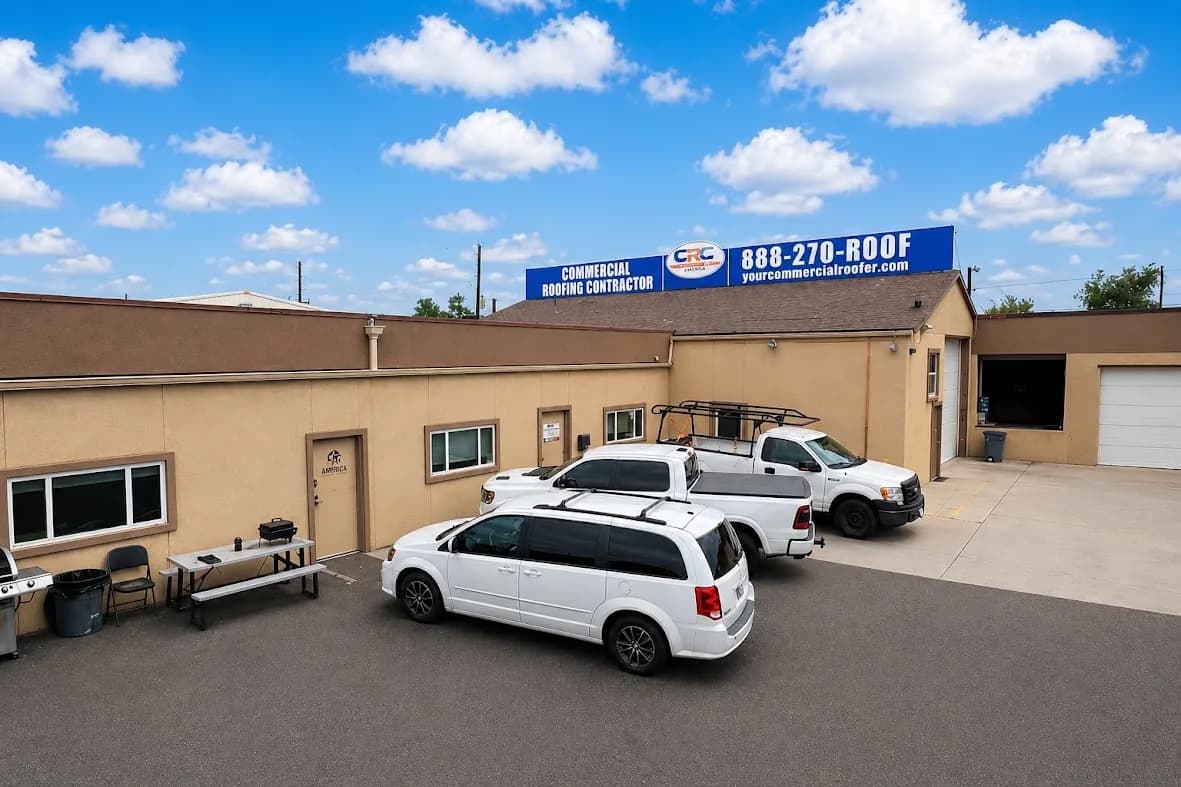
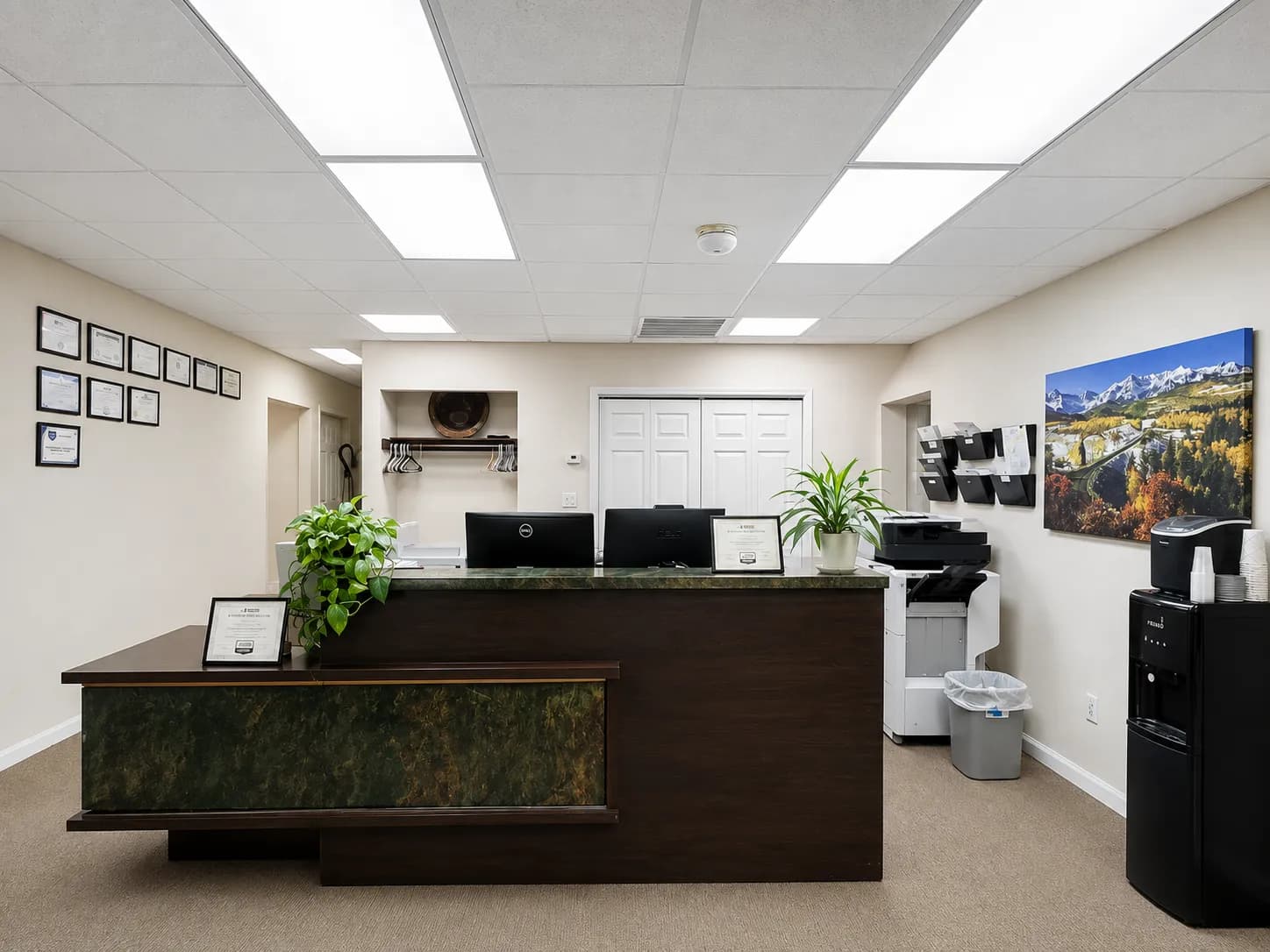
We are not a national brand with a Denver mailing address. The office on 5300 Broadway is staffed, the crews dispatch from here, and the people who inspect your roof are the people who will be on it. That matters after a major hail event, when out-of-state trucks arrive within days, sell a season's work on the strength of a knock, and are unreachable by the time a flashing detail fails two winters later.
Areas We Serve From Denver
From our Denver office we provide commercial and residential roofing across Denver Metro and Front Range, including:
- Denver
- Aurora
- Lakewood
- Arvada
- Centennial
- Golden
- Parker
- Boulder
- Longmont
- Thornton
- Englewood
- Littleton
- Broomfield
- Westminster
- Commerce City
- Elizabeth
- Castle Rock
- Castle Pines
- Colorado Springs
- Greeley
- Fort Collins
- Loveland
- Highlands Ranch
Those are the Denver cities with a page of their own. We serve more towns than we have written up, so if you do not see yours, browse every Colorado and Nebraska Panhandle city we cover or call the office and ask.
Roofing Services From Our Denver Office
- Commercial roofing (TPO, EPDM, metal, and coatings).
- Residential roofing (asphalt shingle, metal, and tile).
- Storm and insurance claim support (hail and wind damage documentation and adjuster coordination).
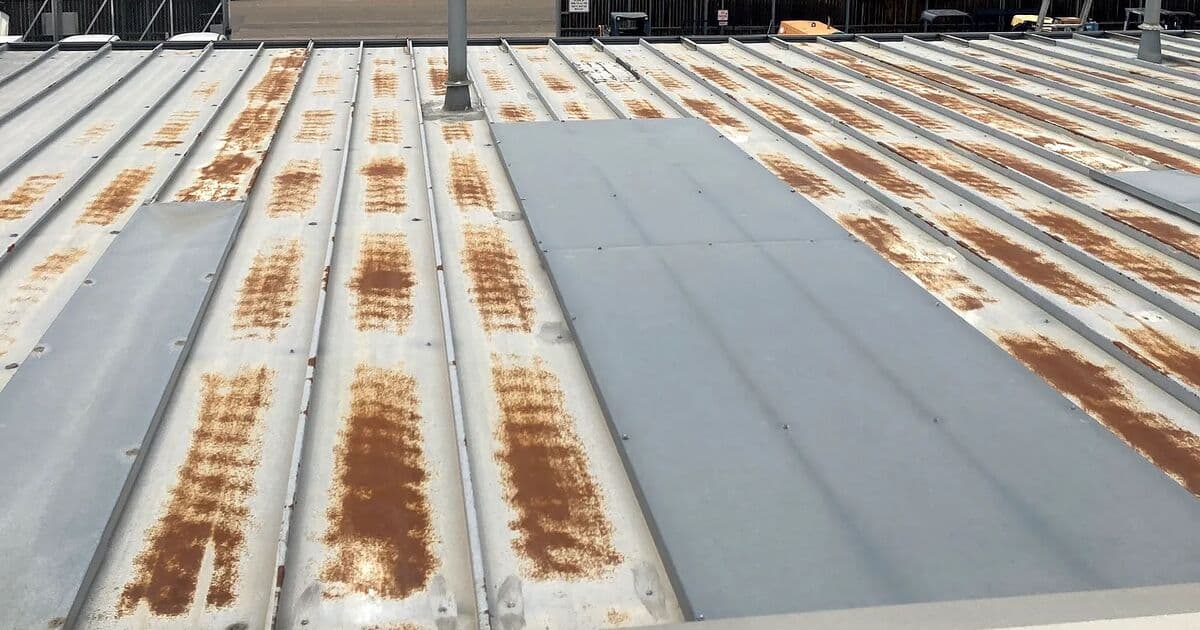
- Roof coatings (restoring sound metal and low-slope roofs without a tear-off).
- Commercial roof repair & replacement (targeted repairs through full replacements, in every season, not just after a storm).
- Residential roof repair & replacement (targeted repairs through full replacements, in every season, not just after a storm).
Our Recent Roofing Projects Near Denver
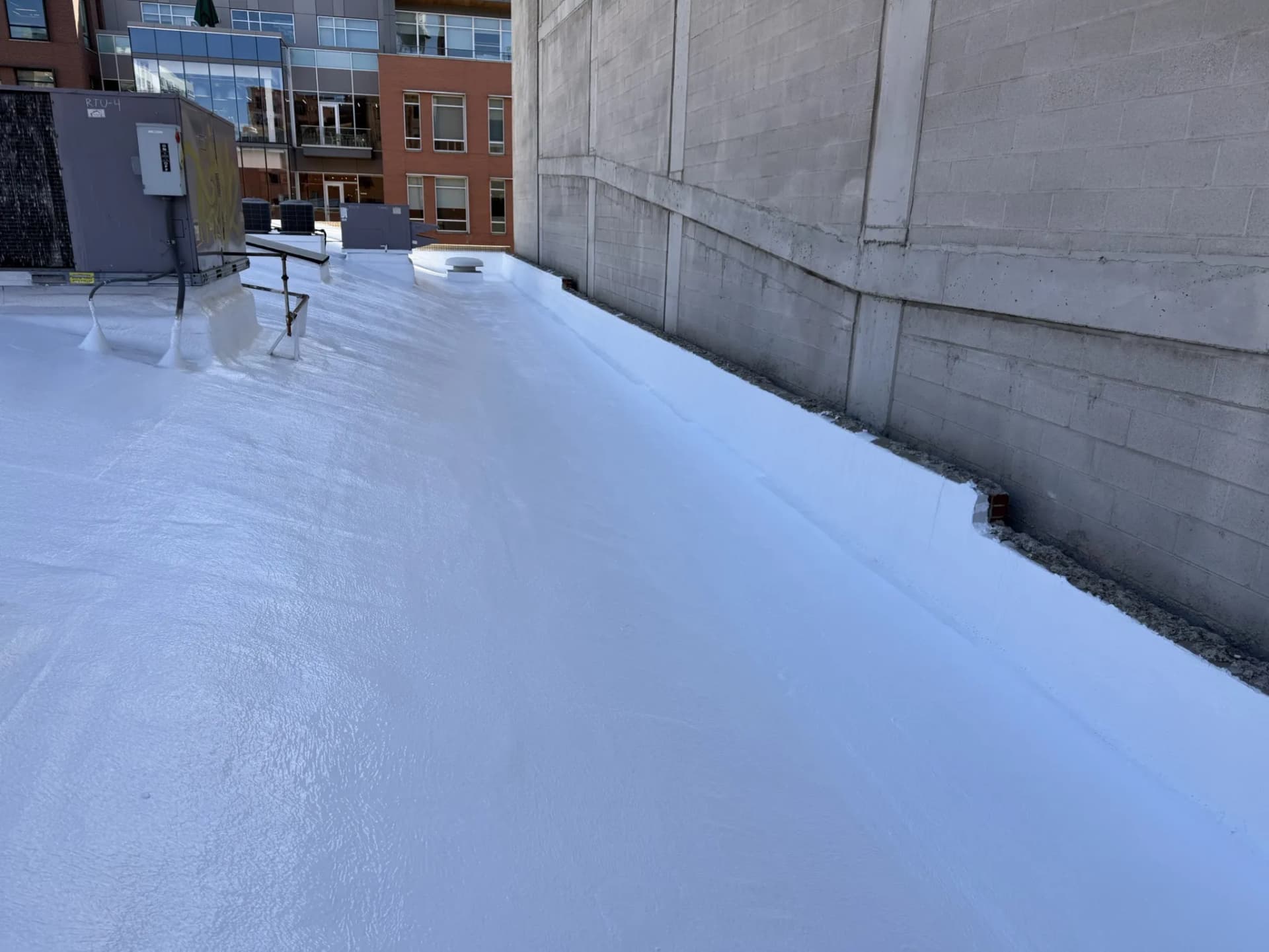
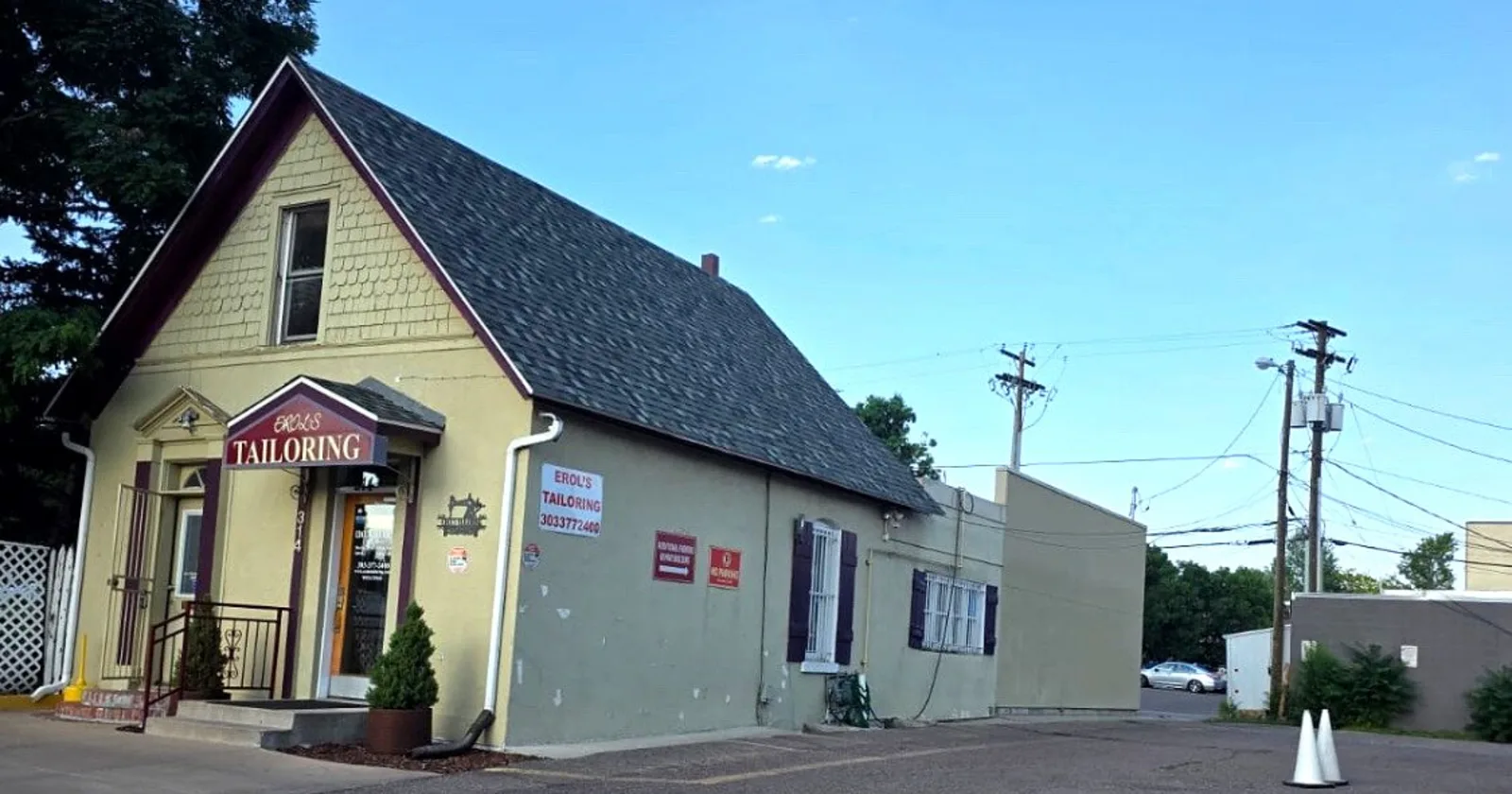
Real completed CRC projects across the Denver Metro and Front Range, with photos, roof systems, and warranties. Every one is a documented job, not a stock photo.
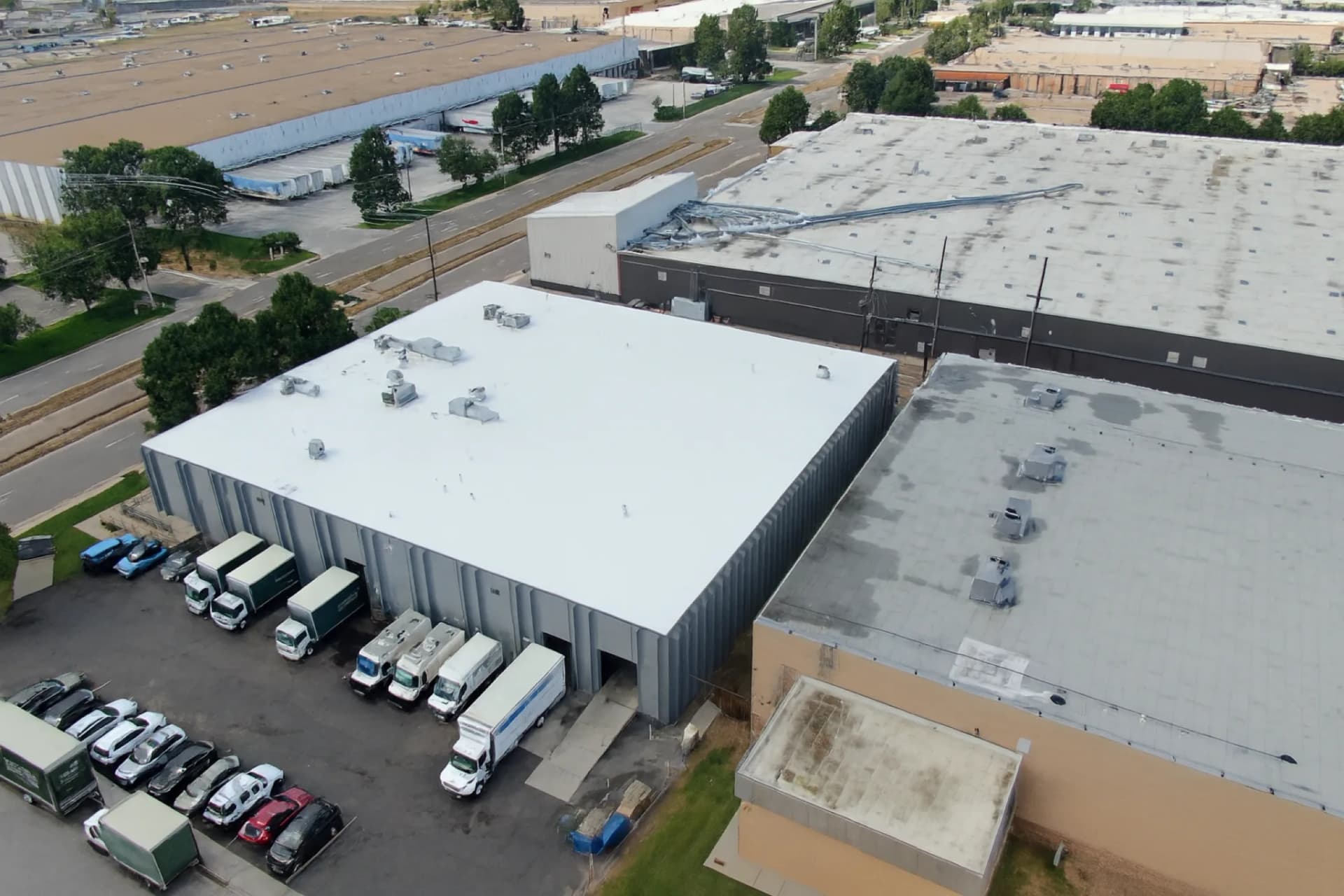
Roofing Built for Denver's Front Range Weather
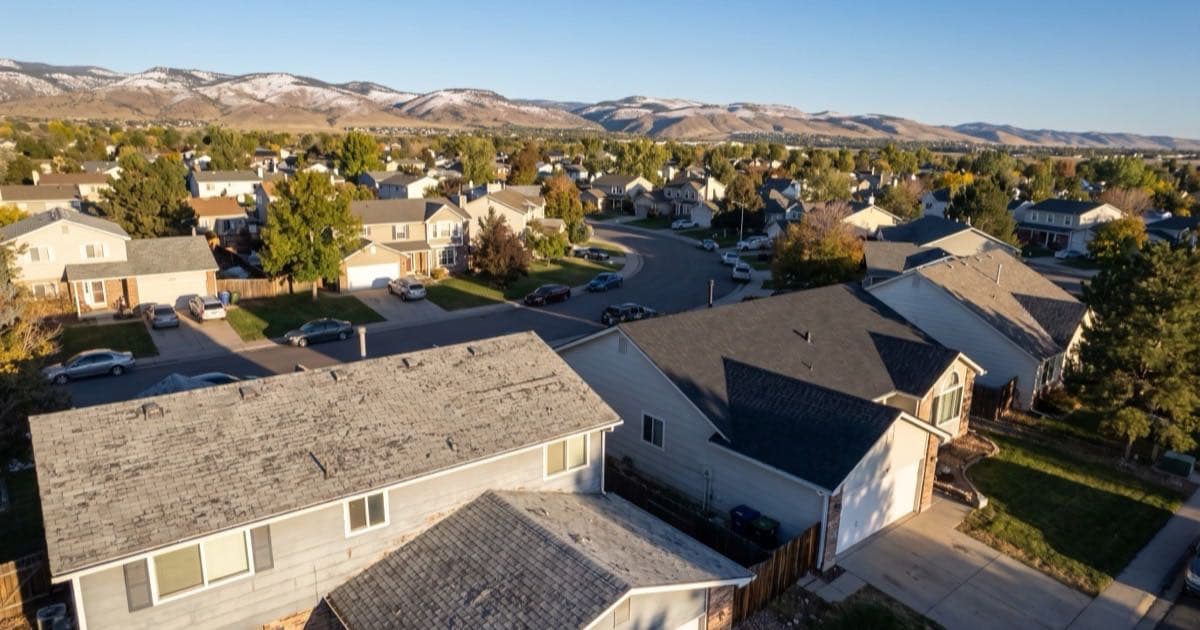
Denver sits a mile up (5,280 feet) where the High Plains meet the Front Range, across Denver, Adams, Arapahoe, Jefferson, and Douglas counties, squarely inside Colorado's Hail Alley, one of the most hail-prone regions in the country, where three or four damaging storms a season is normal. At that elevation the UV is intense, and wide daily temperature swings and repeated freeze-thaw cycles age shingles, pipe boots, and flashings faster than owners expect, on top of chinook-driven wind. We roof it all, from older bungalows and HOA-governed suburbs to low-slope commercial roofs along the I-25 and I-70 corridors, and give you a straight repair-versus-replace answer.
Roofing Codes and Permits in Denver
Roofing work in Denver is permitted and inspected by the Denver Community Planning and Development. Colorado has no statewide roofing code, so requirements are set jurisdiction by jurisdiction and genuinely differ between neighbouring towns. The details below are taken from the Denver Community Planning and Development's published requirements.
Worth knowing in Denver: Denver's wind rating is set by where the building sits, not by one city-wide number: 115 mph east of Federal Boulevard, 125 mph between Federal and Sheridan, and 140 mph from Sheridan to Kipling. A shingle rated for one part of town can be under-rated a few miles west. Two other Denver-specific rules catch crews out. Roof coatings need no permit at all, while every new penetration does. And quick roof permits are not available on buildings over 25,000 square feet, so a large commercial reroof goes to plan review rather than straight to a field inspection.
Commercial roofing code in Denver
| Requirement | Requirement in Denver |
|---|---|
| Adopted code | 2025 Denver Building Code, based on the 2024 International Building Code |
| Energy code | 2021 International Energy Conservation Code, as amended by Denver |
| Current codes effective | Adopted June 13, 2025, second printing November 24, 2025. Construction drawings for new projects submitted after December 31, 2025 must comply. |
| When a permit is required | A repair needs a permit once it exceeds 10 percent of the roof square footage or two roof squares, whichever is smaller. For buildings of 25,000 square feet or more the Green Buildings Ordinance drops that threshold to 5 percent or two squares, whichever is smaller. Every new roof penetration needs a permit. Roof coatings do not require one. |
| Ice barrier | Denver does not require ice barrier underlayment. Its Table R301.2 lists ice barrier underlayment as not required, and the City's roofing guide states that self-adhering bitumen at the eaves and rakes to two feet inside the exterior wall is not required. Double underlayment is still required on asphalt shingle slopes from 2:12 up to 4:12. |
| Overlay and recover | Existing roof coverings must be removed down to the deck where two or more layers exist. A single existing layer may be recovered. |
| Mid-roof inspection | Not automatic in Denver. A mid-roof inspection is required when the pre-inspection identifies work that will not be visible at the final. Pre-inspection is required on townhomes, commercial asphalt shingle, and low-slope roofs, and a mid-roof is always required on tile and metal. A final inspection is required on every roof. |
| Contractor licensing | Membrane roofs must be installed by a contractor holding a Denver D-Roof Covering/Waterproofing license. A D-Roof Shingles license covers membrane only where it is under 10 percent of the roof or two squares, whichever is smaller. |
| Design wind speed | Three zones by street: 115 mph east of Federal Boulevard, 125 mph from Federal to Sheridan Boulevard, and 140 mph from Sheridan Boulevard to Kipling Street. |
| Design snow load | The 2025 Denver Building Code deleted the City's single ground snow load amendment. Ground snow load is now determined from the ASCE 7 Hazard Tool per the IBC and ASCE 7-22, so the flat 35 psf printed in Denver's older roofing handout is no longer the figure to design to. |
| Frost depth | 36 inches |
Residential roofing code in Denver
| Requirement | Requirement in Denver |
|---|---|
| Adopted code | 2025 Denver Residential Code, based on the 2024 International Residential Code |
| Energy code | 2021 International Energy Conservation Code, as amended by Denver |
| Current codes effective | Adopted June 13, 2025, second printing November 24, 2025. Construction drawings for new projects submitted after December 31, 2025 must comply. |
| When a permit is required | A repair needs a permit once it exceeds 10 percent of the roof square footage or two roof squares, whichever is smaller. For buildings of 25,000 square feet or more the Green Buildings Ordinance drops that threshold to 5 percent or two squares, whichever is smaller. Every new roof penetration needs a permit. Roof coatings do not require one. |
| Ice barrier | Denver does not require ice barrier underlayment. Its Table R301.2 lists ice barrier underlayment as not required, and the City's roofing guide states that self-adhering bitumen at the eaves and rakes to two feet inside the exterior wall is not required. Double underlayment is still required on asphalt shingle slopes from 2:12 up to 4:12. |
| Overlay and recover | Existing roof coverings must be removed down to the deck where two or more layers exist. A single existing layer may be recovered. |
| Mid-roof inspection | Not automatic in Denver. A mid-roof inspection is required when the pre-inspection identifies work that will not be visible at the final. Pre-inspection is required on townhomes, commercial asphalt shingle, and low-slope roofs, and a mid-roof is always required on tile and metal. A final inspection is required on every roof. |
| Contractor licensing | Membrane roofs must be installed by a contractor holding a Denver D-Roof Covering/Waterproofing license. A D-Roof Shingles license covers membrane only where it is under 10 percent of the roof or two squares, whichever is smaller. |
| Design wind speed | Three zones by street: 115 mph east of Federal Boulevard, 125 mph from Federal to Sheridan Boulevard, and 140 mph from Sheridan Boulevard to Kipling Street. |
| Design snow load | The 2025 Denver Building Code deleted the City's single ground snow load amendment. Ground snow load is now determined from the ASCE 7 Hazard Tool per the IBC and ASCE 7-22, so the flat 35 psf printed in Denver's older roofing handout is no longer the figure to design to. |
| Frost depth | 36 inches |
Note: Denver currently publishes roofing guidance that references an older code edition than its own adopted codes, so some of the detail above may have moved. We confirm what applies to your roof with the building department before scoping the work.
This is a summary to help you plan, not a compliance determination. The Denver Community Planning and Development is the authority on what your specific roof requires, and we always confirm current requirements with them before we scope a job. Several Colorado jurisdictions changed their adopted codes during 2026, so we re-verify against each department's own published codes rather than working from memory. Source: City and County of Denver Community Planning and Development, Roofing Guide and Checklist (updated 4/11/2024), and CPD's Building and Fire Codes page for the adopted 2025 Denver Building and Fire Code (read the source document). Last verified August 2026.
Wildfire code: what changes on a reroof
Colorado adopted a statewide wildfire code in 2025, and jurisdictions differ in how and whether they have taken it up. Denver has not published its adoption status or its mapped areas, so we confirm what applies to your specific address with the Denver Community Planning and Development before scoping a roof rather than assuming either way. Where the code does apply, the practical effect is a minimum Class A roof covering or assembly and specific valley-flashing and vent details.
For the full picture on storm-driven replacement, see our storm damage and insurance claim guidance.
Denver being its own city and county matters more than it sounds, because it writes its own building code on top of the national model codes instead of adopting them as published. A crew that learned the trade in the suburbs is working from a different rulebook the moment it crosses the city line.
Three Denver rules catch people out. First, the wind rating is set by where in the city the building sits, not by one number: 115 mph east of Federal Boulevard, 125 mph from Federal to Sheridan, and 140 mph from Sheridan to Kipling. A shingle that satisfies the code in Park Hill can be under-rated a few miles west, and the label on the bundle is what an inspector reads.
Second, roof coatings need no permit at all while every new penetration does, so adding a single skylight is a permitted job and coating an entire warehouse roof is not. Third, quick permits stop at 25,000 square feet: above that a reroof goes to plan review rather than straight to a field inspection, which is a scheduling fact worth knowing before a building owner is promised a start date.
The Front Range Towns We Cover From Denver
The metro is the core of this office's work, but the Front Range service area runs from the Wyoming line to the Palmer Divide, and the code changes underneath you as you drive it. The differences are not trivia. They decide whether your roof gets torn off or recovered, and whether an ice barrier goes down at all.
Castle Rock deleted the residential roof-recover section outright, so the recover-versus-tear-off choice that exists in most Colorado jurisdictions is simply not on the table there, and it requires an ice barrier at eaves and valleys that Denver does not require at all. Lakewood will not approve T-lock shingles on a reroof and does not allow photo inspection on commercial permits. Parker requires a mid-roof inspection on EPDM and flat roofs but not on asphalt shingles, so a commercial membrane job there carries a sequencing constraint a shingle job does not.
Boulder is the strictest jurisdiction we work in: Class A roof assemblies only, wood shakes and shingles banned outright including fire-retardant treated products, its own city energy code, and the highest design wind speeds in our service area. Westminster is a designated special wind region requiring high-wind nailing per the manufacturer on every asphalt shingle job. And Colorado Springs is not permitted by the city at all: the Pikes Peak Regional Building Department issues the permit, performs the inspections, will not issue to an unlicensed contractor, and deletes the roof-recover sections from both code paths.
What the Front Range Climate Does to a Roof
The failure pattern here is impact-driven, and it is worth understanding because it changes what to inspect and what to argue with an adjuster about. On the Western Slope the dominant force is ultraviolet exposure and thermal cycling, and roofs die slowly at the details. On the Front Range roofs die suddenly, in one afternoon, from hail.
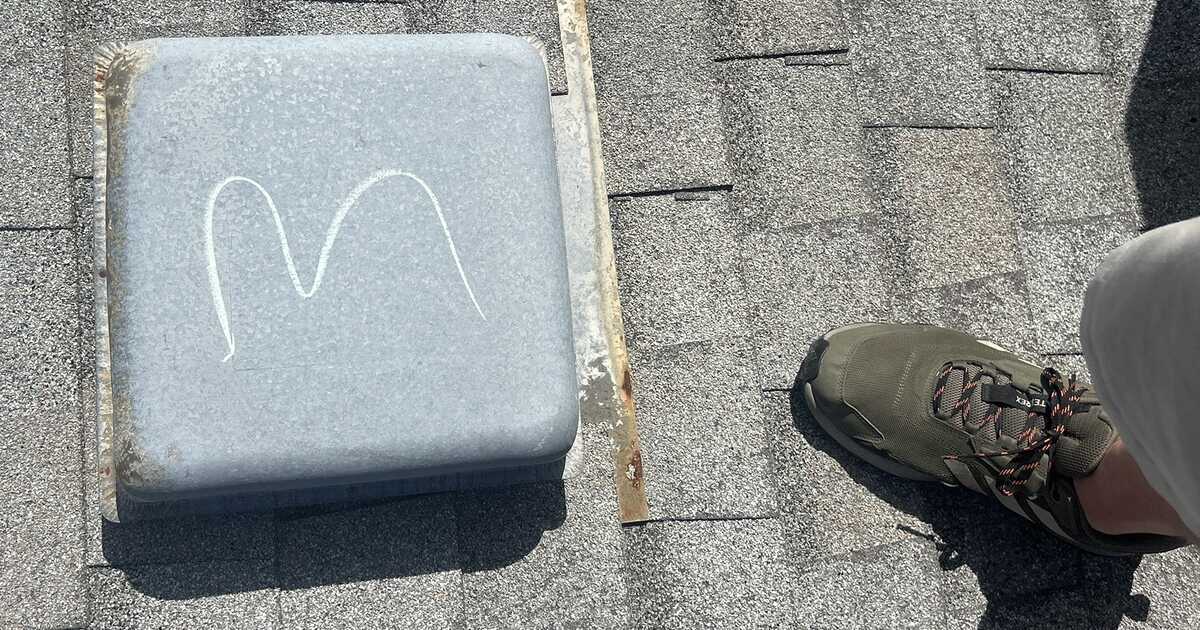
That difference shows up in what damage looks like. Hail bruising on an asphalt shingle frequently leaves no hole and no leak on the day it happens. It fractures the mat under the granules, the granules wash off over the following seasons, the exposed asphalt oxidizes, and the roof fails several years later. By then the storm date that caused it may be outside the claim window. This is why a free inspection after a storm is worth taking even when nothing is leaking, and why we photograph and date what we find.
Elevation compounds it. At 5,280 feet the ultraviolet load is roughly a fifth higher than at sea level, and a forty-degree swing between a sunny afternoon and a clear night is ordinary here in spring and fall. That cycling works fasteners loose, opens sealant at penetrations, and ages pipe boots and flashings faster than the field of the roof, so a Front Range roof often needs its details serviced well before it needs replacing. Chinook winds off the foothills then find whatever the cycling loosened. On commercial work the same conditions favour systems that tolerate movement, which is why a properly detailed TPO membrane with heat-welded seams outlasts an adhesive-dependent assembly here, and why a roof coating on a sound metal building often buys another decade without a tear-off.
What Denver Customers Say
Verified Google reviews from Denver Metro and Front Range customers.

2 months ago
This company is amazing! They are incredibly easy to work with, very responsive, and extremely reliable. I’ve worked with them multiple times, and every experience has been excellent. They even went the extra mile to help me complete my project with a quick turnaround. I highly recommend them to anyone looking for quality service and dependable support. Thank you Chris, Ryan, and Morgan

2 months ago
I am an engineer at an oil company based in northern Colorado. We recently hired CRC to replace one of our 8 metal roofs and we had a great experience. The project was completed in a very high-traffic area, and their team did an outstanding job maintaining a safe work environment while minimizing disruptions. Our project manager, Sean, was on-site every day ensuring everything stayed on schedule and was completed correctly. The owner, Chris, also stopped in frequently throughout just to check in which we appreciated. The installers adhered to our safety standards, kept the job site clean(only complaint: had one employee catch a nail in their tire but they paid for a new one with 0 hassle), and demonstrated a high level of professionalism from start to finish. Big kudos to those guys working on a metal roof in 90 degree weather. We’ve had 3 days of rain and not a drop in a building that previously had more than we could count. We will definitely be using Sean and CRC on our other buildings in the near future and I would highly recommend them to anyone looking for a solid roofing contractor.

3 months ago
Commercial Roofing Contractors replaced my entire roof and did an amazing job from start to finish. Their crew was professional, hardworking, and paid attention to every detail. The project was completed on time, the work quality was excellent, and they kept everything clean throughout the process. I highly recommend them to anyone needing roofing work done.
Frequently Asked Questions
What areas does the Denver office serve?
Our Denver office serves the Front Range and Denver metro, including Denver, Aurora, Lakewood, Arvada, Centennial, Golden, Parker, Boulder, Longmont, Thornton, Englewood, Littleton, Broomfield, Westminster, Commerce City, Elizabeth, Castle Rock, Castle Pines, Colorado Springs, Greeley, Fort Collins, Loveland, Highlands Ranch. We handle both commercial and residential roofing year-round.
Is Commercial Roofing Contractor a local Denver company?
Yes. We operate a staffed office in Denver and have served the area for over 20 years. We are an established local roofing contractor, not an out-of-state storm chaser.
Do you only work after hailstorms?
No. We work in the Denver area year-round. We handle repairs, replacements, inspections, maintenance, and insurance claims in every season, not just after a storm.
Does the Denver office handle both commercial and residential roofing?
Yes. We install and repair commercial systems (TPO, EPDM, metal, and coatings) and residential systems (asphalt shingle, metal, and tile) across the Front Range.
Why is the Denver area prone to roof damage?
The Front Range sits in Colorado's Hail Alley, one of the most hail-prone regions in the country. We provide free inspections to document hail and wind damage and guide your insurance claim.
Read the roofing questions we answer across every market we serve. Grouped by topic: commercial and residential decisions, cost, insurance claims, storm response, warranties, and financing.