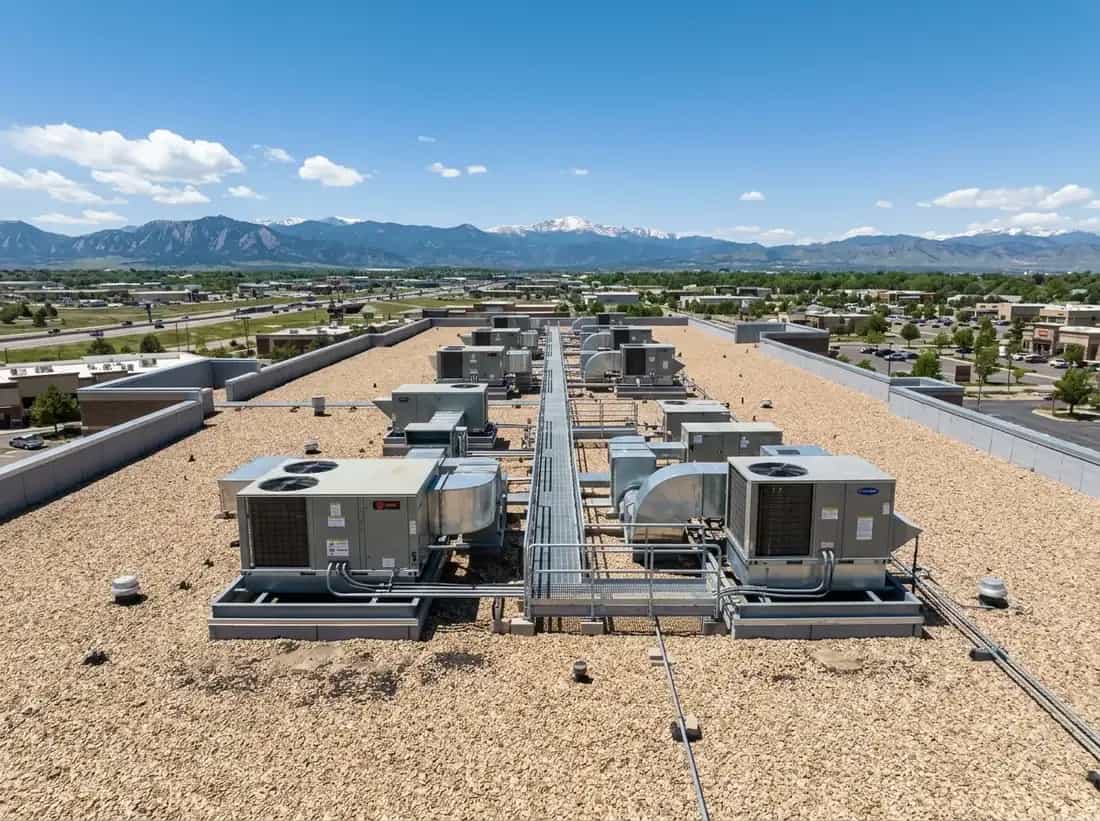
Built-up roofing (BUR), the traditional tar-and-gravel roof, is a multi-ply commercial system built from alternating layers of bitumen and reinforcing felts, finished with gravel ballast or a mineral cap sheet. Its redundant waterproofing layers and heavy surfacing have kept BUR in service on low-slope commercial buildings for over a century. We install, repair, and restore BUR systems from our Denver, Grand Junction, and Scottsbluff offices.
Commercial Roofing Contractor works on built-up roofs across Colorado and the Nebraska Panhandle, from full BUR installations to repairs and restorations of aging systems on older Denver and Grand Valley commercial buildings. Where a BUR roof still has sound plies, restoration is often a better value than a tear-off, and we evaluate that honestly on every roof.
What Built-Up Roofing Is
A built-up roof is assembled in layers directly on the roof deck or insulation. Alternating plies of bitumen, which is hot asphalt or a cold-applied adhesive, and reinforcing felts or fiberglass ply sheets are built up into a thick, redundant membrane. The assembly is then finished with a surfacing layer, most often gravel ballast embedded in a flood coat of asphalt, or a granulated mineral cap sheet. Each ply adds another layer of waterproofing, so the roof does not depend on a single membrane to keep water out.
Where Built-Up Roofing Fits
BUR suits roofs where redundancy and a proven, heavy-duty assembly matter more than a fast, light installation. Many established Denver and Western Slope commercial buildings were originally roofed in BUR, and repairing or restoring that system is frequently the right call. The gravel surface also stands up well to rooftop foot traffic and hail. For new low-slope construction, a single-ply system such as TPO is often lighter and faster to install, so we match the system to the building rather than defaulting to one answer.
The nearest alternative is not single-ply at all. Modified bitumen is the same idea as BUR, an asphalt roof in multiple plies, with the plies made in a factory and polymers blended into the asphalt instead of being built up on the roof. It goes down faster, weighs less, and is easier to inspect and patch, which matters on a roof somebody has to service regularly. We compare the two directly in modified bitumen vs built-up roofing.
How Built-Up Roofing Performs in Colorado
Hail and the gravel surface
On a gravel-surfaced BUR roof, the ballast acts as a sacrificial layer that absorbs and disperses hail impact before it reaches the waterproofing plies beneath. Combined with the redundant layers, that surfacing gives BUR real resilience in the Front Range hail belt, where a single-layer system takes hail directly on the membrane.
Sun, heat, and ponding water
Colorado's high-altitude UV and wide daily temperature swings age the asphalt in a BUR roof over time, and standing water accelerates that wear. Correcting the low spots is its own scope, covered on our commercial roof drainage page. Proper slope and drainage, plus regular maintenance, are what carry a built-up roof to the long end of its service life.
Repair and Restoration vs Replacement
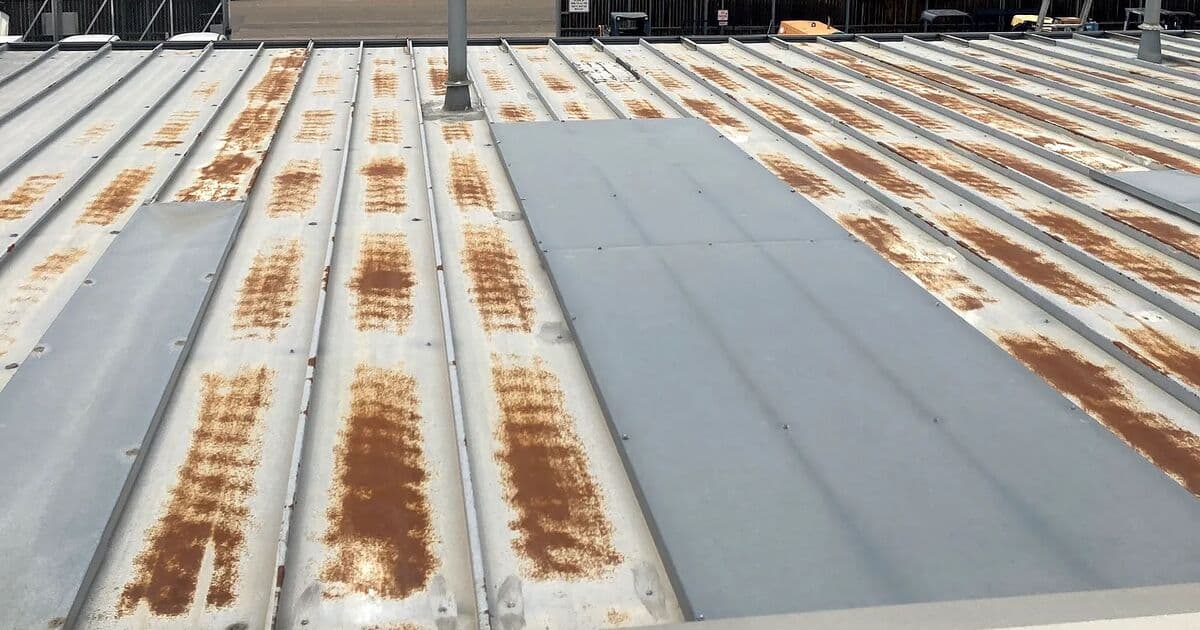
An aging built-up roof does not always need a full tear-off. If the plies are sound and the roof is dry, a roof coating or restoration system can add years of waterproofing and reflectivity at a fraction of the cost and disruption of a replacement. When a moisture survey finds wet insulation or failing plies, we recommend a full commercial roof replacement instead, often to a modern single-ply or modified bitumen system. We give you the honest read either way.
Our Built-Up Roofing Process
- Free inspection and moisture survey. We assess the plies, surfacing, drainage, and insulation, and whether repair, restoration, or replacement is the right approach.
- Scope and recommendation. We lay out the honest options, from a targeted repair or coating to a full tear-off, with the tradeoffs of each.
- Deck and ply installation. For a new or replacement BUR roof, alternating plies of bitumen and reinforcing felts are built up over the prepared deck and insulation.
- Surfacing. The assembly is finished with gravel ballast in a flood coat or a mineral cap sheet to protect the plies from sun and hail.
- Flashing, detail work, and inspection. Penetrations, edges, and drains are detailed and the finished roof is inspected before signoff.
Built-Up Roofing in Scottsbluff and the Nebraska Panhandle
Most built-up roofs we look at in the Panhandle are already in place rather than being specified new: schools, municipal buildings, and older main-street commercial stock around Scottsbluff and Gering that were roofed this way decades ago and have been maintained since. The practical question is usually whether the existing plies still have service life, not which BUR system to install.
Gravel surfacing is where wind changes the answer here. On an exposed roof with long fetch, scour migrates the aggregate off the high corners and edges and leaves the bitumen below it taking ultraviolet directly, which ages the roof unevenly and fastest exactly where uplift is highest. We check corners and perimeters before the field. Our Scottsbluff office inspects and repairs built-up roofs across Gering, Terrytown, Mitchell, Minatare, Morrill, Bayard, and Bridgeport.
Free Built-Up Roof Inspection
Whether your built-up roof needs a repair, a restoration, or a full replacement, the right answer starts with an honest look at the plies and the drainage. Call our Denver office at (720) 893-7663, our Grand Junction office at (970) 877-7663, our Scottsbluff office at (308) 536-7663, or request a free roof inspection.
Frequently Asked Questions About Built-Up Roofing
What is built-up roofing?
Built-up roofing (BUR) is a multi-ply commercial roof system built from alternating layers of bitumen (asphalt) and reinforcing felts or fiberglass ply sheets, finished with a surfacing of gravel ballast or a mineral cap sheet. Often called a tar-and-gravel roof, BUR has been used on low-slope commercial buildings for over a century and gets its durability from redundant waterproofing layers.
Is built-up roofing outdated?
No. BUR is a mature system rather than an obsolete one. Single-ply membranes like TPO and PVC have taken much of the new-construction market, but BUR's redundant layers and heavy surfacing still make sense on specific roofs, and many older Denver and Grand Valley commercial buildings carry BUR that is worth repairing or restoring rather than replacing outright.
Does a built-up roof project include the drains and scuppers?
Yes. Built-up roofs are typically dead level or very low slope, so they depend more on working drainage than almost any other system, and ponding is what breaks down the surfacing. We replace drain bowls, strainers, clamping rings, scuppers, conductor heads, and downspouts as part of the roof scope rather than flashing a new roof into worn-out drainage.
How does built-up roofing handle Colorado hail?
The gravel or mineral surfacing on a BUR roof acts as a sacrificial layer that absorbs and disperses hail impact before it reaches the waterproofing plies, which is a real advantage in the Front Range hail belt. The multiple redundant layers also mean a single breach is less likely to reach the deck. As with any system, condition and age matter, which is what a free inspection determines.
How long does a built-up roof last in Colorado?
A well-built, well-maintained BUR roof commonly lasts 20 to 30 years, and gravel-surfaced systems can reach the upper end of that range. Sun, thermal cycling, and ponding water are the main factors that shorten a BUR roof's life in Colorado, so drainage and regular maintenance matter as much as the original build quality.
Can an old built-up roof be restored instead of replaced?
Often, yes. If the plies are sound and the roof is dry, a restoration or roof coating can add years of service and waterproofing without a full tear-off, at a lower cost and with less disruption. If a moisture survey finds wet insulation or failing plies, replacement is the better path. We evaluate that on our roof coatings page and during a free inspection.
What does built-up roofing cost in Colorado?
Published installed-cost ranges across the industry run roughly $5 to $12 per square foot depending on the number of plies, insulation, surfacing, roof size, and site conditions. A site visit tightens that range considerably, so we do not quote firm BUR pricing without seeing the roof. Denver metro: (720) 893-7663. Western Slope: (970) 877-7663. Nebraska Panhandle: (308) 536-7663.
See all roofing FAQs. Grouped by topic: commercial and residential decisions, cost, insurance claims, storm response, warranties, and financing.
Related Resources
CRC Serving You From Three Offices
Available from all three offices: Denver, Grand Junction, and Scottsbluff, plus surrounding service areas.
Denver Office
Denver Metro and Front Range
(720) 893-7663
Grand Junction Office
Western Slope
(970) 877-7663
Scottsbluff Office
Nebraska Panhandle
(308) 536-7663