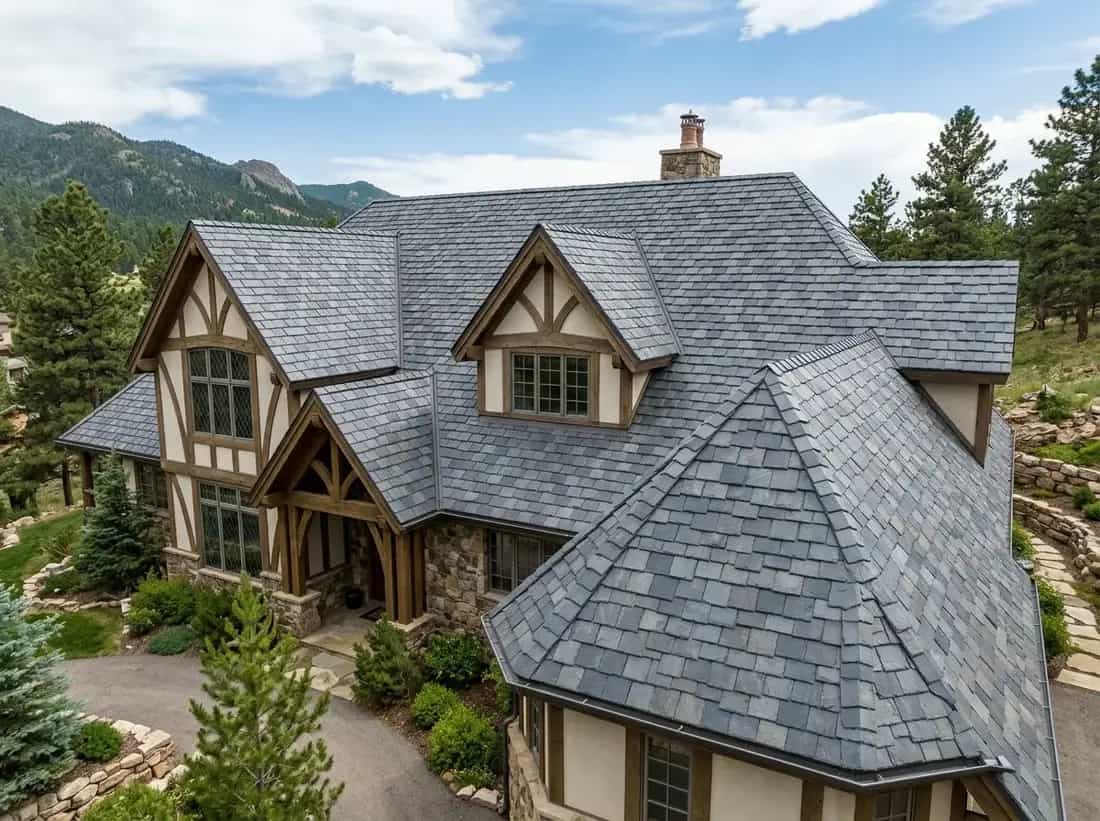
Synthetic slate and shake are composite tiles molded from real slate and cedar, giving the authentic look of a premium roof with Class 4 hail ratings, 40 to 50 year warranties, and far less weight than natural slate or tile, so no structural reinforcement is usually needed. Expect about $12 to $20 or more per square foot installed. We install synthetic slate and shake systems from our Denver, Grand Junction, and Scottsbluff offices.
Commercial Roofing Contractor installs synthetic slate and shake roofing for homeowners who want the character of natural slate or cedar without the weight, fragility, or maintenance that come with the real thing. Composite roofing has become one of the smartest premium choices in Colorado's hail belt, and we install it across the Front Range, the Western Slope, and the Nebraska Panhandle from our Denver, Grand Junction, and Scottsbluff offices.
What Synthetic Slate and Shake Is
Synthetic, or composite, roofing tiles are molded from engineered polymers, frequently with recycled content, and cast directly from natural slate and hand-split cedar. That casting process is why a good composite roof looks authentic from the street: it carries the same irregular texture, thickness variation, and shadow lines as the natural material it was molded from. The difference is in the performance, where the manufactured product outclasses the natural one in nearly every way that matters in Colorado.
Why Synthetic Works in Colorado
- Class 4 hail resistance. Leading composite products carry the highest UL 2218 impact rating and flex under hail rather than shattering the way natural slate can, which also helps them qualify for Colorado impact-resistant insurance discounts.
- Lightweight. Composite weighs a fraction of natural slate or tile, so it typically installs on a standard framed roof with no structural upgrade, unlike the heavy materials it imitates.
- UV and moisture stable. Engineered polymers resist the fading, cracking, and water absorption that age natural materials under high-altitude Colorado sun and freeze-thaw cycling.
- Wildfire-conscious alternative to wood shake. Composite shake gives the cedar look without the combustibility and constant maintenance of real wood, which matters in the foothills and wildland-urban interface.
Synthetic vs Natural Slate and Tile
Authentic slate is beautiful and can last a century, but it is heavy, expensive, brittle under hail, and demands a structure engineered to carry it. Composite slate reproduces the look at a fraction of the weight, with better hail performance, at a lower installed cost once the structural requirements of natural slate are counted. If your home was purpose-built for concrete or clay tile, authentic tile remains a great long-term option; if you want the high-end slate or shake look on a conventionally framed home, synthetic is usually the better path.
Who Chooses Synthetic Slate and Shake
Composite is the choice for homeowners who want a distinctive, high-end roof that still makes sense in hail country: upscale and custom homes, houses in HOAs that require a slate or shake appearance, historic-look renovations, and foothills homes replacing aging wood shake with a fire-conscious, low-maintenance alternative. For a straightforward, budget-first roof, Class 4 asphalt shingles remain the value choice; synthetic is for when appearance is a priority alongside durability.
Synthetic Slate and Shake in Scottsbluff and the Nebraska Panhandle
The case for composite in the Panhandle is the same one that makes natural cedar a poor bet here. Real shake needs to dry between wettings and splits under repeated hail; the sun and wind that make this a good climate for drying are also what check and cup a wood roof early. Synthetic gives the same texture and shadow line without the maintenance cycle or the fire rating problem.
These are premium roofs and we would rather be honest about where they fit: on a home you plan to keep, or where the architecture genuinely calls for it, a Class 4 composite is a fifty-year decision. On a house you expect to sell inside a decade, a Class 4asphalt shingle roof gets you most of the hail performance for a fraction of the cost. Our Scottsbluff office installs composite roofs across Gering, Terrytown, Mitchell, Minatare, Morrill, Bayard, and Bridgeport.
Cost of a Synthetic Roof in Colorado
Synthetic slate and shake typically runs about $12 to $20 or more per square foot installed, positioned above asphalt shingles and generally below authentic slate once structural work is included. For homeowners paying out of pocket, roof financing is available through our partner Hearth; see our financing options. After a free inspection we provide a written proposal detailing the composite system, warranty terms, and installation specification.
CRC is a Haag Certified, licensed, and insured roofing contractor, and we install every synthetic slate and shake system to manufacturer specification. See our certifications and licensing.
Frequently Asked Questions About Synthetic Slate & Shake
What is synthetic slate and shake made of?
Synthetic slate and shake are composite tiles molded from engineered polymers, often with recycled content, and cast from real slate or hand-split cedar so the surface texture and shadow lines look authentic. The result is a roof that reads as natural slate or wood shake from the ground while performing like a modern, warrantied manufactured product.
How well does synthetic roofing handle Colorado hail?
Very well. Leading synthetic slate and shake products carry a Class 4 impact rating, the highest tier under UL 2218, and are engineered to flex under impact rather than shatter the way natural slate can. That makes composite a strong fit for Colorado's hail belt, and the impact rating often qualifies for the same insurance discounts offered on other Class 4 roofs.
Is synthetic roofing lighter than real slate or tile?
Much lighter. Natural slate and clay or concrete tile are heavy enough to require a structure engineered for the load. Synthetic slate and shake weigh a fraction of that, so they can typically go on a standard framed roof without structural reinforcement, which is a major reason homeowners choose composite over authentic slate.
How long does a synthetic slate or shake roof last?
Composite slate and shake products commonly carry warranties in the 40 to 50 year range and are engineered to resist the UV fading, cracking, and moisture problems that age natural materials. In Colorado's high-UV, high-hail environment, that durability and the Class 4 rating are the main reasons to choose synthetic over natural wood shake, which weathers and carries wildfire concerns.
How much does a synthetic slate or shake roof cost?
Synthetic slate and shake typically runs about $12 to $20 or more per square foot installed, more than asphalt shingles and generally less than authentic slate or a full tile system once structural work is counted. You are paying for the premium appearance, the Class 4 durability, and the long warranty. Denver metro: (720) 893-7663. Western Slope: (970) 877-7663. Nebraska Panhandle: (308) 536-7663.
See all roofing FAQs. Grouped by topic: commercial and residential decisions, cost, insurance claims, storm response, warranties, and financing.
Related Resources

CRC Serving You From Three Offices
Available from all three offices: Denver, Grand Junction, and Scottsbluff, plus surrounding service areas.
Denver Office
Denver Metro and Front Range
(720) 893-7663
Grand Junction Office
Western Slope
(970) 877-7663
Scottsbluff Office
Nebraska Panhandle
(308) 536-7663