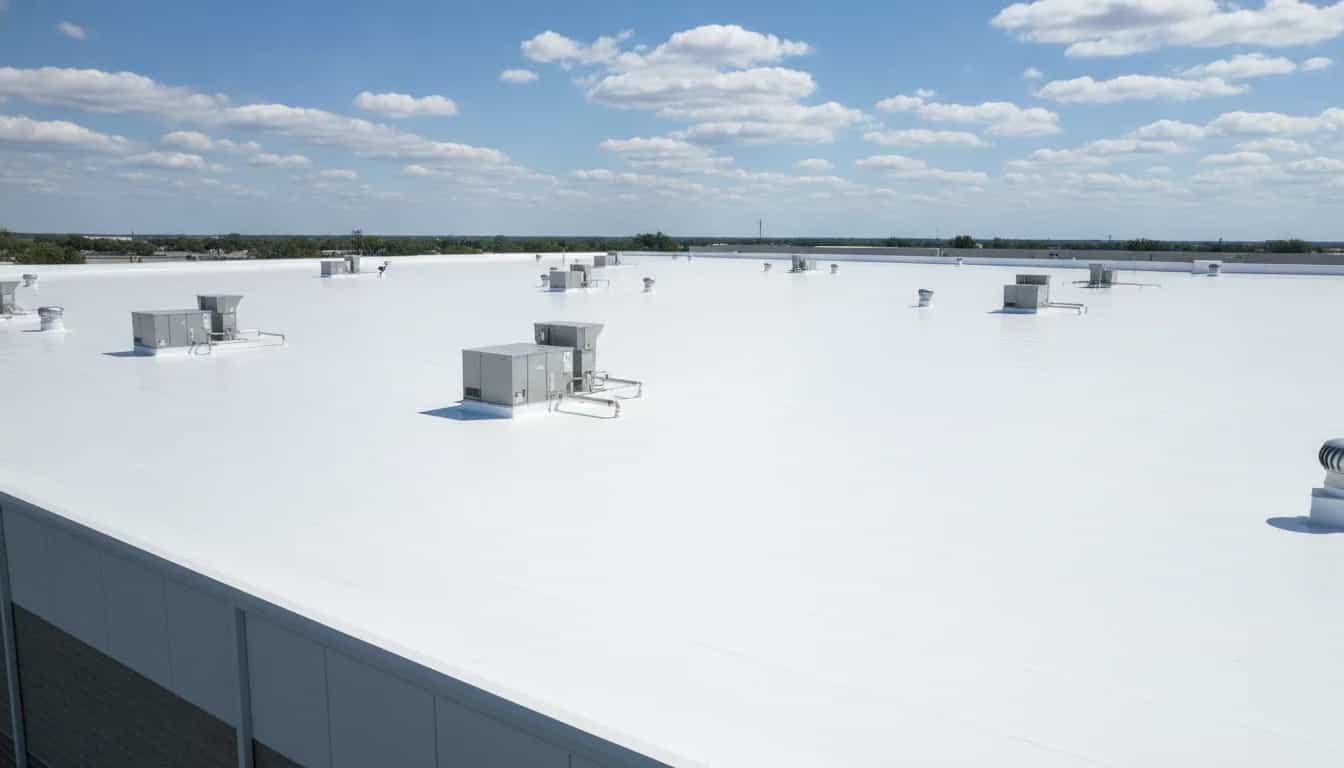
TPO (thermoplastic polyolefin) is Colorado's most widely installed commercial flat-roof membrane: a reflective white single-ply system with heat-welded seams. It comes in 45, 60, and 80-mil thicknesses, handles Colorado's hail and high-altitude UV when specified correctly, and typically lasts 20 to 30 years. We install Johns Manville TPO systems with NDL warranties up to 50 years from our Denver, Grand Junction, and Scottsbluff offices.
Commercial Roofing Contractor installs and replaces TPO roofing systems on office buildings, retail centers, warehouses, and industrial facilities. As a Johns Manville Peak Advantage Certified Contractor, we install manufacturer-backed TPO systems built for the Front Range, the Western Slope, and the Nebraska Panhandle.
What TPO Roofing Is
TPO is a single-ply membrane, usually white, built in three layers: a UV-resistant top layer, a polyester-mesh reinforcement, and a flexible base. Its defining feature is the heat-welded seam, which fuses sheets into a continuous, watertight bond rather than relying on glue or tape. That makes TPO one of the most reliable membranes for wind uplift, snowmelt, and long-term waterproofing on Colorado's flat and low-slope commercial roofs.
TPO Thicknesses We Install
We install 45-mil, 60-mil, and 80-mil TPO depending on the building, its rooftop traffic, and its hail exposure. Many Colorado commercial roofs use 60-mil as a practical baseline, stepping up to 80-mil for high-traffic roofs, heavy rooftop equipment, or the strongest hail and warranty requirements. We confirm the right thickness for your building during a free inspection.
How TPO Performs in Colorado Conditions
High-altitude UV and reflectivity
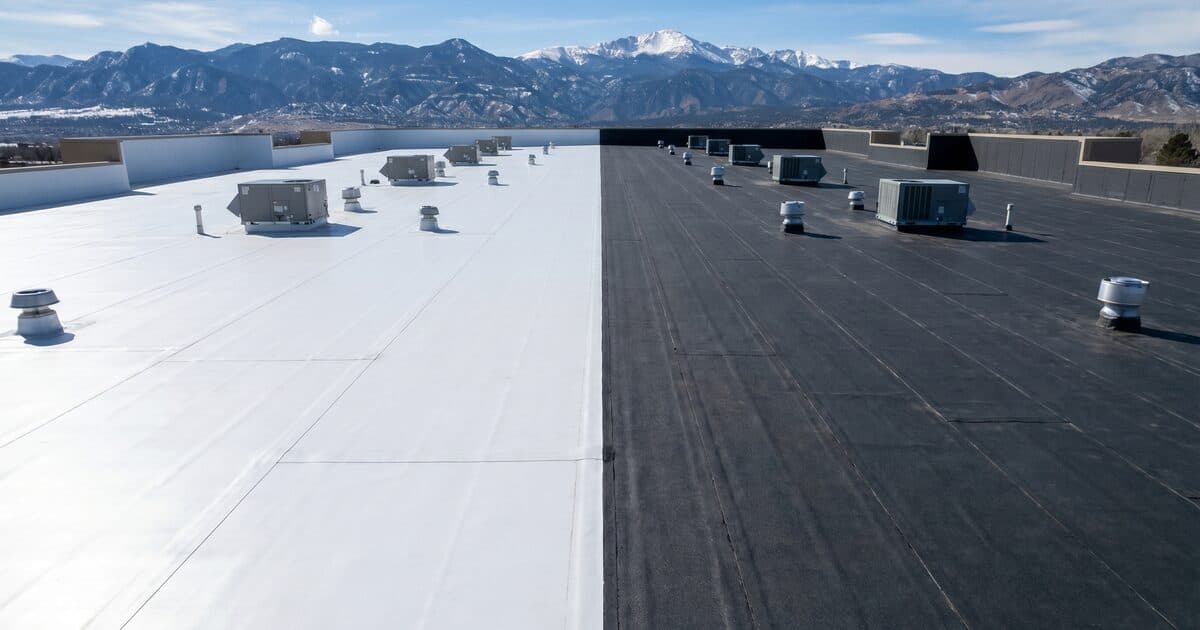
Colorado's elevation means stronger UV exposure than most of the country. TPO's reflective white surface bounces a large share of solar radiation, commonly cited in the range of 75 to 80 percent for white TPO, which lowers rooftop temperature and cooling load in cooling-driven buildings.
Hail
The Front Range is one of the most hail-prone regions in North America. TPO offers strong puncture resistance for foot traffic and debris, but thinner membranes can be more vulnerable to large hail, which is why we typically recommend 60-mil or 80-mil TPO for hail-exposed roofs. We inspect for hail damage on every service call, because impacts are not always visible from a walk-by.
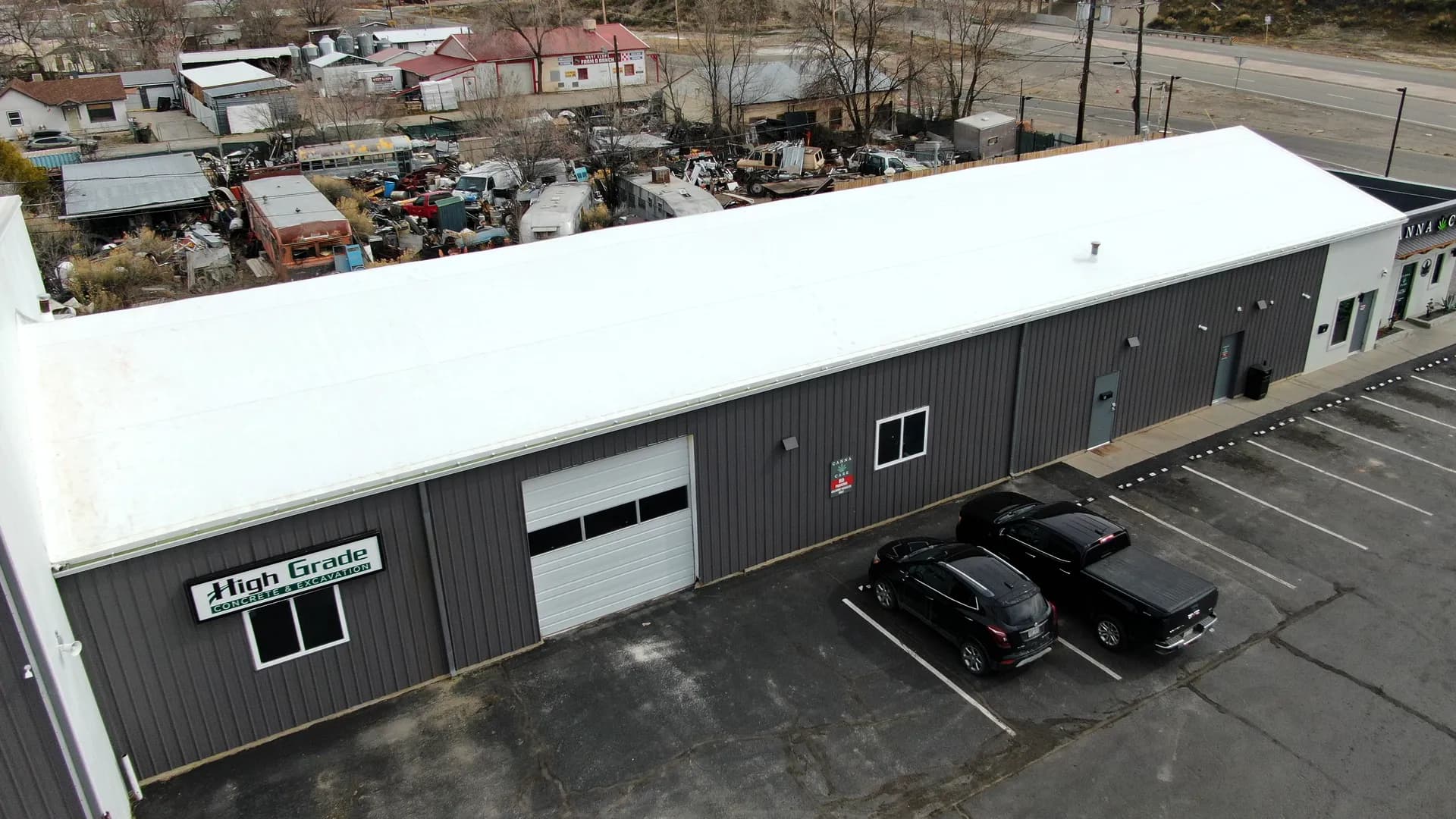
You can see both paths in our own Colorado work. On a two-building Denver TPO reroof, we documented a full hail claim from the cover board up and rebuilt each roof with a mechanically fastened 60-mil Johns Manville system. On a Grand Junction TPO recover, a hail-worn roof was recovered with a fully-adhered JM TPO membrane instead of a full tear-off. Both are written up with photos, build sheets and the systems used, alongside the rest of our documented commercial and residential roofing projects.
Thermal cycling and foot traffic
Colorado roofs can swing more than 100 degrees between a winter night and a sunny afternoon. TPO's welded seams resist the seam stress that thermal movement creates, and the membrane's puncture and tear resistance give it an edge on roofs with HVAC units, frequent service access, or solar arrays.
Johns Manville TPO Systems We Install
We are a Johns Manville Peak Advantage Certified Contractor, a certification granted only to contractors who meet rigorous installation quality and ongoing training standards. That qualifies us to install Johns Manville TPO systems carrying NDL warranties of 10, 15, 20, 25, and up to 50 years, covering both materials and labor for the warranty term.
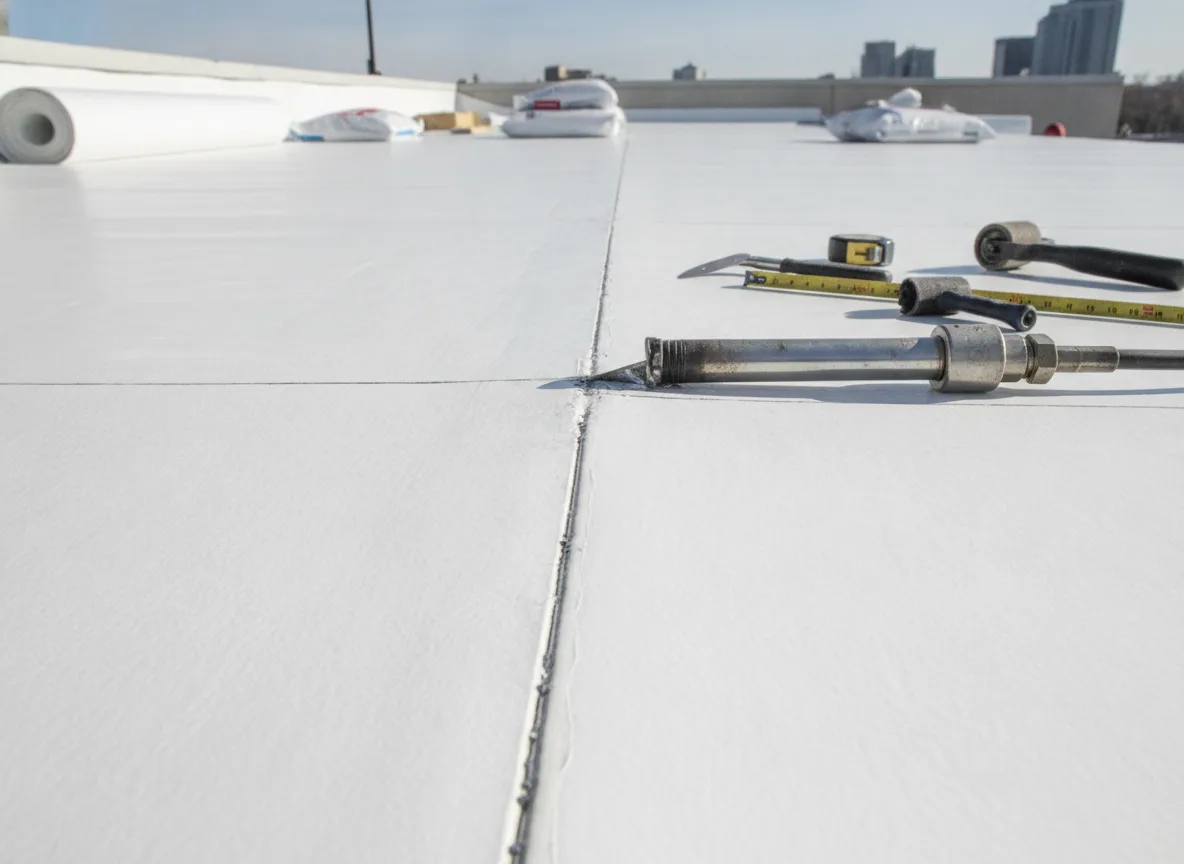
Single-Ply Membrane
TPO Membrane Seam
Heat-welded seams fuse the sheets into one continuous, watertight bond, the reflective white surface lowers rooftop temperature and cooling load, and it comes in 45, 60, and 80-mil thicknesses to match hail and traffic exposure.
TPO vs Other Commercial Roof Systems
TPO is not the right fit for every roof. Buildings prioritizing cold-weather flexibility and hail elasticity over reflectivity may be better served by EPDM roofing, while roofs with grease exhaust or chemical exposure often call for PVC instead. We help you weigh membrane options against your building's use, deck condition, and budget, and every TPO recommendation is part of a broader commercial roof replacement evaluation, not a one-size-fits-all pitch.
TPO Roofing in Scottsbluff and the Nebraska Panhandle
TPO's reflectivity is its headline benefit, and it is worth being straight that the cooling-season payback is smaller this far north than it is on the Front Range. What still earns its place in the Panhandle is the welded seam. Wind is relentless on open ground, and a heat-welded lap does not rely on adhesive that ages, so the failure mode that ends most low-slope roofs out here is the one TPO is best at resisting.
Thickness is the decision we spend the most time on locally. Where a roof takes regular service traffic or sits in the open with no hail shelter, we will usually price 60-mil against 45 rather than defaulting to the thinner sheet. Our Scottsbluff office installs and replaces TPO across Gering, Terrytown, Mitchell, Minatare, Morrill, Bayard, and Bridgeport. Our Johns Manville Peak Advantage certification applies here exactly as it does in Colorado, so a Panhandle roof can carry the same JM NDL warranty on the same terms.
Our TPO Installation Process
- Free inspection and moisture survey. We assess deck condition, insulation, and whether a recover or full tear-off is the right approach.
- Tear-off or recover. A sound, dry existing roof may be a recover candidate; a wet or failing substrate requires a full tear-off.
- Insulation and deck prep. New insulation is set to the specified R-value and the deck is prepared for membrane attachment.
- Membrane installation and heat-welded seams. TPO sheets are mechanically attached or fully adhered, then every seam is heat-welded into a continuous, watertight bond.
- Flashing, detail work, and inspection. Penetrations, edges, and flashings are detailed and the finished roof is inspected and registered for its Johns Manville NDL warranty.
Frequently Asked Questions About TPO Roofing
What is TPO roofing?
TPO (thermoplastic polyolefin) is a single-ply commercial roofing membrane, usually white, built in three layers: a UV-resistant top layer, a polyester-mesh reinforcement, and a flexible base. Sheets are joined with heat-welded seams that fuse into a continuous, watertight bond rather than relying on adhesive or tape. It is the most widely specified flat-roof membrane on new commercial construction and reroof projects across Colorado and the Nebraska Panhandle.
What TPO thickness should I choose for a Colorado roof?
We install 45-mil, 60-mil, and 80-mil TPO depending on the building. Many Colorado commercial roofs use 60-mil as a practical baseline for hail and foot traffic, stepping up to 80-mil for high-traffic roofs, heavy rooftop equipment, or the strongest hail and warranty requirements. The right thickness depends on your building's use, roof access, and the manufacturer warranty you want, so we confirm the spec during your free inspection.
Do you replace the roof drains when you install a TPO roof?
Yes. TPO is welded into the drain with a target patch and clamping ring, so the drain assembly is part of the membrane system rather than a separate fitting. Installing new TPO around a corroded bowl or a hail-flattened strainer builds a leak point in on day one. We replace drain bowls, strainers, clamping rings, scuppers, and downspouts with the roof.
How long does a TPO roof last in Colorado?
A properly installed TPO roof typically lasts 20 to 30 years, though installation quality and membrane thickness affect lifespan more than the material itself. As a Johns Manville Peak Advantage Certified Contractor, we install TPO systems eligible for manufacturer No Dollar Limit (NDL) warranties of 10, 15, 20, 25, and up to 50 years, which cover both materials and labor for the warranty term.
Why replace an EPDM roof with TPO?
Usually for the reflectivity and the seams. TPO's white surface reflects a large share of the sun, commonly around 75 to 85 percent, where an aging black EPDM roof absorbs most of it. That lowers summer cooling load and keeps the roof running cooler and under less daily thermal stress. Its heat-welded seams also fuse into one continuous surface, a stronger and longer-lasting bond than EPDM's taped or adhered seams. That said, a sound EPDM roof is not worth replacing just to switch materials. The upgrade makes the most sense when the existing membrane is already failing or hail-damaged, on a cooling-sensitive building, or under intense high-elevation sun. We inspect first and only recommend a full replacement when the roof actually needs one.
Is TPO better than EPDM in Colorado's climate?
Neither is universally better; it is a genuine tradeoff. TPO's reflective white surface cuts summer cooling load, and its heat-welded seams handle wind, snowmelt, and foot traffic well, which suits cooling-driven buildings and high-UV, high-elevation sites. EPDM has real strengths of its own: a longer lifespan track record, better flexibility in deep cold and freeze-thaw movement, and a lower upfront cost, which is why EPDM is often preferred in cold-dominated climates. Colorado is a real freeze-thaw climate, and a white roof does trade a little wintertime heat gain for its summer cooling, so the right call depends on the building. For cooling-sensitive buildings and intense high-altitude sun, TPO's advantages often win, and modern TPO formulations have narrowed the cold-weather gap. We help you weigh both against your building's use and budget.
Can TPO be installed over my existing roof, or do I need a tear-off?
Sometimes. If the deck is structurally sound and the existing roof is dry, a recover installs new TPO over the prepared existing system. If a moisture scan finds wet insulation or a failing substrate, a recover will trap the problem, and a full tear-off is the right call. Every TPO project starts with an inspection and, where needed, a moisture survey so we recommend the approach that actually protects your building.
How does hail affect a TPO roof?
Colorado's Front Range is one of the most hail-prone regions in North America. TPO offers strong puncture resistance for foot traffic and debris, but thinner membranes can be more vulnerable to large hail. For hail-exposed roofs, we typically recommend 60-mil or 80-mil TPO, and we inspect for hail damage on every service call because impacts are not always visible from a walk-by.
What does commercial TPO roofing cost in Colorado?
Published installed-cost ranges across the industry run roughly $4 to $12 per square foot depending on the thickness, insulation package, roof size, and site conditions. A site visit tightens that range considerably, so we do not quote firm TPO pricing without seeing the roof. Denver metro: (720) 893-7663. Western Slope: (970) 877-7663. Nebraska Panhandle: (308) 536-7663.
See all roofing FAQs. Grouped by topic: commercial and residential decisions, cost, insurance claims, storm response, warranties, and financing.
CRC Serving You From Three Offices
Available from all three offices: Denver, Grand Junction, and Scottsbluff, plus surrounding service areas.
Denver Office
Denver Metro and Front Range
(720) 893-7663
Grand Junction Office
Western Slope
(970) 877-7663
Scottsbluff Office
Nebraska Panhandle
(308) 536-7663