Commercial Roofing Contractor provides commercial and residential roofing, roof replacement, repair, and hail damage work in Longmont, Colorado from our Denver office. Longmont splits its roofing rules by segment more clearly than most Front Range jurisdictions, and its one-square rule can turn what looks like a repair into a full replacement. Every inspection we do in Longmont is free and no-obligation.
Roofing Between the Plains and the Foothills
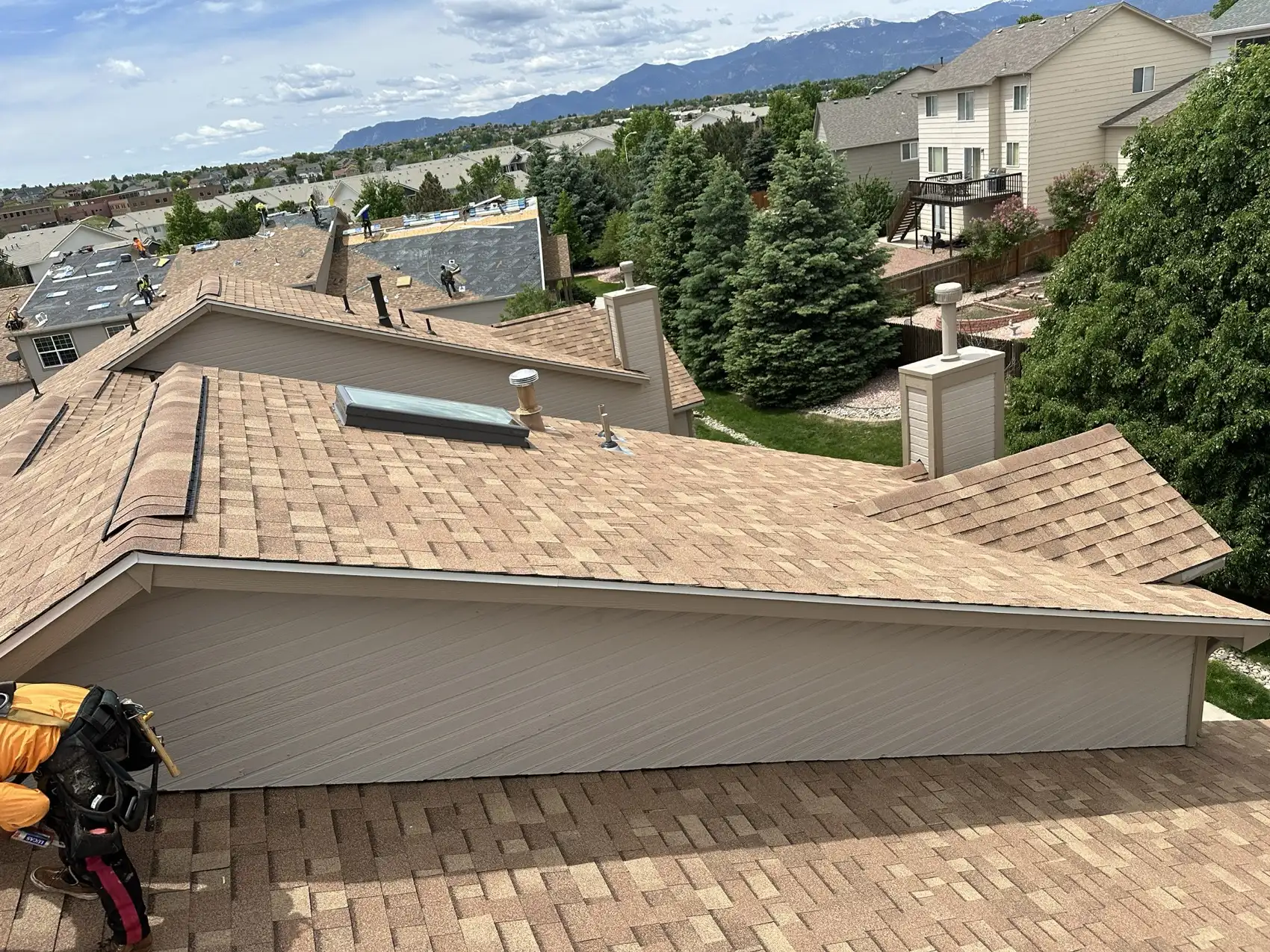
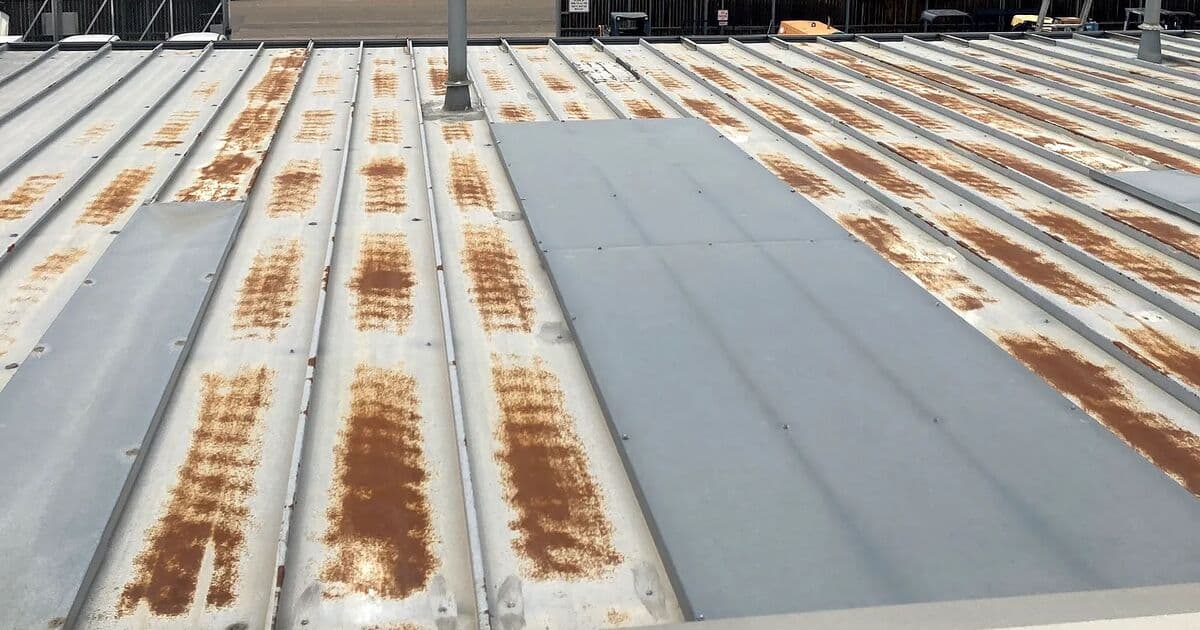
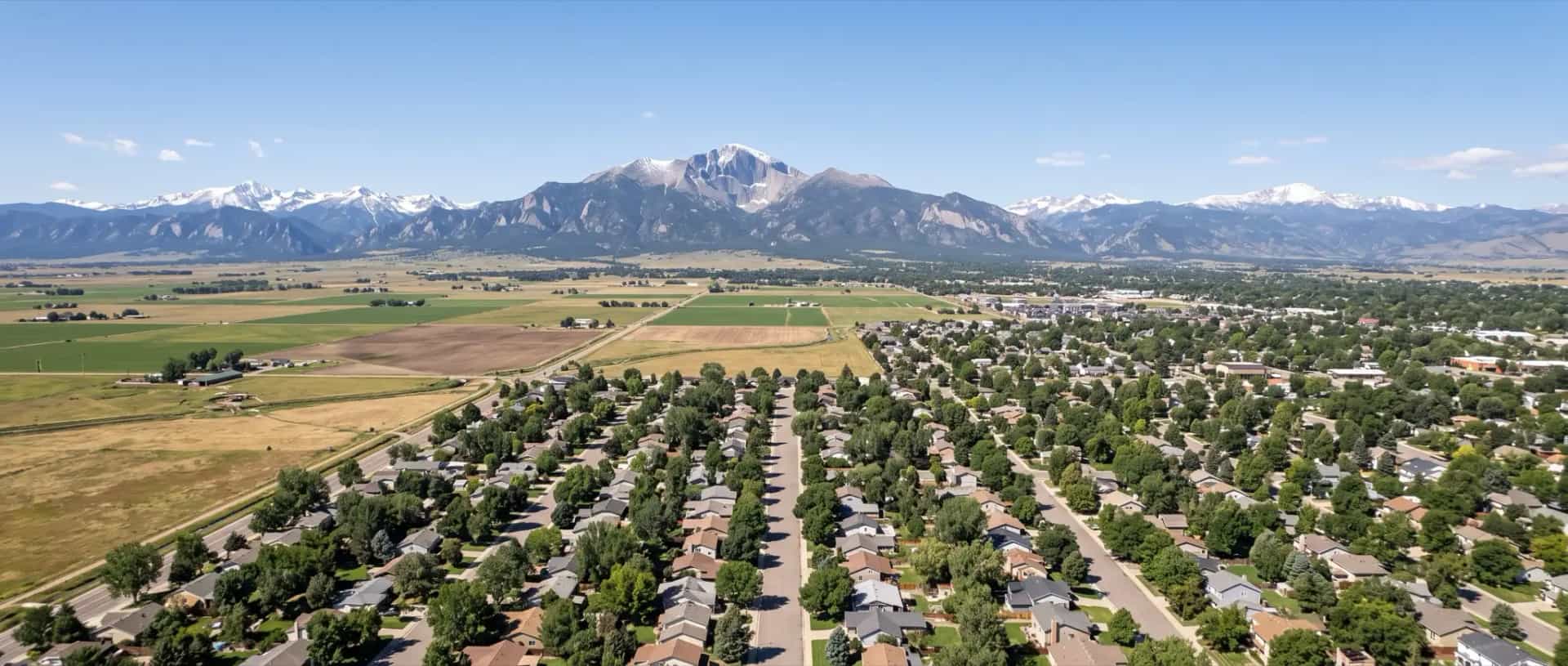
Longmont sits at about 4,980 feet where the St. Vrain Valley opens out of the foothills onto the plains, low enough to miss the deep mountain snow loads but squarely inside the Front Range hail corridor. That position matters for roofs in a specific way: storms build over the foothills to the west through the afternoon and then push east across the city, so Longmont catches cells at the point where they are strongest rather than after they have spent themselves crossing the plains. The 2013 flood reshaped how the city thinks about drainage, and on low-slope commercial roofs along the Ken Pratt corridor and the older industrial blocks near Main Street the failure we find most often is not impact damage at all but standing water at a blocked scupper or a tired lap seam. The building stock runs from the brick storefronts of Old Town and the light industrial and tech buildings east toward the airport, out to residential neighbourhoods spreading south and west toward Niwot and Gunbarrel.
Recorded Hail in Longmont
Between 2017 through 2026 the NOAA NCEI Storm Events Database recorded 30 reported hail events in Longmont, of which 23 produced stones of one inch or larger. The largest on record measured 1.75 inches on 9 May 2023. Longmont recorded two separate reported stones on 19 June 2018 within about twenty minutes of each other.
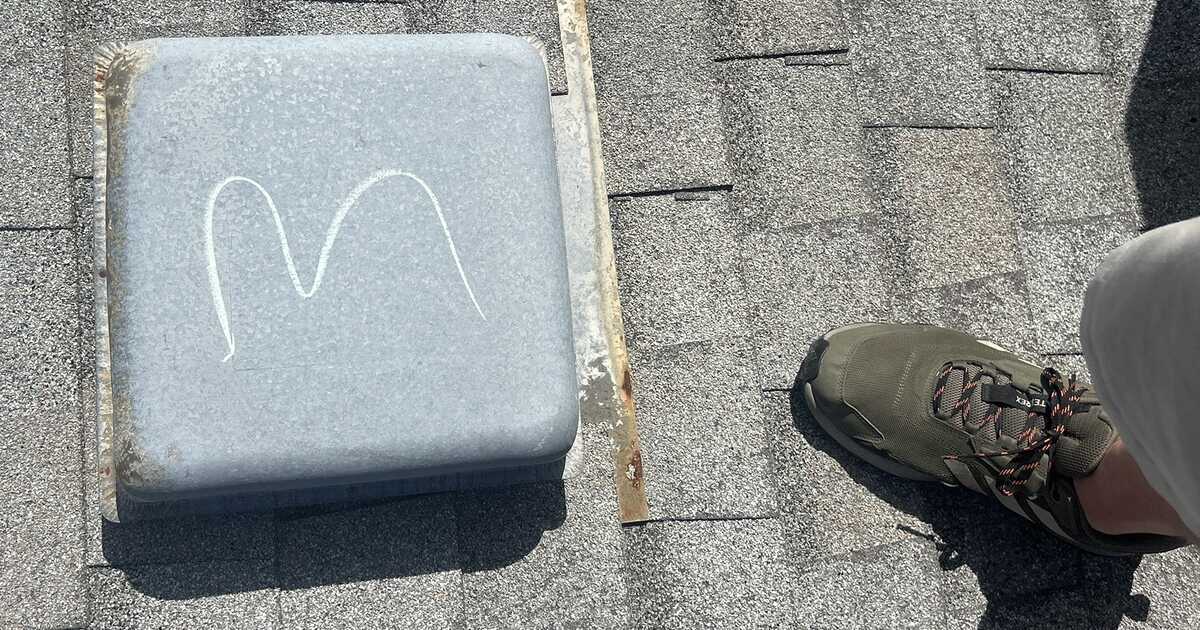
One inch is the size at which asphalt shingles typically start bruising, which is why that count matters more than the raw number of storms. Bruising fractures the mat under the granules and often leaves no obvious hole, so a roof can be functionally compromised while still looking intact from the driveway. That is what we look for on an inspection, and we photograph what we find so you have documentation before deciding anything.
Figures are reported events from the NOAA NCEI Storm Events Database, 2017 through 2026, retrieved August 2026. NCEI records storm reports filed for a named location, so the real number of hail events over any given roof may be higher than the reported count.
Roofing Codes and Permits in Longmont
Roofing work in Longmont is permitted and inspected by the City of Longmont Building Inspection (303-651-8332). Colorado has no statewide roofing code, so requirements are set jurisdiction by jurisdiction and genuinely differ between neighbouring towns. The details below are taken from the City of Longmont Building Inspection's published requirements.
Worth knowing in Longmont: Longmont splits almost every requirement by segment: homeowners may self-permit while commercial work requires a Class D-2 licensee, and commercial carries a minimum R-30 above-deck insulation requirement with no residential equivalent.
Commercial roofing code in Longmont
| Requirement | Requirement in Longmont |
|---|---|
| Adopted code | 2021 International Building Code and International Energy Conservation Code |
| Current codes effective | January 1, 2022 |
| When a permit is required | Repair under 100 square feet needs no permit. Beyond that the entire roof must be replaced, not just the affected plane. On commercial, cumulative membrane damage of 100 square feet or more requires the roof to be replaced in its entirety. |
| Ice barrier | Ice and water shield is required. Where the manufacturer's instructions and the code conflict, the more restrictive applies. |
| Overlay and recover | Residential overlays are prohibited and existing layers are removed completely. Commercial allows a maximum of one overlay and two layers. |
| Mid-roof inspection | Not required residentially except on flat roofs. Required on commercial built-up roofs, including a ladder, before dry-in and when above-deck insulation or sheathing is installed. |
Residential roofing code in Longmont
| Requirement | Requirement in Longmont |
|---|---|
| Adopted code | 2021 International Residential Code, chapter 9 |
| Current codes effective | January 1, 2022 |
| When a permit is required | Repair under 100 square feet needs no permit. Beyond that the entire roof must be replaced, not just the affected plane. On commercial, cumulative membrane damage of 100 square feet or more requires the roof to be replaced in its entirety. |
| Ice barrier | Ice and water shield is required. Where the manufacturer's instructions and the code conflict, the more restrictive applies. |
| Overlay and recover | Residential overlays are prohibited and existing layers are removed completely. Commercial allows a maximum of one overlay and two layers. |
| Mid-roof inspection | Not required residentially except on flat roofs. Required on commercial built-up roofs, including a ladder, before dry-in and when above-deck insulation or sheathing is installed. |
This is a summary to help you plan, not a compliance determination. The City of Longmont Building Inspection is the authority on what your specific roof requires, and we always confirm current requirements with them before we scope a job. Several Colorado jurisdictions changed their adopted codes during 2026, so we re-verify against each department's own published codes rather than working from memory. Source: City of Longmont Roofing Guidelines for Commercial and Residential Projects (read the source document). Last verified July 2026.
Wildfire code: what changes on a reroof
The 2025 Colorado Wildfire Resiliency Code applies inside mapped wildland-urban interface areas. Each jurisdiction declares and maps those areas itself and publishes the map, so whether a specific address falls inside one is checked against the local map. Where it applies, the rule that matters most on a reroof is the 25 percent threshold: where an existing roof is replaced, or 25 percent or more of the roof surface area is replaced, the entire roof covering must be brought up to the new-construction wildfire standard, unless the existing covering already complies.
The new-construction standard means roofs must have a covering or assembly classified Class A when tested to ASTM E108 or UL 790. Where the covering profile leaves a space above the deck, that space must resist flames and embers by noncombustible firestopping, an ASTM D3909 cap sheet over the combustible deck, or a listed Class A assembly. That last requirement catches tile and metal profiles, not just shingles, so it reaches commercial work as well as homes. We check the Longmont map before quoting, because it changes the scope rather than just the material.
For the full picture on storm-driven replacement, see our storm damage and insurance claim guidance.
Roofing Services We Provide in Longmont
- Commercial roofing services - TPO, EPDM, metal, modified bitumen and roof coatings for retail, office and light industrial buildings, including low-slope drainage corrections.
- Residential roofing - asphalt shingle including Class 4 impact-resistant products, metal, tile, and synthetic slate and shake.
- Storm and insurance claim support - free damage documentation and adjuster coordination for both commercial property claims and residential homeowner claims, which are scoped and settled differently.
- Roof repair and full replacement - year-round, not only after storms.
Nearby Front Range Communities We Serve
Frequently Asked Questions
If part of my Longmont roof is damaged, can I just repair that section?
Usually not. Longmont has enforced a one-square rule since 2012: if more than 100 square feet of roofing needs repair or replacement, the entire roof must be replaced, not just the affected plane. On commercial buildings the same logic applies to cumulative membrane damage of 100 square feet or more. It is the single most important rule to understand before you agree to a repair scope on a hail claim.
Who is allowed to pull a roofing permit in Longmont?
A homeowner may self-permit residential work. Commercial roofing requires a Class D-2 licensee. That difference catches people out on mixed-use and small multi-family buildings, so we confirm which path a building falls under before quoting.
Can I put a new roof over the old one in Longmont?
It depends on the segment. Residential overlays are prohibited and existing layers must be removed completely for asphalt shingles. Commercial allows a maximum of one overlay and two layers total. Commercial reroofs also carry a minimum R-30 above-deck insulation requirement that has no residential equivalent.
Does Longmont require ice and water shield?
Yes. Longmont requires ice and water shield, and where the manufacturer's installation instructions and the code conflict, the more restrictive requirement applies. Drip edge is required at both eaves and rakes.
Will my Longmont roof need a mid-roof inspection?
Residential roofs do not, except flat roofs. Commercial built-up roofs do, including a ladder, and the inspection is required before dry-in and when above-deck insulation or sheathing is installed. That changes the sequencing on a commercial job and we plan for it rather than discovering it.
How much hail does Longmont actually get?
The NOAA NCEI Storm Events Database records 30 reported hail events in Longmont between 2017 and 2026, 23 of which produced stones of one inch or larger. The largest on record was 1.75 inches on 9 May 2023. One inch is roughly where asphalt shingles begin to bruise, so that second number is the one that matters.
How soon after a storm should I get my Longmont roof inspected?
As soon as it is safe, ideally within a day or two. Early documentation preserves the evidence a claim depends on and gives you time to choose an established contractor rather than a door-knocking storm chaser. Our Longmont inspections are free and no-obligation.
See all roofing FAQs. Grouped by topic: commercial and residential decisions, cost, insurance claims, storm response, warranties, and financing.
← Back to our Denver office (5300 Broadway, Denver, CO 80216, (720) 893-7663)