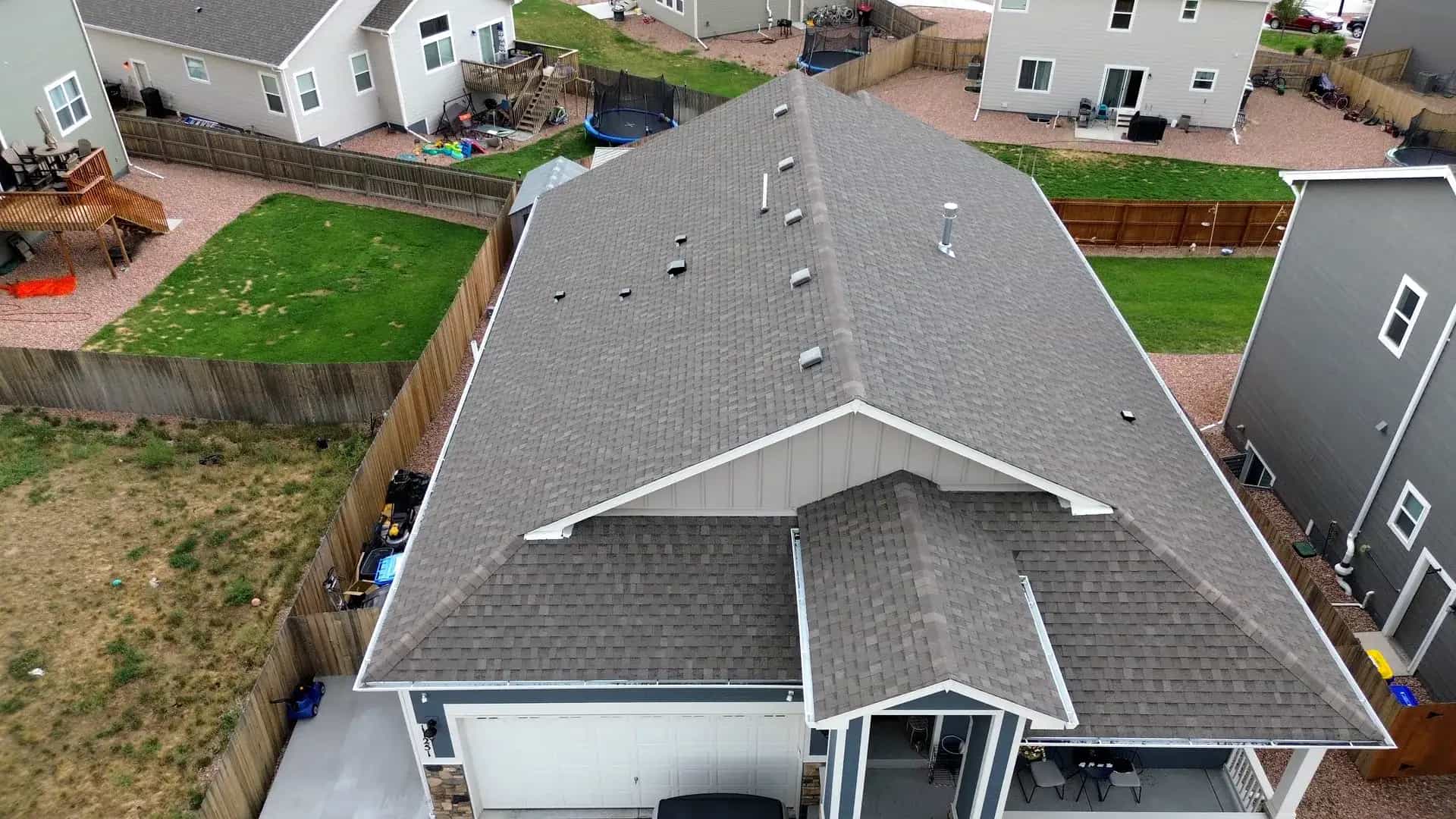
Architectural asphalt shingles are the most common residential roofing material in Colorado, typically costing $4.50 to $7.00 per square foot installed and lasting 15 to 25 years in this climate. For hail-prone areas of the Front Range, Class 4 impact-resistant shingles cost 10 to 20 percent more but often qualify for insurance premium discounts. We install GAF, Owens Corning, CertainTeed, and Malarkey shingle systems from Denver and Grand Junction.
Commercial Roofing Contractor installs and replaces asphalt shingle roofs on homes across Colorado and the Nebraska Panhandle, from standard architectural shingles to Class 4 impact-resistant upgrades. As a GAF Certified Plus contractor, we install manufacturer-backed shingle systems built for the Front Range, the Western Slope, and the Nebraska Panhandle, from our Denver, Grand Junction, and Scottsbluff offices.
Architectural Asphalt Shingles: The Colorado Standard
Architectural, or dimensional, asphalt shingles are the most widely chosen residential roofing material in Colorado. They are thicker and more durable than older 3-tab shingles, with a layered look, strong wind resistance, and a wide range of styles and colors. Modern architectural shingles typically last 25 to 30 years nationally, though Colorado's high-altitude UV, hail, and freeze-thaw cycling tend to shorten that to roughly 15 to 25 years in practice.
Manufacturers and Warranties We Install
We are a GAF Certified Plus contractor, and we install premium architectural shingle systems from GAF, Owens Corning, CertainTeed, and Malarkey, with manufacturer warranty coverage ranging from 30 to 50 years depending on the product line and installation certification.
Class 4 Impact-Resistant Shingles
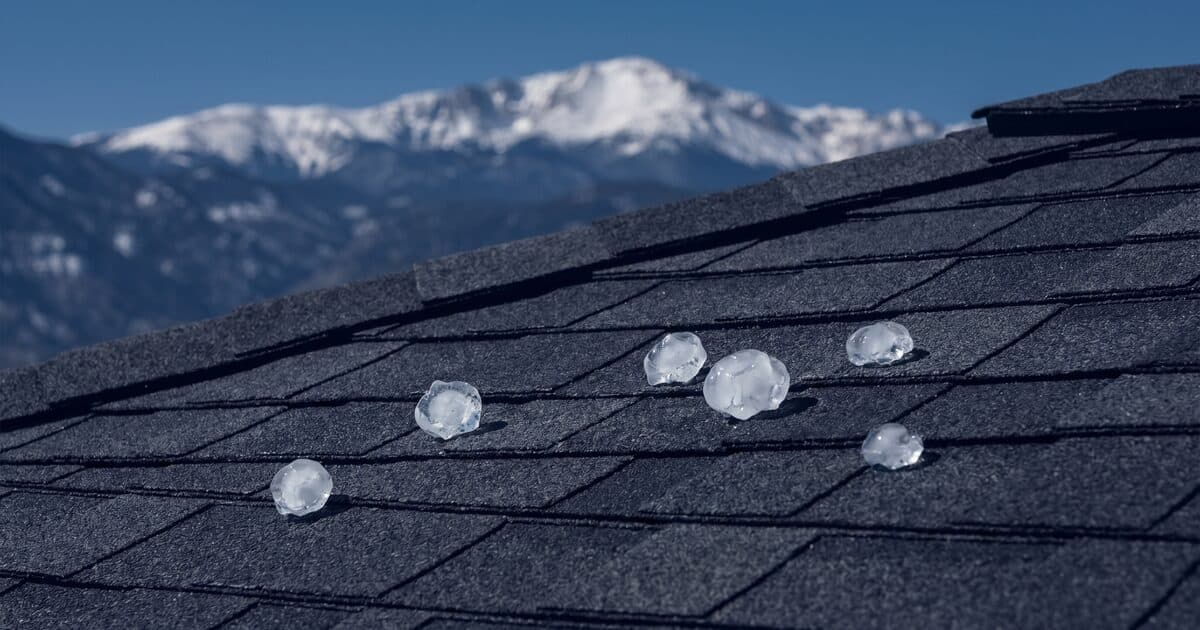
If you live anywhere along Colorado's Front Range, hail is not a question of if but when. Class 4 is an impact-resistance rating from UL 2218, a standard from Underwriters Laboratories in which a steel ball is dropped from a set height onto the roofing material to simulate hail impact. Materials are rated Class 1 through Class 4, with Class 4 the highest: a Class 4 shingle must resist cracking, splitting, or rupture of its reinforcing mat after impact. A related standard, FM 4473, uses launched ice balls instead of a steel ball; both are recognized by insurers as impact-resistance tests.
We install Class 4 impact-rated lines from GAF, Malarkey, TAMKO, and IKO, including Malarkey's NEX polymer-modified shingles built for impact resistance in hail-prone markets. A Class 4 shingle does not make a roof hail-proof, but it sharply reduces the odds of functional damage from the small-to-moderate hail that hits the Front Range most years.
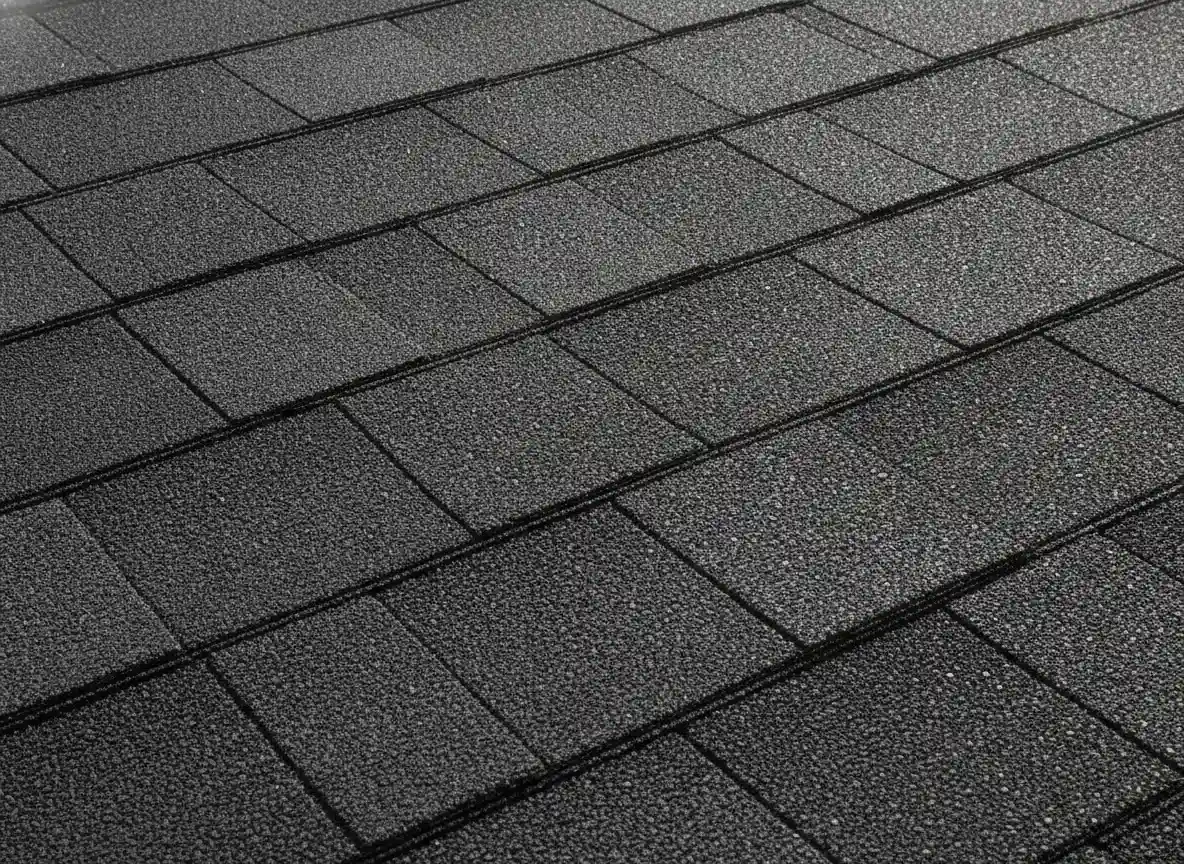
Impact-Rated Shingle
Class 4 Impact-Resistant Texture
UL 2218 tested to resist a 2-inch steel ball dropped from 20 feet, its dimensional granulated surface resists cracking and splitting on impact, and it often qualifies for Colorado insurance premium discounts.
The Insurance Discount
Because Class 4 roofs file fewer hail claims, several major carriers reward them with premium discounts. Reported programs include State Farm (up to roughly 35 percent in high-hail areas), USAA (up to about 15 percent), Farmers (agent-reported up to about 27 percent), American Family (a reduced rating for impact-resistant roofs), and Allstate (a discount without a publicly listed percentage). Treat these as reported ranges, not promises: the exact figure depends on your carrier, policy, and location, and several roofing sources put typical Colorado savings at roughly $200 to $700 per year, with break-even on the upgrade often landing in 3 to 7 years. Carriers generally require manufacturer certification that the installed product is a genuine UL 2218 Class 4 shingle, which we supply at installation.
Where the Math Works Hardest
Class 4 pays off fastest where hail is most frequent: the Castle Rock through southeastern Denver into Aurora corridor, Denver Metro suburbs like Lakewood, Thornton, and Westminster, Colorado Springs, and Greeley and Weld County, which regularly top the state for total hail reports. On the Western Slope around Grand Junction, hail exposure is generally lower, so the payback depends more on your specific premium and carrier discount.
Standard vs Class 4: Cost and Payback
| Shingle type | Impact resistance | Typical lifespan | Relative cost |
|---|---|---|---|
| 3-tab asphalt | Lowest, prone to hail cracking | About 15 to 20 years | Lowest |
| Architectural (dimensional) | Better than 3-tab, not impact-rated | About 25 to 30 years | Mid |
| Class 4 impact-rated | Highest (UL 2218 Class 4) | Comparable to or better than architectural | About 10 to 20% more than architectural |
For most homeowners already replacing a roof, the marginal cost of stepping up to Class 4 is small relative to the added protection and the recurring premium discount, especially in a high-frequency hail zone. If you are replacing a roof after a storm, claim proceeds can often cover the Class 4 upgrade at the same time; see our roof insurance claims page for how that process works.
Signs You Need a Shingle Roof Replacement
- Age. Most asphalt roofs in Colorado only last 15 to 25 years given local UV and hail exposure.
- Granule loss. Widespread granules collecting in gutters signal shingles are wearing thin.
- Curling or cracked shingles. A sign the shingles have aged past their protective life.
- Missing shingles after wind. Exposed underlayment and decking invite leaks.
- Daylight or water stains in the attic. Evidence water is already getting through.
- A sagging roofline. A structural warning sign that needs prompt inspection.
Asphalt Shingles vs Metal Roofing
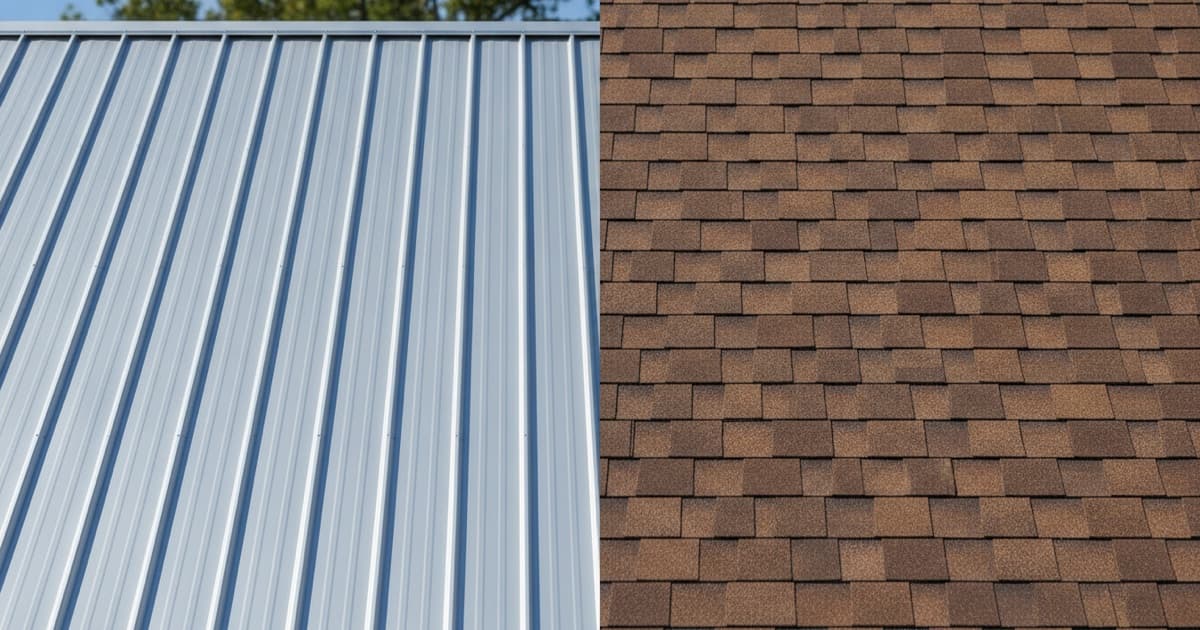
Asphalt shingles cost less upfront, roughly $4.50 to $7.00 per square foot installed, and last 15 to 25 years in Colorado's climate. Metal roofing costs about two to three times more, roughly $9 to $16 or more per square foot, but lasts 40 to 70 years and handles hail by denting rather than cracking. The right choice depends on your budget, how long you plan to stay in the home, and your HOA's requirements.
Asphalt Shingle Roofing in Scottsbluff and the Nebraska Panhandle
Shingle roofs on the western Nebraska plains face a different mix of stresses than Front Range roofs do. The Panhandle sits high and dry, so the governing problems are wind uplift off open ground and the ultraviolet load that dries a mat out and leaves granules loose years before the warranty period is up. Ridges, rakes, and the first courses above an eave are where that shows first, which is why we set starter strips and hip and ridge with the manufacturer's own components rather than cut three-tab, and nail to the high-wind pattern rather than the field-standard one.
Hail is the other half of the picture, and it is the reason a Class 4 upgrade is usually worth pricing here rather than assuming it is a Colorado-only conversation. Our Scottsbluff office handles shingle work across Gering, Terrytown, Mitchell, Minatare, Morrill, Bayard, and Bridgeport, and inspections are free. Nebraska insurers write hail differently than Colorado carriers do, so if a storm is already involved, start with our Nebraska Panhandle claims guide before a roof is torn off.
Our Shingle Replacement Process
- Free inspection. We assess your existing roof's condition, decking, and whether Class 4 makes sense for your location and carrier.
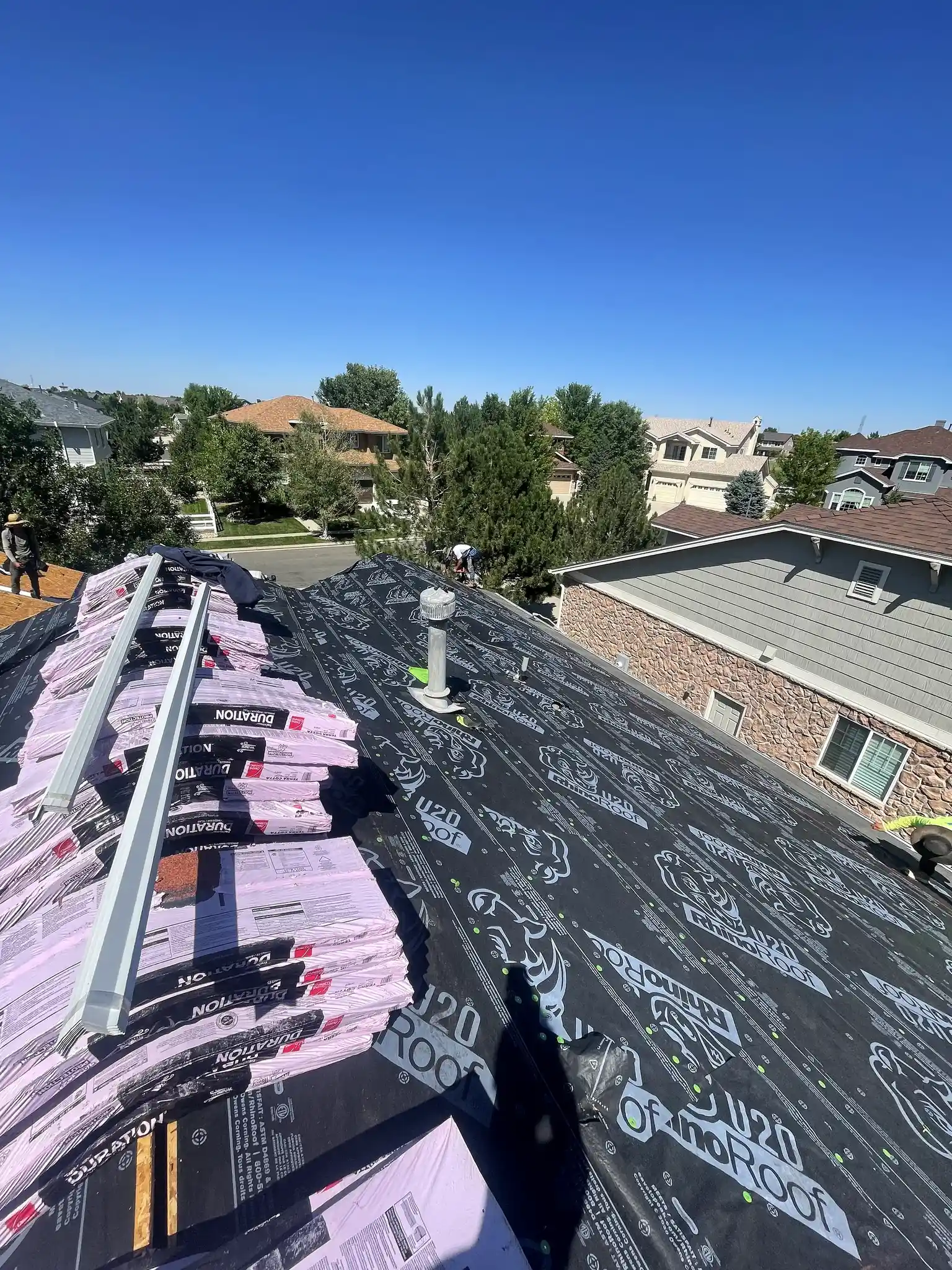
- Tear-off. The old shingles and underlayment are removed down to the deck.
- Synthetic underlayment. A synthetic underlayment is installed for a stronger moisture barrier than traditional felt.
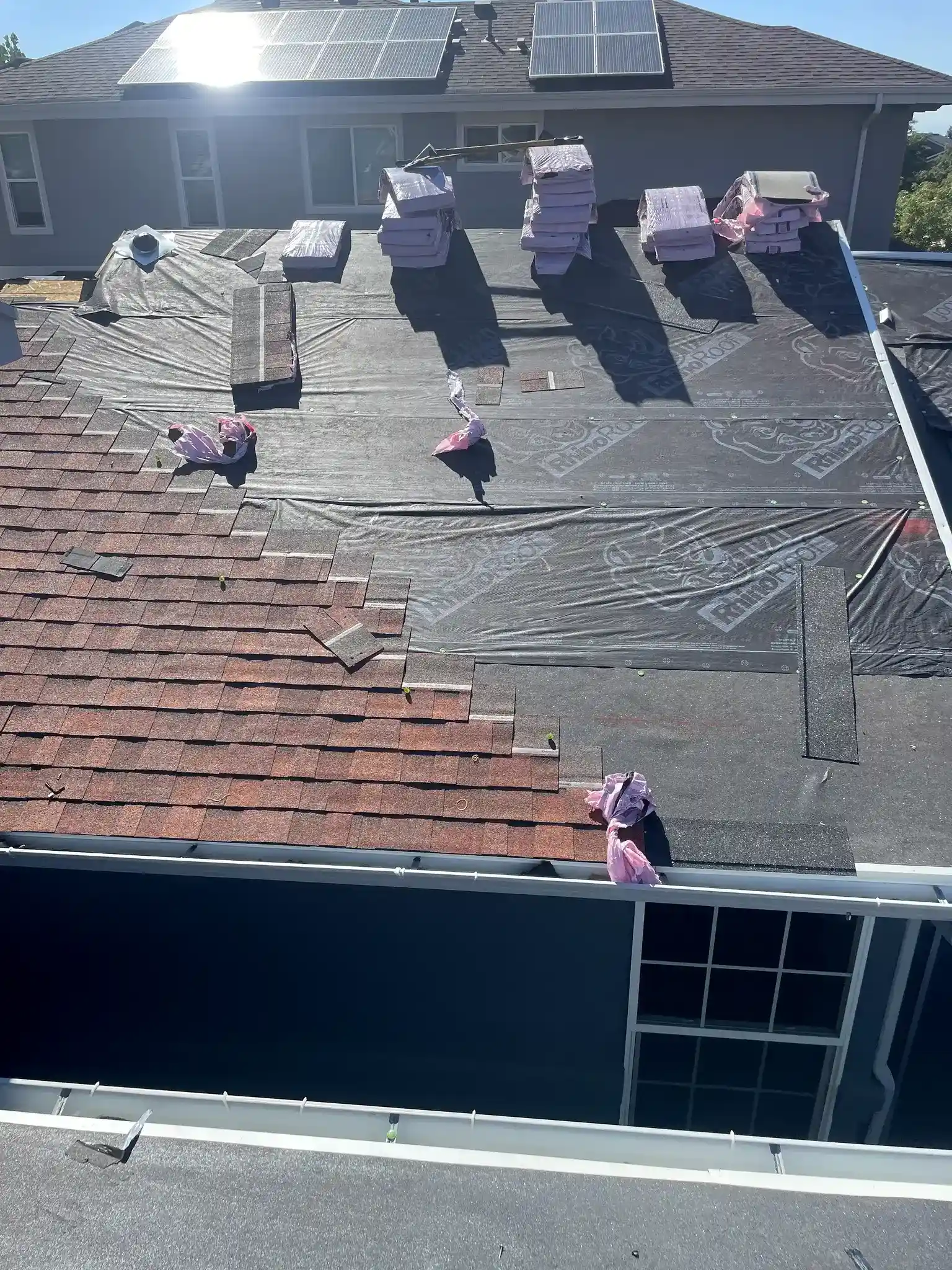
- Shingle installation. New architectural or Class 4 shingles are installed to manufacturer specification, which is what keeps the warranty valid.
- Cleanup and inspection. The site is cleaned of debris and the finished roof is inspected and registered for its manufacturer warranty.
Frequently Asked Questions About Asphalt Shingle Roofing
What is the difference between architectural and 3-tab shingles?
3-tab shingles are a flat, single-layer, budget-tier product that typically lasts 15 to 20 years and offers the lowest impact resistance. Architectural (dimensional) shingles are thicker, layered for a dimensional look, and typically last 25 to 30 years with better wind and impact performance than 3-tab. Architectural shingles are the standard choice on most homes in our service area today.
Are Class 4 impact-resistant shingles worth it in Colorado?
For most Front Range homeowners, yes. Class 4 shingles cost roughly 10 to 20 percent more than standard architectural shingles but resist hail far better and often qualify for insurance premium discounts. In high-frequency hail zones like the Castle Rock to Aurora corridor, the combination of fewer claims and annual premium savings usually offsets the upgrade within a handful of years. See our full breakdown in the Class 4 section below.
How long do asphalt shingles last in Colorado's climate?
Standard architectural asphalt shingles typically last 15 to 25 years in Colorado, on the shorter end of national averages because high-altitude UV, hail, and dramatic freeze-thaw swings age roofs faster here than in milder climates. Class 4 impact-resistant shingles perform comparably to or better than standard architectural shingles for lifespan, with the added benefit of stronger hail resistance.
Will Class 4 shingles get me an insurance discount?
Often, yes, though the amount depends on your carrier, policy, and location. Several Colorado-active carriers offer impact-resistant roofing discounts, with reported credits ranging from roughly 10 percent up to about 35 percent in high-hail areas on a portion of the premium. Carriers generally require manufacturer certification that the installed shingle is a genuine UL 2218 Class 4 product, which we provide at installation.
Asphalt shingles or metal roofing, which is better for my home?
Asphalt shingles cost less upfront (roughly $4.50 to $7.00 per square foot installed) and last 15 to 25 years, while metal costs about two to three times more and lasts 40 to 70 years. Metal handles hail by denting rather than cracking and sheds snow well, but dents can be a cosmetic and insurance consideration. The right choice depends on your budget, how long you plan to stay in the home, and your HOA rules. See our metal roofing systems for a full comparison.
What does a shingle roof replacement cost in Colorado?
A full asphalt shingle roof replacement in Colorado typically runs about $4.50 to $7.00 per square foot installed, which puts most single-family homes in the $9,000 to $20,000 range depending on roof size, pitch, decking condition, and whether Class 4 shingles are specified. A common 2,000-square-foot roof usually lands around $10,500 to $16,000 for architectural shingles with tear-off. If your replacement is tied to a hail insurance claim, we manage that process alongside the installation. Denver metro: (720) 893-7663. Western Slope: (970) 877-7663. Nebraska Panhandle: (308) 536-7663.
See all roofing FAQs. Grouped by topic: commercial and residential decisions, cost, insurance claims, storm response, warranties, and financing.
Related Resources
CRC Serving You From Three Offices
Available from all three offices: Denver, Grand Junction, and Scottsbluff, plus surrounding service areas.
Denver Office
Denver Metro and Front Range
(720) 893-7663
Grand Junction Office
Western Slope
(970) 877-7663
Scottsbluff Office
Nebraska Panhandle
(308) 536-7663