Commercial Roofing Project
Industrial Metal Roof Panel Replacement in Denver, CO
By Commercial Roofing Contractor, project management team · October 27, 2026
- Industrial Roofing
- Metal Roof Panel Replacement
- Galvalume
- Denver
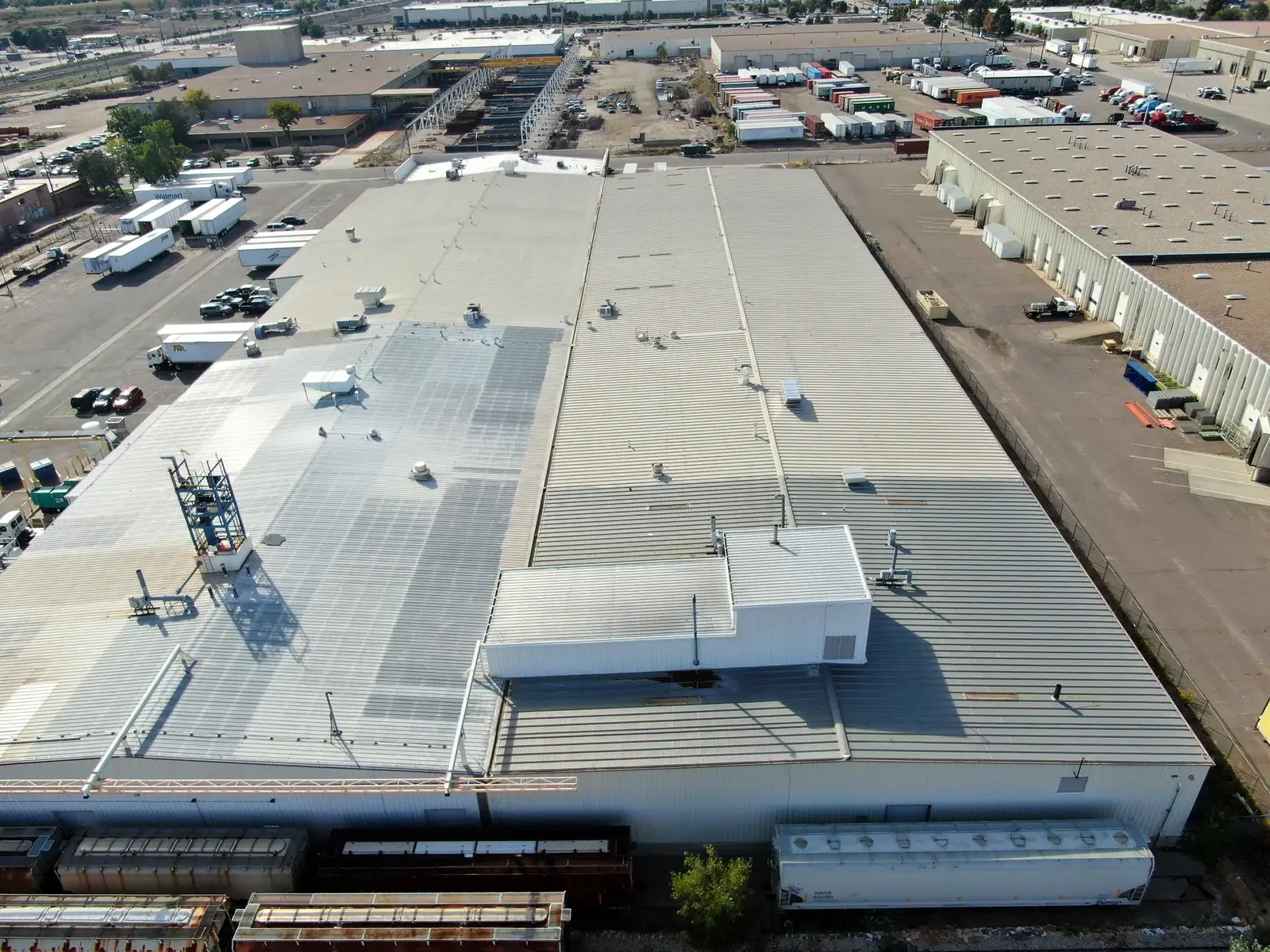
Project Capsule: An industrial chemical facility in Denver needs to replace three large chemical vats, and the only way out for vats that size is up through the roof. CRC inspected the building and scoped the roof side of the job: take two metal roof sections off beside the penthouse, leave the opening while the owner's contractor cranes the old vats out and the new ones in, then close it back up with new insulation and new 24-gauge Galvalume panels. This job is quoted and scheduled around the vat work; it has not been built yet, and we will update this page with photos when it is.
Project Facts
| Status | Inspected and quoted; install timed to the owner's vat replacement |
| Location | Industrial district in northeast Denver, Colorado (80239) |
| CRC office | CRC Denver Office |
| Building type | Industrial chemical facility with rail service, roughly 25 to 30 feet to the eave |
| Existing roof | Ribbed metal panels at a 1/12 pitch over two ridges, 135,395 square feet in total with 30 rooftop penetrations (EagleView measurement) |
| Scope | Two sections on the east edge by the penthouse, roughly 3,500 to 3,700 square feet, confirmed by field measurement before material is ordered |
| Roof system to install | R-30 polyiso insulation in two staggered layers under a high-temperature self-adhered underlayment, then 36 new 24-gauge Galvalume Max-Rib panels, each an estimated 65 to 68 feet long, with butyl-taped side laps, foam closures, and new headwall flashing at the penthouse |
| Equipment | A 60-ton crane on the exterior, provided by the facility; work follows the facility's and OSHA's safety requirements; all roof work done from above, no interior scaffolding |
| Warranty | CRC 10-year workmanship warranty, plus the panel manufacturer's Galvalume warranty |
Can part of a metal roof be taken off so large equipment can be lifted out?
That is the plan at this Denver chemical facility: CRC removes two metal roof sections beside the penthouse in one day, the owner's contractor lifts out and replaces three large chemical vats through the opening, and CRC then installs new insulation and new 24-gauge Galvalume panels over the same footprint in two days.
How do 65-foot metal roof panels get onto an industrial roof?
On this job, by crane. The new Max-Rib panels run an estimated 65 to 68 feet, ridge to eave plus overhang, onto a roof roughly 25 to 30 feet high, so the facility is bringing in a 60-ton crane to lift the old panels off and land the new ones, with a spreader bar expected to keep panels that long from bending in the lift.
Why Three Chemical Vats Mean the Roof Has to Come Off
Most roof projects start with a roof problem. This one starts with what is underneath it. The facility runs large chemical storage vats, and three of them are due to be replaced. They are too big to come out through a door, so the plan is to lift them straight up and out through the roof, and that means a section of a working industrial roof has to come off and go back on without leaving the plant exposed any longer than it has to be.
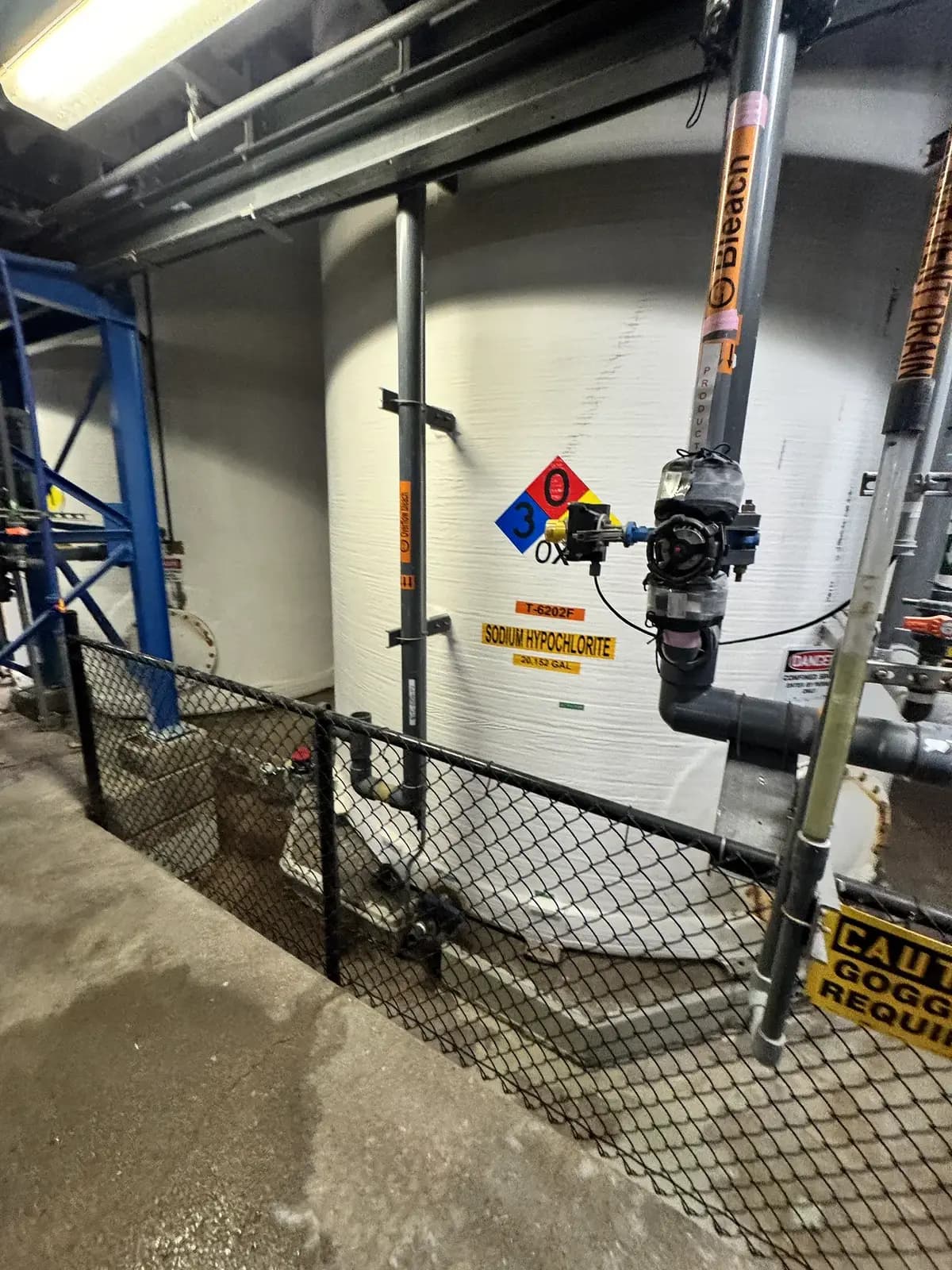
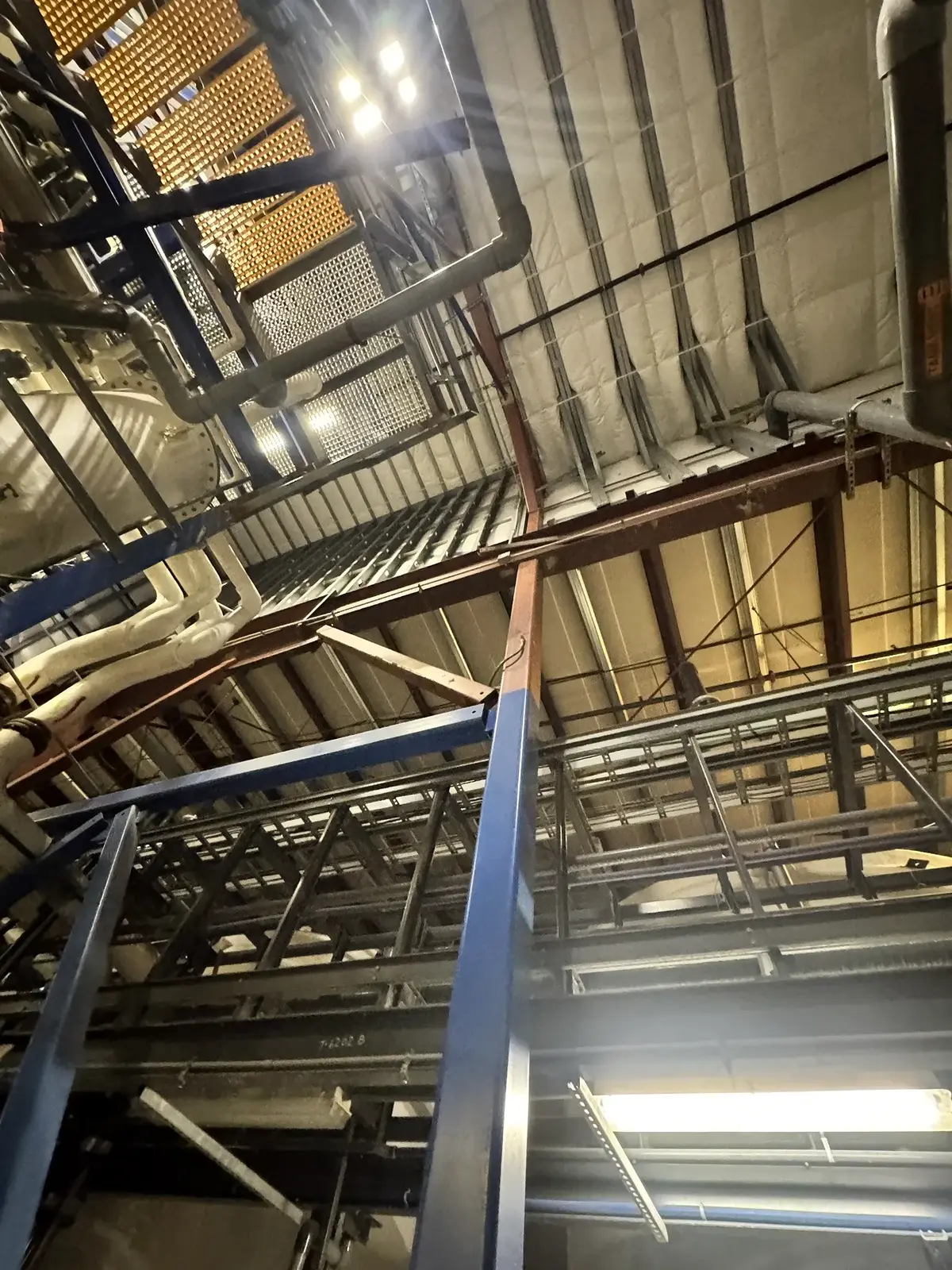
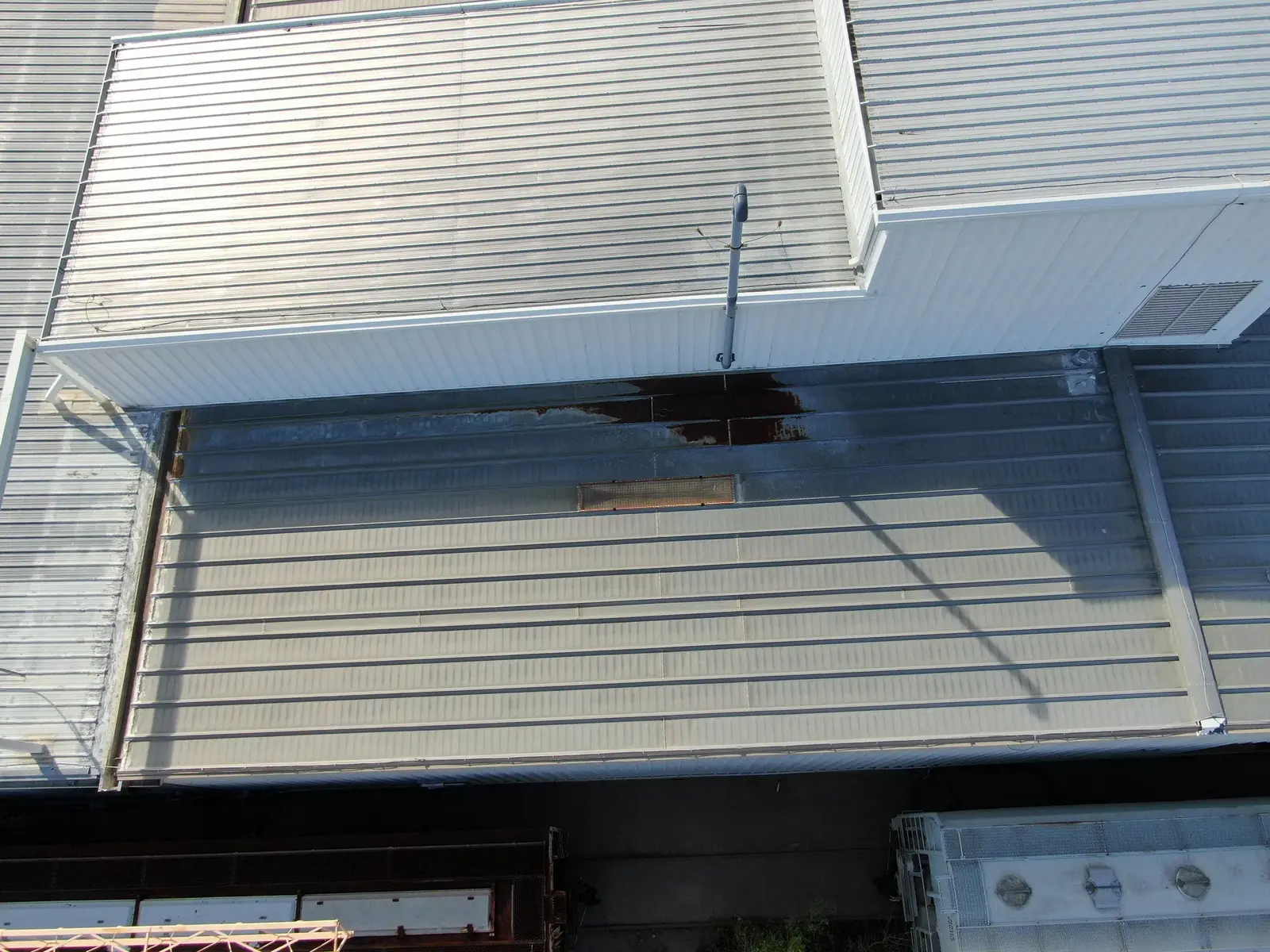
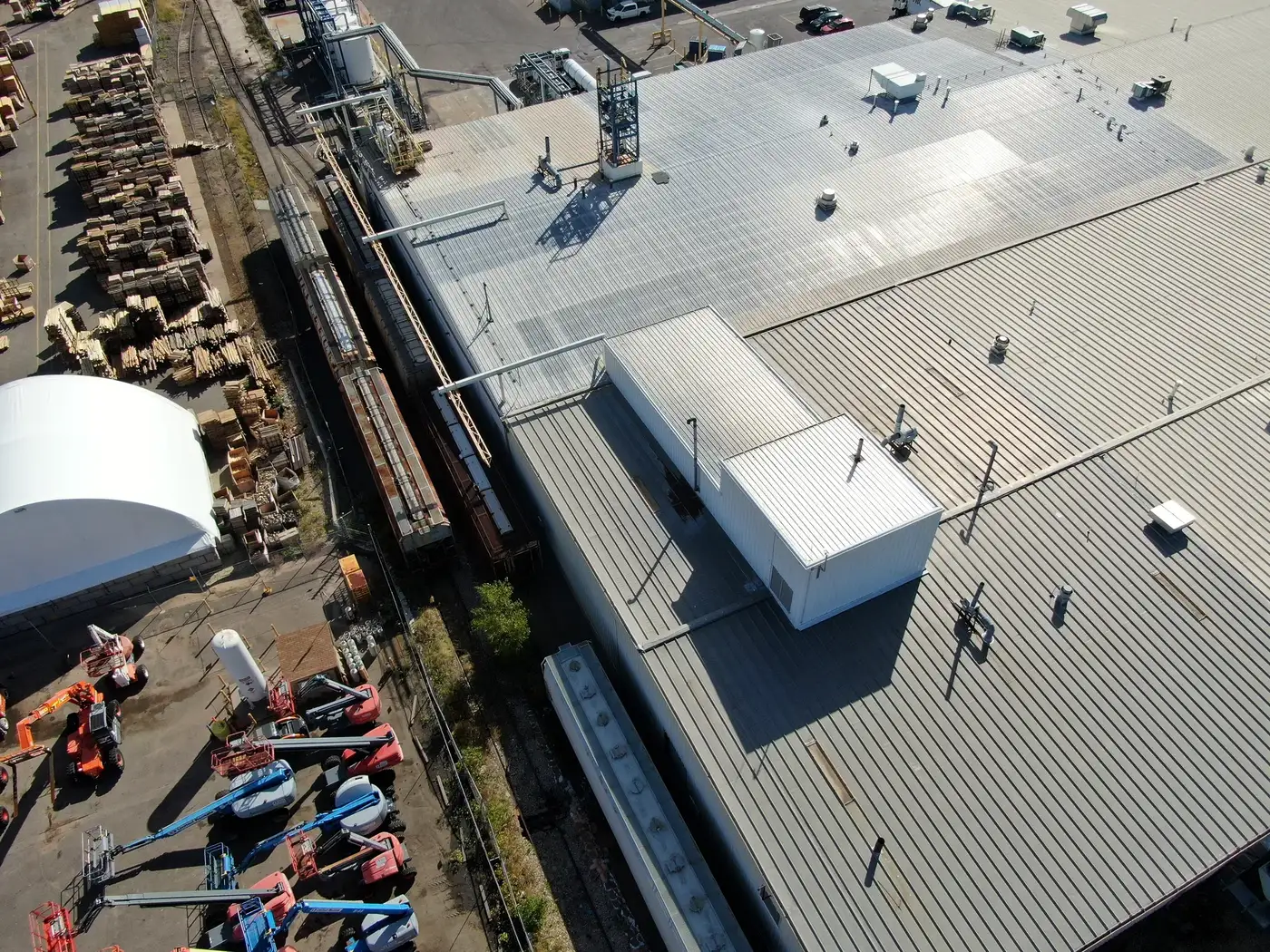
CRC's part is the roof, not the vats. The owner's own contractor handles removing and replacing the vats. Our job is to open the roof in the right place, keep that window as short as the vat schedule allows, and then give the building a better roof over that area than it had before. The building is close to 530 feet long and its whole roof covers 135,395 square feet, measured by EagleView, at a shallow 1/12 pitch, so the scope had to be drawn precisely: two sections, under 3 percent of the roof, on the east edge by the penthouse, directly over the vats.
What Our Metal Roof Inspection Found
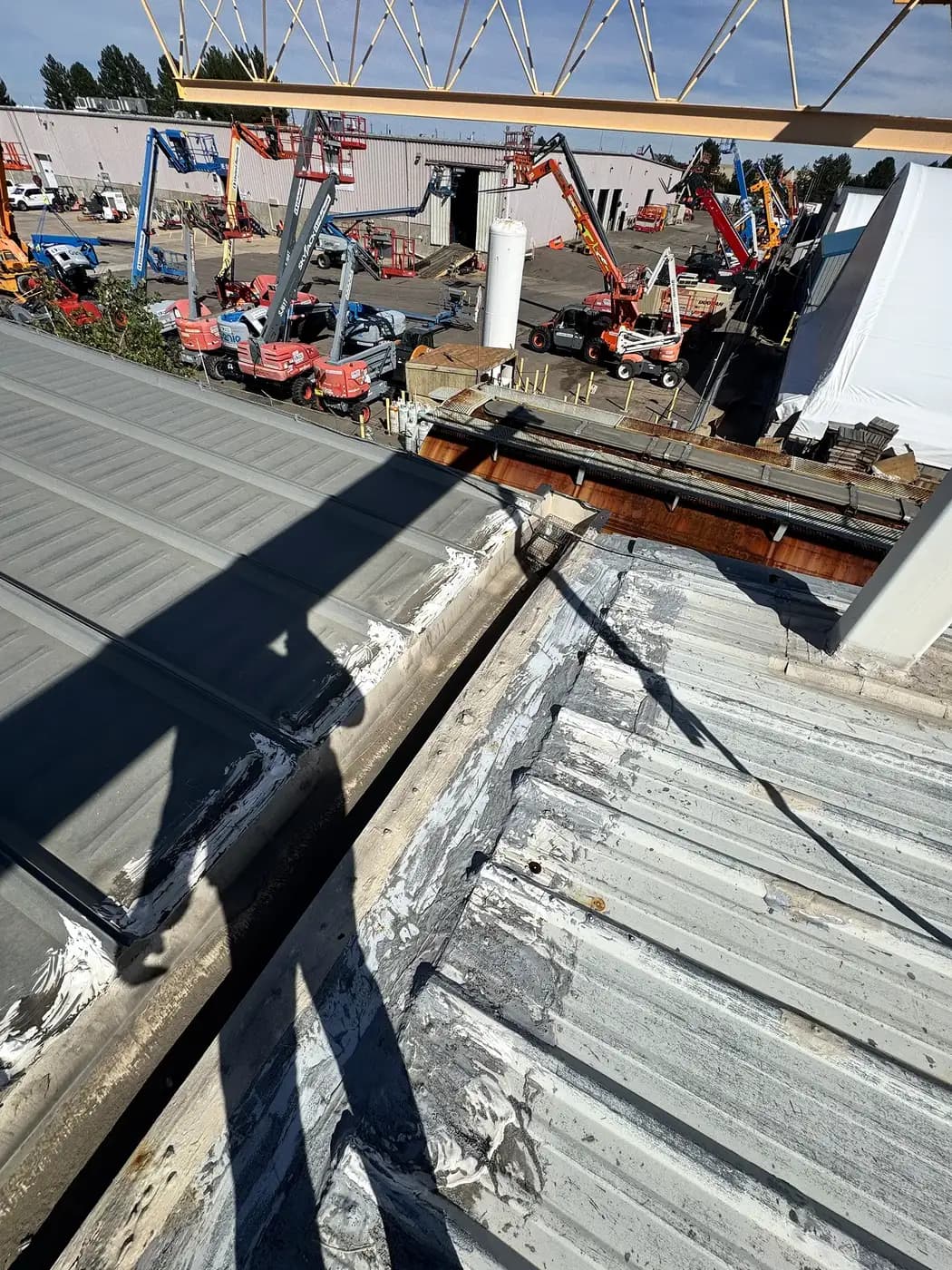
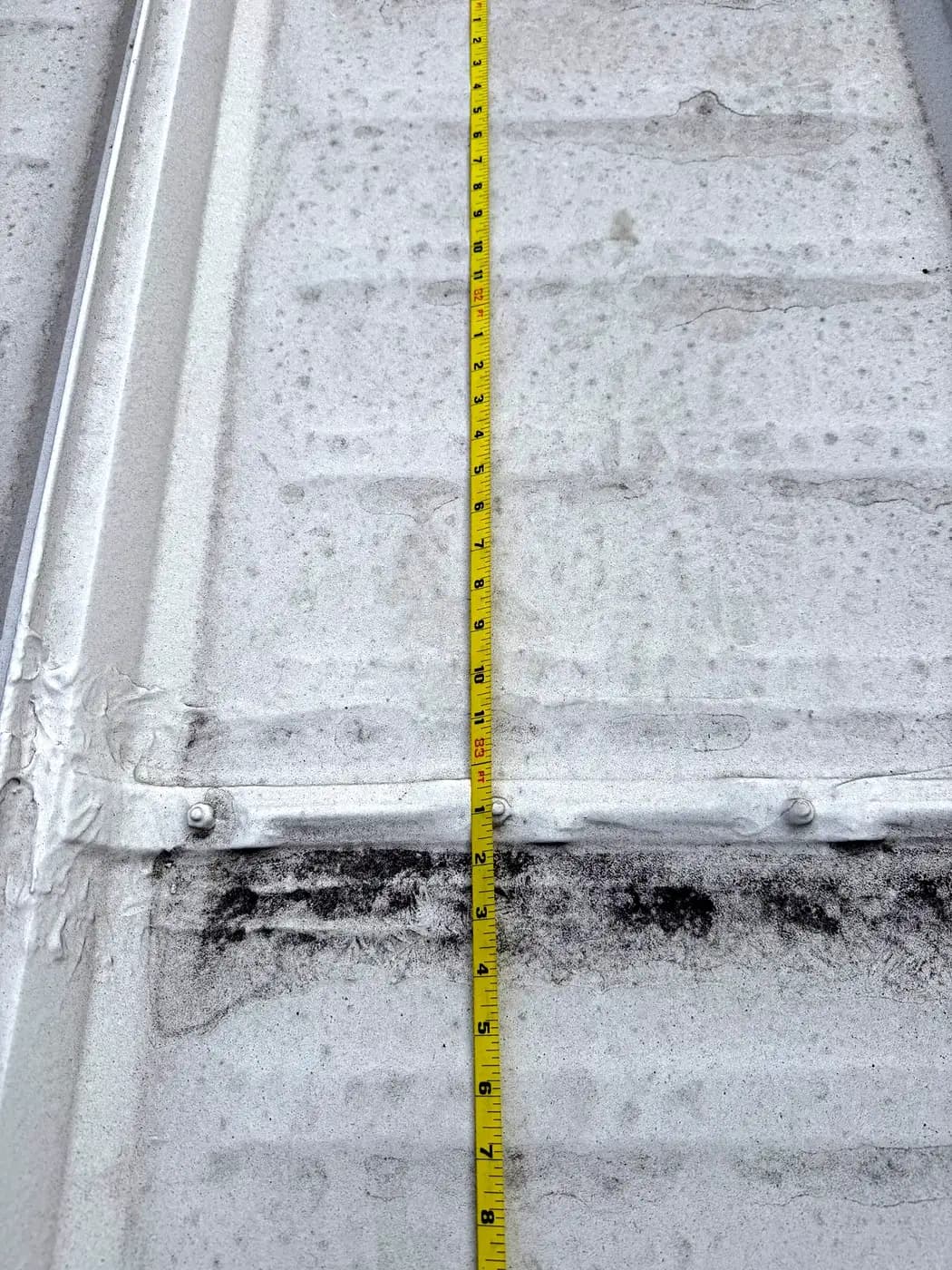
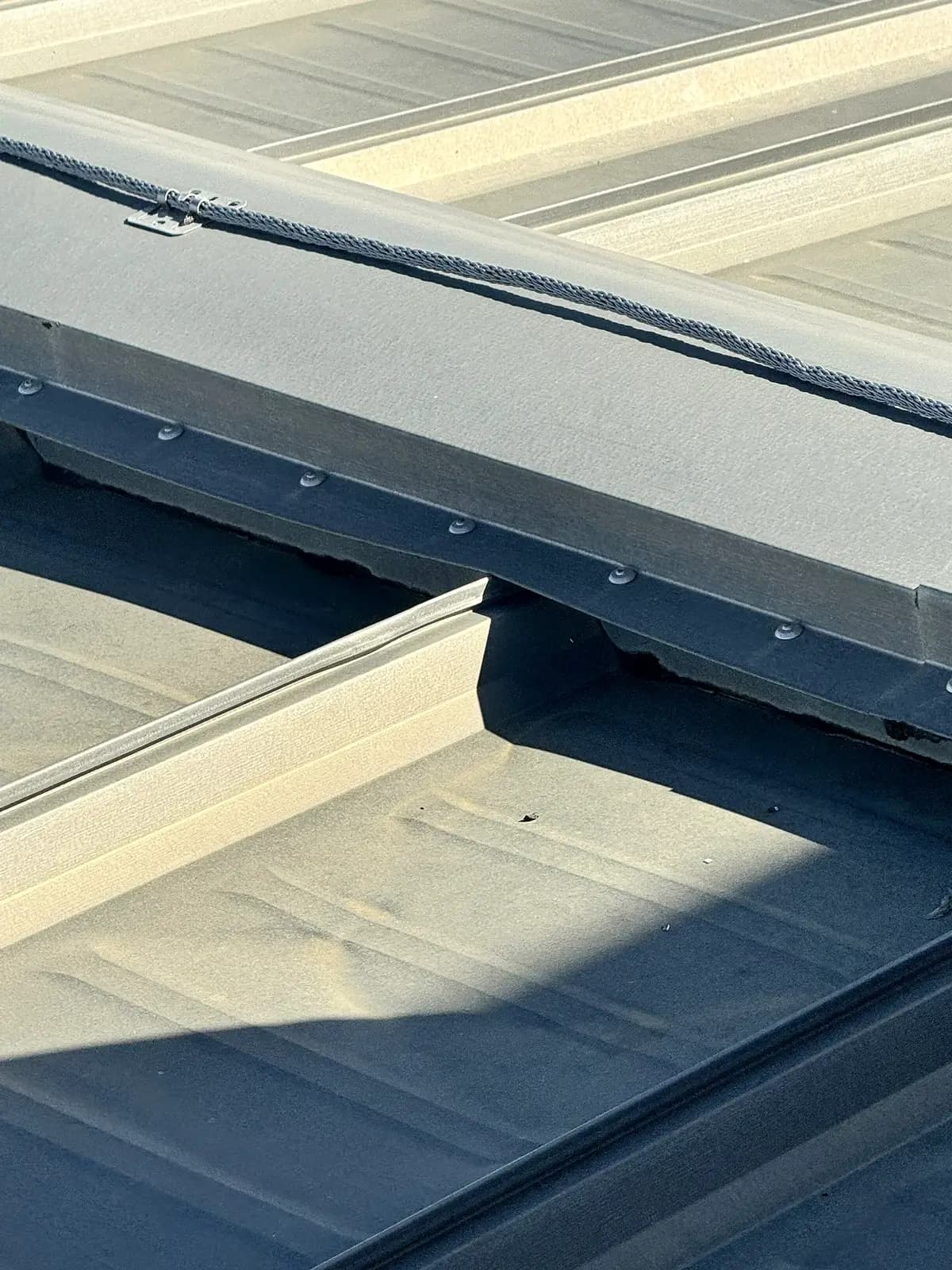
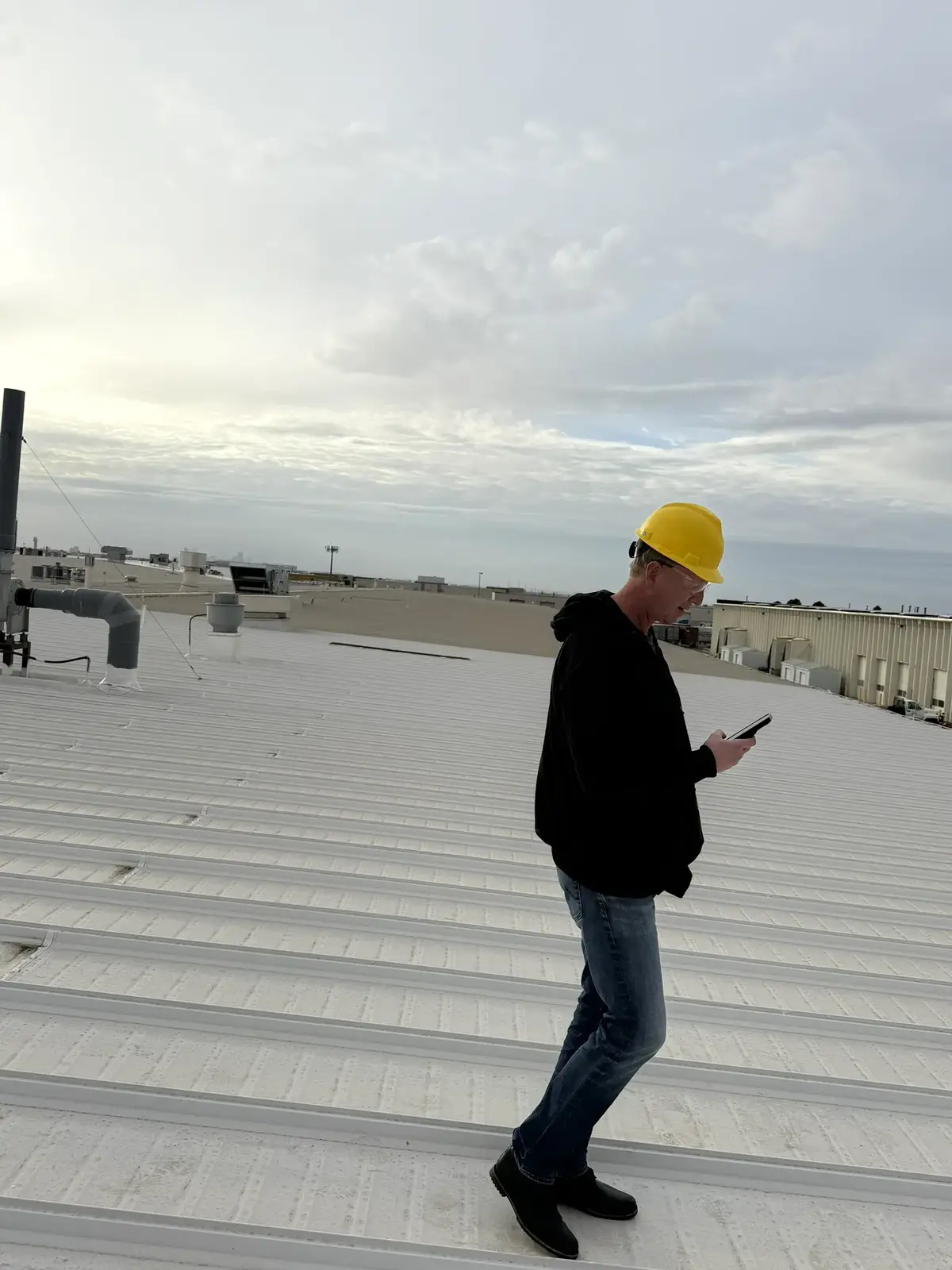
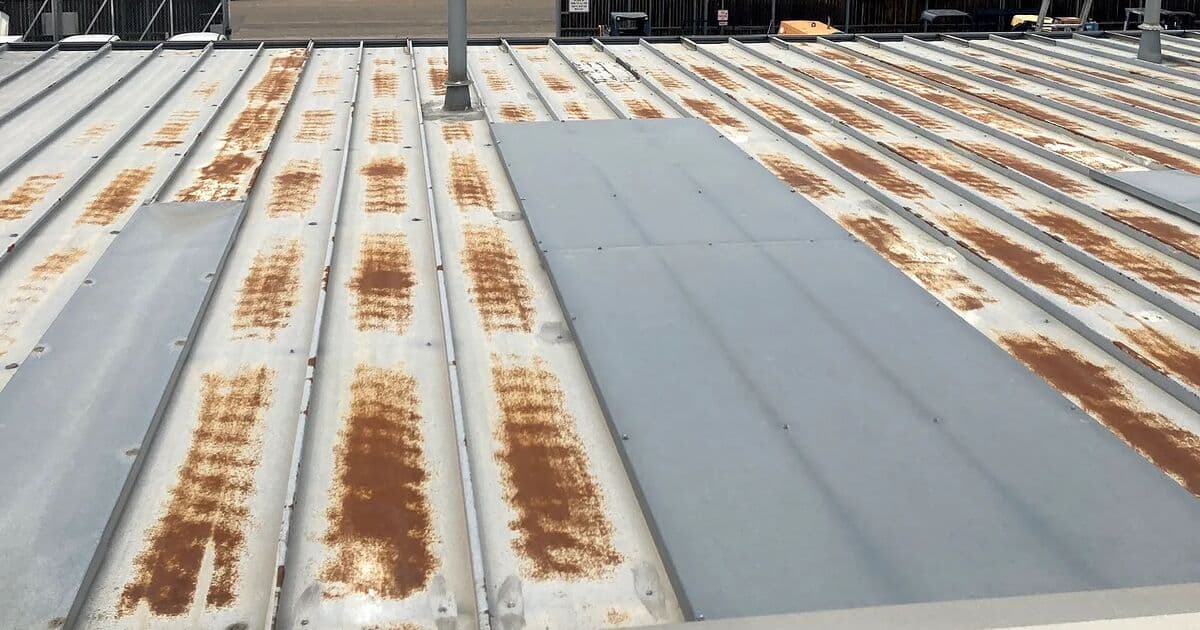
We flew the roof with a drone, walked it, and went inside the plant to see the structure from below. The panels in the scope area show their age. There is rust staining where the panel ends meet the penthouse wall, and the eave and panel end laps carry layer on layer of sealant from past repairs. Rather than putting the old panels back, the quote calls for all-new panels and insulation over the whole footprint. The scope also grew after the first quote: the original 20 squares (about 2,000 square feet) gained a second section of roughly 1,650 square feet right next to it.
How the Metal Roof Comes Off and Goes Back On
The work runs in three steps, built around the owner's vat schedule rather than ours:
- Removal, one day. CRC takes the old panels and insulation off both sections and hauls everything away. The metal goes to a scrap recycler and the insulation to the landfill, so the facility does not have to provide dumpsters or handle debris.
- Vat replacement, by the owner. The roof sections stay open while the owner's contractor lifts the old vats out and sets the new ones. If weather threatens during that window, CRC can put a temporary tarp over the opening.
- Install, two days. Once the new vats are in, CRC rebuilds the roof from above: two layers of polyiso insulation with the seams staggered, for R-30, then a high-temperature self-adhered underlayment, then the new 24-gauge Galvalume Max-Rib panels with butyl tape sealing every side lap. Foam closures fill the panel ribs at the ends, and new apron flashing ties the panels into the penthouse wall, where the old roof showed its rust.
The panels are the hard part. Each one runs an estimated 65 to 68 feet: the EagleView report measures every slope on this roof at 65 to 67 feet from ridge to eave, and the panels run that full distance in one piece plus the overhang, onto a roof roughly 25 to 30 feet up. The facility is bringing in a 60-ton crane on the exterior to lift the old panels off and land the new ones, and at that length a spreader bar is expected so the panels do not bend in the lift. Final panel length, eave height, and square footage are all confirmed by field and laser measurement before a single panel is ordered. All of the roof work happens from the roof itself, so nothing goes up inside the plant except a request to clear or protect the floor directly under the opening.
Why CRC for Industrial Roofing in Denver
Industrial roof work is rarely just about the roof. It has to fit around a plant that keeps running, equipment that has to move, and other trades on their own schedules. That is what industrial roofing means in practice, and it is why this job was scoped around the vats first and the panels second. Our Denver office handles industrial and commercial metal roofing across the Front Range, from panel replacement like this to restoring a rusted metal roof with a coating when the panels are still sound.
Moving Equipment Through Your Roof?
If equipment has to come in or out of your building, bring the roofer in before the crane is booked. Call our Denver office at (720) 893-7663, or click to request a free roof inspection.
Talk to the team nearest you: our Denver office, our Grand Junction office, or our Scottsbluff office.