Colorado & Nebraska Panhandle Severe Weather Outlook
A 7-day storm and hail forecast for Denver, Aurora, Golden, Parker, Castle Rock, Boulder, Fort Collins, Greeley, Colorado Springs, Grand Junction, Cheyenne, WY, and Scottsbluff, NE - plus 66+ more cities across Colorado and the Nebraska Panhandle - built for commercial and residential property owners who want a heads-up before the next roof-damaging storm.
Live Storm Radar
Checking radar…Double-click the map to zoom in.
Radar imagery from RainViewer (NEXRAD). Active warning outlines from the National Weather Service. Pins mark the cities we serve and our offices.
Hail Outlook - Next 48 Hours
Storm Prediction Center Day 1 and Day 2 hail outlooks for each of our three coverage regions, taken at the office that serves it.
Front RangeDenver
Western SlopeGrand Junction
Nebraska PanhandleScottsbluff, NE
7-Day Roof-Risk Forecast
Showing the 7-day roof-risk forecast for Denver. To see another town, use the Front Range, Western Slope, or Nebraska Panhandle picker at the top of the page.
Loading 7-day forecast…
Forecast data from Open-Meteo (NWS/NOAA model output) and active alerts from the National Weather Service, refreshed every few minutes. Days are color-coded by roof-risk: yellow means storms are possible, orange means an elevated storm risk, and red flags the high-risk days most likely to bring hail or damaging wind. This outlook is informational and not an official weather warning; always follow NWS guidance for life-safety decisions.
Why the Front Range Gets the Severe Weather It Does
Colorado sits in the heart of "Hail Alley," the stretch of the High Plains where Colorado, Wyoming, and Nebraska meet that NOAA ranks among the most hail-prone regions in North America. The Front Range averages seven to nine hail days a year, and two things make that hail hit harder here than almost anywhere else. Because the ground sits near a mile high, a hailstone falls through far less warm air and has little time to melt before it reaches your roof. And thinner air means less drag, so each stone lands with more force: the Insurance Institute for Business and Home Safety found that a 1-inch hailstone in Denver carries the same impact energy as a 1.2-inch stone in Dallas, and Front Range storms tend to drop more stones per square foot than storms elsewhere.
The Rocky Mountains are the engine. On summer afternoons the sun heats the high terrain first and fires off thunderstorms over the foothills and ridges. Low-level upslope flow, moist plains air pushed west and lifted against the mountains, feeds those storms, which then track east across the Front Range and onto the plains through the late afternoon and evening. That is when the metro usually takes its hits. Hail and damaging straight-line wind, not tornadoes, are the signature threats from roughly mid-April through mid-September, worst in early-to-mid summer.
A common myth is that these storms roll in over the mountains from the west. They rarely do. The Continental Divide is too high a barrier for most storms to cross intact, and the convection that does spill over it usually weakens and then re-forms on the eastern side. Front Range hail is overwhelmingly born locally, over the eastern foothills, the Palmer Divide, and the plains, where a band of colliding low-level winds known as the Denver Convergence Vorticity Zone, or "Denver Cyclone," can lift the air enough to set off storms just east of the mountains.
The damage is not theoretical. One Denver-metro hailstorm on May 8, 2017 caused about $2.3 billion in insured losses across roughly 267,000 claims, the costliest disaster of any kind in Colorado history, and Colorado hail has run more than $5 billion in insured damage over the past decade.
📍 The Palmer Divide - Colorado's Hail Engine
Just south of the Denver metro runs the Palmer Divide, a high ridge that crests near 7,300 feet around Monument and runs east from the foothills toward Limon, well above Denver at 5,280 feet. It works as a storm engine two ways at once. Being higher, it heats fastest and triggers thunderstorms earliest. And it forces convergence: air rising out of the Denver basin to the north and the Colorado Springs basin to the south collides over the ridge and is pushed upward, building tall storms with the strong updrafts that grow large hail.
It is one of the main reasons south Denver, the Tech Center, Castle Rock, Monument, and Colorado Springs sit among the most hail-prone areas in the country. When the Divide lights up on a summer afternoon, the metro often feels it within a couple of hours.
CRC's Denver roofing office covers the Front Range for exactly these storms. When hail moves through, we handle residential storm and hail damage and the hail damage insurance claim end to end, out to the Palmer Divide hail belt around Colorado Springs and Elizabeth. See how we rebuilt a Castle Pines home with Class 4 impact-resistant shingles after a hail claim.
Front Range Seasonal Almanac
Growing Season
Last frost early May, first frost early October. USDA zone 5b-6a.
Elevation
Thinner air and intense UV age shingles faster than at sea level.
Hail Season
Peaks mid-June to mid-July - the single costliest roofing threat on the Front Range.
Fire / Red Flag
Dry, windy days spike Red Flag Warnings especially along the foothills and out on the plains.
Snow Season
Heaviest snows come in March; wet spring snow adds real load to roofs.
Best Roofing Window
After hail season and before deep winter, when crews and materials are most available.
Seasonal dates are typical long-term averages - actual timing varies year to year.
Why the Western Slope Sees a Different Kind of Storm
West of the Continental Divide the weather rules change. Grand Junction sits near 4,600 feet in a high-desert basin walled in by the Book Cliffs, the Colorado National Monument, and the Grand Mesa, and it collects only about nine inches of precipitation in an average year - drier than almost anywhere else in Colorado. The same terrain that makes the Grand Valley a rain shadow also keeps the Front Range's storm engine from reaching it: upslope flow off the eastern plains never crosses the Divide, and Pacific systems arriving from the west have already wrung most of their moisture out over the Utah plateaus and the high country.
The practical result is that severe hail is far less frequent here than it is on the other side of the mountains. What replaces it as the leading roof threat is sun and heat. Grand Junction is one of the hottest places in the state in summer, with highs routinely in the 95 to 100 degree range, and at elevation the ultraviolet load is punishing year-round. UV bakes the oils out of asphalt shingles and drives chalking and shrinkage in single-ply membranes. Layered on top of that are the Western Slope's very large day-to-night temperature swings, which expand and contract a roof assembly every single day. Over years, that thermal cycling is what backs fasteners out, opens seams and laps, and fatigues metal flashing long before anything actually hits the roof.
The second threat is water arriving all at once. From mid-July into early September the North American Monsoon pushes moisture north out of Mexico and the Gulf of California, and the Grand Valley trades weeks of dry heat for short, violent afternoon downpours. Those cells drop more rain in twenty minutes than a drain, scupper, or gutter sized for a nine-inch year is ever asked to move. On low-slope commercial roofs the classic Western Slope failure is not an impact bruise - it is ponding, a backed-up drain, or a lap seam that finally lets go under standing water.
Wind rounds out the list. Spring frontal passages and downslope winds funnel through De Beque Canyon and down the valley, lifting shingle tabs and peeling edge metal and coping on commercial buildings. Valley snowfall is modest, around twenty inches a year, but that number falls off a cliff as you climb: Grand Mesa, Collbran, Cedaredge, and the higher parts of Delta and Montrose counties carry real snow load, and a roof spec that is right in Grand Junction can be badly under-built thirty miles away and three thousand feet up.
📍 The Rain Shadow - Why Western Slope Hail Is Rarer, Not Absent
Being west of the Divide takes the upslope mechanism that drives Front Range hail off the table, and it is genuinely why the Grand Valley averages a small fraction of Denver's hail days. It is not a guarantee. Monsoon thunderstorms and strong spring cold fronts still produce pea-to-quarter-size hail over Grand Junction, Fruita, Palisade, Delta, and Montrose most years, and Western Slope storm cells tend to be small and sharply defined - one subdivision takes a beating while the next street over stays dry.
That combination is exactly what gets damage missed out here. Because hail is uncommon, owners assume it did not happen, so nobody looks; and because the cells are narrow, a neighbor with an intact roof proves nothing about yours. If a storm produced hail anywhere near your address, get eyes on the roof and document the date while it is still fresh.
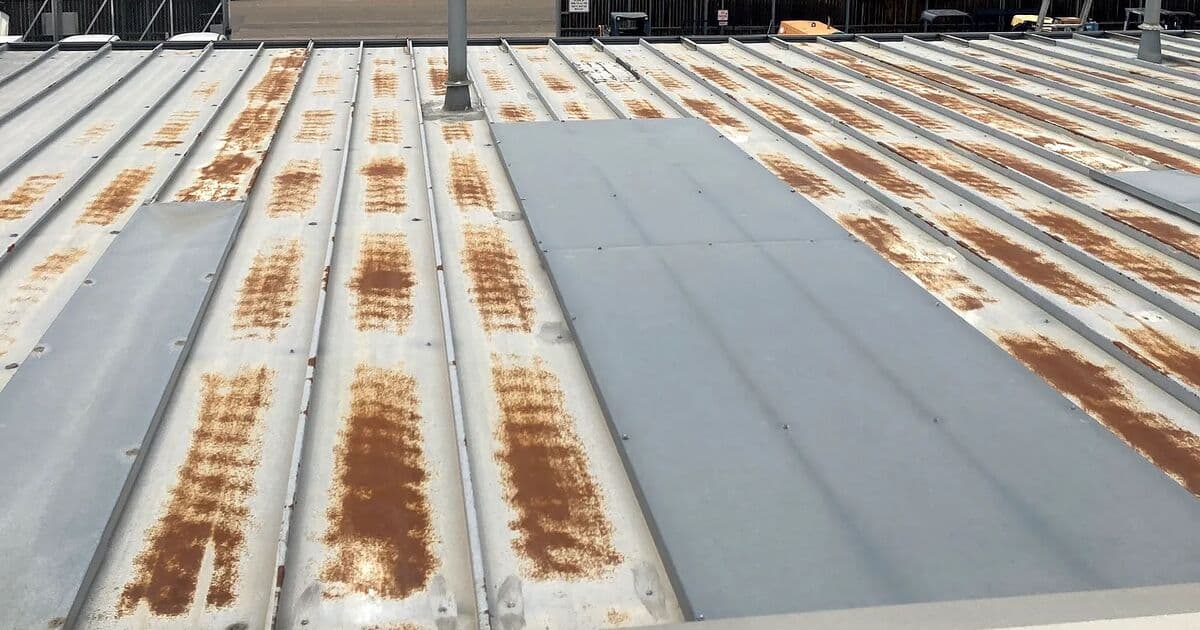
Our Grand Junction roofing office is built around the Western Slope's real threats: we handle commercial storm and leak repair when a monsoon cell overruns a drain, and roof coatings that push back on UV and thermal aging before a tear-off is needed. We cover the Grand Valley including Fruita, and you can see a Western Slope hail-damaged metal roof we recovered with TPO on an approved claim.
Western Slope Seasonal Almanac
Growing Season
Last frost mid-April, first frost late October. USDA zone 7a in the Grand Valley - peach and vineyard country.
Elevation
High-desert sun, intense UV, and wide day-night swings age shingles and membranes faster than hail does.
Monsoon Season
Short, heavy downpours test drains, scuppers, and seams far harder than they test impact resistance.
Hail Season
Many fewer hail days than the Front Range and usually smaller stones - but the cells are narrow and easy to miss.
Snow Season
Light in the valley, heavy on the Grand Mesa and the higher towns - snow load specs change fast with elevation.
Best Roofing Window
Mild shoulder seasons dodge both the monsoon downpours and the peak deck temperatures of midsummer.
Seasonal dates are typical long-term averages - actual timing varies year to year.
Why the Nebraska Panhandle Sits in the Center of Hail Alley
The Panhandle is not on the edge of Hail Alley - it is close to the bullseye. The corner where Colorado, Wyoming, and Nebraska meet records more hail days per year than anywhere else in North America, and Cheyenne, roughly a hundred miles west of Scottsbluff, is routinely ranked the most hail-prone city in the United States. Scottsbluff sits at about 3,900 feet, only a little below Denver, so hailstones here fall through the same thin, dry air: less time to melt on the way down and less drag to slow them, which means more impact energy per stone than the same hail would carry at sea level.
The setup that produces it is terrain plus moisture. The High Plains tilt steadily upward from east to west, so a low-level southeasterly wind carrying Gulf moisture is lifted the entire way as it runs toward the Laramie Range and the Front Range foothills. Add strong afternoon heating over that higher ground to the west and storms fire in eastern Wyoming and northeast Colorado, then track east across the Panhandle through the late afternoon and evening. Because they have had a few hours to organize by the time they arrive, the Panhandle often catches those cells at their most mature - the hail is already large when it gets here.
Wide-open country is the other half of the problem. There is very little to break the wind out here, so Panhandle hail rarely falls straight down. It arrives driven sideways at fifty or sixty miles an hour, which puts impacts into the sides of shingles, the ridge, vent hoods, turbines, siding, and window wraps - places a vertical fall would never touch, and places a quick look from the driveway will never find. The June 22, 2026 storm was a textbook example: NWS Cheyenne logged 8 hail reports across Scotts Bluff County that evening, from 1.75 inches up to 2.75 inches, hitting Scottsbluff, Gering, Terrytown, and Mitchell.
Winter brings a different load. High wind is a year-round constant, blizzards and ground blizzards scour and lift roof edges, and the heavy wet snows of March and April put real weight on low-slope roofs and tear gutters off houses. Between the hail season and the winter wind, a Panhandle roof is asked to survive more damaging events over its service life than a roof almost anywhere else in the country - which is why impact-rated shingles and properly fastened edge metal pay for themselves faster here than they do most places.
📍 The High Plains Upslope - Hail Alley's Bullseye
The same upslope mechanism that loads the Front Range works on the Panhandle, just from the other side: air climbing the plains toward the Laramie Range and the foothills is lifted for hundreds of miles before it ever reaches a mountain. That long, gentle lift is what lets storms in this corner build the tall, sustained updrafts that grow big stones, and it is why the tri-state corner - not Oklahoma or Texas - holds the North American record for hail days.
For property owners it means treating hail as a when, not an if. Document every storm date, get the roof looked at after each one, and know your policy: many carriers in high-hail territory carry a separate percentage wind-and-hail deductible or a cosmetic damage exclusion that changes the math on a claim entirely.
CRC has roofed the Panhandle from its Scottsbluff, Nebraska office since 2001. We handle storm and hail damage and Nebraska Panhandle hail insurance claims, and in high-hail country we steer owners toward Class 4 impact-resistant shingles that pay for themselves faster here. Read our breakdown of the June 2026 Scottsbluff hail storm.
Nebraska Panhandle Seasonal Almanac
Growing Season
Last frost mid-May, first frost late September. USDA zone 5a-5b - sugar beet, corn, and dry bean country.
Elevation
Nearly Front Range altitude: thin, dry air means less melting and more impact energy per hailstone.
Hail Season
Peaks in June. The tri-state corner records the highest hail-day counts in North America.
Wind
Open country and few windbreaks: straight-line wind and driven hail attack ridges, edges, vents, and siding.
Snow & Blizzards
Ground blizzards and heavy wet spring snow load low-slope roofs and pull gutters loose.
Best Roofing Window
After the June-to-July hail peak and ahead of the first hard freeze, when crews and materials are available.
Seasonal dates are typical long-term averages - actual timing varies year to year.
Colorado and Nebraska Panhandle Storm & Roof FAQ
When is hail season in Colorado and the Nebraska Panhandle?
Hail season runs from April through September in both, and peaks from mid-June to mid-July. The Colorado Front Range and the Nebraska Panhandle both sit in 'Hail Alley,' one of the most hail-prone regions in North America, so large-hail days are most common on summer afternoons. The Western Slope, west of the Continental Divide, sees far fewer hail days than either.
How do I know if hail or wind damaged my roof?
Hail and wind damage is often invisible from the ground. Bruised or fractured shingles, broken adhesive seals, and granule loss usually show up later as leaks. The reliable way to know is a documented roof inspection after a storm, ideally while the event date is still recent.
Should I get my roof inspected before or after a storm?
Both help. A baseline inspection before a storm establishes your roof's condition, and an inspection after a storm documents any new damage. Having both makes an insurance claim much easier to prove, because the cause and date of loss are clear.
Is a storm-damage roof inspection free?
Yes. Commercial Roofing Contractor provides free roof inspections across Colorado and the Nebraska Panhandle, documents any damage, pulls the National Weather Service report for your date of loss, and can meet your insurance adjuster on the roof at no charge.
Which cities do you serve for storm and hail roofing?
We cover three regions from three offices. From our Denver office we serve the Denver metro and Front Range, including Denver, Aurora, Lakewood, Arvada, Westminster, Thornton, Centennial, Highlands Ranch, Littleton, Englewood, Wheat Ridge, Commerce City, Northglenn, Brighton, Broomfield, Parker, Castle Rock, Lone Tree, Golden, Louisville, Lafayette, Erie, Boulder, Longmont, Loveland, Fort Collins, Greeley, Windsor, Firestone, Evergreen, and Elizabeth. From our Grand Junction office we serve the Grand Valley and Western Slope, including Grand Junction, Fruita, Palisade, Clifton, Fruitvale, Orchard Mesa, Redlands, Loma, Mack, Whitewater, and De Beque. From our Scottsbluff office we serve the Nebraska Panhandle, including Scottsbluff, Gering, Terrytown, Mitchell, Minatare, Melbeta, Morrill, Bayard, Lyman, and Bridgeport. If your town sits near one of these, call the closest office and we can almost always help.
Why does the Nebraska Panhandle get so much hail?
The corner where Colorado, Wyoming, and Nebraska meet records more hail days per year than anywhere else in North America, and Scottsbluff sits inside it. The High Plains rise steadily from east to west, so moist low-level wind is lifted for hundreds of miles as it runs toward the Laramie Range and the Front Range foothills. Storms fire over that higher ground in the afternoon and track east across the Panhandle already mature, and with little to break the wind out here the hail usually arrives driven sideways, damaging siding, vents, and the sides of shingles as well as the roof surface.
What is the Palmer Divide and why does it cause so much hail?
The Palmer Divide is a high ridge south of Denver that tops out near 7,300 feet around Monument. Winds forced up its slopes fire off thunderstorms that drift north into the metro, making south Denver and the southern suburbs among the most hail-prone areas in the country.
See all roofing FAQs. Grouped by topic: commercial and residential decisions, cost, insurance claims, storm response, warranties, and financing.