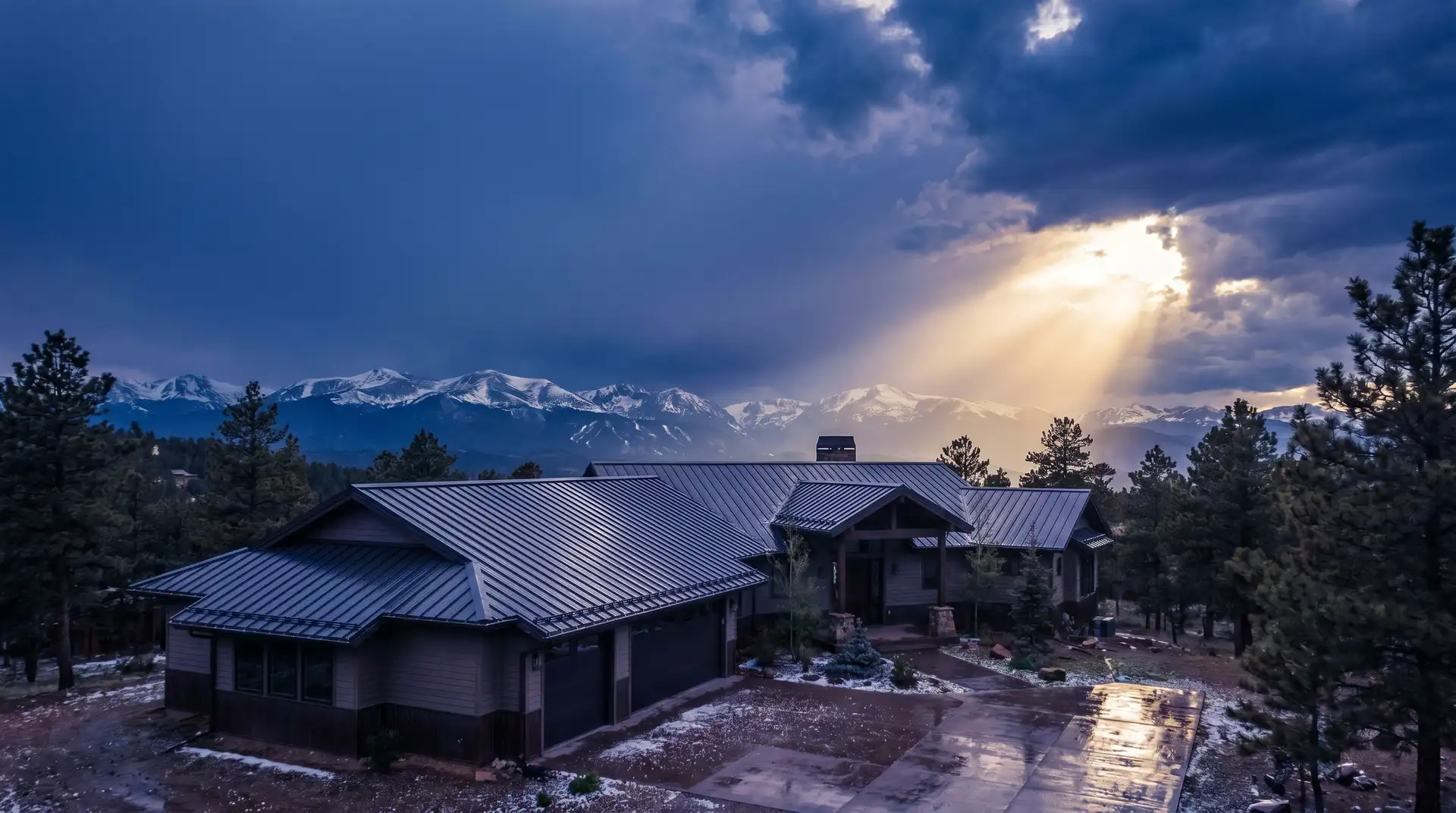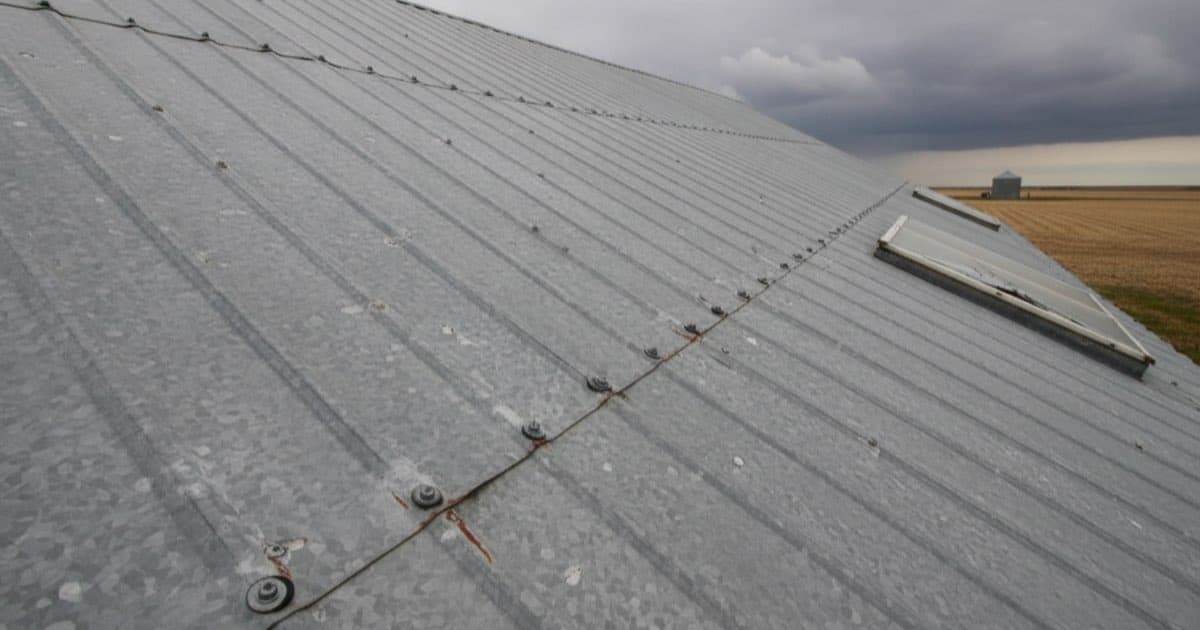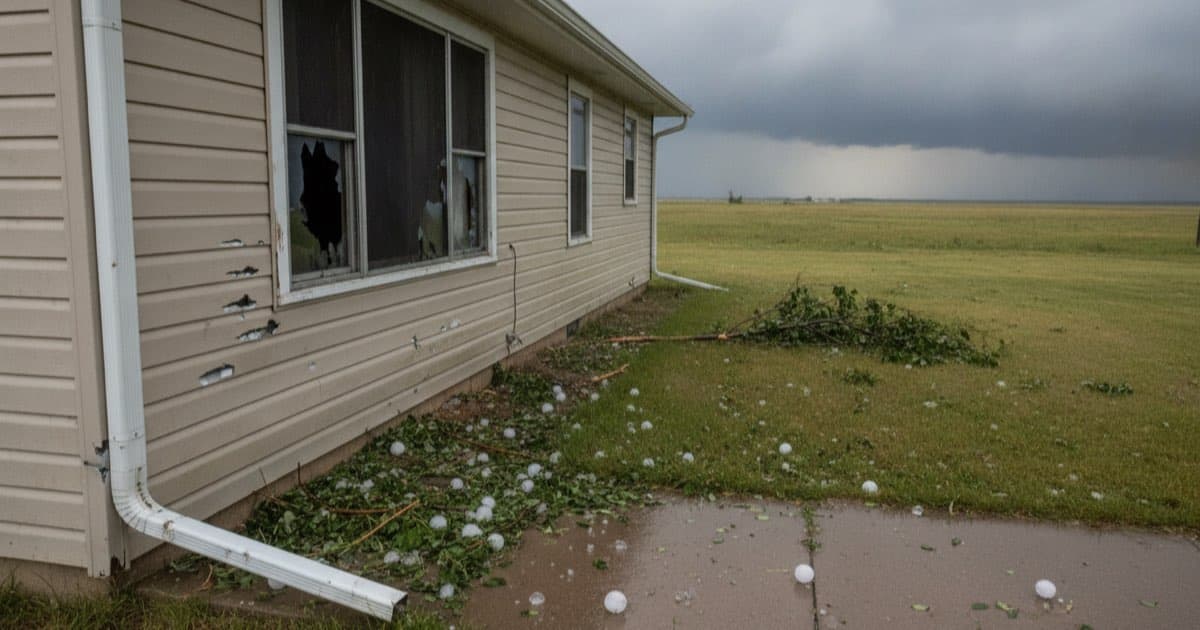
Commercial Roofing Contractor has served the Nebraska Panhandle since 2001, and our staffed office at 16 W 17th St in Scottsbluff is the local base for that work. From here we install, repair, and replace commercial and residential roofs across the Panhandle, and we handle hail and wind insurance claims from documentation through final restoration.
Scottsbluff Office
Phone
Office Hours
Monday to Friday, 8:00 AM to 5:00 PM
Saturday and Sunday: Closed
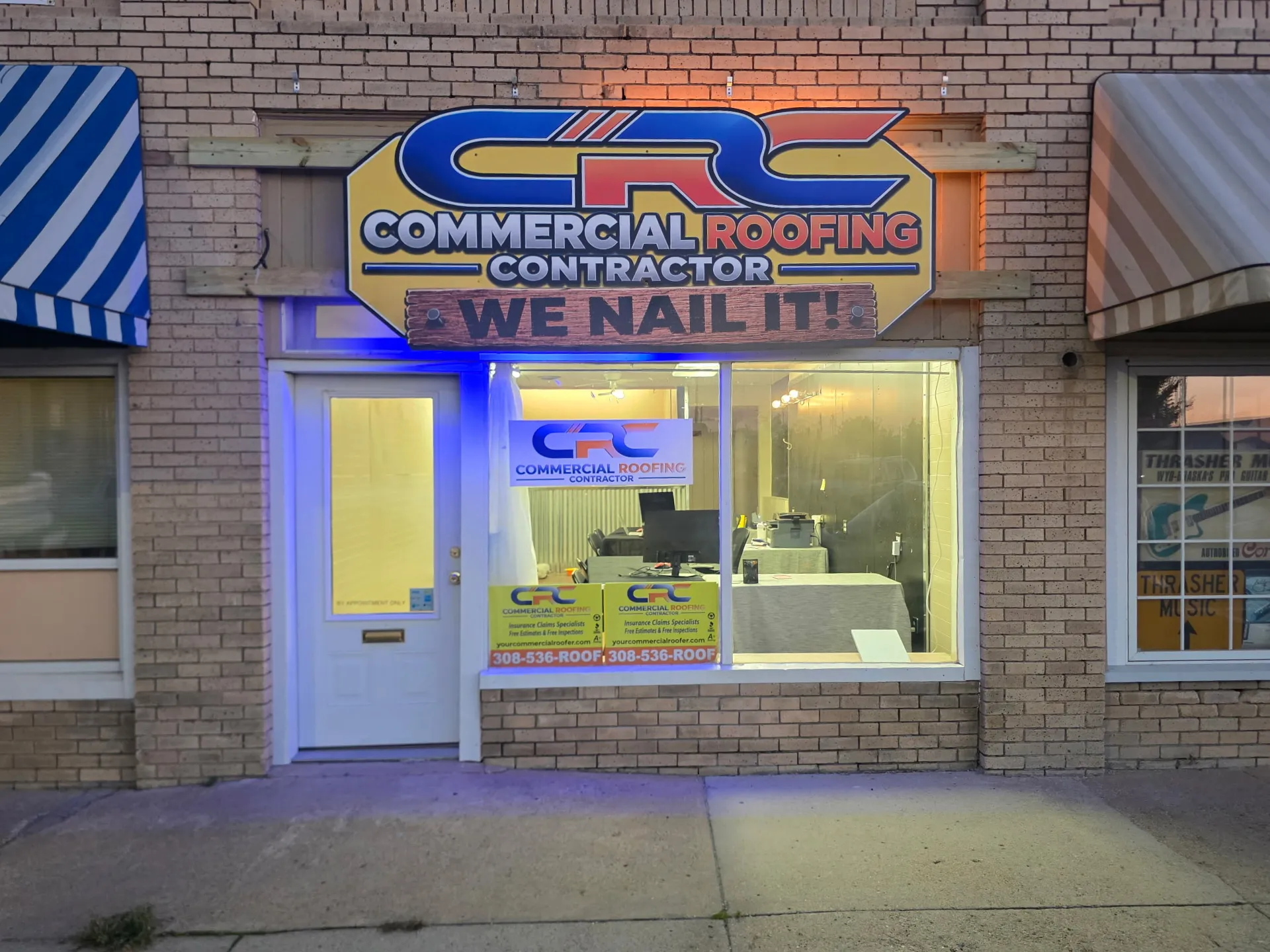
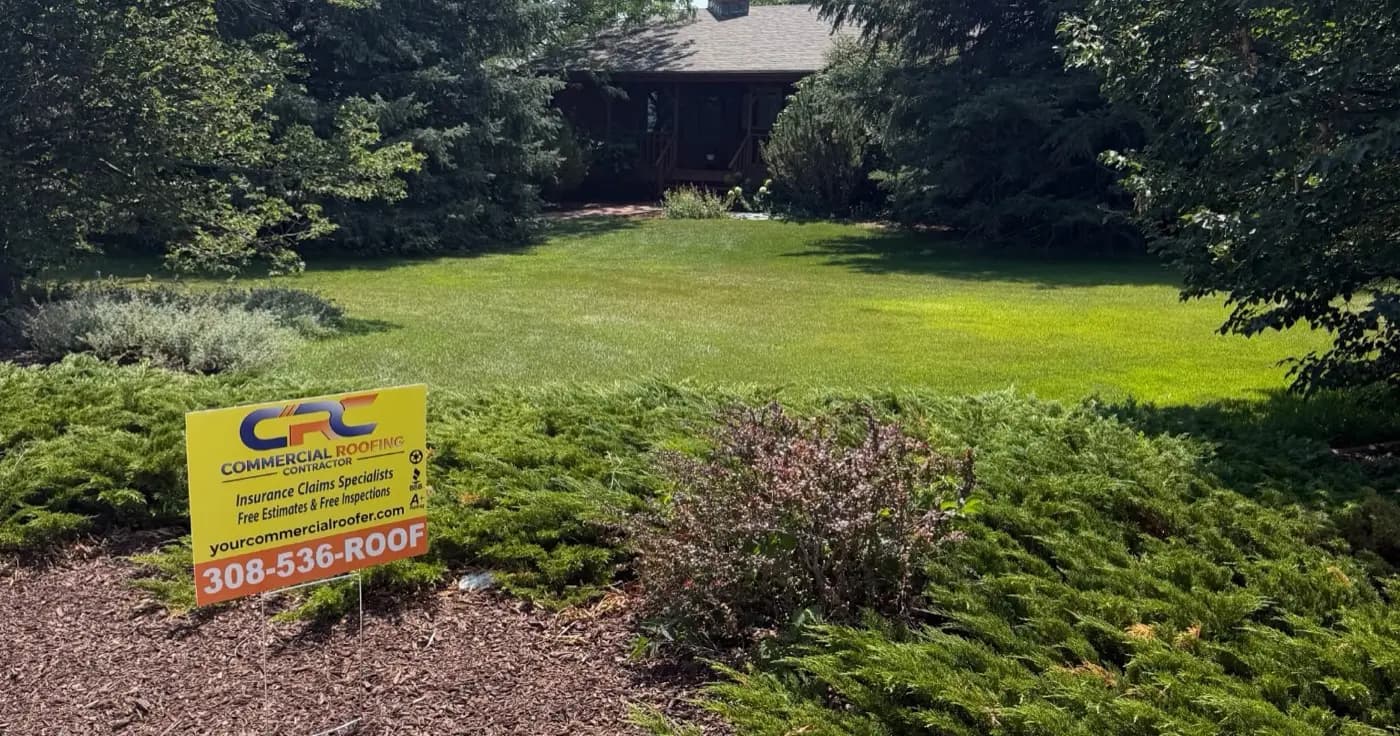
We are not a Colorado company that drives out after a storm. The office at 16 W 17th St is staffed, our number is a 308 number, and our signs are in yards across the Panhandle because the work is here year round.
Areas We Serve From Scottsbluff
From our Scottsbluff office we provide commercial and residential roofing across Nebraska Panhandle, including:
Those are the Scottsbluff cities with a page of their own. We serve more towns than we have written up, so if you do not see yours, browse every Colorado and Nebraska Panhandle city we cover or call the office and ask.
Roofing Services From Our Scottsbluff Office
- Commercial roofing (TPO, EPDM, metal, and coatings).
- Residential roofing (asphalt shingle, metal, and tile).
- Storm and insurance claim support (hail and wind damage documentation and adjuster coordination).
- Asphalt shingle roofing (including Class 4 impact-resistant shingles).
- Commercial roof repair & replacement (targeted repairs through full replacements, in every season, not just after a storm).
- Residential roof replacement (targeted repairs through full replacements, in every season, not just after a storm).
Roofing Built for the Nebraska Panhandle
Scottsbluff and Gering anchor the Panhandle from the North Platte River valley beneath Scotts Bluff National Monument, and the weather here works roofs as hard as anywhere in Hail Alley, the tri-state stretch where Nebraska, Colorado, and Wyoming meet. High Plains supercells roll off the Wyoming line through the valley in summer, dropping large hail and straight-line wind, while wide temperature swings and freeze-thaw cycles age shingles, pipe boots, and flashings the rest of the year. The building stock runs from established neighborhoods in Scottsbluff and Gering to newer homes in Terrytown and the surrounding towns, plus the ag facilities, warehouses, and downtown commercial buildings along the Highway 26, 71, and 92 corridors. We inspect and document all of it and give you a straight repair-versus-replace answer.
Roofing Codes and Permits in Scottsbluff
Roofing work in Scottsbluff is permitted and inspected by the City of Scottsbluff Development Services (308-630-6243). Nebraska has a state building code, but cities and villages adopt and enforce their own codes locally, and Panhandle towns a few miles apart have adopted different editions in different decades. Requirements genuinely differ town to town. The details below are taken from the City of Scottsbluff Development Services's published requirements.
Worth knowing in Scottsbluff: The R-30 insulation value is the requirement that most often changes the scope of a low-slope commercial reroof here. Bringing an older roof up to R-30 usually means adding insulation thickness rather than simply replacing the membrane, and that in turn affects edge details, flashing heights and drainage. It is worth scoping before a budget is set rather than discovering it at permit review. Note that R-30 comes from the energy code as it applies to this climate zone rather than from a local Scottsbluff amendment. On the ice barrier question, the climate record helps explain why the city has never designated one: NOAA's storm database records no ice storm in Scotts Bluff County across its entire period of record from 1996, and only one has ever been logged anywhere in the eleven Panhandle counties, while Nebraska as a whole has recorded 288. Freezing precipitation is measured at the Scottsbluff airport on roughly two days a year. What the area does get is hard freeze-thaw cycling, around 174 days a year that drop below freezing but only 27 that stay there, which ages flashings and pipe boots rather than building the persistent roof snowpack that ice damming needs.
Commercial roofing code in Scottsbluff
| Requirement | Requirement in Scottsbluff |
|---|---|
| Adopted code | 2018 International Building Code, with re-roofing governed by Section 1511. Chapter 15 is not among the excluded sections, so the reroofing provisions apply in full. No existing building code is adopted, which is why a commercial reroof runs through Section 1511 rather than the IEBC. |
| Energy code | 2018 International Energy Conservation Code, which sets an R-30 insulation value for Scottsbluff. It is adopted separately precisely because the energy chapters of the building and residential codes are excluded. |
| Current codes effective | The 2018 editions took effect here by ordinance in January 2020. |
| When a permit is required | Any reroof needs a permit. Scottsbluff lists roofing explicitly among the work requiring one, and there is no square-footage or dollar threshold below which a reroof is exempt, because the city excluded the model codes' work-exempt-from-permit sections when it adopted them. Replacing roof gutters is on the city's short list of work that does not need a permit. One local quirk worth knowing: no building permit is issued until an application for a solid waste container has also been submitted, so the dumpster is part of the permit process rather than an afterthought. |
| Ice barrier | There is no simple yes or no here, and anyone who gives you one is guessing. The residential code makes an ice barrier depend on a local designation in its climatic criteria table, and Scottsbluff has never filled that table in, so the requirement is not switched on that way. The city also published a roofing requirements sheet for years listing the seven things it wanted particular attention paid to, and an ice barrier is not among them: the only underlayment it names is a new layer of 15 pound felt. That sheet was withdrawn from the city's site after July 2024 with no replacement, so treat it as what the city has historically emphasised rather than current guidance. What does still bite is that the code separately requires roofing to be installed to the manufacturer's instructions. Where your shingle manufacturer requires an ice barrier, and many do at the eaves as a condition of the warranty, the code requires it too. That is usually what decides the question on a Scottsbluff roof, so we scope from the manufacturer's specification and confirm with the department rather than from a table that was left blank. |
| Overlay and recover | Full tear-off. Section 1511.3 requires a roof replacement to include removal of all existing layers of roof covering down to the roof decking, and Section 1511.3.1.1 does not permit a roof recover where the existing roof already carries two or more applications of any type of roof covering. The practical effect is that layered roofs cannot be built up further, which also keeps accumulated dead load off the structure. |
| Mid-roof inspection | Not required. Scottsbluff closes a reroof out on a final inspection, with no mid-roof or in-progress roofing inspection in its published inspection sequence. That is a meaningful contrast with Gering next door, which requires three separate roofing inspections plus photographs. |
| Contractor licensing | Scottsbluff does not license contractors, but registration is mandatory and it is unlawful to work in the city without it. Registration runs one calendar year. Worth knowing as a property owner: the city states plainly that anyone seeking to register will be allowed to, that the information is supplied by the contractor, and that the city does not verify it. Liability insurance is expressly not required to register. Registration is therefore a filing, not a vetting, and it is not a substitute for checking a contractor's insurance yourself. |
Residential roofing code in Scottsbluff
| Requirement | Requirement in Scottsbluff |
|---|---|
| Adopted code | 2018 International Residential Code, adopted with chapters 11 through 42 excluded. Those are the energy, plumbing, mechanical and electrical chapters, which the city adopts separately. Roof assemblies sits in chapter 9, inside the adopted portion, so the residential roofing provisions do apply. |
| Energy code | 2018 International Energy Conservation Code, which sets an R-30 insulation value for Scottsbluff. It is adopted separately precisely because the energy chapters of the building and residential codes are excluded. |
| Current codes effective | The 2018 editions took effect here by ordinance in January 2020. |
| When a permit is required | Any reroof needs a permit. Scottsbluff lists roofing explicitly among the work requiring one, and there is no square-footage or dollar threshold below which a reroof is exempt, because the city excluded the model codes' work-exempt-from-permit sections when it adopted them. Replacing roof gutters is on the city's short list of work that does not need a permit. One local quirk worth knowing: no building permit is issued until an application for a solid waste container has also been submitted, so the dumpster is part of the permit process rather than an afterthought. |
| Ice barrier | There is no simple yes or no here, and anyone who gives you one is guessing. The residential code makes an ice barrier depend on a local designation in its climatic criteria table, and Scottsbluff has never filled that table in, so the requirement is not switched on that way. The city also published a roofing requirements sheet for years listing the seven things it wanted particular attention paid to, and an ice barrier is not among them: the only underlayment it names is a new layer of 15 pound felt. That sheet was withdrawn from the city's site after July 2024 with no replacement, so treat it as what the city has historically emphasised rather than current guidance. What does still bite is that the code separately requires roofing to be installed to the manufacturer's instructions. Where your shingle manufacturer requires an ice barrier, and many do at the eaves as a condition of the warranty, the code requires it too. That is usually what decides the question on a Scottsbluff roof, so we scope from the manufacturer's specification and confirm with the department rather than from a table that was left blank. |
| Overlay and recover | Full tear-off. Section 1511.3 requires a roof replacement to include removal of all existing layers of roof covering down to the roof decking, and Section 1511.3.1.1 does not permit a roof recover where the existing roof already carries two or more applications of any type of roof covering. The practical effect is that layered roofs cannot be built up further, which also keeps accumulated dead load off the structure. |
| Mid-roof inspection | Not required. Scottsbluff closes a reroof out on a final inspection, with no mid-roof or in-progress roofing inspection in its published inspection sequence. That is a meaningful contrast with Gering next door, which requires three separate roofing inspections plus photographs. |
| Contractor licensing | Scottsbluff does not license contractors, but registration is mandatory and it is unlawful to work in the city without it. Registration runs one calendar year. Worth knowing as a property owner: the city states plainly that anyone seeking to register will be allowed to, that the information is supplied by the contractor, and that the city does not verify it. Liability insurance is expressly not required to register. Registration is therefore a filing, not a vetting, and it is not a substitute for checking a contractor's insurance yourself. |
This is a summary to help you plan, not a compliance determination. The City of Scottsbluff Development Services is the authority on what your specific roof requires, and we always confirm current requirements with them before we scope a job. Several Colorado jurisdictions changed their adopted codes during 2026, so we re-verify against each department's own published codes rather than working from memory. Source: Scottsbluff Code of Ordinances Article 4-1 (sections 4-1-2, 4-1-10 and 4-1-10.1), the City's published Scottsbluff and Terrytown Roofing Requirements sheet, NOAA National Centers for Environmental Information storm and climate records for Scotts Bluff County, and re-roofing and energy requirements confirmed by City of Scottsbluff Development Services. Last verified July 2026.
For the full picture on storm-driven replacement, see our storm damage and insurance claim guidance.
The same department performs the inspections for neighbouring Terrytown. Nebraska has no statewide roofing license, so what governs your roof here is the city's own adopted code and its contractor registration requirement rather than a state credential.
The Panhandle Towns We Cover From Scottsbluff
Scottsbluff and Gering are the core of this office's work, but the Panhandle service area runs out along the North Platte and the Highway 26 corridor, and who inspects your roof changes town by town in ways that surprise people. This is not the same as Colorado, where a county department typically covers a whole region under one code set.
Gering licenses its own roofing contractors as a distinct class and runs a downtown fire-limits overlay where the exterior roof material must be at least as fire resistant as asphalt roofing, and the permit application asks which side of that line the building sits on. Terrytown does not inspect its own roofs at all: the City of Scottsbluff has handled its permitting and inspections since 1995 under an agreement renewed in 2025. Bayard is the strangest of the set. It sits in Morrill County, but its roofs are inspected by Scotts Bluff County Building and Zoning next door under a standing interlocal agreement, so the permit comes from the Bayard City Clerk and the inspector comes from the neighbouring county.
Then there are the towns whose own code adoption has gone stale or self-contradictory, which is common in small Nebraska municipalities and is worth being honest about rather than papering over. Mitchell adopted the BOCA code, which stopped publishing in 1999. Minatare adopts the most recent editions and then lists 2009 ones, naming a code that does not exist. Morrill has a building code section that never names a code. And Bridgeport adopts the International Building Code but no residential code whatsoever. In each case the Nebraska state building code acts as the working floor, and the practical answer for a property owner is that we confirm the requirement with the town before we scope the job rather than assuming the code on the books is the code being enforced.
What the Panhandle Climate Does to a Roof
Roofs fail here from impact and from wind, in that order, and the two arrive together. The Panhandle sits in the tri-state corner of Hail Alley, and High Plains supercells form over the Laramie Range and Wyoming line in the afternoon and track east down the valley with the storm at its strongest. That geography is why hail here often arrives wind-driven rather than falling straight down.
Wind-driven hail is a different inspection problem, and it is the one most often missed. Stones coming in at an angle concentrate damage on the west and south elevations and on everything vertical: ridge caps, the windward slope, siding, window screens, soft metal like gutters and downspouts. A roof can read as sound from the street and from the leeward side while the windward slope is finished. We inspect elevation by elevation for exactly that reason, including on every residential hail damage inspection, and the soft-metal test squares tell you what the shingles will not admit yet.
The rest of the year the enemy is temperature. The Panhandle runs a wider annual range than either Colorado office's territory, with hard freezes into spring and long dry heat in summer, and that freeze-thaw cycling works fasteners loose and splits sealant at penetrations. On the low-slope commercial buildings along the Highway 26, 71 and 92 corridors it shows up first at seams and terminations rather than in the field, which is why a Panhandle membrane roof can leak with real service life left in it, and why the R-30 insulation requirement on a reroof here is usually a scope question rather than a paperwork one.
Frequently Asked Questions
What areas does the Scottsbluff office serve?
Our Scottsbluff office serves the Nebraska Panhandle, including Scottsbluff, Gering, Terrytown, Mitchell, Minatare, Morrill, Bayard, Bridgeport. We handle both commercial and residential roofing year-round.
How long has Commercial Roofing Contractor worked in the Nebraska Panhandle?
Since 2001. CRC has held a Nebraska business license and roofed across the Panhandle for more than two decades, and our staffed office at 16 W 17th St in Scottsbluff is the local base for that work, with the same crews, materials, and standards as our Colorado offices.
Are you a storm chaser?
No. Storm chasers work out of trucks and leave when the season ends. We operate a staffed local office in downtown Scottsbluff, along with our Colorado offices in Denver and Grand Junction, and we stand behind our work year-round.
Does the Scottsbluff office handle both commercial and residential roofing?
Yes. We install and repair commercial systems (TPO, EPDM, metal, and roof coatings) and residential systems (asphalt shingle, metal, and Class 4 impact-resistant shingles) across the Panhandle.
Can you help with hail damage insurance claims in the Panhandle?
Yes. The Panhandle sits in Hail Alley, the tri-state stretch where Nebraska, Colorado, and Wyoming meet. We inspect and document hail and wind damage for free, meet your adjuster on site, and support your claim through completion.
Read the roofing questions we answer across every market we serve. Grouped by topic: commercial and residential decisions, cost, insurance claims, storm response, warranties, and financing.