
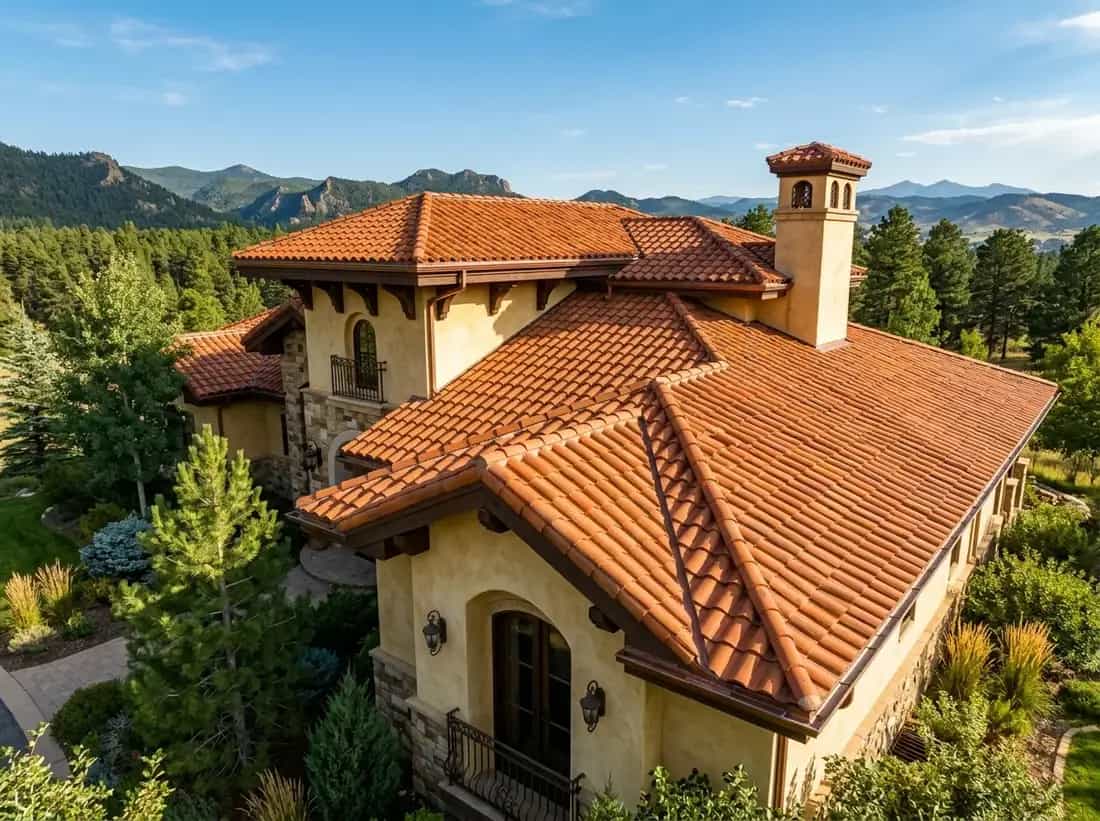
Concrete and clay roof tiles last 50 years or more, but the underlayment beneath them lasts only 20 to 30 years, so most tile roofs need a tile-lift and underlayment renewal at least once even though the tiles are still good. Tile suits Spanish, Mediterranean, and Pueblo Revival home styles, is heavier than shingles, and typically runs $10 to $20 or more per square foot installed. We install and repair tile roofs from our Denver and Grand Junction offices.
Commercial Roofing Contractor installs, repairs, and renews concrete and clay tile roofs on Colorado homes. Tile is one of the most distinctive and longest-lasting roofing materials available, but it behaves very differently from shingles, and getting the details right is what separates a tile roof that lasts decades from one that leaks. We work on tile across the Front Range, the Western Slope, and the Nebraska Panhandle, from our Denver, Grand Junction, and Scottsbluff offices.
Concrete vs Clay Tile
Both are excellent, long-lived materials, and the right choice usually comes down to appearance, weight, and budget.
- Concrete tile. Less expensive, slightly heavier, and available in a wide range of profiles and colors, including flat tiles that mimic slate or shake. Color is applied to the surface, so it can soften over decades of UV. A practical, durable choice for most Colorado homes designed for tile.
- Clay tile. The classic terracotta and glazed tile look, with color fired through the body of the tile so it holds its appearance far longer. Clay is typically more expensive and is the authentic choice for Spanish, Mediterranean, and Pueblo Revival architecture.
The Underlayment Is the Real Roof
This is the most important thing to understand about tile, and the point most homeowners miss: the tile is the shell, but the underlayment is the waterproofing. Water that gets past the tile, and some always does, is stopped by the underlayment and drained off the roof. Because the tiles routinely outlast the underlayment by decades, the defining tile roof service is not replacement but a tile-lift and re-roof: the existing tiles are carefully removed and stacked, the worn underlayment and flashings are replaced, and the same tiles are relaid. It costs less than a full new tile roof because the expensive part, the tile, is salvaged and reused.
Tile Roof Repair
Most tile roof repairs fall into a few categories, and many are caused not by the weather but by foot traffic from other trades:
- Cracked or broken tiles. From hail, falling branches, or someone walking the roof incorrectly. We replace with matching tile and salvage from inconspicuous areas when an exact match is discontinued.
- Slipped tiles. Tiles that have shifted out of position, exposing the underlayment to direct sun and weather.
- Flashing failures. Leaks at valleys, walls, and penetrations, which are the most common source of tile roof leaks even when the tiles are intact.
- Underlayment failure. The roof leaks despite sound tile, which signals the underlayment has reached end of life and a tile-lift renewal is due.
Weight and Structure
Tile is heavy, roughly two to three times the weight of an asphalt shingle roof. Homes built with tile are already engineered for that load, so a like-for-like tile renewal is straightforward. Converting a shingle roof to tile is a different matter: the structure usually needs an engineering review and may need reinforcement before tile can go on. We evaluate this up front so you never end up with a roof your home was not built to carry.
Tile, Slate, and Synthetic
If you love the look of tile or slate but want less weight and a lower structural bar, our synthetic slate and shake systems reproduce the appearance with a fraction of the weight and a Class 4 hail rating. For homes already designed for tile, though, authentic concrete or clay remains the longest-lasting and most character-true option.
Tile Roofing in Scottsbluff and the Nebraska Panhandle
Tile is uncommon in the Panhandle and we would rather say so than pretend otherwise. The housing stock around Scottsbluff and Gering is overwhelmingly shingle and metal, so most tile work we do out here is service on an existing roof, not a new installation: replacing cracked pieces, resetting slipped tile, and renewing the underlayment beneath a field that is still perfectly good.
That underlayment point is the one worth understanding, because it is where tile roofs actually end. The tile is a rain shield with a very long life; the membrane under it is the waterproofing and it ages on a normal schedule. A tile roof that is leaking usually needs a lift-and-relay rather than new tile. Our Scottsbluff office services tile roofs across Gering, Terrytown, Mitchell, Minatare, Morrill, Bayard, and Bridgeport, and freeze and thaw cycling is what cracks concrete tile here, so we inspect for hairline splits that are invisible from the ground.
Cost of a Tile Roof in Colorado
A full concrete or clay tile roof typically runs about $10 to $20 or more per square foot installed, depending on the tile, roof complexity, and any structural work. A tile-lift and underlayment renewal costs meaningfully less because the existing tile is reused. After a free inspection we provide a written proposal that spells out exactly which scope your roof needs, tile replacement, underlayment renewal, or a full system, so you are not paying for a new tile roof when an underlayment renewal is what the roof actually calls for.
CRC is a Haag Certified, licensed, and insured roofing contractor, and our crews are trained to walk, repair, and install tile without cracking it. See our certifications and licensing.
Frequently Asked Questions About Tile Roofing
How long does a tile roof last in Colorado?
The tiles themselves, concrete or clay, commonly last 50 years or more, often outliving the home's other components. The catch is that the underlayment beneath the tile does not. Underlayment typically lasts 20 to 30 years, so a tile roof usually needs the tile lifted, the underlayment replaced, and the tile relaid at least once during the roof's life, even though the tiles are still good.
Can hail crack a tile roof?
Large hail can crack or chip concrete and clay tiles, though tile is more hail-durable than standard asphalt shingles. Cracked tiles do not always leak right away because the underlayment is the actual water barrier, which is why hail damage on a tile roof is easy to miss and worth a professional inspection after a significant storm. We document any cracked or broken tiles for insurance and replace them to match.
Can you walk on a tile roof to repair it?
Tile can be walked, but only with proper technique, weight distribution, and footing on the strong part of each tile. Careless foot traffic is one of the most common causes of cracked tiles, often from other trades like solar or satellite installers. Our crews are trained to walk tile correctly and we replace any tile broken during our work at no cost to you.
Is my home strong enough for a tile roof?
Tile is heavy, roughly two to three times the weight of asphalt shingles, so the roof structure has to be rated for it. Homes originally built with tile are already engineered for the load. If you want to convert a shingle roof to tile, the structure usually needs an engineering review and possible reinforcement first. We assess this during the inspection before recommending tile.
Should I repair or replace my tile roof?
It depends on what is failing. If the tiles are sound but the roof is leaking, the underlayment has usually reached end of life, and the fix is a tile-lift and underlayment renewal rather than new tile. If individual tiles are cracked or slipped, targeted replacement is the answer. We inspect to identify whether you have a tile problem or an underlayment problem, because they call for very different work.
What does a tile roof cost in Colorado?
Tile roofing typically runs about $10 to $20 or more per square foot installed in Colorado, depending on concrete vs clay, tile profile, roof complexity, and any required structural work. A tile-lift and underlayment renewal, which reuses the existing tile, costs less than a full new tile system because the tile is salvaged. Denver metro: (720) 893-7663. Western Slope: (970) 877-7663. Nebraska Panhandle: (308) 536-7663.
See all roofing FAQs. Grouped by topic: commercial and residential decisions, cost, insurance claims, storm response, warranties, and financing.
Related Resources

CRC Serving You From Three Offices
Available from all three offices: Denver, Grand Junction, and Scottsbluff, plus surrounding service areas.
Denver Office
Denver Metro and Front Range
(720) 893-7663
Grand Junction Office
Western Slope
(970) 877-7663
Scottsbluff Office
Nebraska Panhandle
(308) 536-7663