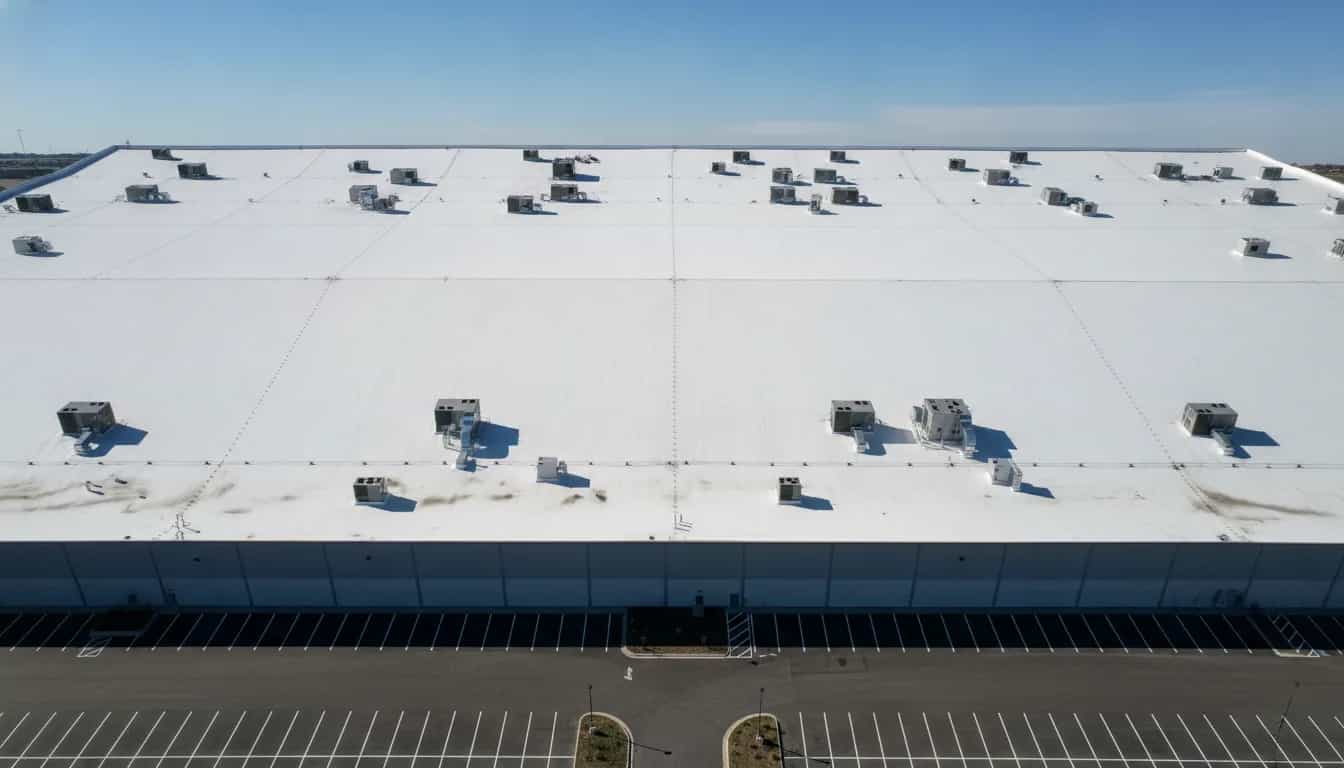
Industrial roofing covers warehouses, distribution centers, and manufacturing buildings, typically large flat roofs carrying significant rooftop equipment. TPO and standing seam metal are the most common systems, with modified bitumen common on older buildings. Large roof areas concentrate drainage at fewer points, so proper slope and drain capacity matter more here than on smaller buildings. We phase work around 24/7 operations and serve Colorado from Denver, Grand Junction, and Scottsbluff.
Commercial Roofing Contractor installs, repairs, and replaces roofing on industrial buildings across Colorado and the Nebraska Panhandle: warehouses, distribution centers, manufacturing plants, and cold storage facilities. Our Denver, Grand Junction, and Scottsbluff crews handle the large roof areas and rooftop equipment loads that come with industrial buildings.
Roof Systems for Industrial Buildings
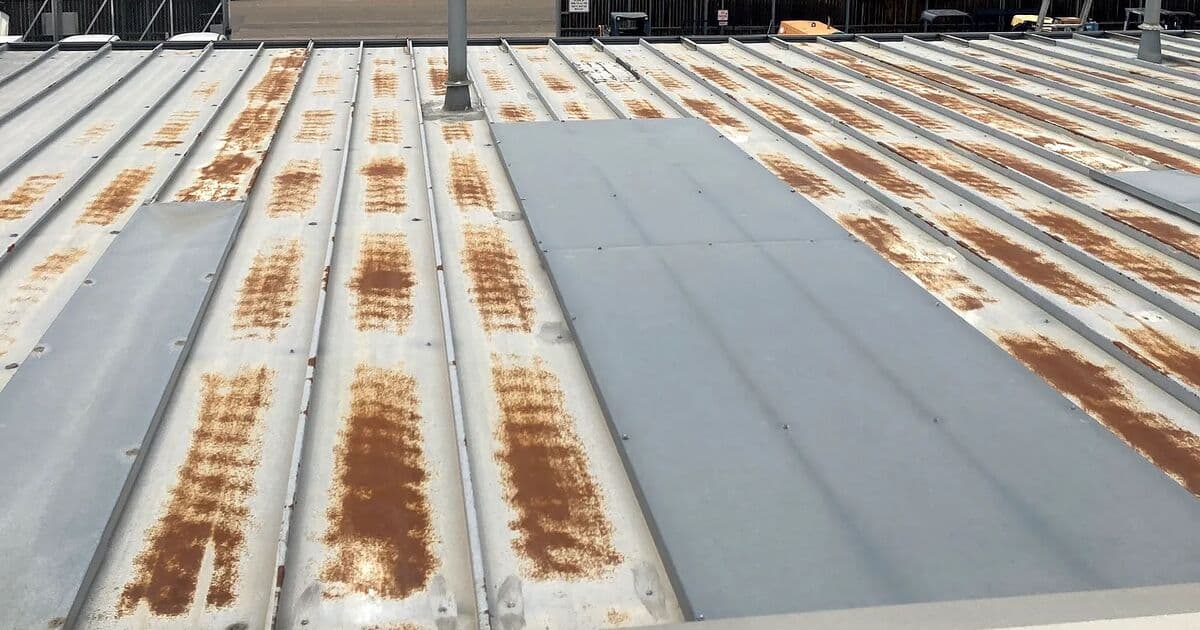
TPO is the most common choice for large industrial roofs: its reflective surface reduces cooling costs on wide-open buildings, and its heat-welded seams hold up over long roof runs and wind uplift. Standing seam metal roofing is common on newer industrial construction, and modified bitumen appears on many older industrial buildings still in service. We match the system to your building's age, use, and rooftop equipment load rather than defaulting to one system.
Heavy Rooftop Equipment
Industrial roofs often carry HVAC units, exhaust fans, skylights, solar arrays, and maintenance walkways. We detail flashing and curbs around every penetration and specify membrane thickness and walkway pads to handle the foot traffic that comes with servicing that equipment, so the roof holds up to ongoing maintenance access, not just the elements.
Large Roof Areas and Drainage
Large, flat industrial roofs concentrate drainage at fewer points than smaller buildings, so proper slope and drain capacity matter more as roof size increases. We assess drainage as part of every industrial inspection, because ponding water on a large roof is a bigger structural and leak risk than on a small one, and expansion joints on very large buildings are a common failure point we check specifically. Two inches of standing water across a 40 by 60 foot bay is roughly 25,000 pounds on that section of deck, which is why commercial roof drainage is scoped as its own piece of work on an industrial roof rather than an afterthought to the membrane.
Keeping Operations Running
Most industrial roof projects happen while the building stays fully operational. We phase work in sections, coordinate around shift schedules and loading dock activity, and manage large roof areas methodically so operations below continue throughout the project. Every industrial roof replacement we plan accounts for your building's specific operating schedule.
Industrial Roofing in Scottsbluff and the Nebraska Panhandle
Industrial roofing in western Nebraska mostly means agricultural processing, and that changes the specification in two concrete ways. Process exhaust puts moisture, and sometimes oils, onto the roof surface near the stacks, which rules out membranes that soften on contact with them. And the roof deck carries more penetrations than a distribution building does, so the detail work at curbs and stacks is the majority of the labour rather than an afterthought.
Scheduling is the harder constraint. A processing facility has weeks where the building simply cannot stop, so the roof has to be planned around the season instead of the season around the roof. We phase by section and dry in each day's work before leaving. Our Scottsbluff office handles industrial roofs across Gering, Terrytown, Mitchell, Minatare, Morrill, Bayard, and Bridgeport.
Our Process for Industrial Roofs
- Free inspection and drainage assessment. We assess the full roof area, rooftop equipment, and drainage capacity for your building.
- System recommendation. We recommend the system matched to your building's age, use, and budget, with a written scope and timeline.
- Phasing plan. For operational buildings, we plan the work in sections around shift schedules and loading activity.
- Installation. The roof system is installed to manufacturer specification across the full roof area.
- Final inspection and warranty registration. The finished roof is inspected and registered for its manufacturer warranty.
Frequently Asked Questions About Industrial Roofing
What roof systems are best for industrial and warehouse buildings?
TPO is the most common choice for large industrial roofs, with its reflective surface reducing cooling costs on wide-open buildings and heat-welded seams handling wind uplift over long roof runs. Standing seam metal is common on newer industrial construction, and modified bitumen appears on many older industrial buildings. We match the system to your building's age, use, and rooftop equipment load.
Do you handle the roof drains on a large industrial roof?
Yes. A warehouse or distribution roof moves an enormous volume of water through relatively few drains, so one flattened strainer or crushed downspout puts standing water across a wide low area fast. We replace drain bowls, strainers, clamping rings, scuppers, conductor heads, and downspouts as part of the roof scope, and we check drain placement against the low spots rather than assuming the original layout still drains the roof.
Can you reroof a warehouse without shutting down operations?
Yes. Most industrial roof projects happen while the building stays operational. We phase the work in sections, coordinate around shift schedules and loading dock activity, and manage large roof areas methodically so operations below continue throughout the project.
How do you handle heavy rooftop equipment on industrial buildings?
Industrial roofs often carry HVAC units, exhaust fans, skylights, solar arrays, and walkways for maintenance access. We detail flashing and curbs around every penetration and specify membrane thickness and walkway pads to handle the foot traffic that comes with servicing that equipment.
Do industrial roofs need special consideration for large roof areas?
Large, flat industrial roofs concentrate drainage at fewer points, so proper slope and drain capacity matter more as roof size increases. We assess drainage as part of every industrial inspection, because ponding water on a large roof is a bigger structural and leak risk than on a small one.
What causes leaks on industrial and warehouse roofs?
The same issues that affect any flat commercial roof, seams, flashing, and penetrations, are magnified on industrial buildings simply because there is more roof and more rooftop equipment. Ponding water at low points and expansion joints on very large buildings are also common failure areas we check specifically.
How long does an industrial roof replacement take?
Timeline depends heavily on total roof area and phasing requirements. A large distribution center may take several weeks when phased around operations, while a smaller industrial building can be completed much faster. We provide a specific timeline as part of your written proposal after inspection.
What does industrial roofing cost in Colorado?
Cost depends on the system, total square footage, and rooftop equipment complexity, generally following the same per-square-foot ranges as other commercial roof systems, with large industrial roofs sometimes achieving a lower per-square-foot cost due to scale. A site visit is required for firm pricing. Denver metro: (720) 893-7663. Western Slope: (970) 877-7663. Nebraska Panhandle: (308) 536-7663.
See all roofing FAQs. Grouped by topic: commercial and residential decisions, cost, insurance claims, storm response, warranties, and financing.
Related Resources
CRC Serving You From Three Offices
Available from all three offices: Denver, Grand Junction, and Scottsbluff, plus surrounding service areas.
Denver Office
Denver Metro and Front Range
(720) 893-7663
Grand Junction Office
Western Slope
(970) 877-7663
Scottsbluff Office
Nebraska Panhandle
(308) 536-7663