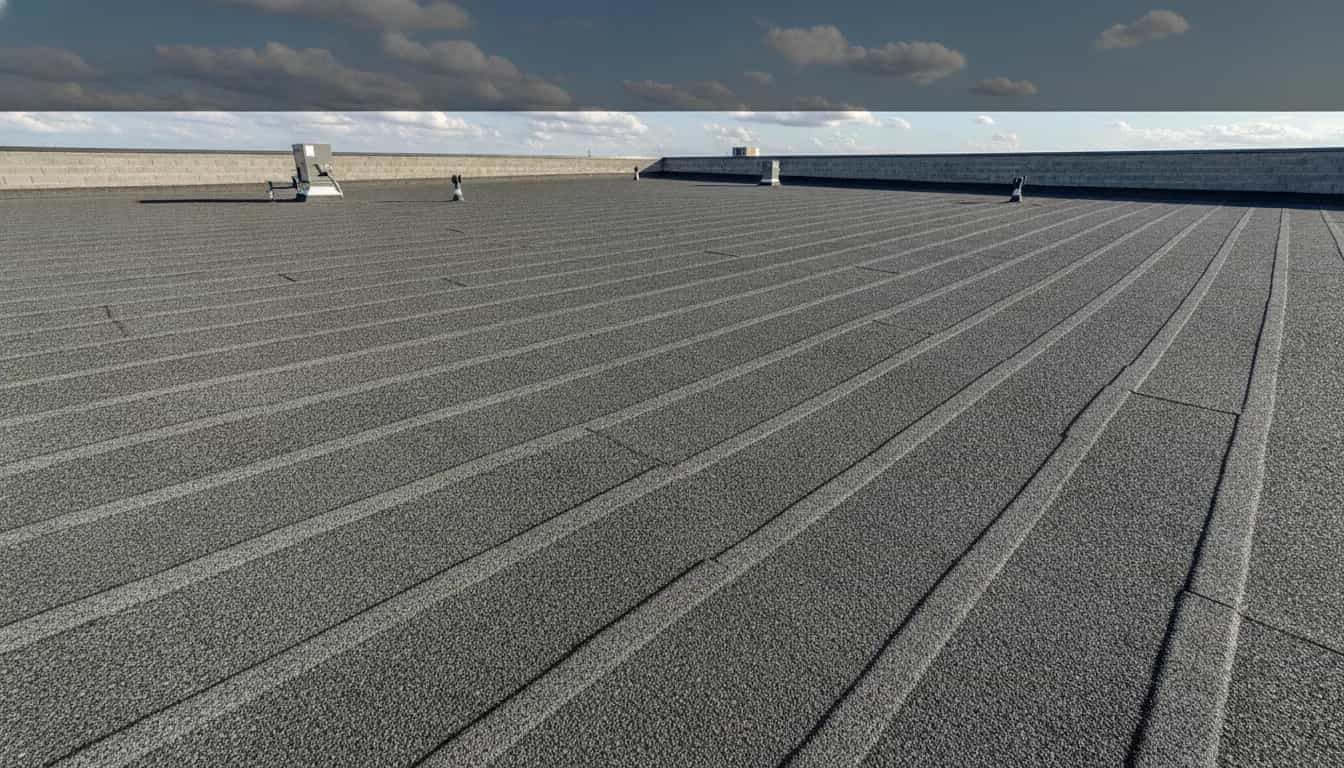
Modified bitumen is a multi-ply, asphalt-based roofing system reinforced with APP or SBS polymer modifiers, applied in overlapping sheets with a granulated cap sheet on top. It is a proven low-slope system with a long Colorado track record, typically lasting 15 to 25 years. We install and repair modified bitumen systems from our Denver and Grand Junction offices.
Commercial Roofing Contractor installs and repairs modified bitumen roofing systems on office buildings, retail centers, and industrial facilities across Colorado and the Nebraska Panhandle. Our Denver and Grand Junction crews work with torch-applied, cold-applied, and self-adhered modified bitumen systems built for the Front Range, the Western Slope, and the Nebraska Panhandle.
What Modified Bitumen Roofing Is
Modified bitumen is a multi-ply roofing system built from asphalt reinforced with polymer modifiers, applied in overlapping sheets over a base sheet. The top cap sheet is usually granulated for UV protection and surface durability. It has one of the longest track records of any low-slope commercial roofing system, including on many older buildings across our service area.
APP vs SBS Modified Bitumen
APP-modified bitumen is more rigid and UV-resistant and is typically torch-applied, performing well in consistently hot, sunny conditions. SBS-modified bitumen is more flexible and rubber-like, tolerating Colorado's freeze-thaw cycling and daily temperature swings better, and can be torch-applied, cold-applied, or self-adhered depending on site conditions. We specify the system that matches your building and any restrictions on open-flame application.
How Modified Bitumen Performs in Colorado Conditions
Hail
Hail can bruise the granulated cap sheet or, in severe events, puncture the membrane, especially where the surface has already worn thin. We inspect granule coverage and check for hidden impact damage as part of every assessment, because surface bruising is not always visible from a walk-by.
Freeze-thaw and high-altitude UV
Colorado's repeated freeze-thaw cycling stresses seams and flashings, and high-altitude UV degrades the cap sheet faster than sea-level specifications suggest. SBS systems generally tolerate the temperature swings better than APP, which is why SBS is often the better default specification for Colorado's climate.
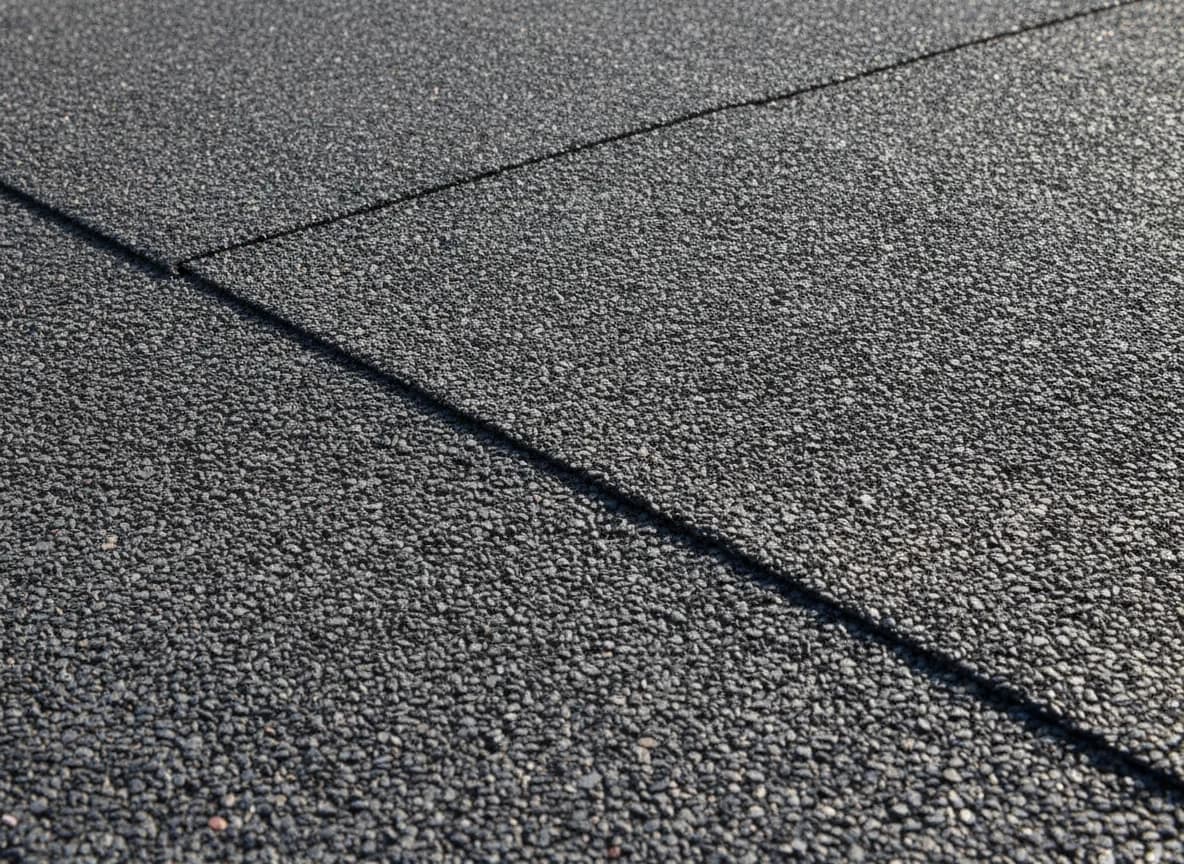
Multi-Ply
Modified Bitumen Cap Sheet
A granulated surface protects against UV and surface wear, multi-ply construction overlaps the seam laps for redundancy, and it comes in APP and SBS polymer formulations.
Modified Bitumen vs Other Commercial Roof Systems
Modified bitumen suits buildings that want a proven multi-ply system with strong puncture resistance from the layered construction. Buildings prioritizing reflectivity to cut cooling costs may be better served by TPO roofing, while buildings wanting cold-weather flexibility at a lower installed cost may prefer EPDM roofing. Every modified bitumen recommendation is part of a broader commercial roof replacement evaluation, not a one-size-fits-all pitch.
The closest comparison is the system modified bitumen was developed from. Built-up roofing is also a multi-ply asphalt roof, but its plies are assembled on the roof and surfaced, usually with gravel, rather than arriving as factory-made sheets. That single difference drives most of the others: weight, installation time, and how straightforward the roof is to inspect and repair later. We set the two side by side in modified bitumen vs built-up roofing.
Modified Bitumen Roofing in Scottsbluff and the Nebraska Panhandle
Application method matters more than usual on Panhandle work. A torch-applied system is a poor fit next to grain handling, feed storage, or anything else where combustible dust is part of the operation, and plenty of the low-slope building stock around Scottsbluff and Gering sits in exactly that context. Self-adhered and cold-applied systems get the same multi-ply redundancy onto the roof without an open flame near the building.
That redundancy is the reason mod-bit still gets specified at all: two or three plies mean a breach in the cap sheet is not immediately a breach in the roof, which is worth real money on a building where the contents matter more than the structure. Our Scottsbluff office installs and repairs modified bitumen across Gering, Terrytown, Mitchell, Minatare, Morrill, Bayard, and Bridgeport, and we will tell you when aroof coating would buy the same years for less.
Our Modified Bitumen Installation Process
- Free inspection and moisture survey. We assess deck condition, insulation, and whether repair, recover, or full tear-off is the right approach.
- Tear-off or recover. A sound, dry existing roof may be a recover candidate; a wet or failing substrate requires a full tear-off.
- Base sheet installation. A base sheet is set and secured to the prepared substrate.
- Cap sheet application. The granulated cap sheet is torch-applied, cold-applied, or self-adhered to manufacturer specification, with all seams properly lapped.
- Flashing, detail work, and inspection. Penetrations, edges, and flashings are detailed and the finished roof is inspected and registered for its manufacturer warranty.
Frequently Asked Questions About Modified Bitumen Roofing
What is modified bitumen roofing?
Modified bitumen is a multi-ply roofing system built from asphalt reinforced with polymer modifiers, either APP (a plastic-like modifier) or SBS (a rubber-like modifier), applied in overlapping sheets over a base sheet. The top cap sheet is usually granulated for UV protection and durability. It has a long track record on low-slope commercial roofs, including many older Colorado buildings.
APP or SBS modified bitumen, what is the difference?
APP-modified bitumen is more rigid and UV-resistant, typically torch-applied, and performs well in consistently hot climates. SBS-modified bitumen is more flexible and rubber-like, tolerates Colorado's freeze-thaw cycling and temperature swings better, and can be torch-applied, cold-applied, or self-adhered. We specify the system that matches your building and installation constraints.
How is modified bitumen installed?
Modified bitumen sheets are applied by torch (heat-welding the underside to the substrate), cold adhesive, or self-adhered peel-and-stick backing, depending on the product and site conditions such as occupied-building fire safety requirements. We select the application method that fits your building and any restrictions on open flame.
How long does a modified bitumen roof last?
A properly installed modified bitumen system typically lasts 15 to 25 years, with SBS systems and multi-ply builds often at the longer end of that range. Installation quality, granule wear, and seam maintenance affect actual service life more than the base material choice.
How does hail affect a modified bitumen roof?
Hail can bruise the granulated cap sheet or, in severe events, puncture the membrane, especially where the surface has already worn thin. We inspect the granule coverage and check for hidden impact damage as part of every modified bitumen assessment, because surface bruising is not always visible from a walk-by.
Can modified bitumen be repaired instead of replaced?
Often, yes, when damage is localized to seams, flashing, or a specific section. Widespread granule loss, multiple layer failure, or broad wet insulation are signs that a repair will not hold and a full replacement is the better investment. We assess which situation you are in during a free inspection.
What does commercial modified bitumen roofing cost in Colorado?
Published installed-cost ranges commonly run roughly $4 to $9 per square foot depending on the number of plies, application method, insulation package, and site conditions. A site visit tightens that range considerably, so we do not quote firm pricing without seeing the roof. Denver metro: (720) 893-7663. Western Slope: (970) 877-7663. Nebraska Panhandle: (308) 536-7663.
See all roofing FAQs. Grouped by topic: commercial and residential decisions, cost, insurance claims, storm response, warranties, and financing.
Related Resources
CRC Serving You From Three Offices
Available from all three offices: Denver, Grand Junction, and Scottsbluff, plus surrounding service areas.
Denver Office
Denver Metro and Front Range
(720) 893-7663
Grand Junction Office
Western Slope
(970) 877-7663
Scottsbluff Office
Nebraska Panhandle
(308) 536-7663