Commercial Roofing
Commercial Metal Roof Repair in Colorado and the Nebraska Panhandle
By Chris Sanchez, Commercial Roofing Contractor · October 1, 2026
- Commercial Roofing
- Roof Repair
- Metal Roof Restoration
- Hail Damage
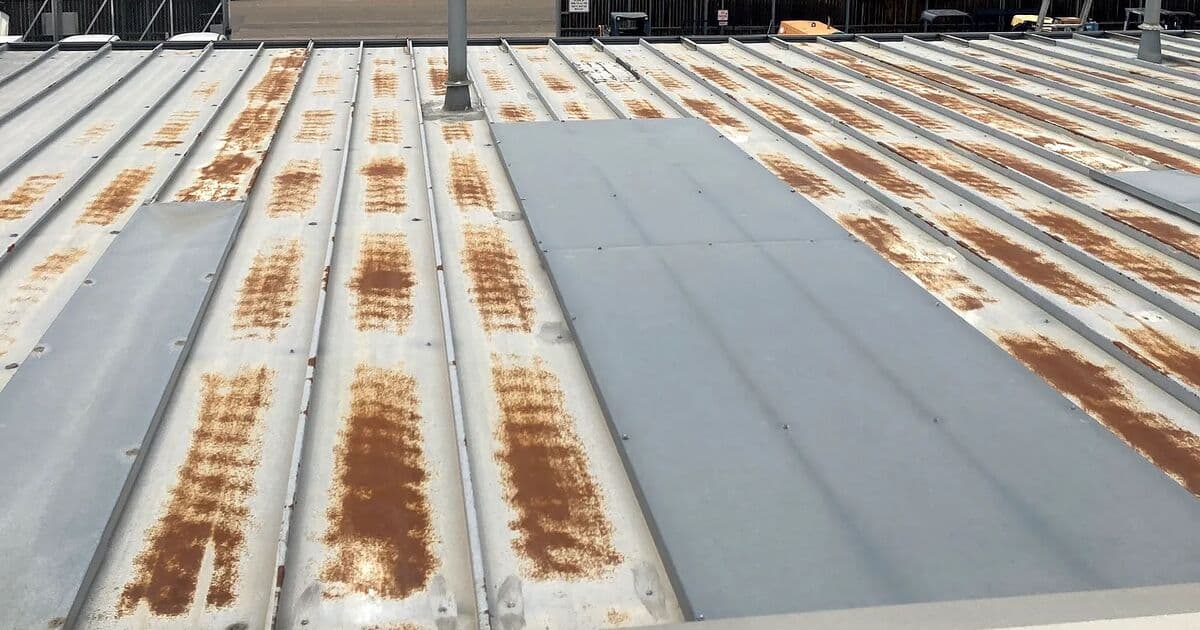
Short answer: commercial metal roofs leak at their joints and holes, not through sound panels: fastener washers, panel laps, flashings and penetrations. Fix the failed part rather than caulking over it. When the problems are everywhere at once on metal that is still sound, a coating restoration usually beats chasing leaks. When the damage is widespread, as after hail, a recover over the existing metal is often the better roof.
Metal is one of the longest-lived roofs a commercial building can have, which is exactly why a leaking one is frustrating. The panels themselves are rarely the problem. What fails is everything that holds the panels together and keeps water out between them, and on a typical commercial metal roof there are thousands of those points.
That is true whether the building is a warehouse on the Front Range, a shop on the Western Slope or an equipment building in the Nebraska Panhandle. The climate differs in the details, but the failure points are the same, and so is the decision you eventually face: repair, restore, or recover.
Where commercial metal roofs actually leak
Most commercial metal roofs are one of two types, and they fail differently.
Exposed-fastener panels (often called R-panel or ribbed panel) are screwed straight through the face of the panel into the structure below. Every screw has a rubber washer under its head, and that washer is the only thing keeping water out of the hole. Standing seam panels hide their fasteners in clips under a raised, folded seam, so there are far fewer holes in the roof, but the seams, end laps and flashings still have to stay tight.
On either type, look for leaks in this order:
- Fasteners. Washers dry out, crack and shrink with years of sun, and screws back out slightly as the roof expands and contracts every day. A screw that is loose by a few turns lets water run down its shank. On an exposed-fastener roof this is the most common leak by a wide margin.
- Side and end laps. Where one panel overlaps the next, the sealant between them ages and the lap can open slightly. Water driven by wind gets under a lap that looks closed from the ground.
- Flashings and trim. Ridge caps, eave and rake trim, and the flashing where the roof meets a wall or parapet all move independently of the panels. Their fasteners and sealant fail on the same schedule as the field.
- Penetrations. Pipe boots, vents, exhaust fans and rooftop unit curbs are holes cut through the roof on purpose. The boot or curb flashing around each one is a common leak on any roof, metal included.
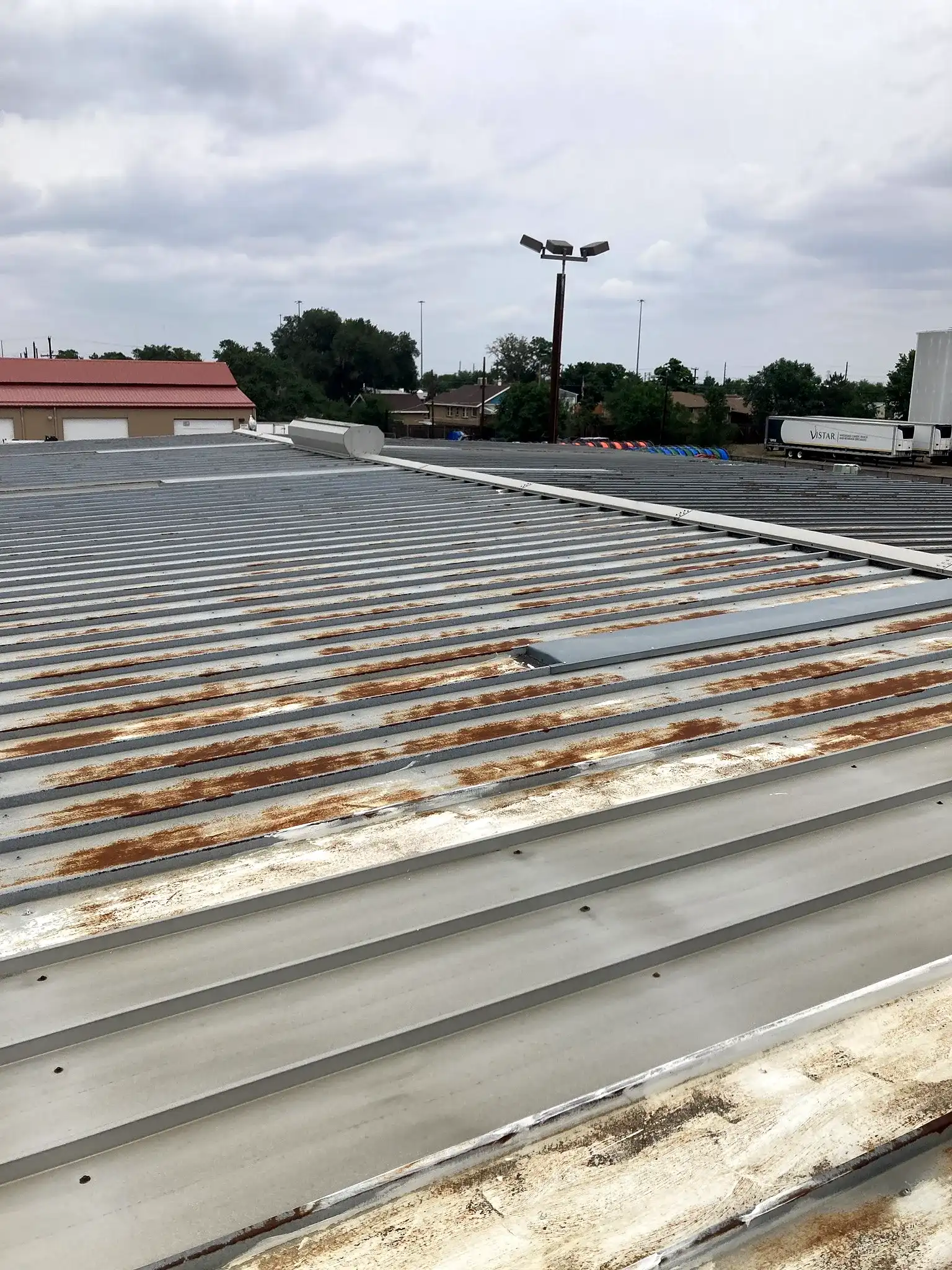
- Rust. Corrosion usually starts at the same places water sits longest: along fastener lines, at laps, at cut panel edges and around penetrations. Surface rust is a warning; rust that has eaten through the panel is a hole.
What a lasting repair looks like
The honest test of a metal roof repair is whether it replaced the part that failed or just covered it up. A lasting repair on the failure points above usually means:
- Replacing backed-out or stripped screws, typically with a slightly larger fastener so it bites into fresh metal, with a new washer under the head.
- Opening, cleaning and resealing laps and flashings rather than running a bead over the outside of them.
- Re-flashing a failed penetration properly, which often means a new boot or curb flashing rather than more sealant on the old one.
- Cutting out and patching panel that has rusted through, or replacing the panel if the damage is extensive.
The materials matter as much as the method. Sealants and patches need to be compatible with the metal and with any coating that might go on later. Asphalt-based roof cement, the bucket of black tar that shows up on a lot of metal roofs, does not bond well to metal and makes a later coating harder to do properly. Dissimilar metals are the other trap: copper or the wrong fastener in contact with galvanized steel corrodes the steel around it.
When repairing leak by leak stops making sense
One leaking fastener is a repair. Leaks that keep moving to new spots are a sign that the whole roof has reached the same age at once, because every washer and every lap on it was installed on the same day. At that point repairing one leak at a time rarely gets ahead of the next one, and there are two better options.
Coating restoration: when the metal is still sound
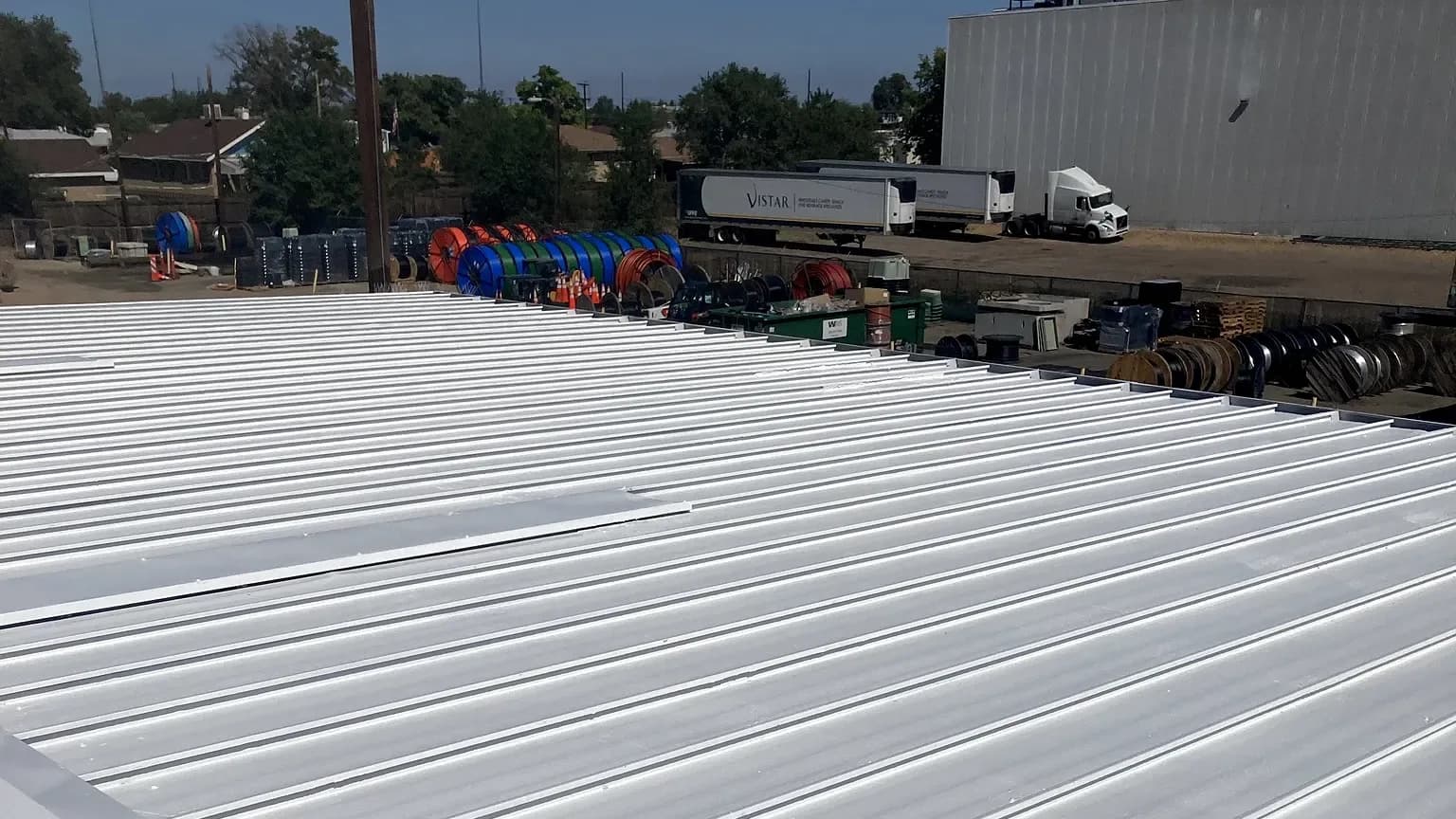
If the panels are structurally sound but the rust, washers and laps are failing across the whole roof, a coating restoration fixes all of it in one pass. The rust is treated, the seams and fasteners are sealed, and a coating system goes over the entire field, turning thousands of separate leak points into one continuous surface.
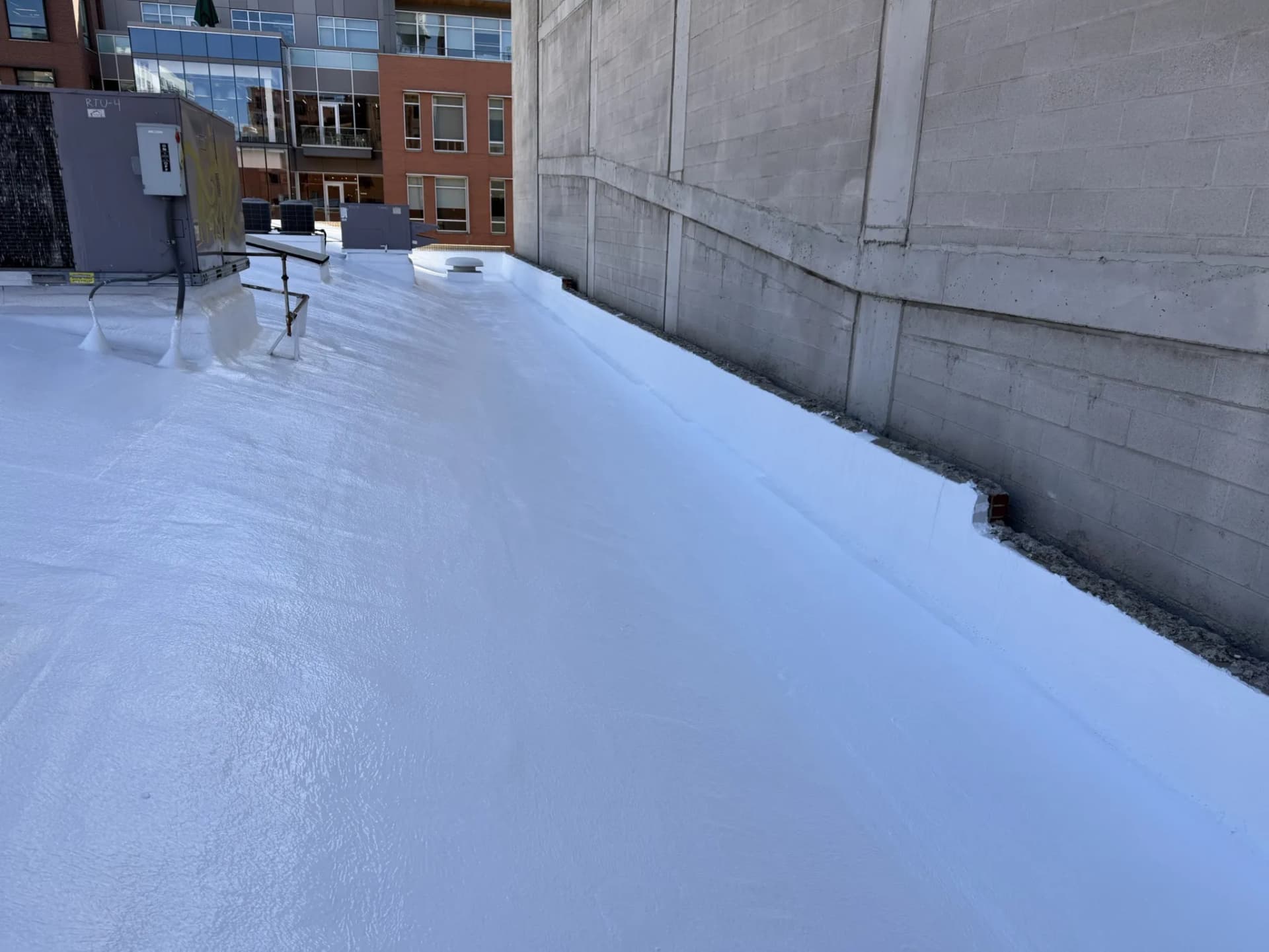
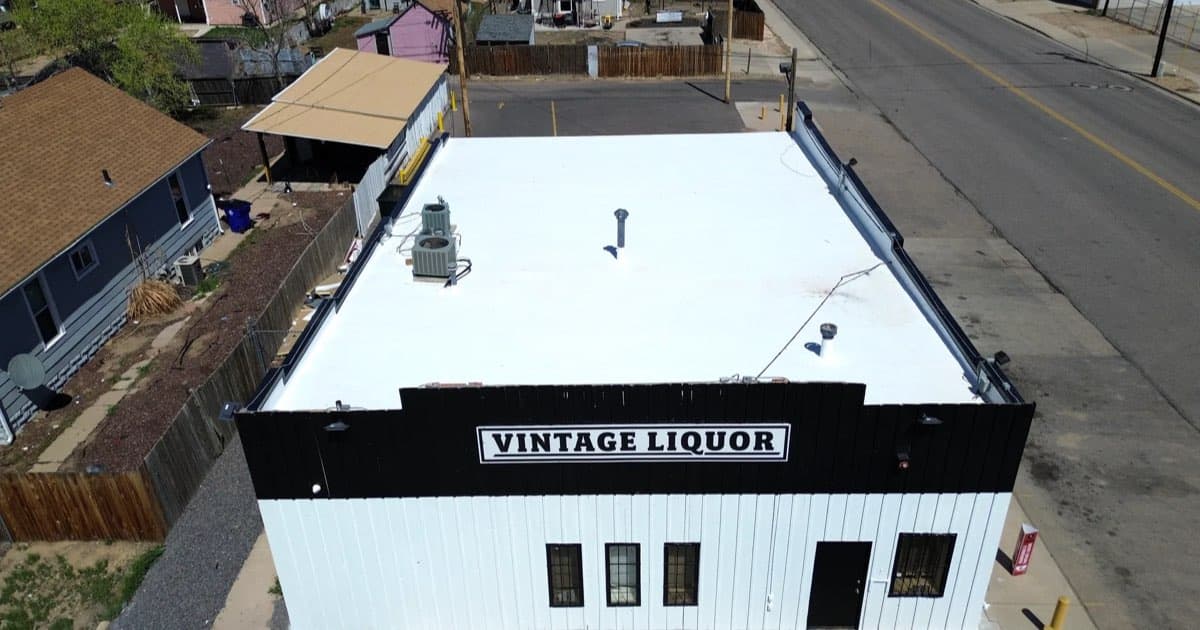
That is what we did on the Denver roof in the photos above. The metal was rusted from end to end but still sound, so instead of a tear-off we restored it with an American WeatherStar metal roof restoration system, finished in reflective white and backed by a 20-year No Dollar Limit manufacturer warranty. The full story is in the Denver metal roof coating project, and our guide to roof coatings versus tear-off covers when a coating is and is not the right call. A coating is not a fix for metal that has rusted through in many places or a roof structure that is failing; those need panel replacement first, or a different approach entirely.
Recover: when the damage is widespread
When damage is across the whole roof, as it is after a serious hail storm, or when the building needs insulation it never had, a recover is often the better roof. A new insulated low-slope system is built directly over the existing metal, so the old panels never come off, the building stays dry and in use while the work goes on overhead, and the exposed fasteners the next storm would have worked loose are gone for good.
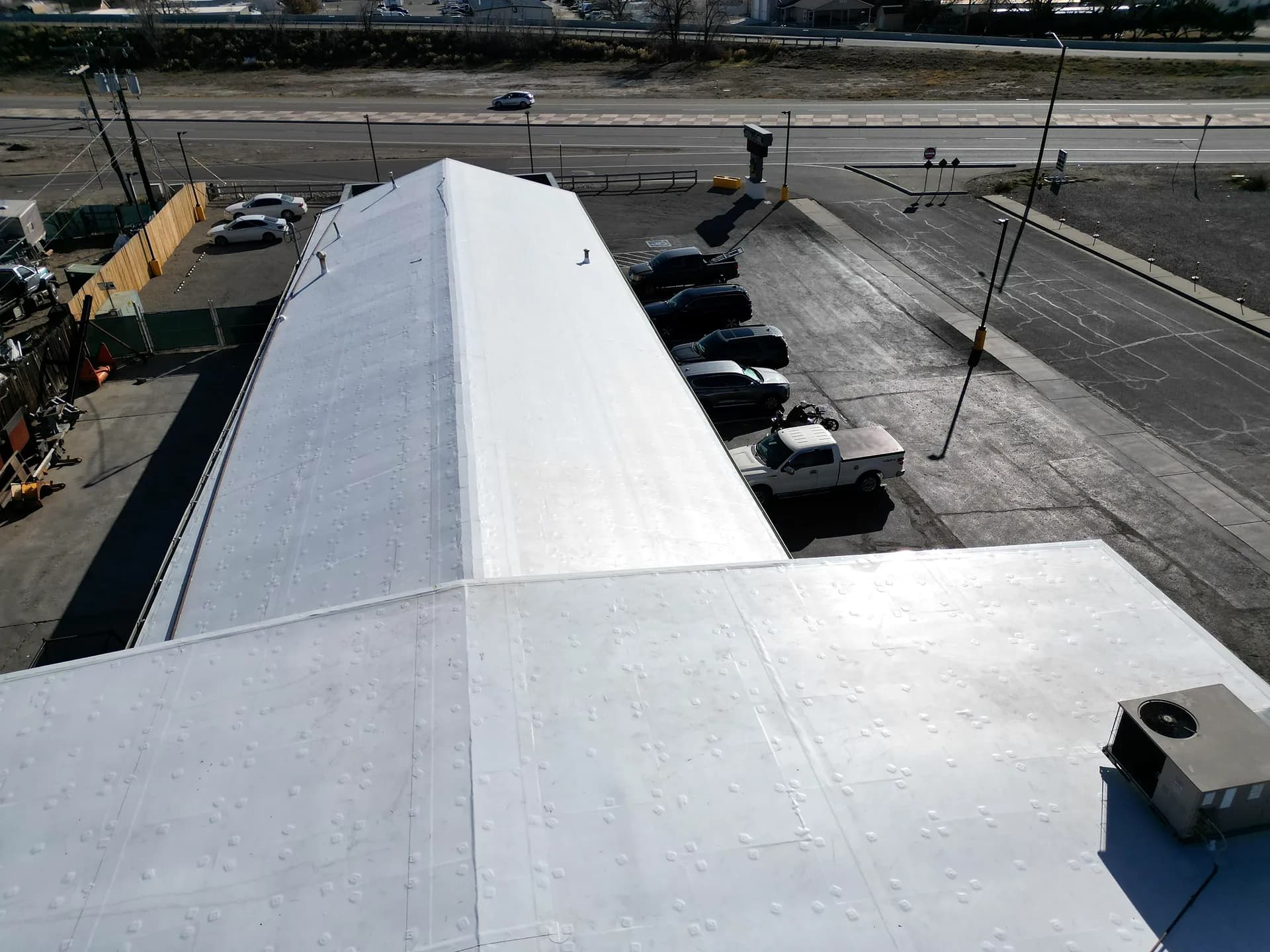
We did exactly that on a hail-damaged 26-gauge exposed-fastener roof on Highway 50 in Grand Junction: rigid insulation built up to meet current county code, a cover board, and a 60-mil white TPO membrane over more than 12,000 square feet of metal, with no tear-off. See the Grand Junction metal roof recover for the full scope.
Hail and metal roofs: dents are not the whole story
Hail is the reason many commercial metal roofs in Colorado and the Nebraska Panhandle need attention. Metal dents easily, and a dented panel often still sheds water, which is why some policies carry a cosmetic damage exclusion that pays for loss of function but not appearance.
The damage that matters is less visible than the dents. Hail cracks the coating that keeps corrosion off the steel, so a panel can rust outward from the impact points a year or two later. It also splits and displaces fastener washers, which turns a sound roof into a leaking one without a single hole in a panel. Both are functional damage, and both are easy to miss on the day of the storm.
So have the roof documented soon after a storm, with the impacts measured and photographed, even if it is not leaking yet. Our guide to going from hail inspection to insurance approval walks through that process, and our post on hail claims for Panhandle farm and shop buildings goes deeper on the washer and coating damage that metal outbuildings take.
What our climate does to metal roofs
Colorado and western Nebraska are hard on the parts of a metal roof that fail first. High altitude sun is strong, which ages rubber washers and sealants faster. Large daily temperature swings make the panels expand and contract, which is what works fasteners loose over time. Freeze-thaw cycles force any water that got into a lap or a loose fastener to expand and open the gap further. And strong wind, a fact of life across the Panhandle, lifts trim and drives rain sideways under laps.
None of that makes metal a poor choice here. It means the maintenance matters: a yearly inspection, and another after any big hail or wind event, catches a backed-out screw while the fix is a screw and a washer. Our commercial roof maintenance guide covers what that visit should include.
Getting a metal roof looked at
The first step is the same whichever fix you end up with: an inspection that finds every failure point, not just the one dripping on the warehouse floor today, and tells you honestly whether you are looking at a repair, a restoration or a recover. We inspect commercial roofs free of charge from our offices in Denver, Grand Junction and Scottsbluff, covering the Front Range, the Western Slope and the Nebraska Panhandle. You can read more about our commercial metal roofing, commercial roof repair and roof coating work, or see every town we cover on our service areas page.
Frequently Asked Questions
Where do commercial metal roofs usually leak?
Almost never through the middle of a sound panel. Leaks start at the joints and holes: the washers under exposed fasteners, the side and end laps where panels overlap, flashings at walls, curbs and ridges, and every pipe, vent or unit that penetrates the roof. Rust usually starts in the same places, because that is where water sits longest.
Can you just caulk a leaking metal roof?
Not in a way that lasts. Sealant smeared over a leaking fastener or lap hides the problem for a season, then the metal moves with the temperature, the bead cracks, and water tracks in behind it where it is harder to find. A lasting repair replaces the failed part, such as a backed-out screw, a split washer or a lifted flashing, and seals it with a product compatible with the metal and with any coating that may go on later.
When should a commercial metal roof be coated instead of repaired?
When the metal is still structurally sound but the problems are everywhere at once: rust along every rib and fastener line, washers aging across the whole roof, and leaks that keep moving. At that point repairing one leak at a time rarely gets ahead of the next one. A coating restoration treats the rust, seals the seams and fasteners, and turns the field into one continuous surface, usually for far less cost and disruption than a tear-off.
When is a recover better than repairing a metal roof?
When damage is widespread, as after a major hail storm, or when the building needs insulation it does not have. A recover builds a new insulated low-slope roof system directly over the existing metal, so the building stays in use during the work and the old panels never come off. It also removes the exposed fasteners that the next storm would have worked loose.
Is hail damage on a metal roof covered by insurance?
It depends on the damage and the policy. Hail commonly dents metal without letting water in, and some policies carry a cosmetic damage exclusion that pays for loss of function but not appearance. Hail can also crack the panel coating and split fastener washers, which are functional failures that show up later as rust and leaks. Have the roof documented soon after the storm, and read the exclusions in your own policy.
How often should a commercial metal roof be inspected?
At least once a year, and again after any significant hail or wind event. Fasteners back out and washers age gradually, so a yearly look catches them while the fix is a screw and a washer rather than a wet ceiling and a rusted panel.
Talk to the team nearest you: our Denver office, our Grand Junction office, or our Scottsbluff office.