Commercial Roofing Contractor provides roof replacement, roof repair, and hail damage insurance claim work in Colorado Springs, Colorado from our Denver office at 5300 Broadway. Our completed Colorado Springs work includes a fully documented hail-claim shingle replacement, and every inspection we do in the city is free and no-obligation.
Roofing for the Pikes Peak Region and Its Hail Seasons
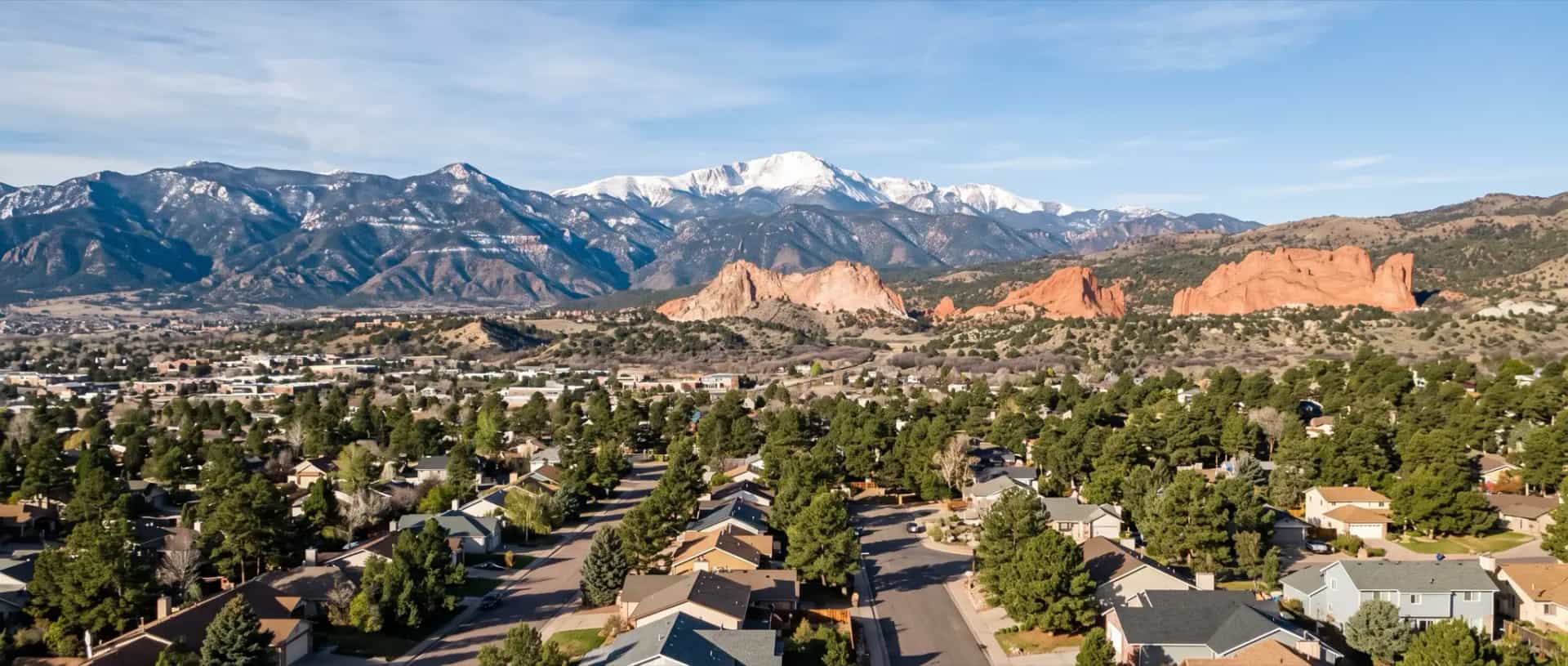
Colorado Springs sits at the foot of Pikes Peak in El Paso County, one of the most hail-battered corners of the country, where late-spring and summer storms roll off the mountains and hammer the neighborhoods from Briargate and Powers down through the east-side subdivisions. The city's roofs range from decades-old shingle in the established central and west-side neighborhoods to newer HOA-governed communities on the north and east where shingle style and color often need approval before a reroof can start. At over 6,000 feet, Colorado Springs roofs take intense high-altitude UV and hard freeze-thaw cycling on top of the hail, which ages flashings and pipe boots faster than the shingles around them. We inspect for all of it, document what we find with photos, and give you a straight answer on repair versus replacement.
Our Work in Colorado Springs
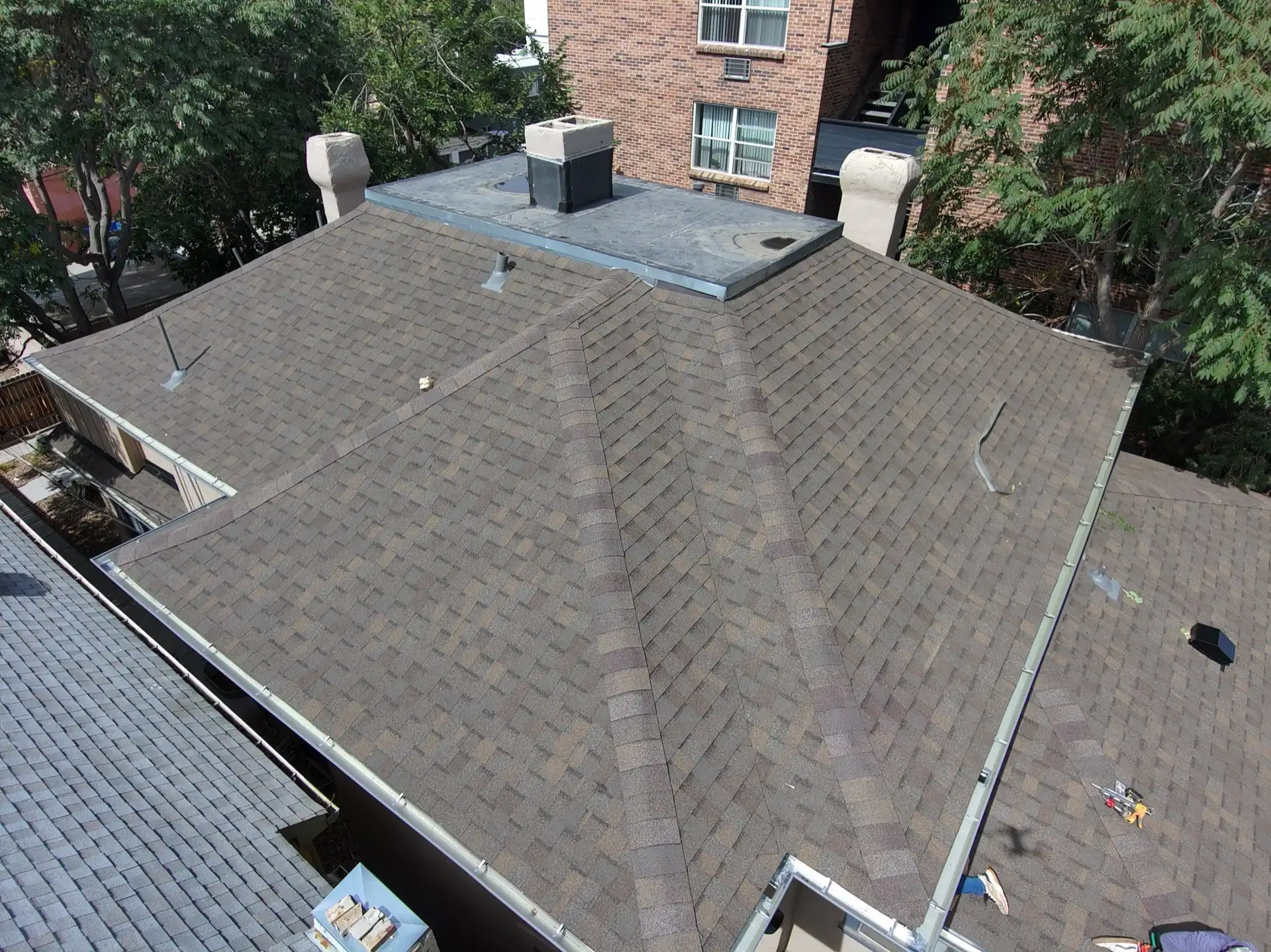
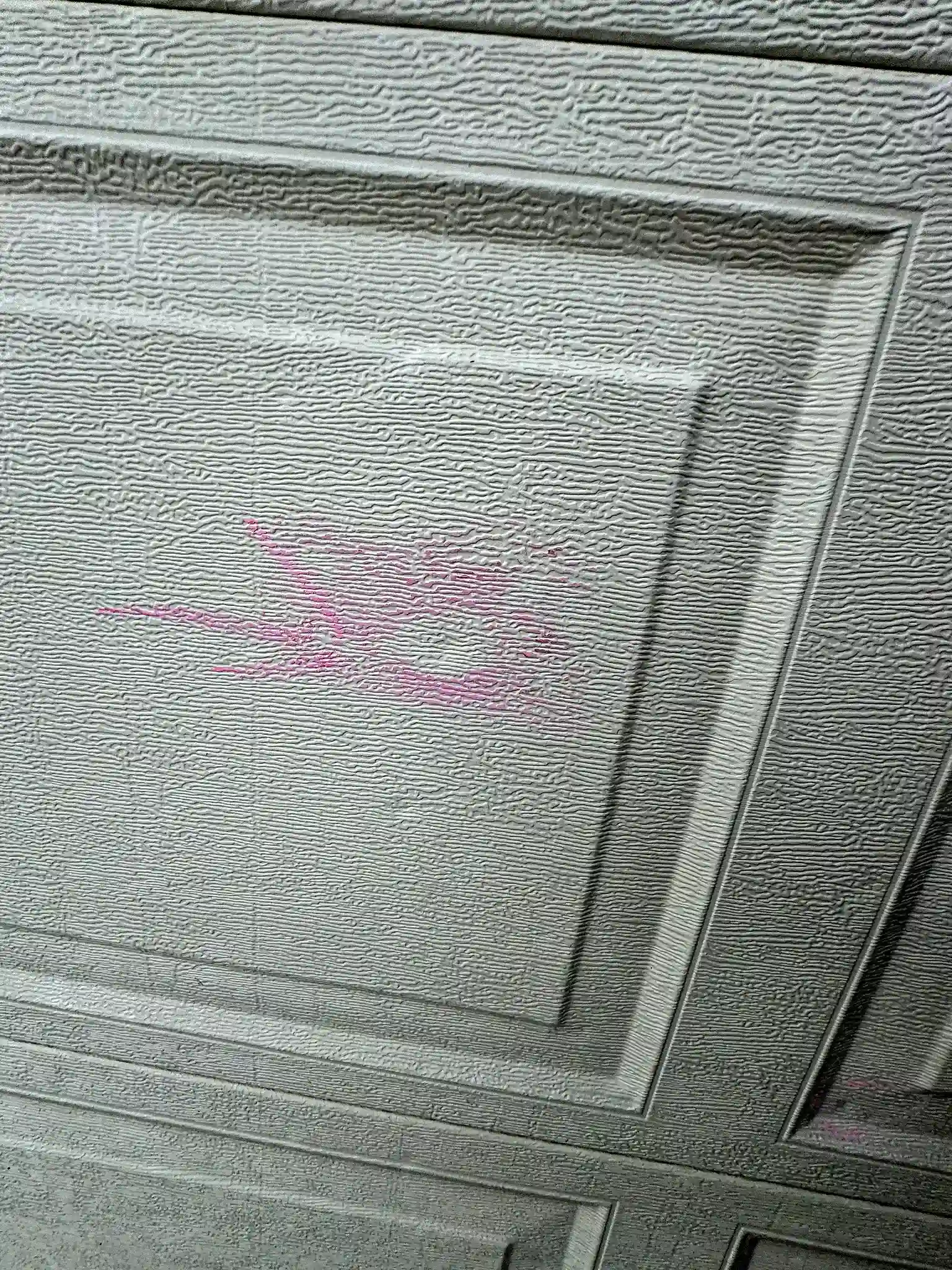
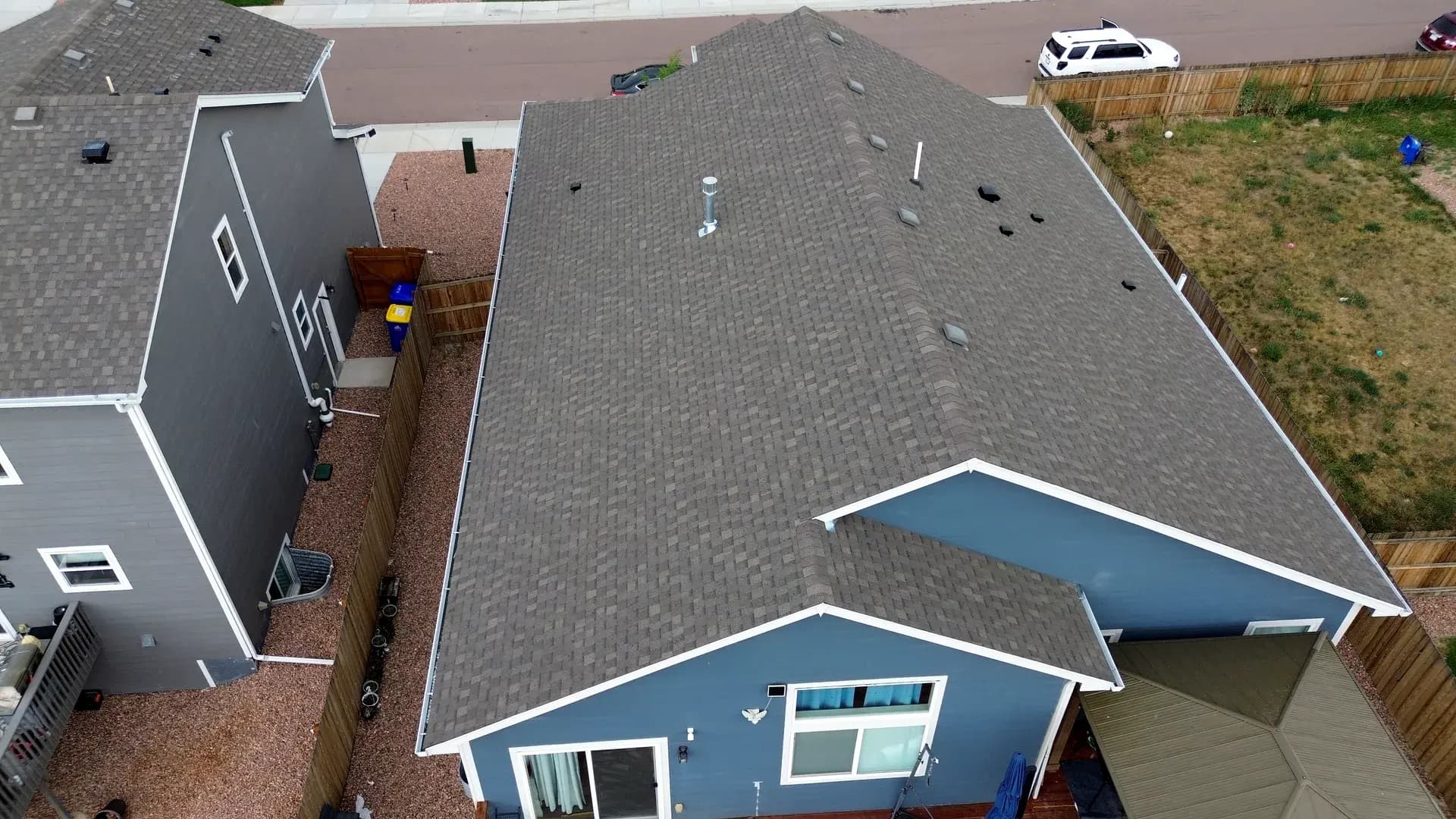
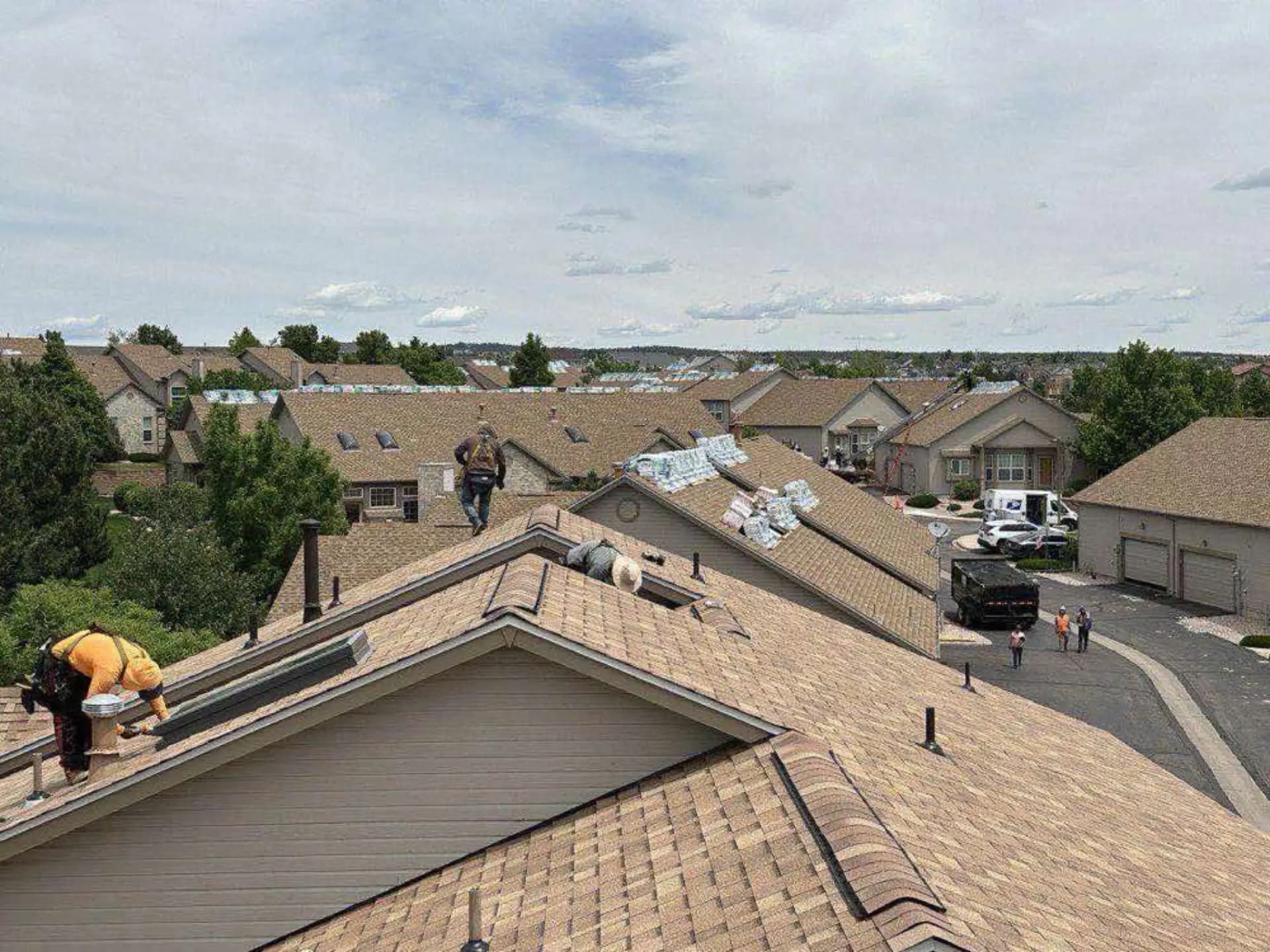
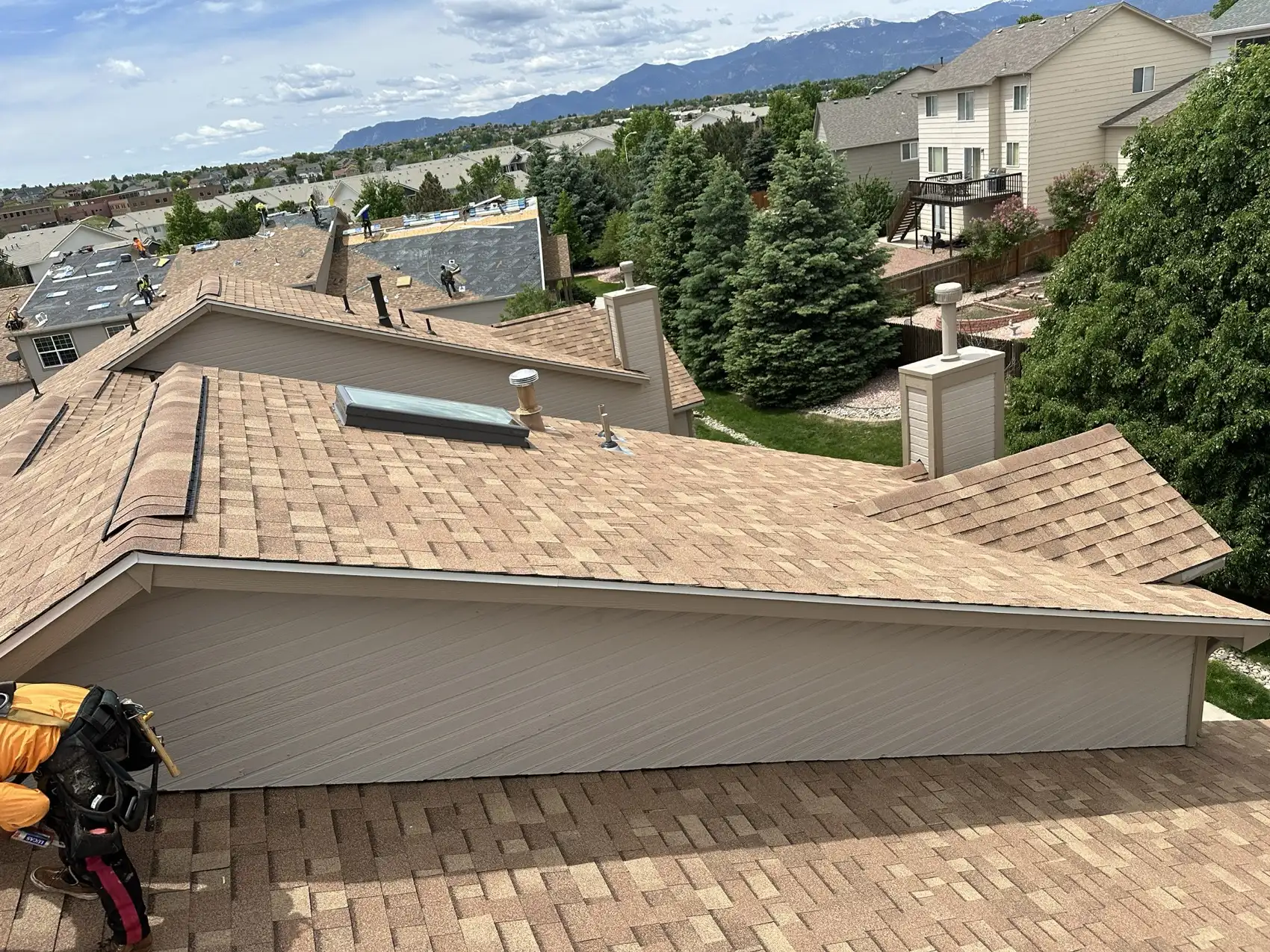
This Colorado Springs home came to us after a hail storm that damaged the shingle roof along with the garage door, downspouts, and window screens. We documented the full scope for the homeowner's insurance claim, completed a full tear-off, and installed a new architectural asphalt shingle system.
View the full Colorado Springs project
Multi-Family and HOA Roofing in Colorado Springs
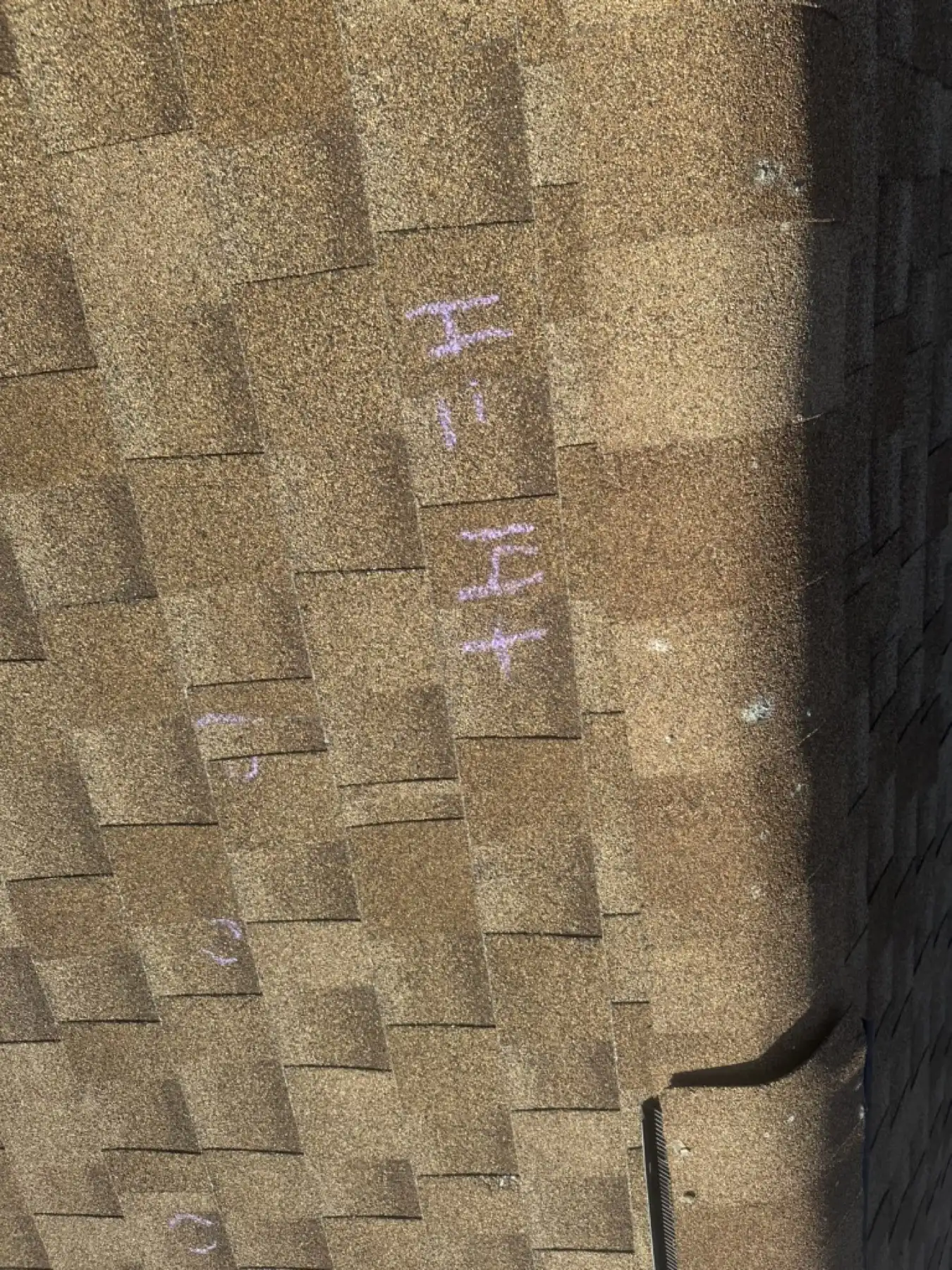
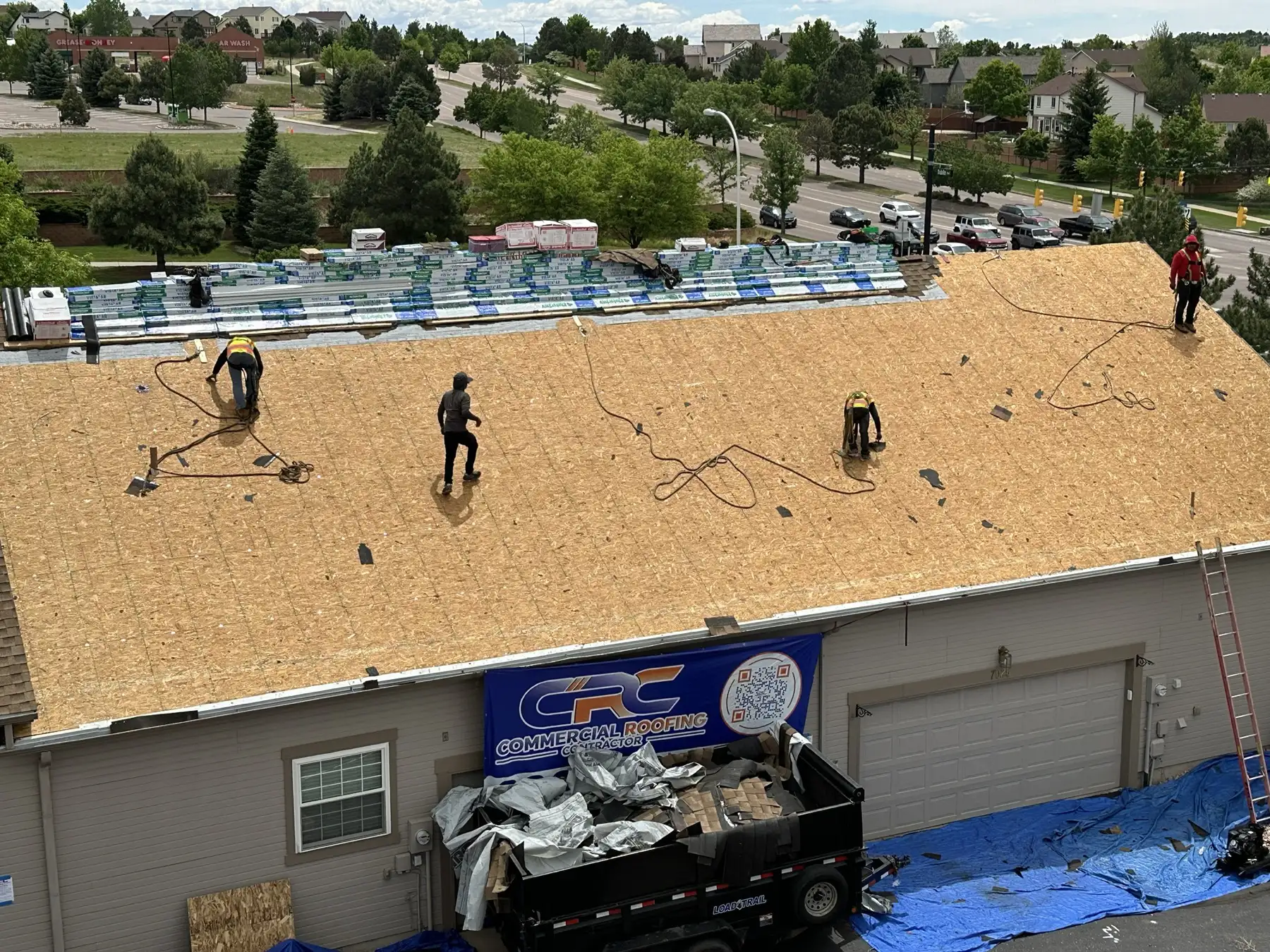
Commercial work in Colorado Springs runs through the same office. At Saddleback at Newport HOA we reroofed all 14 buildings in the community with Malarkey Vista AR architectural shingles, and replaced and re-flashed 95 skylights along the way. We won the job on a competitive bid against nine other contractors, documented the hail damage building by building the way an adjuster does, and carried one approved insurance claim across 80 individual condo owners.
Every building is covered by a manufacturer warranty, so the protection carries across the entire community rather than stopping at individual units. That matters for an HOA board answering to residents: one contractor, one system, and one warranty position for the whole property. You can read the full Saddleback at Newport project or see how we approach multi-family roofing generally.
Roofing Codes and Permits in Colorado Springs
Roofing work in Colorado Springs is permitted and inspected by the Pikes Peak Regional Building Department (719-327-2880). Colorado has no statewide roofing code, so requirements are set jurisdiction by jurisdiction and genuinely differ between neighbouring towns. The details below are taken from the Pikes Peak Regional Building Department's published requirements.
Worth knowing in Colorado Springs: Permitting runs through the Pikes Peak Regional Building Department, not the City of Colorado Springs. That regional department issues the permit, performs the inspections, and publishes the amendments a roof is actually held to here, so a contractor who only knows city hall is looking in the wrong place. Colorado Springs requires a minimum Class A roof covering on every one- and two-family dwelling city-wide, not just inside mapped wildfire areas, and the requirement explicitly applies when you recover or replace an existing roof. Solid wood roofing products are excluded by name, treated or not. That single amendment rules out material choices that are perfectly legal in most of Colorado.
Commercial roofing code in Colorado Springs
| Requirement | Requirement in Colorado Springs |
|---|---|
| Adopted code | 2021 International Building Code, as amended by the 2023 Pikes Peak Regional Building Code |
| Energy code | 2021 International Energy Conservation Code |
| Current codes effective | The 2023 regional code was adopted by the city in March 2023, and its 2nd Printing took effect June 30, 2026. |
| When a permit is required | A permit is required for any roof repair or replacement of 100 square feet or more. Below that it is exempt work. Stocking materials on the driveway or roof counts as starting the job, and doing so before the permit is issued draws a stop-work order plus an investigation fee of twice the permit fee on top of the permit itself. |
| Ice barrier | Required only where the building sits above 7,000 feet, which is the regional code's local definition of a cold climate. At or below that elevation it is not required. Where it does apply it runs from the eave to at least 24 inches inside the exterior wall line. Elevation is listed on the permit receipt, so this is decided address by address rather than city-wide. |
| Overlay and recover | Full tear-off. The regional code deletes the roof-recover sections from both the residential and commercial paths, so recovering an existing roof is not generally available. Two exceptions survive: a complete separate system such as standing seam metal that carries its own loads to the structure, and metal panel, metal shingle, concrete or clay tile installed over existing wood shakes. |
| Mid-roof inspection | Not required for typical asphalt roofing or direct-to-deck metal shingles on homes, which close out on a final inspection alone. Tile roofs do require a dry-in inspection after underlayment, battens and sub-flashing are in place and before any tile is stocked or installed. |
| Contractor licensing | A current Pikes Peak Regional Building Department license is a hard prerequisite: no permit will be issued to a contractor who does not already hold one. PPRBD does not reciprocate licenses from other building departments, roofing is its own named specialty class, and the licensing process runs roughly six to eight weeks including a required newspaper publication. The insurance certificate must also state specifically that reroofing is included in, or not excluded from, the coverage. |
| Design wind speed | 130 mph ultimate design wind speed on the residential path, and Colorado Springs is a designated special wind region. On the commercial path the basic wind speed rises with risk category: 130 mph for Categories I and II, 135 mph for Category III and 140 mph for Category IV. Exposure C is required and Exposure B is deleted outright on both paths, so the milder exposure category most of the Front Range designs to is not available here. |
| Design snow load | Below 7,000 feet, ground snow load 43 psf and flat-roof snow load 30 psf. At or above 7,000 feet, 57 psf and 40 psf. Loads may be reduced for slope but no other reductions are permitted. |
| Frost depth | 30 inches |
Residential roofing code in Colorado Springs
| Requirement | Requirement in Colorado Springs |
|---|---|
| Adopted code | 2021 International Residential Code, as amended by the 2023 Pikes Peak Regional Building Code |
| Energy code | 2021 International Energy Conservation Code |
| Current codes effective | The 2023 regional code was adopted by the city in March 2023, and its 2nd Printing took effect June 30, 2026. |
| When a permit is required | A permit is required for any roof repair or replacement of 100 square feet or more. Below that it is exempt work. Stocking materials on the driveway or roof counts as starting the job, and doing so before the permit is issued draws a stop-work order plus an investigation fee of twice the permit fee on top of the permit itself. |
| Ice barrier | Required only where the building sits above 7,000 feet, which is the regional code's local definition of a cold climate. At or below that elevation it is not required. Where it does apply it runs from the eave to at least 24 inches inside the exterior wall line. Elevation is listed on the permit receipt, so this is decided address by address rather than city-wide. |
| Overlay and recover | Full tear-off. The regional code deletes the roof-recover sections from both the residential and commercial paths, so recovering an existing roof is not generally available. Two exceptions survive: a complete separate system such as standing seam metal that carries its own loads to the structure, and metal panel, metal shingle, concrete or clay tile installed over existing wood shakes. |
| Mid-roof inspection | Not required for typical asphalt roofing or direct-to-deck metal shingles on homes, which close out on a final inspection alone. Tile roofs do require a dry-in inspection after underlayment, battens and sub-flashing are in place and before any tile is stocked or installed. |
| Contractor licensing | A current Pikes Peak Regional Building Department license is a hard prerequisite: no permit will be issued to a contractor who does not already hold one. PPRBD does not reciprocate licenses from other building departments, roofing is its own named specialty class, and the licensing process runs roughly six to eight weeks including a required newspaper publication. The insurance certificate must also state specifically that reroofing is included in, or not excluded from, the coverage. |
| Design wind speed | 130 mph ultimate design wind speed on the residential path, and Colorado Springs is a designated special wind region. On the commercial path the basic wind speed rises with risk category: 130 mph for Categories I and II, 135 mph for Category III and 140 mph for Category IV. Exposure C is required and Exposure B is deleted outright on both paths, so the milder exposure category most of the Front Range designs to is not available here. |
| Design snow load | Below 7,000 feet, ground snow load 43 psf and flat-roof snow load 30 psf. At or above 7,000 feet, 57 psf and 40 psf. Loads may be reduced for slope but no other reductions are permitted. |
| Frost depth | 30 inches |
This is a summary to help you plan, not a compliance determination. The Pikes Peak Regional Building Department is the authority on what your specific roof requires, and we always confirm current requirements with them before we scope a job. Several Colorado jurisdictions changed their adopted codes during 2026, so we re-verify against each department's own published codes rather than working from memory. Source: 2023 Pikes Peak Regional Building Code, 2nd Printing (Appendix D is the Colorado Springs amendments), PPRBD Reroofing Guidelines and Design Criteria, and City of Colorado Springs Ordinance 26-18 (Appendix K, wildfire) (read the source document). Last verified July 2026.
Wildfire code: what changes on a reroof
Colorado adopted a statewide wildfire code in 2025, and jurisdictions differ in how and whether they have taken it up. Colorado Springs has not published its adoption status or its mapped areas, so we confirm what applies to your specific address with the Pikes Peak Regional Building Department before scoping a roof rather than assuming either way. Where the code does apply, the practical effect is a minimum Class A roof covering or assembly and specific valley-flashing and vent details.
For the full picture on storm-driven replacement, see our storm damage and insurance claim guidance.
Recorded Hail in Colorado Springs
Between 2017 through 2026 the NOAA NCEI Storm Events Database recorded 104 reported hail events in Colorado Springs, of which 101 produced stones of one inch or larger. The largest on record measured 2.75 inches on 6 August 2018. 104 reported events is more than four times what any other city in our service area records, and 101 of them reached one inch or larger. 6 August 2018 alone produced 13 reported stones, three of them at 2.75 inches. Two later days, 5 August 2020 and 31 July 2023, produced nine each.
One inch is the size at which asphalt shingles typically start bruising, which is why that count matters more than the raw number of storms. Bruising fractures the mat under the granules and often leaves no obvious hole, so a roof can be functionally compromised while still looking intact from the driveway. That is what we look for on an inspection, and we photograph what we find so you have documentation before deciding anything.
Figures are reported events from the NOAA NCEI Storm Events Database, 2017 through 2026, retrieved August 2026. NCEI records storm reports filed for a named location, so the real number of hail events over any given roof may be higher than the reported count.
Roofing Services We Provide in Colorado Springs
- Residential roofing - asphalt shingle (including Class 4 impact-resistant), metal, tile, and synthetic slate and shake.
- Storm and hail damage - free inspections and full damage documentation after Palmer Divide hail events.
- Insurance claim support - adjuster meetings, supplement filing, and claim-scoped restoration.
- Commercial roofing services - TPO, EPDM, metal, and roof coatings for Colorado Springs offices, retail centers, and industrial buildings.
- Roof repair and full replacement - year-round, not just after storms.
Nearby Communities We Serve
Frequently Asked Questions
Do you have an office in Colorado Springs, CO?
Colorado Springs is served by our Denver office at 5300 Broadway. Our crews and inspectors work throughout the Pikes Peak region year-round, and inspections are free with no obligation. Call (720) 893-7663 to schedule.
Have you actually done roofing work in Colorado Springs?
Yes. The photos on this page are from a completed CRC job in Colorado Springs: a hail-damaged home reroofed with new architectural asphalt shingles on an approved insurance claim, with collateral hail damage to the garage door and downspouts documented in the scope. The full write-up is on our projects page.
Does homeowners insurance cover hail damage to Colorado Springs roofs?
Most Colorado homeowners policies cover wind and hail damage, and in El Paso County, where storms rolling off the Palmer Divide make this one of the most hail-prone areas in the country, carriers almost always apply a separate wind/hail deductible set as a percentage of your home's insured value. We inspect and document the damage, meet your adjuster on site, and file supplements when the initial scope misses damage.
What types of roofs do you install in Colorado Springs?
Residential: asphalt shingle (including Class 4 impact-resistant), metal, tile, and synthetic slate and shake. Commercial: TPO, EPDM, metal, modified bitumen, and roof coatings for Colorado Springs offices, retail, and industrial buildings.
How soon after a hail storm should I get my Colorado Springs roof inspected?
As soon as it is safe, ideally within the first day or two. Colorado Springs sits right below the Palmer Divide, the high ground just to the north that acts as a hail engine and puts El Paso County among the most hail-struck regions in the U.S., so early documentation preserves the evidence your claim depends on and lets you pick a local contractor instead of signing with a door-knocking storm chaser. Our inspections are free and no-obligation.
See all roofing FAQs. Grouped by topic: commercial and residential decisions, cost, insurance claims, storm response, warranties, and financing.
← Back to our Denver office (5300 Broadway, Denver, CO 80216, (720) 893-7663)