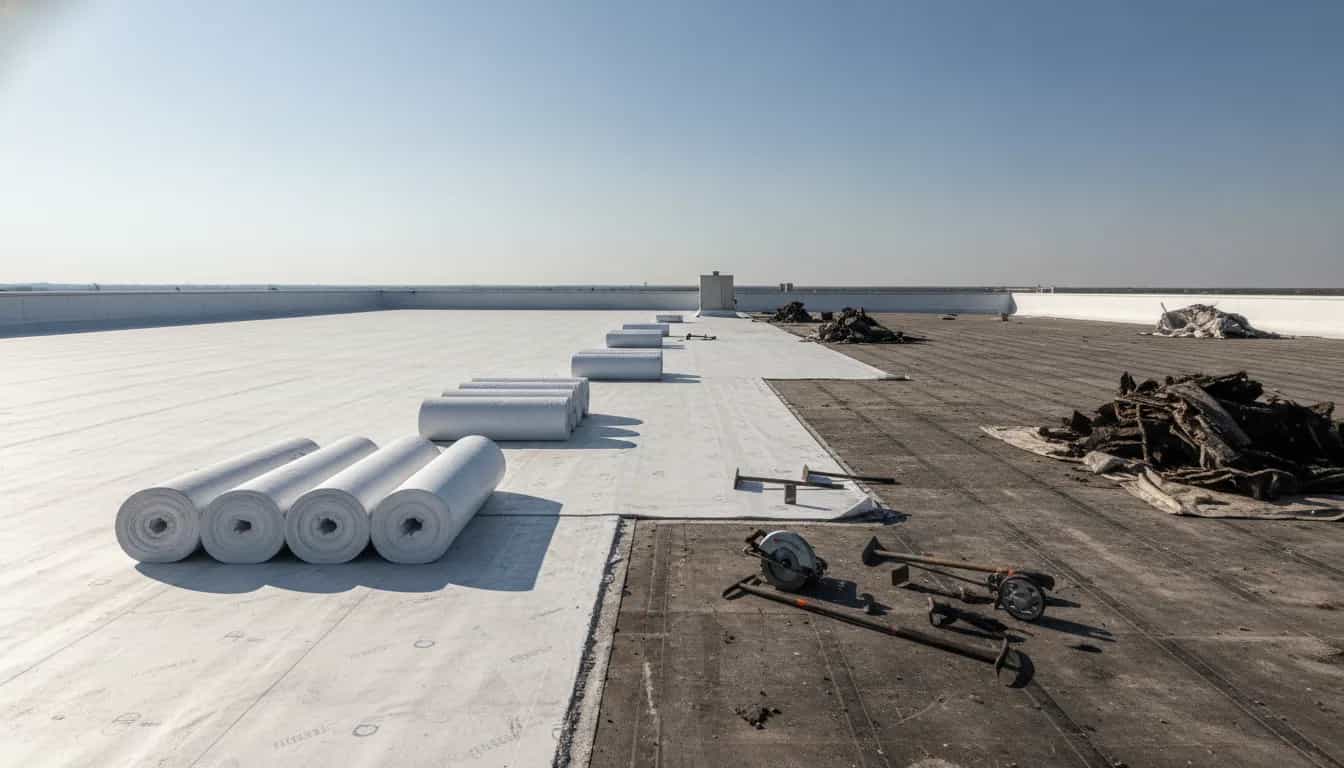
A commercial roof replacement means either a recover, installing a new system over a sound, dry existing roof, or a full tear-off down to the deck when moisture or structural issues require it. We phase replacements for occupied buildings so operations continue, and match the new system, TPO, EPDM, modified bitumen, or metal, to your building's use and budget, backed by manufacturer NDL warranties up to 50 years.
Commercial Roofing Contractor replaces roofs on office buildings, retail centers, warehouses, and multi-tenant properties across Colorado and the Nebraska Panhandle. Our Denver, Grand Junction, and Scottsbluff crews handle full tear-off and recover replacements, phased to keep occupied buildings operating throughout the project.
Tear-Off vs Recover
A recover installs a new roof system over your existing one when a moisture survey confirms the deck is structurally sound and the existing roof is dry. It costs less and disrupts operations less than a full tear-off. A tear-off removes the old roof down to the deck, which is required when the substrate is wet, failing, or code requires it. We determine which approach fits your building during a free inspection and moisture survey, not by default.
Phased Reroofing for Occupied Buildings
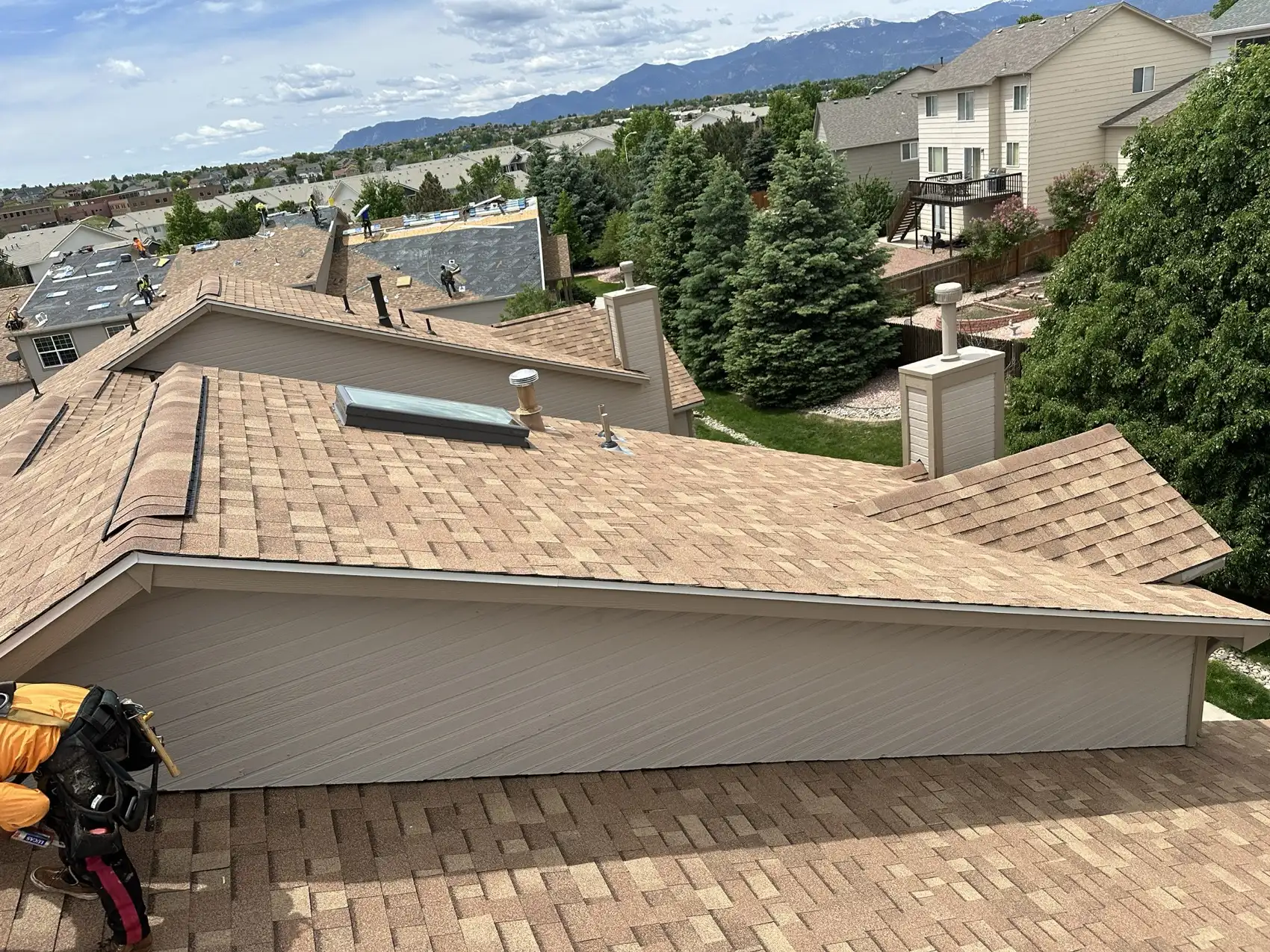
Many commercial roof replacements happen on buildings that cannot simply close for the duration of the project. We phase reroof work in manageable sections for occupied buildings, retail centers, and multi-tenant properties, so operations continue below while work moves across the roof. We coordinate noise-sensitive work like tear-off and mechanical fastening around your building's schedule wherever possible.
Choosing Your Replacement System
The right system depends on your building's use, budget, and priorities, not a default recommendation. We walk through the tradeoffs across the systems we install:
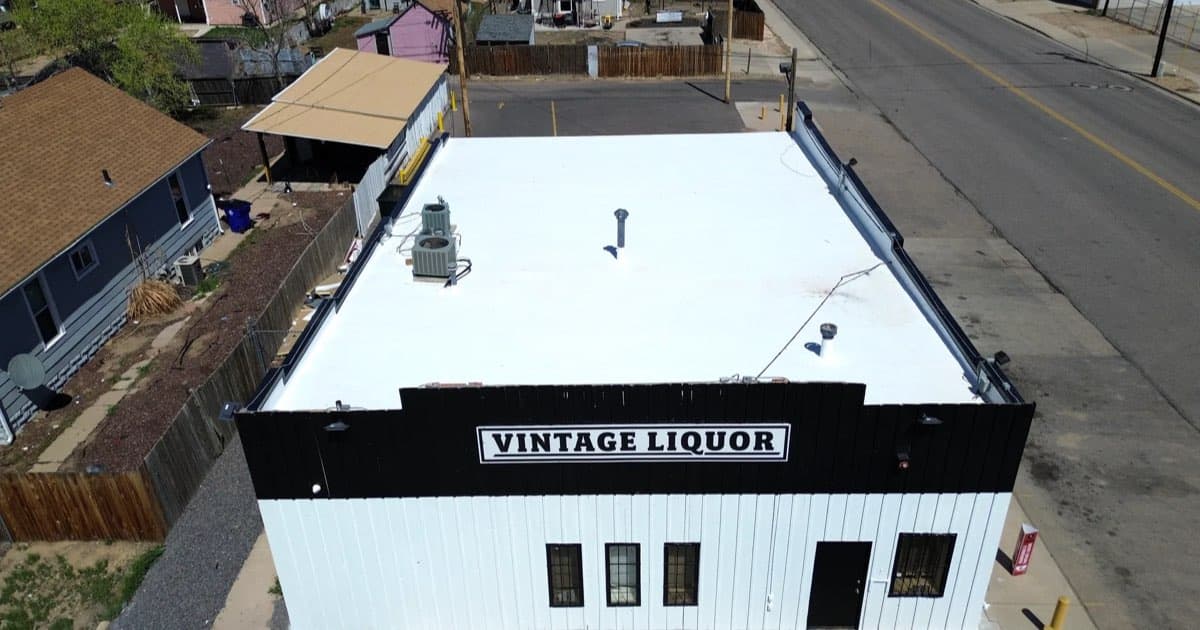
- TPO roofing: reflective white single-ply membrane with heat-welded seams, suited to cooling-driven buildings and heavy rooftop equipment.
- EPDM roofing: black synthetic rubber membrane, suited to buildings prioritizing cold-weather flexibility and a lower installed cost.
- Modified bitumen: proven multi-ply asphalt system with strong puncture resistance from its layered construction.
- Standing seam metal roofing: the longest service life of any system, 40 to 60 years, at a higher upfront cost.
If your existing roof is weathered but still structurally sound, a coating restoration may extend its life at a fraction of replacement cost, and we will tell you honestly when that is the better option instead of a full replacement.
Warranty Tiers
As a Johns Manville Peak Advantage Certified Contractor, we install systems eligible for manufacturer No Dollar Limit (NDL) warranties of 10, 15, 20, 25, and up to 50 years, covering both materials and labor for the warranty term. This certification is granted only to contractors who meet rigorous installation quality and ongoing training standards, and the specific warranty tier available depends on the system and thickness you choose.
Minimizing Business Disruption
We schedule around your operating hours where possible, phase work in sections for occupied buildings, coordinate noisy work for lower-impact windows, and keep the site secured and clean throughout the project. We discuss your specific disruption concerns, tenant notifications, and access requirements before work begins, not after.
The Section 179 Tax Angle
Many commercial roof replacements qualify for accelerated depreciation or full expensing in the year completed under Section 179 of the federal tax code, rather than being depreciated over decades. Rules, limits, and eligibility change, so confirm your specific situation with your tax professional before making a replacement decision based on this.
Commercial Roof Replacement in Scottsbluff and the Nebraska Panhandle
Reroofing an occupied Panhandle building is a scheduling problem as much as a roofing one. Ag processing and storage facilities around Scottsbluff and Gering have seasons where the building simply cannot be disturbed, so the useful conversation happens months ahead of the work: what the tear-off exposes, how much can be dried in per day, and which weeks are actually available. We phase by roof section and keep each day's opened area small enough to close before we leave.
System selection also shifts this far north. Reflectivity earns less on a shorter cooling season than it does on the Front Range, so insulation value and cold-weather membrane flexibility carry more weight in the decision than a Colorado spec would suggest. Our Scottsbluff office handles replacements across Gering, Terrytown, Mitchell, Minatare, Morrill, Bayard, and Bridgeport, and we scope the membrane to the building rather than defaulting to one system.
Our Replacement Process
- Free inspection and moisture survey. We assess deck condition, insulation, and whether a recover or full tear-off is the right approach.
- System selection and proposal. We recommend the system and warranty tier matched to your building, with a written scope and timeline.
- Phasing plan. For occupied buildings, we plan the work in sections around your operations.
- Tear-off or recover and installation. The existing roof is removed or prepared, and the new system is installed to manufacturer specification.
- Final inspection and warranty registration. The finished roof is inspected and registered for its manufacturer warranty.
Frequently Asked Questions About Commercial Roof Replacement
Should I tear off my commercial roof or recover it?
A recover installs a new roof system over your existing one when the deck is structurally sound and the existing roof is dry. A tear-off removes the old roof down to the deck, which is required when a moisture scan finds wet insulation, the substrate is failing, or code requires it. We determine which approach fits your building during a free inspection and moisture survey.
Does a commercial roof replacement include the drains and scuppers?
It should, and ours does. Drain bowls, strainers, clamping rings, scuppers, conductor heads, and downspouts are part of how the roof sheds water, and reusing hail-flattened or corroded components under a new membrane is how a new roof starts ponding in its first season. We replace roof drainage as part of the roof scope rather than leaving it for you to arrange separately.
Can you replace my roof while my building stays open?
Yes. We phase reroof projects in sections for occupied buildings, retail centers, and multi-tenant properties, so operations continue while work moves across the roof in manageable segments. We plan the phasing and any noise-sensitive work around your building's schedule.
How do I choose which roof system to replace with?
The right system depends on your building's use, budget, and priorities. TPO suits cooling-driven buildings wanting reflectivity and heat-welded seams. EPDM suits buildings prioritizing cold-weather flexibility and lower upfront cost. Modified bitumen offers a proven multi-ply system with strong puncture resistance. Metal offers the longest service life at a higher upfront cost. We walk through the tradeoffs for your specific building rather than defaulting to one system.
What warranty comes with a commercial roof replacement?
Warranty terms depend on the manufacturer and system. As a Johns Manville Peak Advantage Certified Contractor, we install systems eligible for manufacturer No Dollar Limit (NDL) warranties of 10, 15, 20, 25, and up to 50 years, covering materials and labor for the warranty term. We confirm the specific warranty tier available for your chosen system and building.
How do you minimize disruption during a commercial roof replacement?
We schedule around your operating hours where possible, phase work in sections for occupied buildings, coordinate noisy work like tear-off and mechanical fastening for lower-impact windows, and keep the site secured and clean throughout the project. We discuss your specific disruption concerns before work begins.
Is a commercial roof replacement tax-deductible?
Many commercial roof replacements qualify for accelerated depreciation or full expensing in the year completed under Section 179 of the federal tax code, rather than being depreciated over decades. Rules and limits change, so confirm your specific situation with your tax professional before making a decision based on this.
How long does a commercial roof replacement take?
Timelines depend on roof size, system, and phasing requirements, ranging from a few days for a small building to several weeks for a large or phased occupied-building project. We provide a specific timeline as part of your written proposal after inspection.
See all roofing FAQs. Grouped by topic: commercial and residential decisions, cost, insurance claims, storm response, warranties, and financing.
Related Resources

CRC Serving You From Three Offices
Available from all three offices: Denver, Grand Junction, and Scottsbluff, plus surrounding service areas.
Denver Office
Denver Metro and Front Range
(720) 893-7663
Grand Junction Office
Western Slope
(970) 877-7663
Scottsbluff Office
Nebraska Panhandle
(308) 536-7663