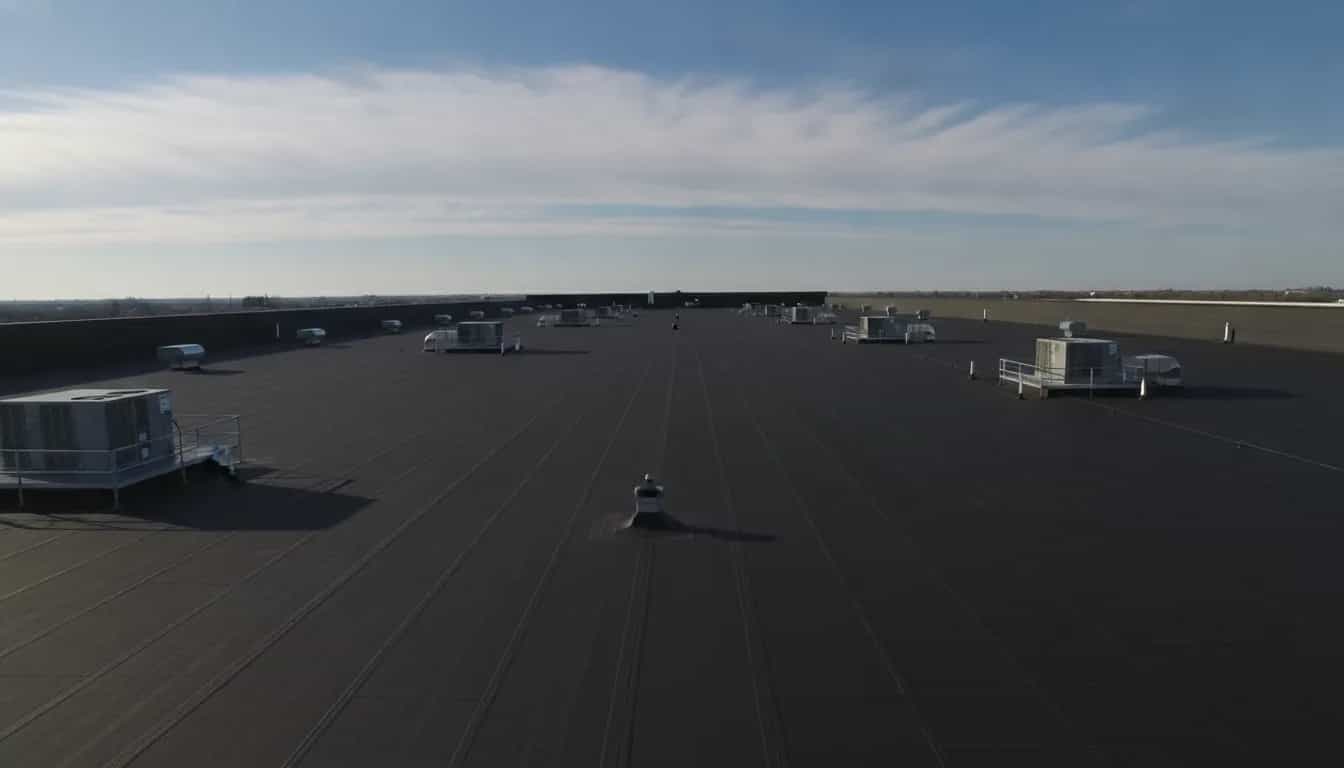
EPDM (ethylene propylene diene monomer) is a black synthetic rubber roofing membrane that has been the workhorse of commercial low-slope roofing since the 1970s. It comes in 45, 60, and 90-mil thicknesses, flexes under hail impact instead of cracking, stays pliable in deep cold, and typically lasts 25 to 40 years. We install Mule-Hide EPDM systems from our Denver, Grand Junction, and Scottsbluff offices.
Commercial Roofing Contractor installs and repairs EPDM roofing systems on office buildings, retail centers, warehouses, and industrial facilities across Colorado and the Nebraska Panhandle. As a Mule-Hide authorized contractor, we install manufacturer-backed EPDM systems built for the Front Range, the Western Slope, and the Nebraska Panhandle.
What EPDM Roofing Is
EPDM is a synthetic rubber membrane, typically black, that has been in commercial service since the 1970s. It is prized for its elasticity and cold-weather performance: the membrane stays pliable through deep winter cold rather than stiffening and cracking. Seams are traditionally glued or taped rather than heat-welded, though seam technology has improved over the decades. Seam condition is the first thing we check on an existing rubber roof, because that is where an aging EPDM system actually fails.
EPDM Thicknesses We Install
We install 45-mil, 60-mil, and 90-mil EPDM depending on the building, its rooftop traffic, and its hail exposure. A thicker membrane holds up better against hail impact and foot traffic, while 45-mil is a practical baseline for straightforward, low-traffic roofs. We confirm the right thickness for your building during a free inspection.
How EPDM Performs in Our Climate
Hail elasticity
Hail Alley runs through both of our markets: the Front Range is one of the most hail-prone regions in North America, and the Panhandle sits in the same corridor. EPDM's rubber elasticity lets it absorb hail impact and flex without fracturing, so on an unsheltered roof it often outlives the alternative even when the alternative is thicker on paper. It is generally considered slightly less puncture-resistant than reinforced TPO for foot traffic, so we typically recommend a thicker 60-mil or 90-mil membrane for hail-exposed roofs.
Cold-weather flexibility
Roofs in our markets can swing more than 100 degrees between a winter night and a sunny afternoon. EPDM stays flexible in extreme cold, remaining pliable through freeze-thaw cycles that can stiffen and stress other membranes. That matters most on a heating-dominated building, which is why EPDM is often the better answer than TPO on a Panhandle roof served from our Scottsbluff office: the dark surface that would cost you on a cooling load is close to neutral there, which removes most of the usual argument against it.
UV and ozone exposure
High-altitude UV and ozone accelerate chalking on EPDM over time, and Colorado roofs take the most of it: elevation drives that exposure, so a Denver or Western Slope roof sees more of it than a Panhandle roof at half the altitude. Modern EPDM formulations are built for UV resistance, and the membrane does not fail quickly from sun alone when installed and maintained correctly.
Mule-Hide EPDM Systems We Install
We are a Mule-Hide authorized contractor, which qualifies us to install Mule-Hide EPDM systems with manufacturer-backed warranty coverage. We install both ballasted EPDM, where stone ballast holds the membrane in place, and fully-adhered EPDM, where the membrane is bonded directly to the substrate, matching the system to your roof's structure and access.
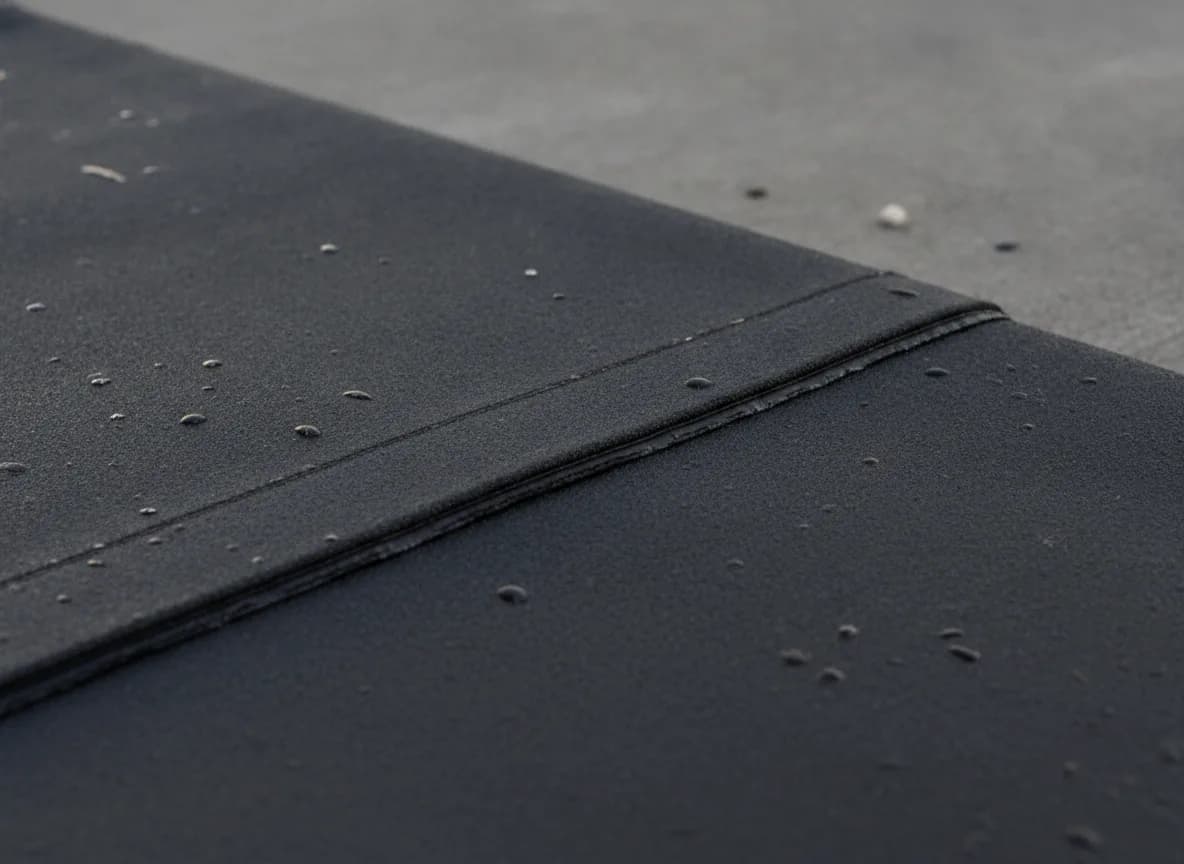
Single-Ply Membrane
EPDM Rubber Membrane
The synthetic rubber membrane stays flexible through deep cold and freeze-thaw cycling and absorbs hail impact rather than fracturing, and it comes in 45, 60, and 90-mil thicknesses.
EPDM vs Other Commercial Roof Systems
EPDM is not the right fit for every roof. Buildings prioritizing reflectivity to cut cooling costs, or heavy rooftop foot traffic and equipment, may be better served by TPO roofing, while roofs with grease exhaust or chemical exposure often call for PVC instead. We help you weigh membrane options against your building's use, deck condition, and budget, and every EPDM recommendation is part of a broader commercial roof replacement evaluation, not a one-size-fits-all pitch.
Our EPDM Installation Process
- Free inspection and moisture survey. We assess deck condition, insulation, and whether a recover or full tear-off is the right approach.
- Tear-off or recover. A sound, dry existing roof may be a recover candidate; a wet or failing substrate requires a full tear-off.
- Insulation and deck prep. New insulation is set to the specified R-value and the deck is prepared for membrane attachment.
- Membrane installation. EPDM sheets are set ballasted or fully-adhered, then every seam is glued or taped to manufacturer specification.
- Flashing, detail work, and inspection. Penetrations, edges, and flashings are detailed and the finished roof is inspected and registered for its Mule-Hide warranty.
Frequently Asked Questions About EPDM Roofing
What is EPDM roofing?
EPDM (Ethylene Propylene Diene Monomer) is a synthetic rubber membrane, typically black, that has been in service on commercial roofs since the 1970s. It is prized for its elasticity and cold-weather performance. Seams are traditionally glued or taped rather than heat-welded, though seam technology has improved over the years. EPDM comes in 45-mil, 60-mil, and 90-mil thicknesses.
What EPDM thickness should I choose for my roof?
We install 45-mil, 60-mil, and 90-mil EPDM depending on the building. A thicker membrane holds up better against hail impact and rooftop foot traffic, while 45-mil is a common baseline for straightforward low-traffic roofs. We confirm the right thickness for your building, your hail exposure, and your warranty requirements during a free inspection.
How long does an EPDM roof last?
EPDM has the longest track record of any single-ply membrane and can reach 25 to 40 years in good conditions, with installation quality and membrane thickness mattering more than the material choice itself. As a Mule-Hide authorized contractor, we install EPDM systems eligible for manufacturer-backed warranties.
Is EPDM or TPO better for my building?
It depends on your priorities. EPDM's rubber elasticity flexes under hail impact and stays pliable in deep cold, which suits heating-driven buildings prioritizing a lower upfront cost and cold-weather forgiveness. TPO's reflective white surface reduces cooling load and its heat-welded seams handle wind uplift well, which suits cooling-driven buildings with heavy rooftop equipment. We help you weigh both against your building's use and budget.
How does hail affect an EPDM roof?
EPDM's rubber elasticity is a real advantage in Hail Alley, the corridor that runs through our markets in both states: the membrane absorbs hail impact and flexes rather than fracturing. It is generally considered slightly less puncture-resistant than reinforced TPO for sharp debris and foot traffic, so a thicker 60-mil or 90-mil membrane is often the right call for hail-exposed roofs.
Can EPDM be installed over my existing roof, or do I need a tear-off?
Sometimes. If the deck is structurally sound and the existing roof is dry, a recover installs new EPDM over the prepared existing system. If a moisture scan finds wet insulation or a failing substrate, a recover will trap the problem, and a full tear-off is the right call. Every EPDM project starts with an inspection and, where needed, a moisture survey.
What does commercial EPDM roofing cost?
Published installed-cost ranges across the industry run roughly $4 to $12 per square foot depending on the thickness, insulation package, roof size, and site conditions, often at the lower end of that range compared to TPO. A site visit tightens that range considerably, so we do not quote firm EPDM pricing without seeing the roof. Denver metro: (720) 893-7663. Western Slope: (970) 877-7663. Nebraska Panhandle: (308) 536-7663.
See all roofing FAQs. Grouped by topic: commercial and residential decisions, cost, insurance claims, storm response, warranties, and financing.
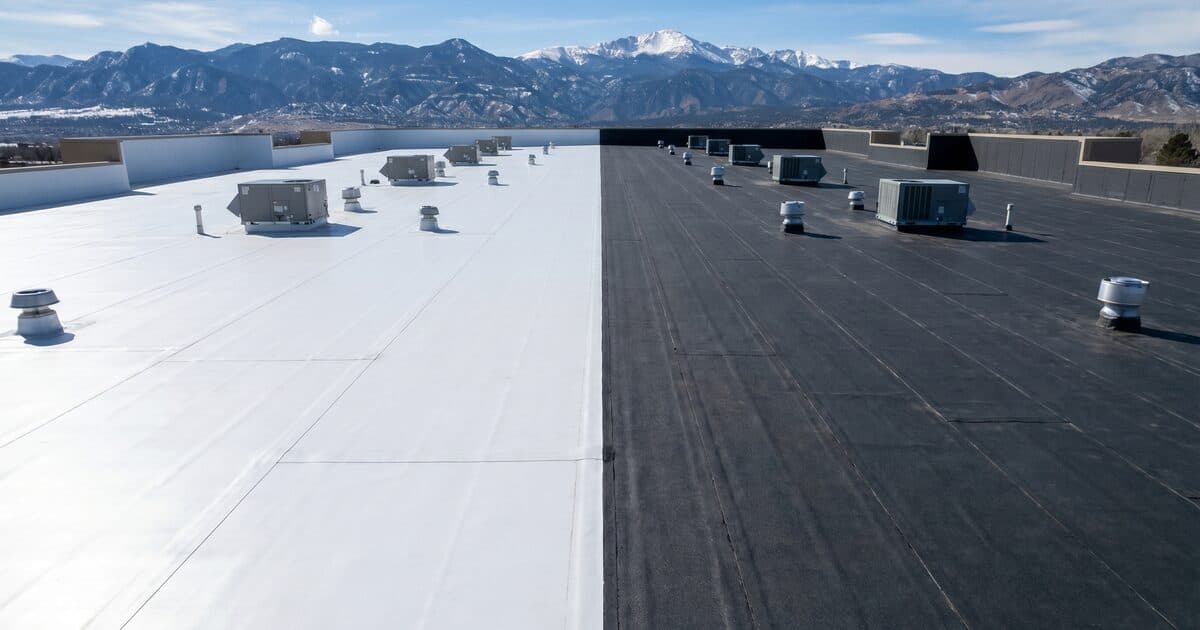
CRC Serving You From Three Offices
Available from all three offices: Denver, Grand Junction, and Scottsbluff, plus surrounding service areas.
Denver Office
Denver Metro and Front Range
(720) 893-7663
Grand Junction Office
Western Slope
(970) 877-7663
Scottsbluff Office
Nebraska Panhandle
(308) 536-7663