Commercial Roofing
Best Commercial Flat Roof Systems for Colorado Buildings
By James Rhoades, Commercial Roofing Contractor · September 5, 2026
- Commercial Roofing
- Flat Roof
- Material Comparison
- Roof Replacement
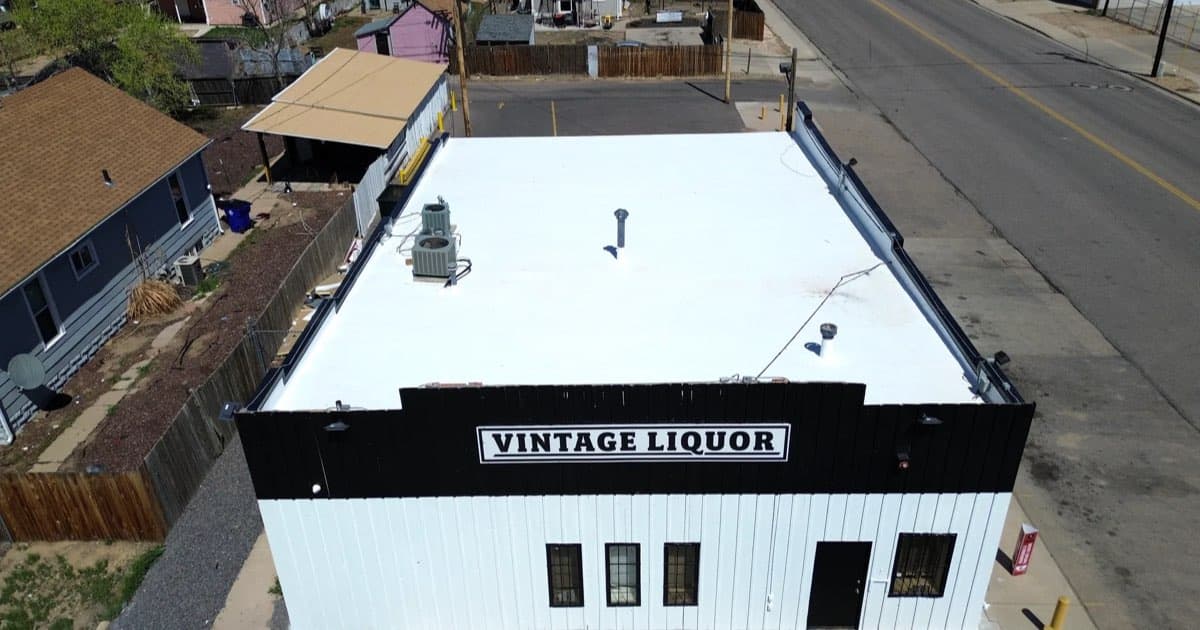
Short answer: There is no single best flat roof system, and the honest version of this question is "best for which building?" On new and replacement work in Colorado, reflective single-ply membranes, TPO and PVC, are the most common answer, because they handle high-altitude sun well and install efficiently. What actually decides it is your deck, your drainage, how much equipment sits on the roof, what comes out of your exhaust vents, and whether the roof you already have is dry enough to build on.
Every low-slope roofing system on the market will keep water out of a building when it is specified correctly, installed by a crew that knows it, and drained properly. That is why comparison articles that crown a winner are not much use. The systems below are not competing for a single title; they are suited to different buildings, and the interesting question is which conditions push you toward each one.
What follows is the short version of each system, what it is genuinely good at, where it struggles, and what Colorado specifically does to it. If you already know which system you are dealing with, each one links through to its own page.
The seven systems, and where each one fits
TPO
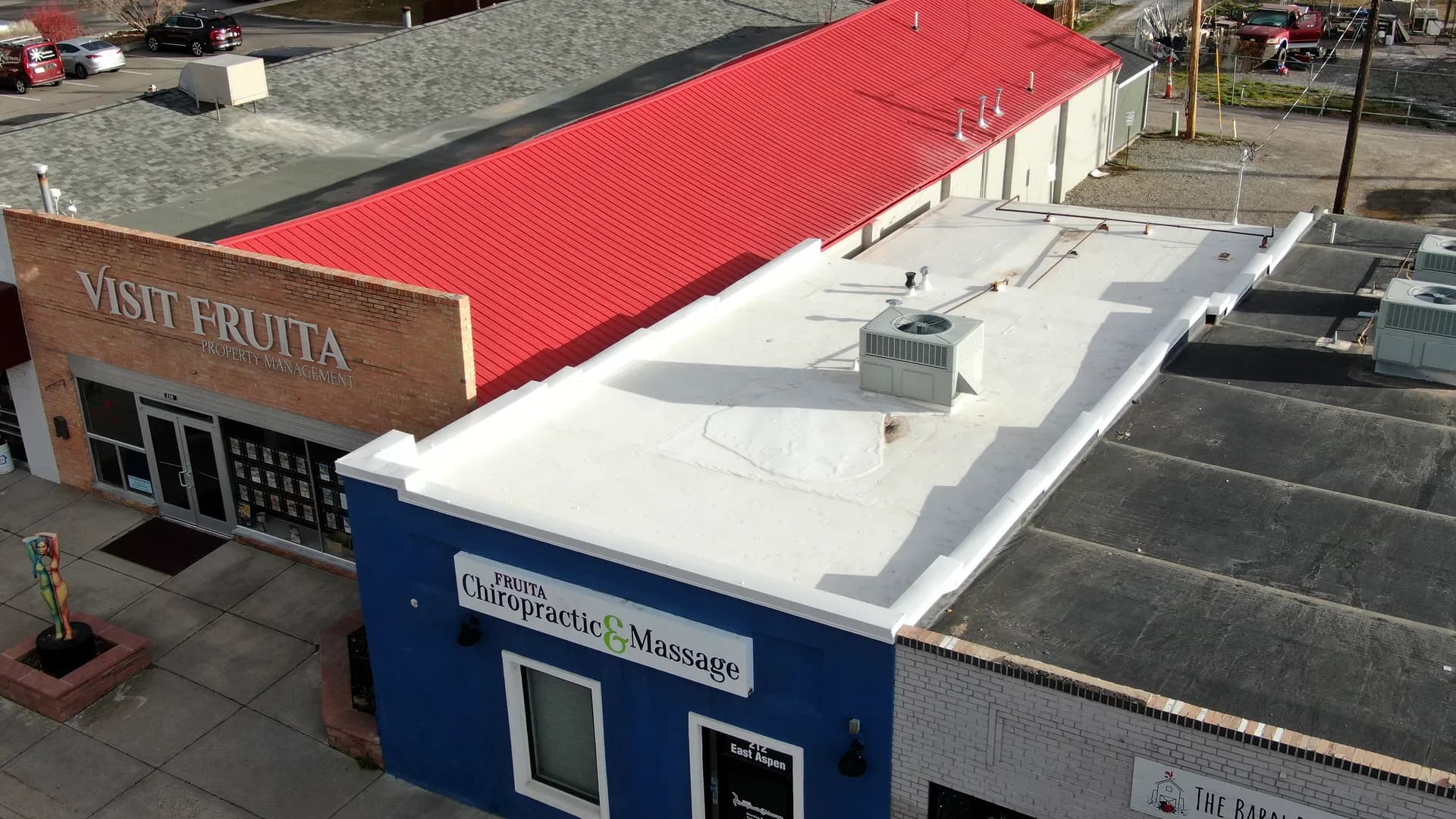
TPO (thermoplastic polyolefin) is a single-ply membrane whose seams are heat-welded rather than glued, which fuses the sheets into one continuous surface. It is the most widely installed system on new and replacement commercial roofs, and the white reflective surface reduces heat gain on a sun-exposed roof, which matters more at altitude than it does at sea level.
It suits most conventional commercial buildings: retail, warehouse, office, light industrial. Where it needs care is at the details, because a heat-welded seam is only as good as the welding, and a roof with a lot of penetrations has a lot of detail work. Commercial TPO roofing covers the assembly in full.
PVC
PVC is also a heat-welded single-ply, and it is the answer when the roof has to survive chemicals. It resists grease, oils and animal fats in a way the others do not, which is why it is the standard choice above restaurant kitchens and food processing, where exhaust deposits land on the membrane continuously. It is generally the more expensive single-ply. Commercial PVC roofing goes further into where the premium is worth paying.
EPDM
EPDM is a synthetic rubber membrane and the long-proven option, with decades of field history behind it. It is flexible in cold weather, which is a real advantage in a climate that swings hard between day and night. Its seams are adhered rather than welded, so seam maintenance matters more over the roof's life, and the traditional black surface absorbs heat instead of reflecting it, though reflective versions exist. Commercial EPDM roofing has the detail, and TPO versus EPDM in Colorado compares the two directly.
Modified bitumen
Modified bitumen is asphalt with polymers blended into it, manufactured into rolls and applied in one or two plies. It is tough underfoot and repairs cleanly, which makes it a practical choice on roofs that see regular foot traffic for equipment servicing. The SBS-modified version stays flexible when cold, which suits Colorado freeze-thaw cycling. Modified bitumen roofing covers it in full.
Built-up roofing
Built-up roofing is the original flat roof, assembled in place from alternating layers of bitumen and reinforcing felt and then surfaced, usually with gravel. It is what most people mean by "tar and gravel". Many layers mean redundancy and it stands up well to traffic, but it is heavy, slow to install, and genuinely difficult to troubleshoot, because finding a leak means moving the surfacing first. See built-up roofing, or modified bitumen versus built-up if you are choosing between the two asphalt systems.
Metal
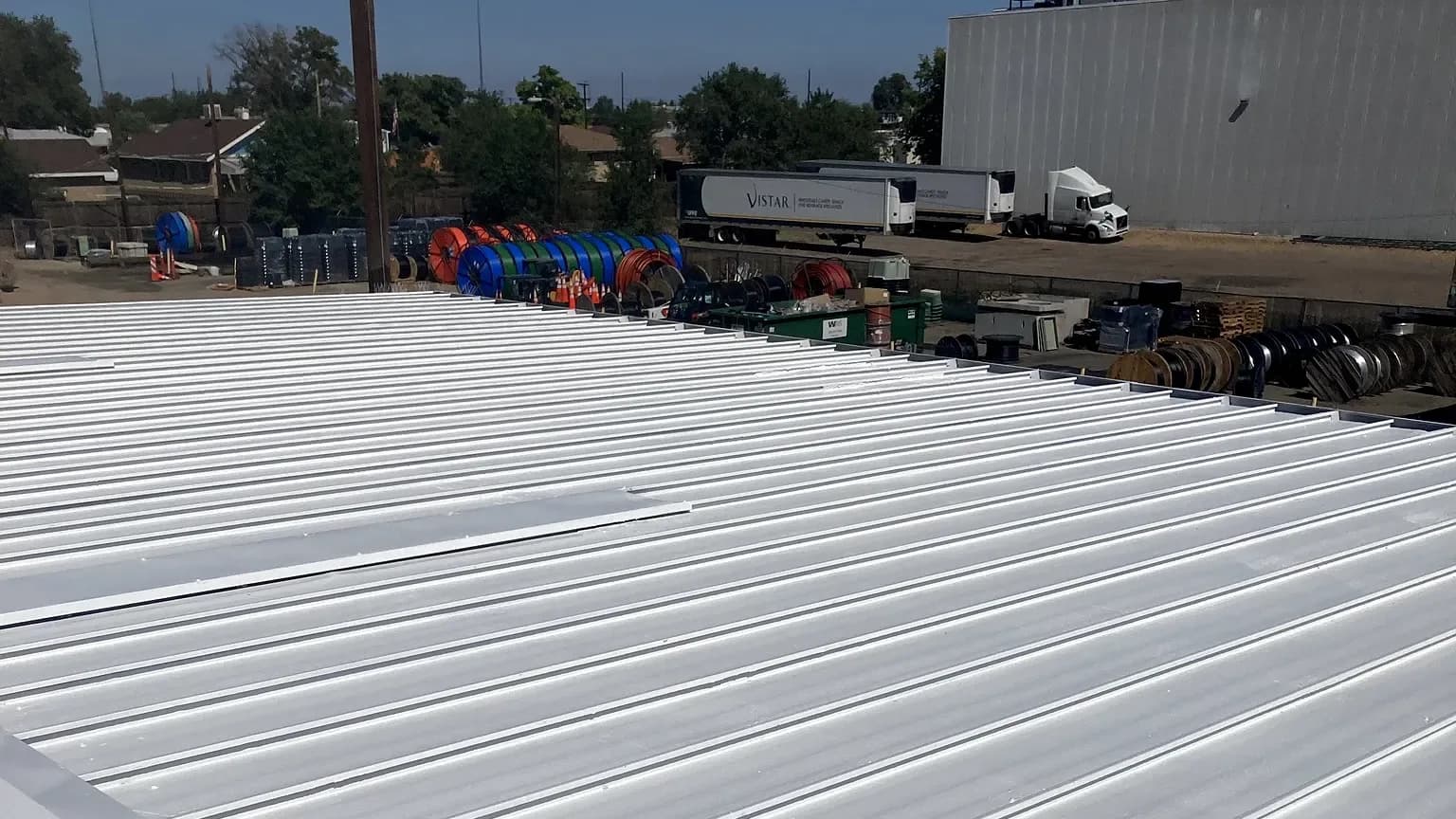
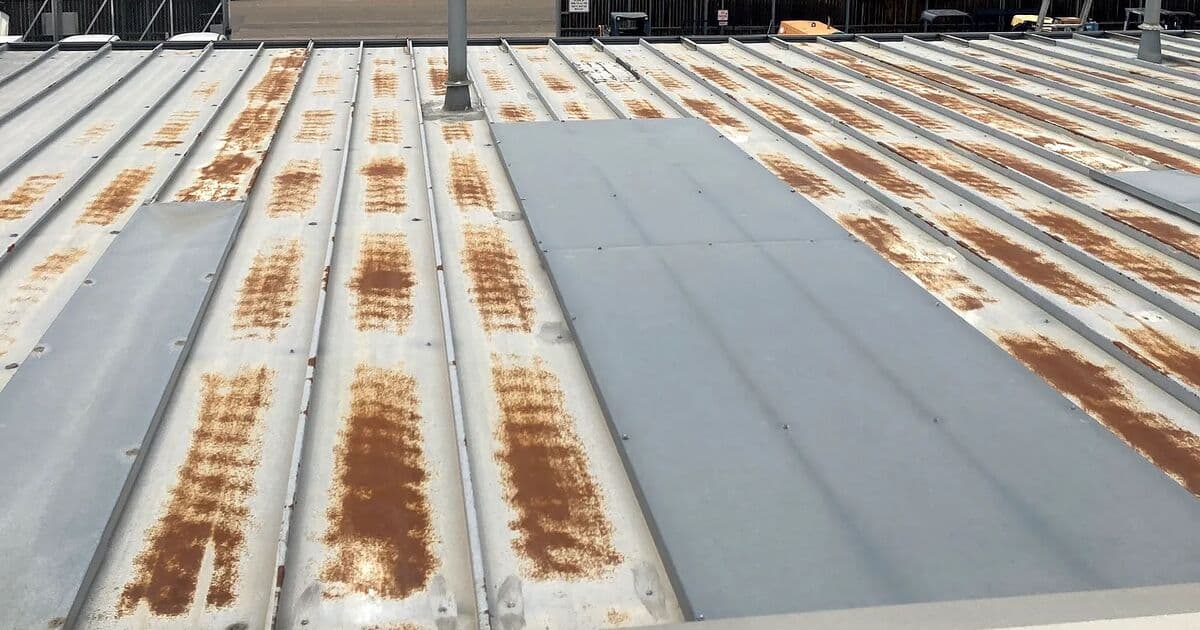
Standing seam metal belongs on this list with a caveat: most metal roofs are not truly flat, and metal needs more pitch than a membrane does. Where it fits, it is extremely long-lived. Where it struggles in Colorado is hail, which dents the panels. Dents are often cosmetic rather than a leak, but they are also permanent and highly visible, and they are frequently the subject of an insurance claim. Commercial metal roofing has more.
Coatings
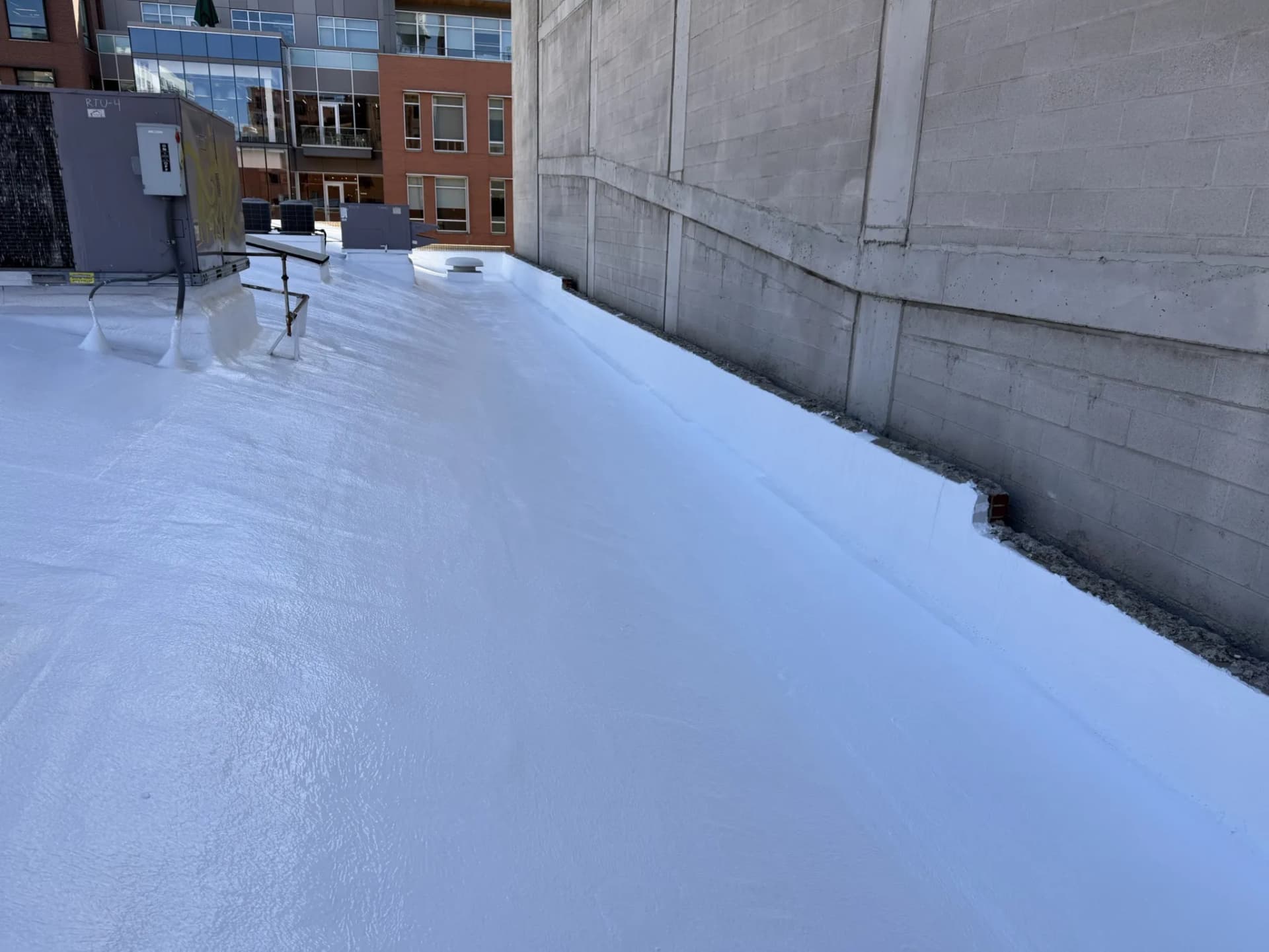
Roof coatings are not a roof in their own right; they are a fluid-applied surface that renews one you already have. On a sound, dry roof with a spent surface, a coating can add years and avoid a tear-off entirely, and a reflective coating cuts heat gain at the same time. On a roof with wet insulation, a coating seals the water in and buys nothing. Commercial roof coatings covers candidacy, and coating versus tear-off works through the decision.
Comparing the systems at a glance
This is a starting point for a conversation, not a specification. Every row has exceptions that depend on the assembly beneath the membrane.
| System | Best suited to | Watch out for |
|---|---|---|
| TPO | Most conventional commercial buildings; sun-exposed roofs | Seam welding quality; detail work around many penetrations |
| PVC | Restaurants, food processing, anywhere grease or chemicals land | Higher cost than other single-ply |
| EPDM | Cold-climate buildings; long field-proven track record | Adhered seams need maintenance; black absorbs heat |
| Modified bitumen | Roofs with regular foot traffic; clean repairs | Heavier than single-ply; surface ages in ultraviolet light |
| Built-up | Heavy-duty redundancy; tough underfoot | Weight; slow install; hard to locate leaks under gravel |
| Metal | Long service life where there is enough pitch | Hail denting; needs more slope than a membrane |
| Coatings | Renewing a sound, dry roof without a tear-off | Useless over wet insulation; not a substitute for a failed roof |
What Colorado does to a flat roof
The published service life of any of these systems assumes a milder climate than this one. Three things here shorten it.
Hail. This is the big one, and it is why a Colorado roof specification is not the same as the same building's roof in a mild state. Hail damage to a membrane is often invisible from the ground and sometimes invisible from the roof: a stone can bruise the membrane and crush the insulation beneath without opening a hole, so the roof does not leak immediately but its remaining life is shorter. What sits under the membrane matters as much as the membrane itself, because a rigid cover board gives the stone something to hit against.
Altitude and ultraviolet exposure. There is less atmosphere overhead here, so a roof surface takes more ultraviolet punishment than the same roof would lower down. That is what ages a membrane surface over time, and it is a large part of why reflective surfaces are so common on Colorado commercial roofs.
Freeze-thaw cycling. The daily temperature swing here is severe, and a roof can cross freezing and back within one day repeatedly. Everything on the roof expands and contracts through that cycle, which works at seams, fasteners and flashings. Systems that stay flexible when cold handle it better.
Drainage sits underneath all three. Standing water magnifies every one of them, and it is the single most common reason a roof underperforms its expected life. Commercial roof drainage covers what to do about it, and where commercial flat roofs actually leak goes through the failure points.
The questions that actually decide it
When we walk a roof to make this recommendation, these are what we are answering. They are worth knowing before you talk to anyone, because a contractor who has not asked them is not yet in a position to advise you.
What is the deck? Steel, concrete and wood each change what can be attached and how. How does it drain? Internal drains, scuppers, or edge, and does water actually leave. What is on the roof? Rooftop units, ducts and penetrations each need flashing, and a busy roof favours a system that details well and tolerates traffic. What comes out of the exhaust? Kitchen grease pushes the answer to PVC. What is already there? The existing assembly decides whether you are recovering or tearing off. How long will you hold the building? The answer for a property being sold in two years is not the answer for a building held for twenty.
Recover, coat, or tear off
This decision usually matters more to the budget than the choice of system does, and it is decided by the condition of what is already up there rather than by preference.
A coating renews a sound roof with a worn surface. A recover installs a new membrane over the existing roof, which avoids the cost and disruption of removal, and is available while the structure is sound, the insulation is dry, and code permits another layer. A tear-off removes everything back to the deck and is the only honest answer when the insulation is saturated or the assembly has failed. Commercial roof replacement covers the full-removal path.
If hail is what put you in this decision, the roof may be an insurance matter rather than a capital expense, and the two paths run on different timelines. Storm damage insurance claims covers how that works.
Whichever system goes on, what determines whether it reaches its expected life is drainage and maintenance rather than the name on the roll. Commercial roof maintenance in Colorado covers the cadence and why warranties depend on it.
Frequently Asked Questions
What is the best roofing system for a commercial flat roof?
There is no single best system, and any contractor who names one before seeing the building is selling rather than advising. TPO and PVC are the most common choices on new low-slope work in Colorado because reflective single-ply handles high-altitude ultraviolet exposure well and installs efficiently. But the right answer follows from the building: what the deck is, how the roof drains, how much rooftop equipment sits on it, whether grease or chemicals reach the surface, and whether the existing roof is dry enough to build on.
What is the most common flat roof material on commercial buildings?
Single-ply membrane, and TPO is the most widely installed of those on new and replacement commercial work. It is a thermoplastic sheet whose seams are heat-welded rather than glued, which produces a continuous watertight surface, and its reflective white surface suits sun-exposed roofs. EPDM, modified bitumen and built-up roofing are all still common on existing buildings.
Which commercial roof system holds up best to Colorado hail?
No membrane is hail-proof, and the honest ranking depends on stone size and what sits under the membrane. In general, thicker membranes over a rigid cover board resist puncture better than thin membranes laid directly over soft insulation, which is why the cover board matters as much as the brand on the roll. Multi-ply asphalt systems absorb impact well but hide the resulting damage, and a hail bruise that does not leak today can still shorten the roof's life.
How thick should a commercial TPO membrane be?
Thicker membranes cost more up front and give more material between a hailstone and the insulation, so on a Colorado roof the thickness decision is really a hail decision. The right specification depends on the building's exposure, the warranty being sought, and what the manufacturer requires for that assembly, so it is set during design rather than picked from a general rule.
Can you put a new flat roof over the old one?
Sometimes, and it is called a recover. It works when the existing roof is structurally sound and the insulation underneath is dry, and it saves the cost and disruption of a full tear-off. It is the wrong answer when the insulation is saturated, because a new membrane over wet insulation seals the water in. Building codes also limit how many roof layers a structure may carry. A moisture survey settles this, not the roof's age.
How long does a commercial flat roof last in Colorado?
Colorado shortens the published expectation for every system. Hail, high-altitude ultraviolet exposure and repeated freeze-thaw cycling do more damage here than in a mild climate, and a single severe hail event can end a roof that was otherwise mid-life. Drainage and maintenance affect real service life more than the choice between systems does: standing water shortens every system on this list.
Is a flat roof actually flat?
No. A low-slope roof is built with a deliberate pitch, usually created by tapered insulation, so water runs to drains rather than sitting. When people describe problems with a flat roof, they are usually describing a drainage problem. Ponding water that remains more than about two days after rain is the signal that the slope, the drains, or both need attention.
Talk to the team nearest you: our Denver office, our Grand Junction office, or our Scottsbluff office.