
Commercial Roofing
Modified Bitumen vs Built-Up Roofing for Colorado and Nebraska Buildings
By James Rhoades, Commercial Roofing Contractor · August 31, 2026
- Commercial Roofing
- Material Comparison
- Flat Roof
- Roof Replacement
Short answer: Both are multi-ply asphalt roofs. Built-up roofing is assembled on site from alternating layers of bitumen and felt and then surfaced, usually with gravel. Modified bitumen arrives as factory-made rolls of asphalt with polymers blended in, and goes down in one or two plies. Modified bitumen installs faster and repairs more cleanly; built-up is heavier, tougher underfoot, and harder to troubleshoot.
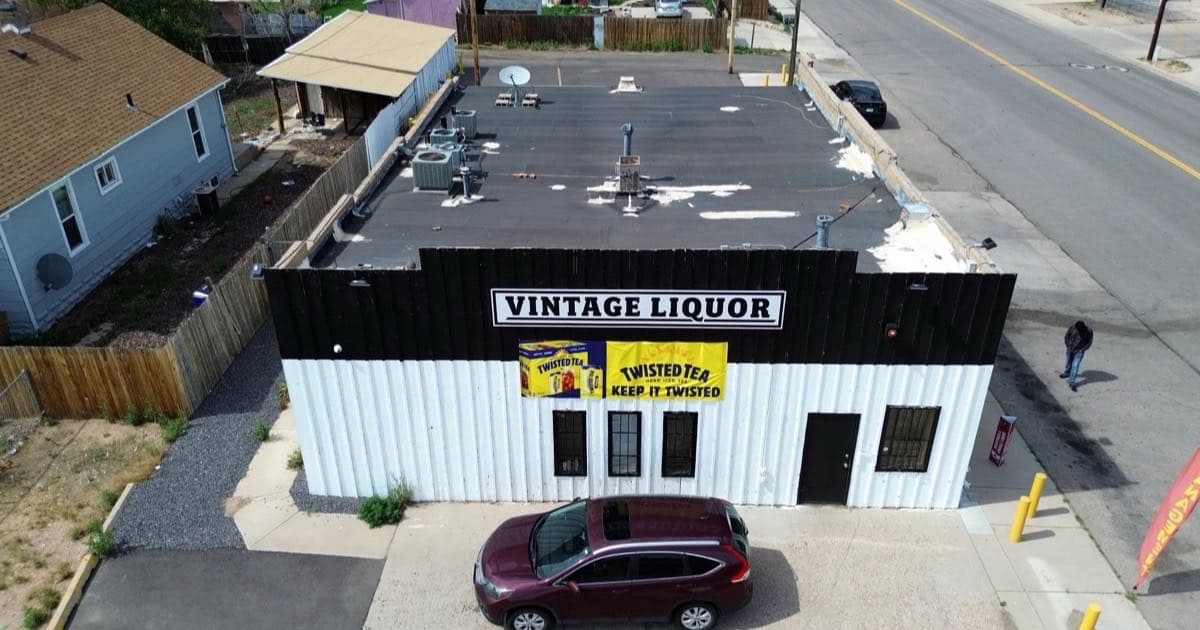
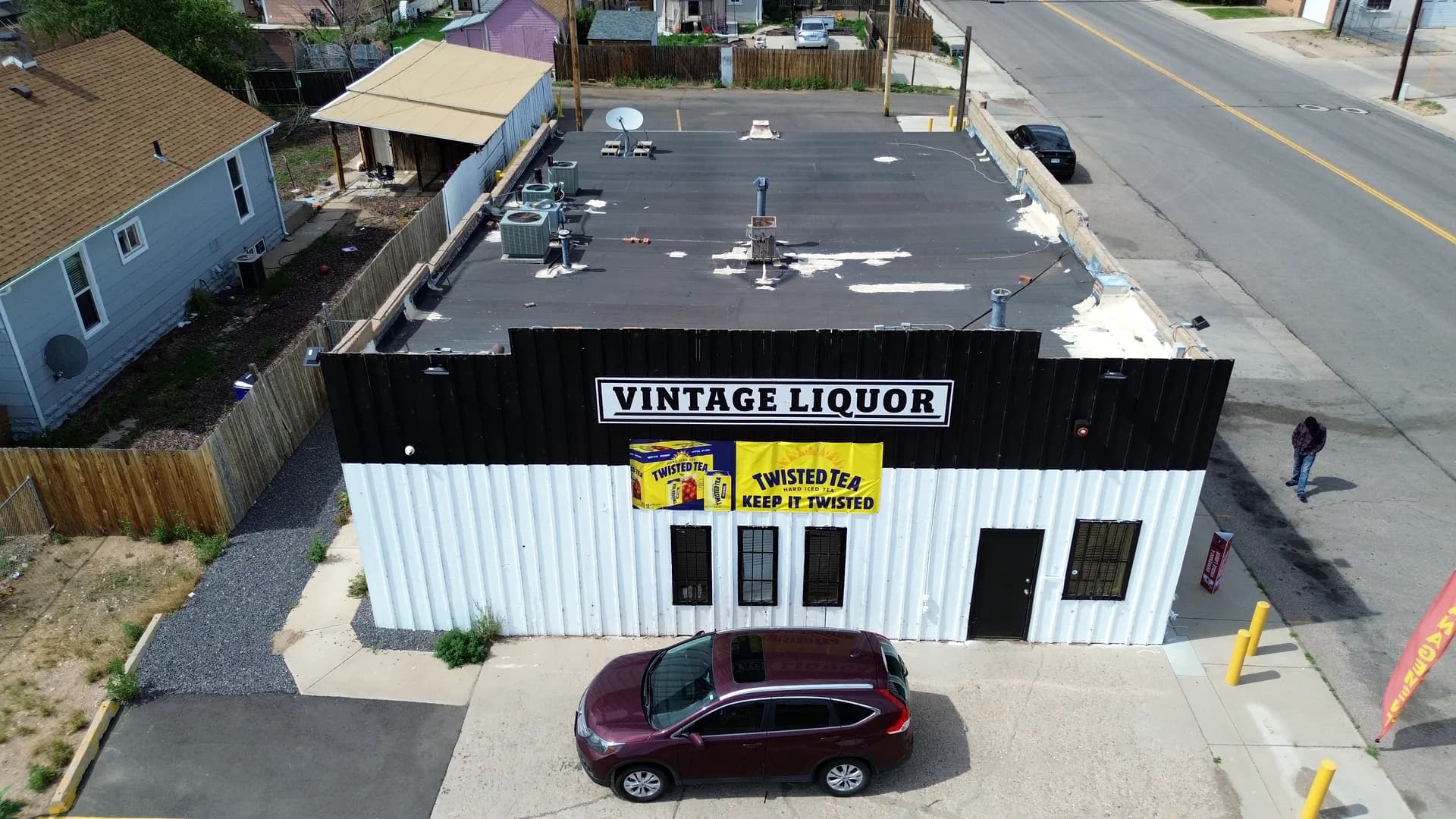
If your building has a flat or low-slope roof that is dark, asphalt-based, and older than the single-ply membranes on newer buildings nearby, it is almost certainly one of these two. They look similar from the parking lot and they get talked about interchangeably. They are not the same roof, and the difference matters most at two moments: when one of them starts leaking, and when you are deciding what to put back.
What built-up roofing is
Built-up roofing is the original flat roof, and it is built in place. A crew alternates layers of bitumen with layers of reinforcing felt, ply on ply, and then finishes the assembly with a surfacing, most often a layer of gravel embedded in a flood coat. Three and four ply assemblies are common. It is the roof most people are describing when they say "tar and gravel".
Its strengths come from that construction. Many layers mean redundancy, so no single puncture reaches the deck. The gravel surfacing shields the bitumen underneath from ultraviolet light and adds mass. It stands up to foot traffic well, which matters on a roof with rooftop equipment somebody has to service.
Its weaknesses come from the same place. It is heavy, which the structure has to be able to carry. It is slow and disruptive to install, and hot-applied work brings kettles and fumes onto an occupied property. And gravel makes troubleshooting genuinely difficult: to inspect or repair the membrane, the surfacing has to come off first.
What modified bitumen is
Modified bitumen is asphalt with polymers blended into it, manufactured into rolled sheets with reinforcement built in, then rolled out on the roof. It was developed to keep what worked about built-up roofing while fixing what did not: the plies are made in a factory to a consistent thickness rather than assembled by hand in the weather.
Two polymers dominate, and the difference between them is not marketing:
- SBS (styrene-butadiene-styrene) makes the asphalt behave like rubber. The sheet stretches and recovers, so it tolerates a building that expands and contracts, and it stays flexible when it is cold.
- APP (atactic polypropylene) makes it behave more like plastic, with strong resistance to heat and ultraviolet exposure. APP is typically torch-applied.
Modified bitumen can be torched, set in hot asphalt, adhered cold, or self-adhered, which gives real flexibility on an occupied building where an open flame or a kettle is unwelcome. Repairs are cleaner too: a damaged area can be cut out and a new piece of the same sheet heat-welded or adhered in, with a result that is close to the original assembly.
How they compare
- Installation. Modified bitumen is faster and less disruptive, and offers torch-free options. Built-up is slower, heavier work, and hot-applied methods bring fumes and equipment onto the site.
- Weight. Built-up with gravel surfacing is substantially heavier. On a re-roof this is a structural question, not a preference.
- Repair. Modified bitumen patches cleanly. On gravel-surfaced built-up, the surfacing has to be cleared before anyone can see the membrane, so the same repair costs more and takes longer.
- Finding the leak. This is the underrated one. Gravel hides the evidence, and water travels under a membrane before it appears inside. Infrared scanning earns its keep on these roofs.
- Foot traffic. Built-up with gravel takes abuse well. Modified bitumen holds up fine but benefits from walkway pads on routes to rooftop equipment.
- Cold weather. SBS-modified sheets stay flexible as temperatures drop. Aged, unmodified asphalt gets brittle, which is when thermal movement starts to crack it.
What this means on a Colorado or Nebraska building
The climate here pushes the decision in a particular direction, for reasons that have nothing to do with which system is nicer.
Colorado and the Nebraska Panhandle both run a long shoulder season of warm days and freezing nights, so a roof crosses the freeze point repeatedly, sometimes within a single week. That is thermal movement, and the roof has to absorb it without splitting. Elasticity is worth more here than it is in a stable climate, which is why SBS-modified sheets come up so often on buildings in both markets.
Hail is the other factor. Multi-ply asphalt systems carry real mass and redundancy, which helps, but no low-slope roof is immune, and hail damage to an asphaltic surface is often not visible from inside the building for a long time. That is one more argument for looking at the roof after a storm rather than waiting for a stain. Our guide to what size hail damages a roof covers the thresholds.
Altitude adds ultraviolet exposure, which is what degrades an exposed asphaltic surface over time. Gravel surfacing on built-up roofing was always partly a UV shield. On a smooth-surfaced roof, a reflective coating does the same job.
Choosing between them, or neither
In practice the decision is rarely a clean comparison of two systems on a blank slate. It is usually a building with an existing roof, a budget, and a tenant who cannot be shut down for a week. The questions that actually decide it:
- What is under there, and is it dry? A moisture survey answers this. A thermal imaging inspection maps wet areas across the whole roof without test cuts.
- What can the structure carry? Gravel-surfaced built-up is heavy, and adding a layer to an existing roof compounds it.
- Can the building tolerate the installation? Occupied buildings, food service, and healthcare all constrain what methods are acceptable overhead.
- How much rooftop traffic does it get? A roof with six units that get serviced monthly has different wear than a warehouse nobody walks.
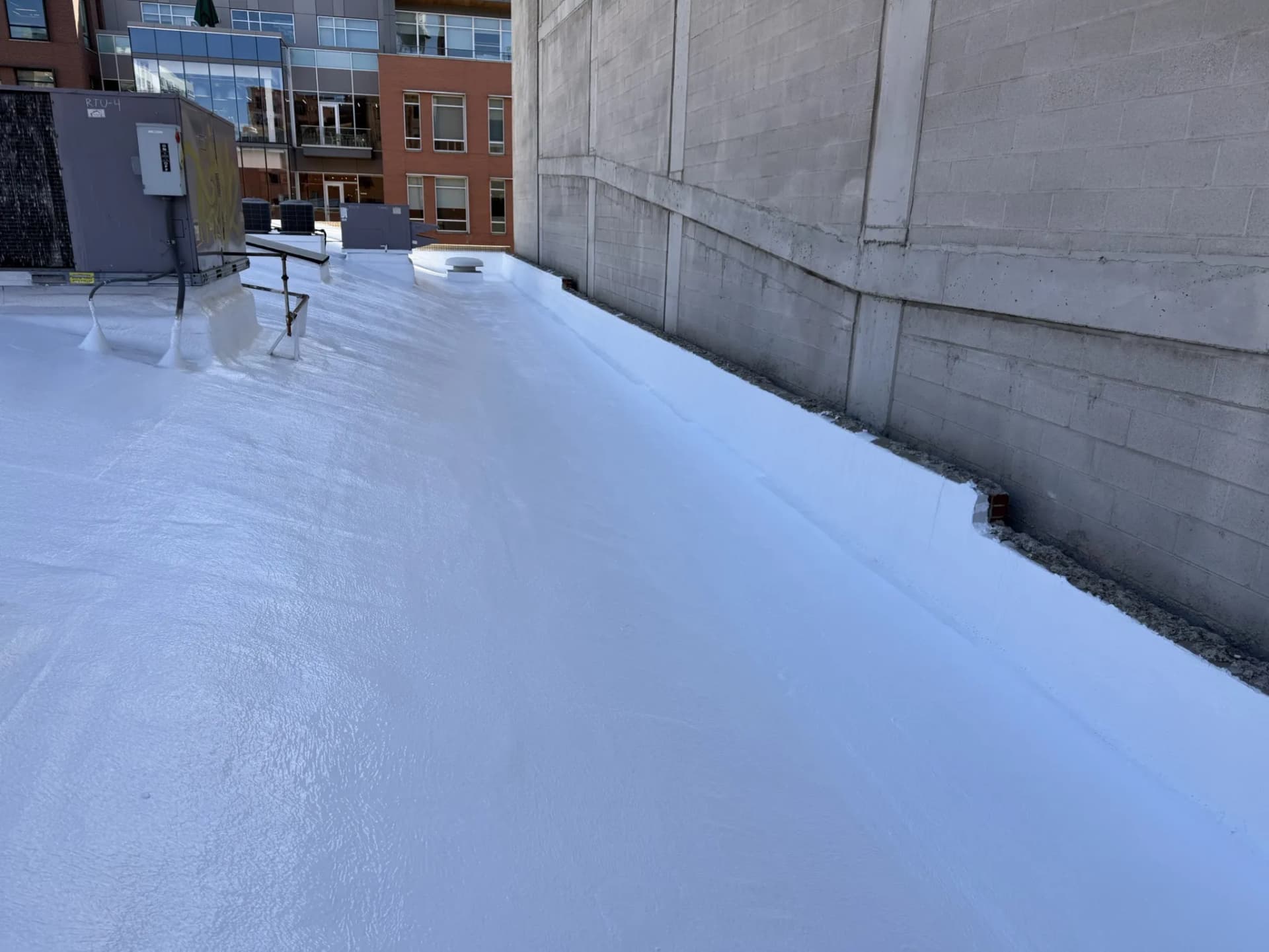
- Does it need replacing at all? Coating versus tear-off is a real question on a roof that is sound but weathered.
It is also worth knowing that neither may be the answer. Single-ply membranes changed what most new low-slope roofs get built with, and TPO versus EPDM is the comparison many owners in both states end up making instead. CRC installs and services all of them: modified bitumen, built-up roofing, and the single-ply systems, out of our Denver, Grand Junction and Scottsbluff offices. Inspections are free, and the point of one is to tell you which of these conversations you are actually having.
Frequently Asked Questions
What is the difference between modified bitumen and built-up roofing?
Built-up roofing is assembled on the roof from alternating layers of bitumen and reinforcing felt, then surfaced, usually with gravel. Modified bitumen arrives as factory-made rolls of asphalt that has had polymers blended into it, and is rolled out in one or two plies. Both are multi-ply asphalt roofs; the difference is where the plies are made and what the asphalt has been modified with.
Is modified bitumen better than built-up roofing?
Neither is better in the abstract. Modified bitumen goes down faster, is easier to repair cleanly, and SBS-modified sheets stay flexible in cold weather, which suits the freeze-thaw cycling both Colorado and the Nebraska Panhandle put a roof through. Built-up roofing with gravel surfacing is heavy, durable underfoot, and long-proven. The right answer depends on the deck, the building's use, rooftop traffic, and what is already there.
What is the difference between APP and SBS modified bitumen?
They are two different polymers blended into the asphalt. SBS (styrene-butadiene-styrene) adds rubber-like elasticity, so the sheet flexes with thermal movement and stays pliable when cold. APP (atactic polypropylene) adds a plastic-like character with strong heat and ultraviolet resistance. For the daily temperature swings across Colorado and the Panhandle, SBS is the more common answer on cold-weather buildings.
How long does a modified bitumen or built-up roof last in Colorado or Nebraska?
Both are long-service systems when installed correctly and maintained, but both of our markets shorten the published expectations for any roof. Hail, ultraviolet exposure that Colorado's altitude intensifies further, and repeated freeze-thaw cycling do more damage here than in a mild climate. Drainage and maintenance affect the real service life more than the choice between the two systems does.
Can you find a leak in a gravel-surfaced built-up roof?
Yes, but it is harder and messier than on a smooth-surfaced roof. The gravel has to be moved to expose the membrane, which is why infrared moisture scanning is particularly useful on these roofs: it narrows the search to the wet area before anyone starts digging.
Can an old asphalt roof be recovered or coated instead of torn off?
Sometimes. If the existing roof is sound and dry underneath, a recover or a coating can extend it and avoid the cost and disruption of a tear-off. If the insulation is saturated, coating over it seals the water in and buys nothing. A moisture survey is what settles that question, not the roof's age.
Talk to the team nearest you: our Denver office, our Grand Junction office, or our Scottsbluff office.