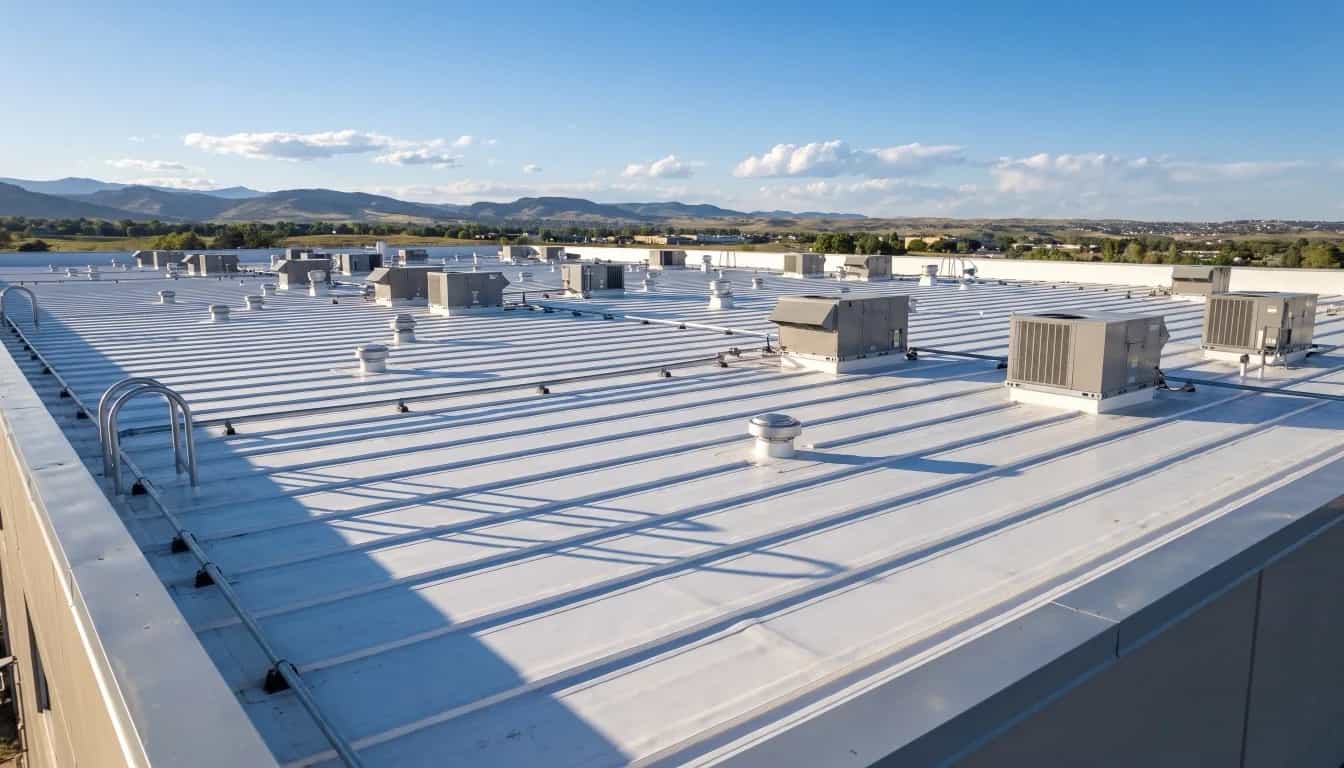
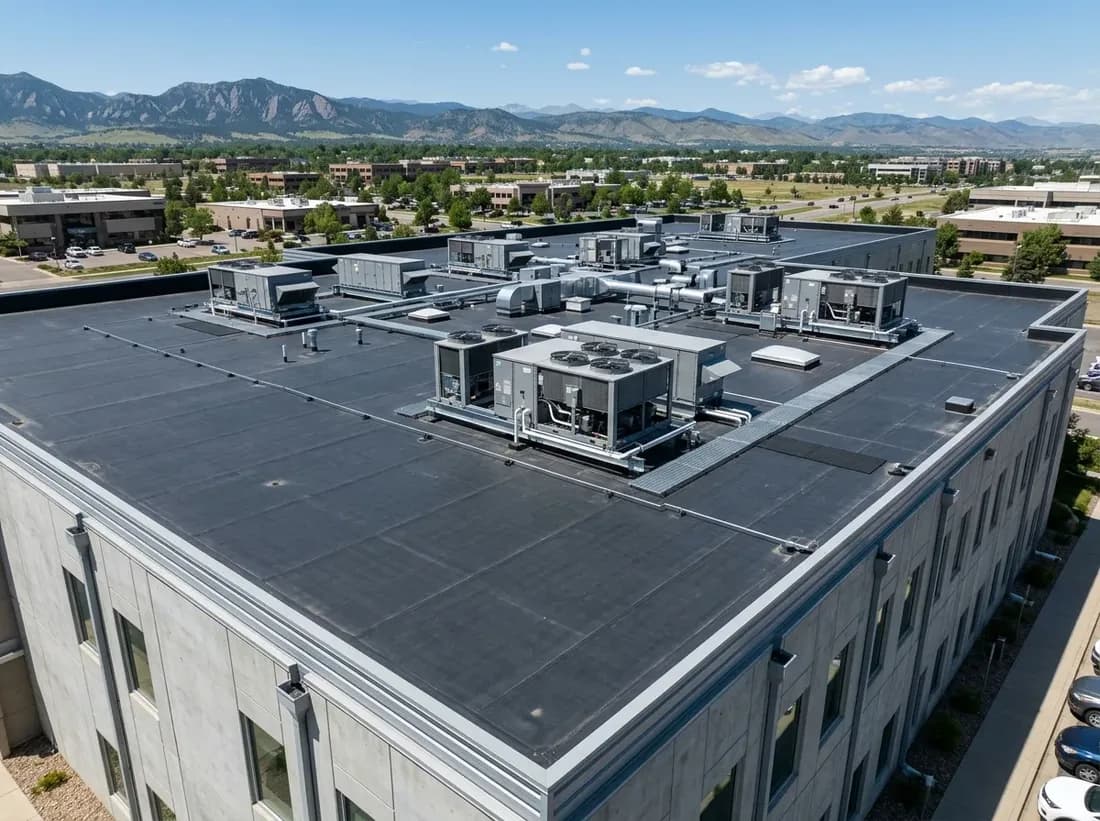
PVC is a heat-welded single-ply membrane formulated to resist grease, animal fats and chemical exhaust. That chemistry is the whole reason to choose it. On a restaurant, commercial kitchen or food processing roof it outlasts membranes that are otherwise excellent, and we install it across Colorado and Nebraska.
What PVC Actually Solves
Most low-slope membranes fail on a kitchen roof in the same place: the field around the exhaust fans. Kitchen exhaust deposits animal fat and cooking oils onto the membrane, and on a membrane not formulated for it those deposits soften the sheet, attack the seams and shorten the roof's life well before the rest of the field is worn out. PVC is plasticized specifically to resist that attack.
Everything else about it is familiar. The sheets are hot-air welded into one continuous watertight bond rather than glued or taped, which is the same seam technology as TPO, and the white surface is reflective, which lowers rooftop temperature and cooling load in high-altitude sun. It is supplied in the same gauge range as other single-plies, commonly 50, 60 and 80-mil. On the Front Range we treat 60-mil as the practical baseline for hail and foot traffic and step to 80-mil for high-traffic roofs, heavy rooftop equipment or the longest warranty terms.
Single-Ply Membrane
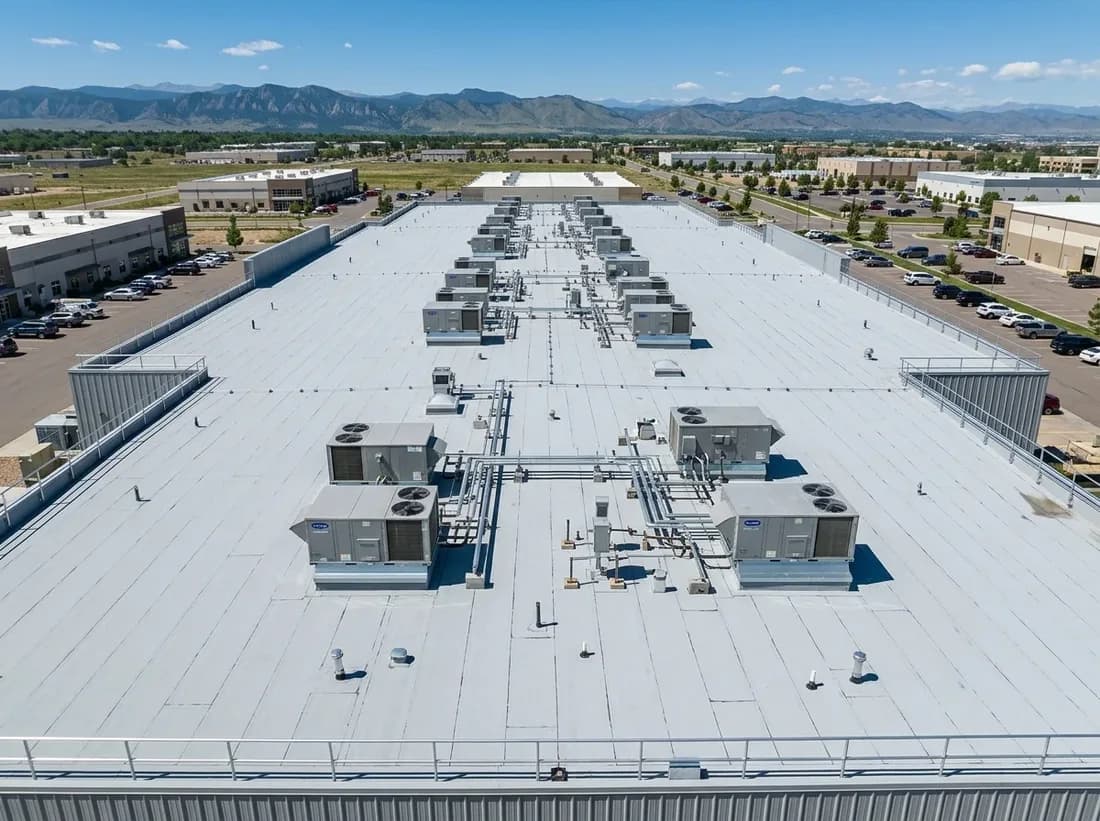
PVC Membrane
Hot-air welded seams, a reflective white surface, and a plasticized formulation that resists grease, animal fats and many chemicals. Supplied in 50, 60 and 80-mil. The membrane to specify when the building puts something on the roof that other single-plies do not tolerate.
PVC, TPO or EPDM: Choosing Honestly
These are not ranked, they are suited. Specifying the wrong one is how a good membrane gets blamed for a bad decision.
Single-Ply Membrane
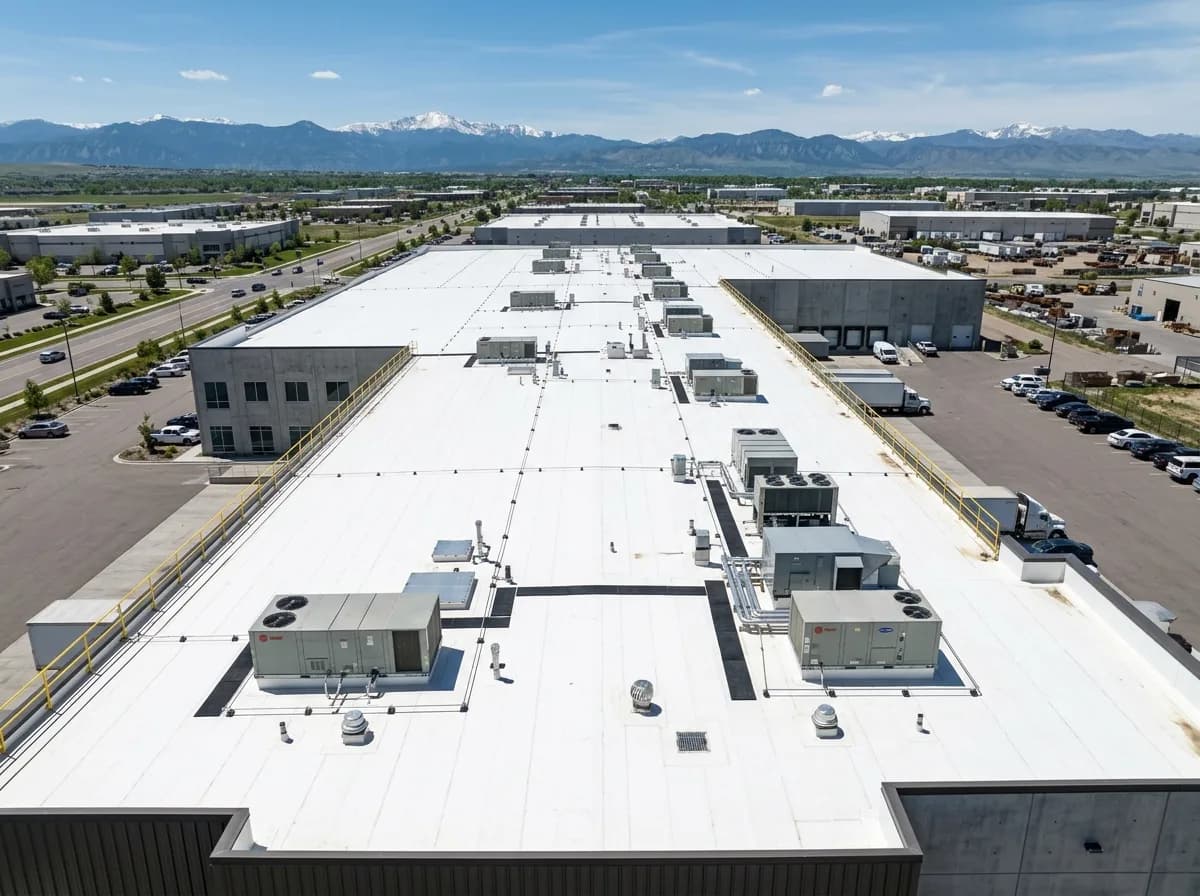
TPO
The usual right answer on a reflective low-slope roof with no chemical exposure, and generally the better value of the two white membranes. Same welded-seam construction. It is grease that separates them, not quality.
Single-Ply Membrane
EPDM
The longest single-ply track record and better flexibility in deep cold and freeze-thaw movement, at a lower upfront cost. Often the better call where cold-weather performance matters more than reflectivity and there is no chemical exposure to design around.
The Manufacturer Program Matters More Than the Material
A single-ply warranty covers the system as installed, not the membrane in isolation, so the certification and the membrane have to come from the same manufacturer program. Johns Manville manufactures PVC single-ply systems alongside its TPO and EPDM lines (JM commercial roofing), and CRC is a Johns Manville Peak Advantage certified contractor. Mule-Hide Products, another manufacturer we hold a certification with, also produces PVC membrane. Our certifications and credentials list every program and the exact tier held, never rounded up.
Recover or Tear Off
The answer comes from what is under the membrane, not from the membrane you are moving to. If the deck is sound and a moisture scan shows the existing system is dry, a recover installs new PVC over the prepared roof. As a rule of thumb, a roof showing less than about 25 percent saturation is a recover or repair candidate; where wet insulation is widespread a recover traps the problem, and a full commercial roof replacement is the honest call. Either way the drainage is rebuilt with the roof rather than welded into, because PVC ties into the drain with a target patch and clamping ring. See commercial roof drainage.
Which Code Governs a PVC Reroof Here
On the commercial side the governing document is the International Building Code as your city adopts it, with Chapter 15 covering roof assemblies and reroofing. We track adopted codes for 38 jurisdictions across our service area, 32 with a commercial edition we have verified against 27 primary source documents, and those editions currently span 2012 to 2025. Membrane choice is not usually what a plan reviewer questions; insulation R-value, edge securement and drainage are. Your city's page carries its adopted editions and permit authority, so start there rather than from a general rule.
This is a summary to help you plan, not a compliance determination. Roofing codes here are adopted city by city rather than at the state level, so the authority on what your specific roof requires is the building department that issues your permit, and we confirm current requirements with them before we scope a job. We track adopted codes for 38 jurisdictions across our service area, 32 of which publish a commercial code edition we have verified against 27primary source documents. The edition is not the same everywhere. Your city's page carries its own adopted codes, permit authority and source document. Corpus last verified August 2026.
Commercial PVC Roofing in Scottsbluff and the Nebraska Panhandle
Our scottsbluff office at 16 W 17th St, Scottsbluff, NE 69361 covers PVC work across the Panhandle, and CRC has roofed western Nebraska since 2001. The buildings that justify PVC there are the same ones as on the Front Range: restaurants, school and institutional kitchens, and food processing, where the exhaust rather than the weather sets the membrane choice. Hard freeze-thaw cycling is the local stress on every low-slope roof, so seam quality and edge detail carry more weight than the label on the membrane. Talk to our Scottsbluff office.
Houses, Townhomes and Low-Slope Sections
PVC is rarely the answer for a whole house, because houses are mostly steep-slope and asphalt shingle or metal is the right system there. Where it does come up is the low-slope sections many Colorado and Nebraska homes have, a flat garage, a porch roof or an addition, and on multi-family buildings with flat sections over breezeways, garages and clubhouses. If one of those sections sits under a kitchen exhaust, the chemistry argument applies at residential scale too. See multi-family and HOA roofing and residential roof repair.
Free inspection on any commercial roof, from Denver, Grand Junction and Scottsbluff.
Commercial PVC Roofing: Frequently Asked Questions
What is PVC roofing, and how is it different from TPO?
PVC is a single-ply thermoplastic membrane, usually white, installed in sheets whose seams are heat-welded into one continuous watertight bond rather than glued or taped. Structurally that is the same idea as TPO. The difference is chemistry: PVC is formulated with plasticizers that make it resistant to grease, animal fats and many chemicals, which is exactly what degrades a TPO membrane over time. Both are reflective, both weld, and they are not interchangeable on the wrong building.
When is PVC the right membrane instead of TPO or EPDM?
The clearest case is a roof with grease or chemical exhaust: restaurants, commercial kitchens, food processing, and buildings venting oils or solvents. Kitchen exhaust deposits animal fat on the membrane around the vents, and that is the specific failure PVC is formulated to resist. Outside that, TPO is usually the better value on a reflective low-slope roof, and EPDM is often preferred where deep-cold flexibility matters more than reflectivity.
Is PVC manufactured by the systems CRC is certified for?
Yes. Johns Manville manufactures PVC single-ply systems alongside its TPO and EPDM lines, and CRC is a Johns Manville Peak Advantage certified contractor. Mule-Hide Products, another manufacturer we are certified with, also produces PVC membrane. That matters because a single-ply warranty covers the system as installed, so the certification and the membrane need to be from the same manufacturer program.
What thickness of PVC should a Colorado roof use?
PVC is supplied in the same gauge range as other single-ply membranes, commonly 50, 60 and 80-mil. On the Front Range we treat 60-mil as the practical baseline for hail and foot traffic, stepping to 80-mil for high-traffic roofs, heavy rooftop equipment, or the longest manufacturer warranty terms. The right gauge depends on roof access, equipment load and the warranty you want, and we confirm it during the free inspection.
How does hail affect a PVC roof?
The same way it affects any single-ply membrane: thinner sheets are more vulnerable to large stones, and impacts are frequently not visible from a walk-by. Colorado's Front Range is one of the most hail-exposed regions in the country, so on a hail-prone building we specify a heavier gauge and inspect for impact damage on every service call rather than assuming a membrane that looks intact is intact.
Can PVC go over my existing roof, or is a tear-off required?
It depends on what is under the membrane, not on the membrane you are moving to. If the deck is sound and a moisture scan shows the existing system is dry, a recover installs new PVC over the prepared roof. As a rule of thumb, a roof showing less than about 25 percent saturation is a recover or repair candidate; where wet insulation is widespread, a recover traps the problem and a full tear-off is the honest call.
Do you replace the roof drains when installing PVC?
Yes. PVC welds into the drain with a target patch and clamping ring, so the drain assembly is part of the membrane system rather than a separate fitting. Welding a new membrane into a corroded bowl or a hail-flattened strainer builds a leak point in on day one, so drain bowls, strainers, clamping rings, scuppers and downspouts are replaced with the roof.
Does PVC make sense on a house or a townhome?
Rarely as a whole roof, because houses are mostly steep-slope and shingle, metal or tile is the right answer there. Where it does come up is the low-slope sections many homes have, a flat garage, a porch roof or an addition, and on multi-family buildings with flat sections over breezeways, garages and clubhouses. If one of those sections sits under a kitchen exhaust, the chemistry argument applies at residential scale too.
See all roofing FAQs. Grouped by topic: commercial and residential decisions, cost, insurance claims, storm response, warranties, and financing.
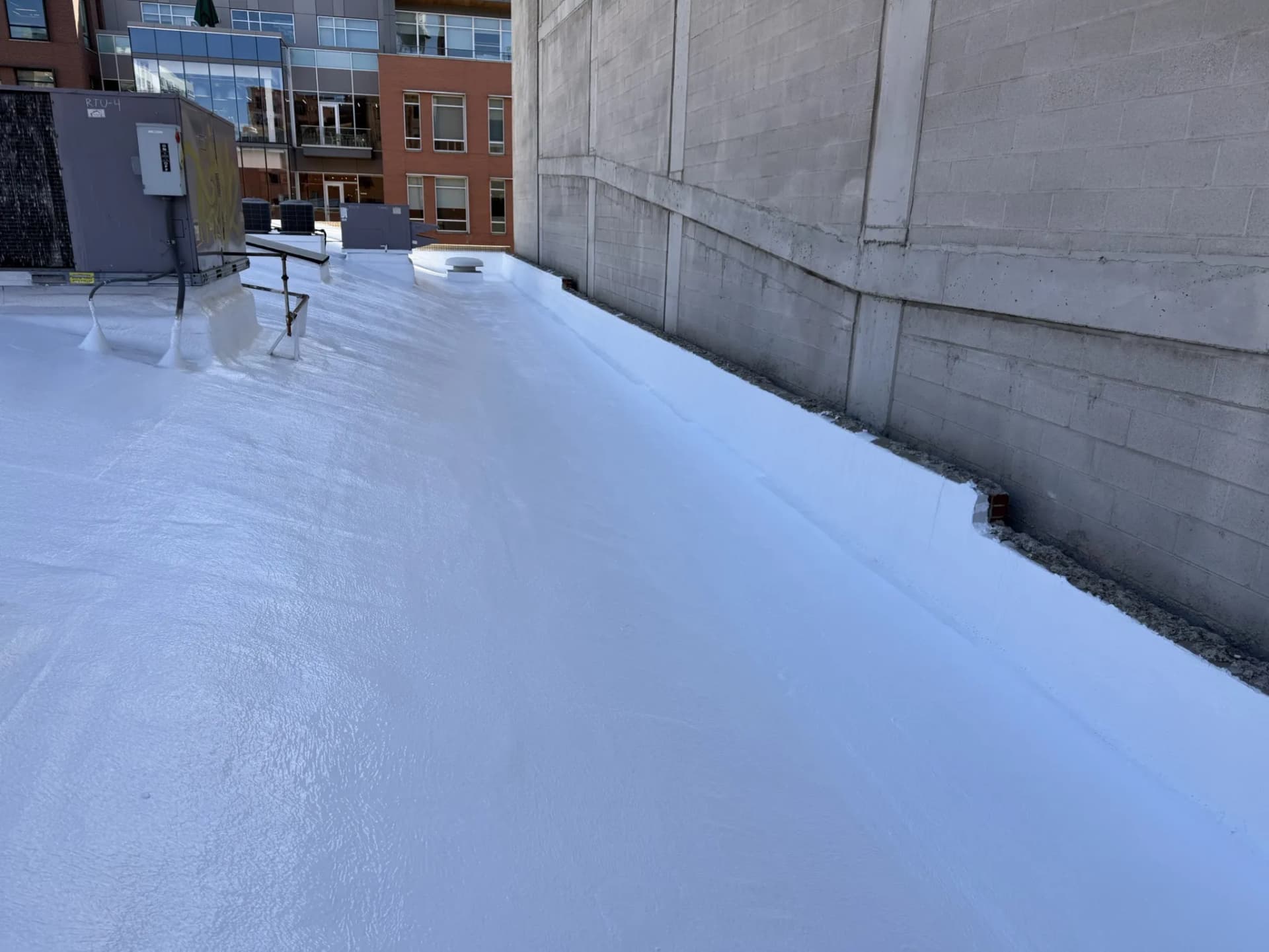
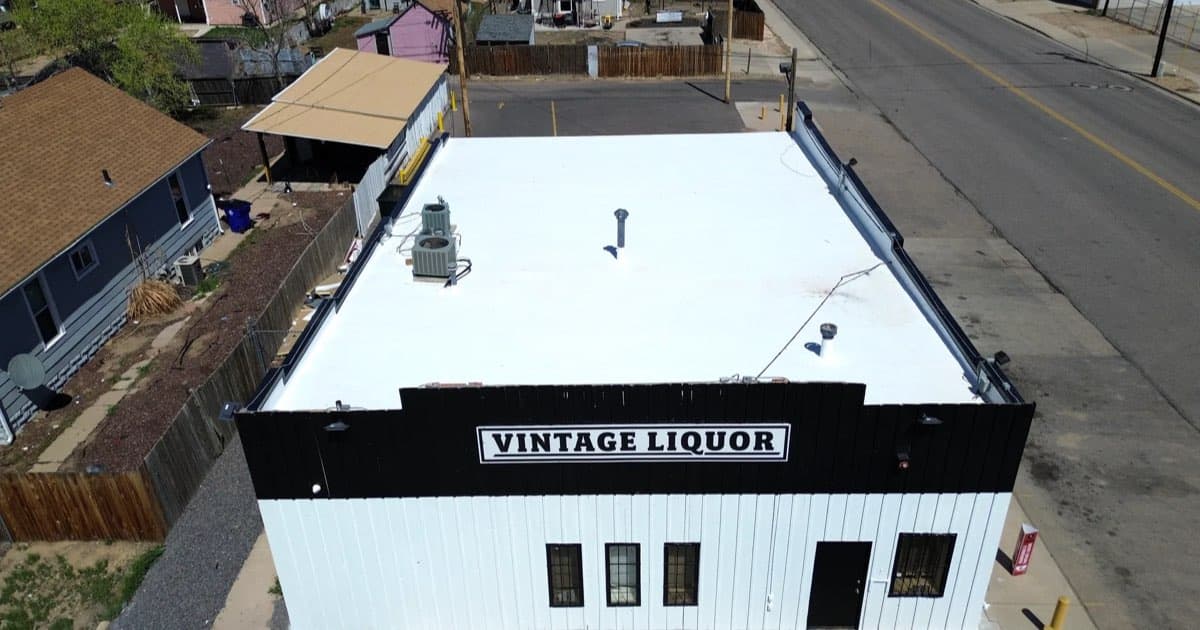
CRC Serving You From Three Offices
Available from all three offices: Denver, Grand Junction, and Scottsbluff, plus surrounding service areas.
Denver Office
Denver Metro and Front Range
(720) 893-7663
Grand Junction Office
Western Slope
(970) 877-7663
Scottsbluff Office
Nebraska Panhandle
(308) 536-7663