Commercial Roofing
What a Thermal Imaging Camera Reveals During a Commercial Roof Inspection
By Ryan Sanchez, Commercial Roofing Contractor · July 20, 2026
- Thermal Imaging
- Roof Inspection
- Commercial Roofing
- Leak Detection
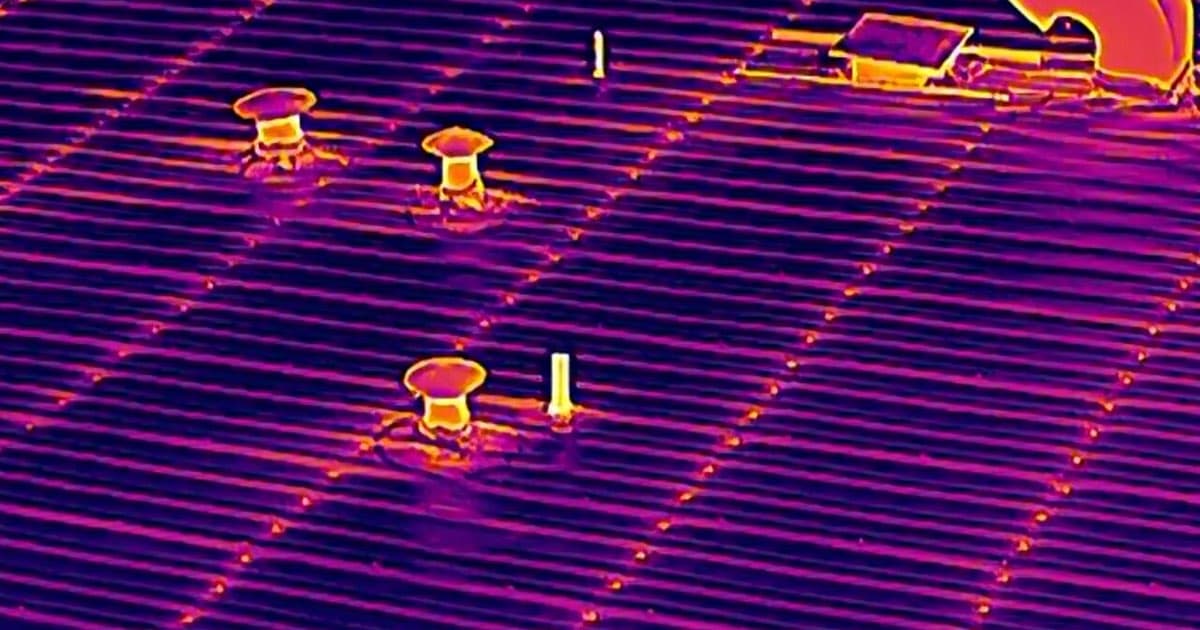
Short answer: A thermal imaging roof inspection flies an infrared camera over the roof to read surface temperature instead of visible light. Wet insulation, active leaks, failed seams, and air leaks hold heat differently than sound roofing, so they show up as hot or cold spots. It is fast, non-destructive, and precise, and it catches hidden problems while they are still cheap to fix.
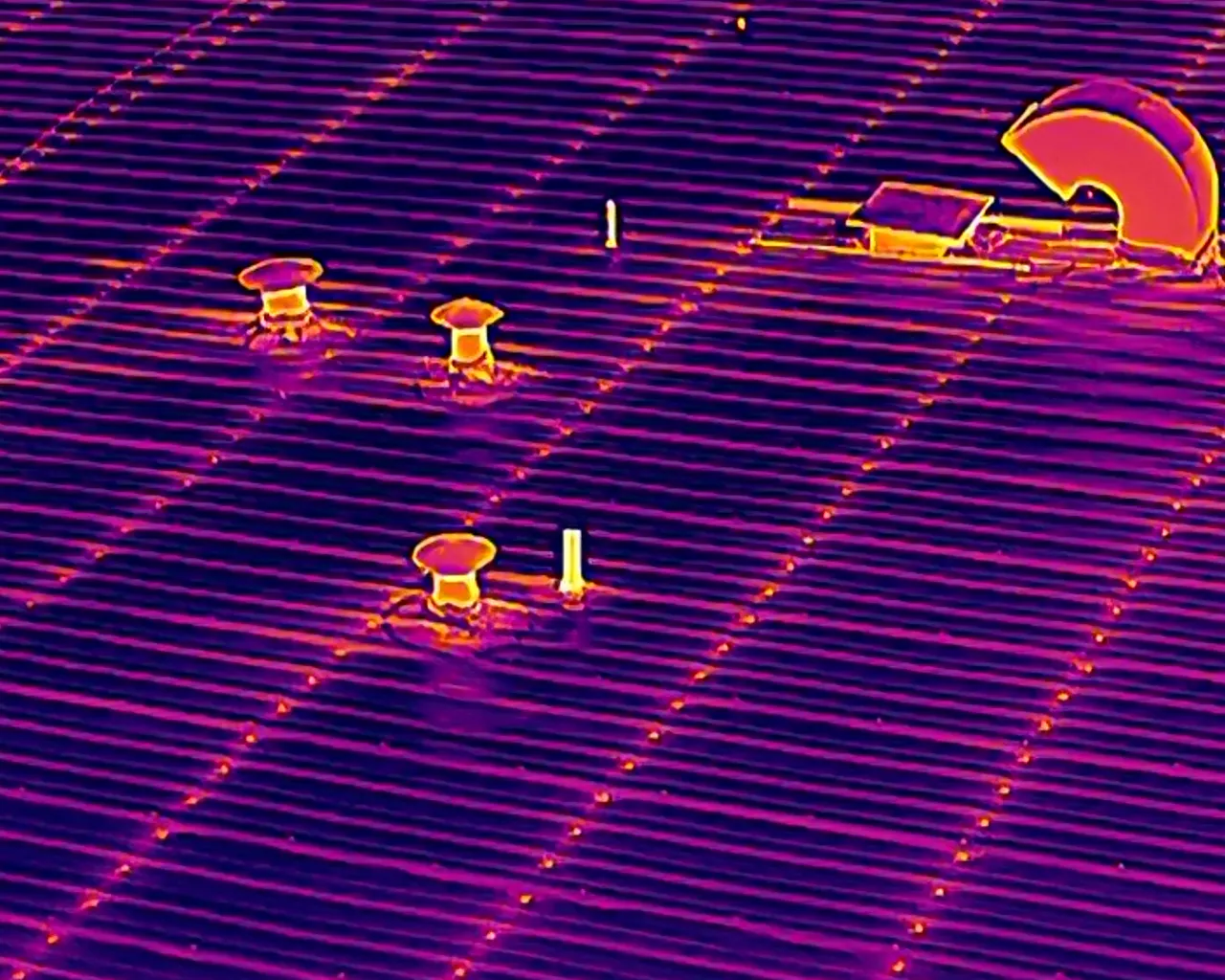
When CRC inspects a commercial roof, we look past the surface. We fly a thermal (infrared) imaging camera over the roof to see what the naked eye cannot. On a recent Grand Junction commercial metal roof, that is exactly how we pinpointed active leaks before recovering the roof. Here is what an infrared roof scan finds, and why it matters.
How thermal roof imaging works
A thermal camera reads surface temperature, not visible light. Water, trapped moisture, and air leaks absorb and release heat at a different rate than dry, intact roofing. Scans are most accurate in the evening after a sunny day: as the roof cools, wet or poorly insulated areas hold heat longer and glow against the cooler dry roof. Mounting the camera on a drone lets us scan an entire commercial roof in minutes, safely, with no foot traffic and no destructive test cuts.
What an infrared roof scan can detect
- Active leaks and water entry points. On a metal roof, water sneaks in at seams, fasteners, and penetrations. Thermal imaging traces the temperature trail back to the actual entry point, not just where the drip shows up inside.
- Trapped moisture and wet insulation. The most expensive hidden problem on a low-slope roof. Saturated insulation reads as warm patches long before it shows inside, so it can be dried or replaced before the deck rots.
- Missing, compressed, or saturated insulation. Cold streaks reveal where insulation has failed or thinned, which drives up heating and cooling costs.
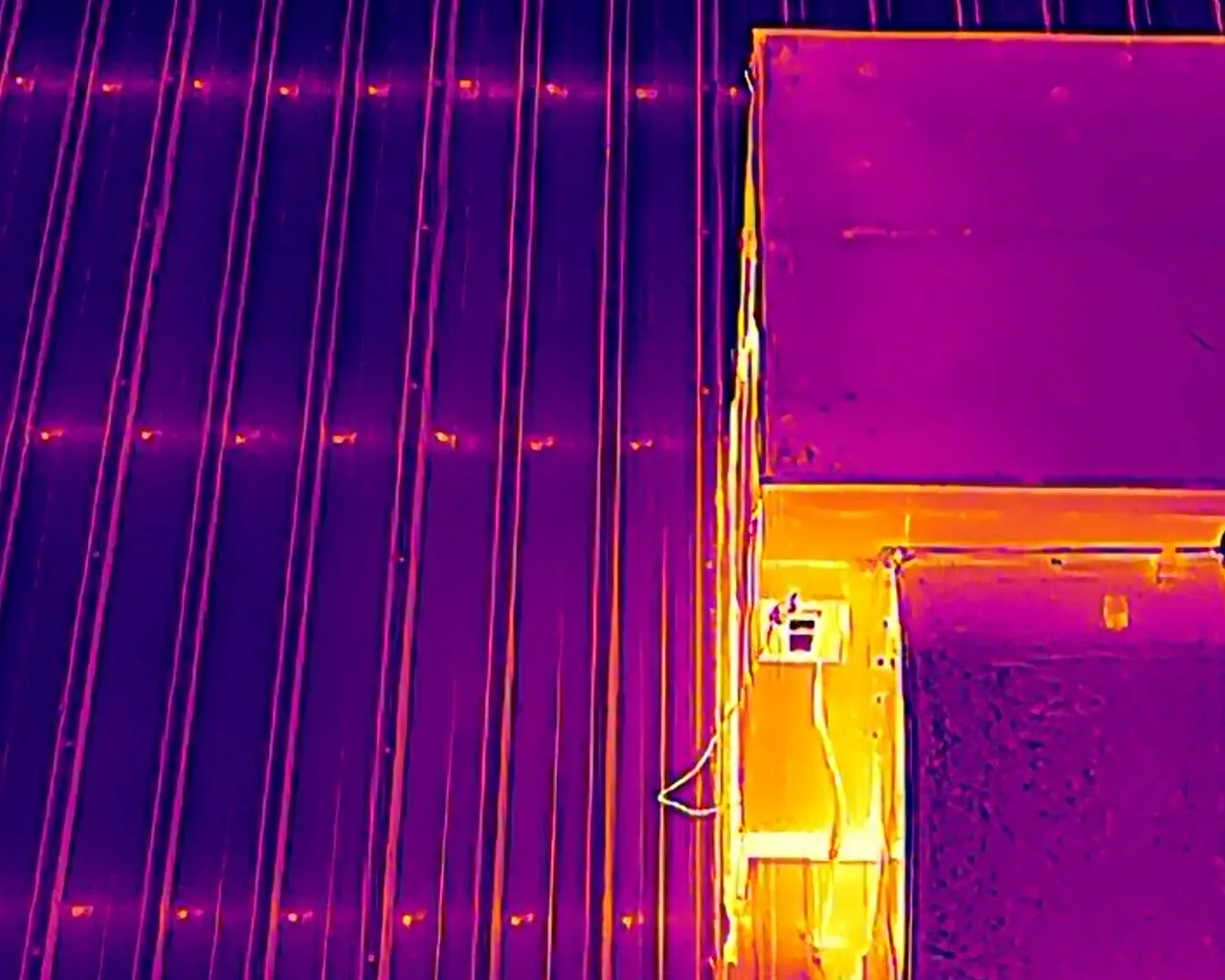
- Failed seams, flashings, and penetration details. The seams around vents, curbs, drains, and equipment are where roofs leak first; infrared highlights the ones letting moisture or conditioned air through.
- Air leaks in the building envelope. Gaps that bleed heated or cooled air, and the owner's energy dollars, show up clearly.
- Membrane blisters, voids, and delamination. Areas where a coating or membrane has lost its bond trap air or water and read differently than sound roofing.
- Ponding and poor drainage. Standing-water and slow-drain areas that shorten a roof's life are easy to map.
- Overheating rooftop equipment. Infrared also flags hot electrical connections and laboring HVAC units, a safety and fire-risk find on top of the roofing inspection.
- Pinpointing repairs and coat-vs-replace decisions. A scan shows exactly which sections are wet, so we replace only the failed areas instead of tearing off a roof that is mostly sound, which can save an owner significant money.
- Documenting an insurance claim. Moisture maps are objective, photographic evidence of the extent of damage for a carrier.
- Verifying the repair. We can re-scan after the work to confirm the wet areas are gone and the fix held.
Why it matters
Infrared roof scanning is non-destructive, fast, and precise. It catches small problems while they are still cheap to fix, prevents you from paying to replace roofing that is still good, and gives you documented proof of a roof's true condition. For Colorado commercial roofs that take a beating from hail, sun, and freeze-thaw cycles, it is one of the most valuable tools in a thorough inspection.
See it in action
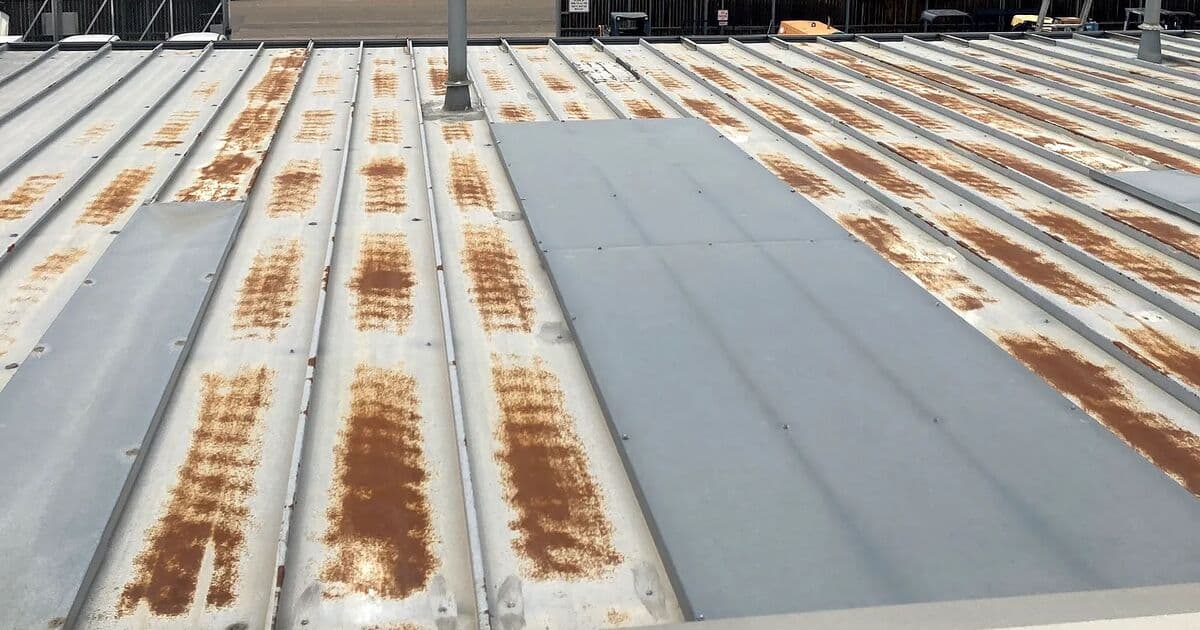
On a Grand Junction commercial metal roof, CRC flew a drone thermal scan to locate the exact leak points, marked and repaired them, and then installed a new fully adhered TPO recover over the metal, so the owner got a fully sealed roof without guesswork or an unnecessary tear-off. It is the same approach we bring to every commercial roof repair across Colorado.
Schedule a free commercial roof inspection with infrared scanning. Call our Denver office at (720) 893-7663 or our Grand Junction office at (970) 877-7663, or request an inspection online.
Frequently Asked Questions
What is a thermal imaging roof inspection?
It is a roof inspection that uses an infrared camera, usually drone-mounted, to read the roof's surface temperature instead of visible light. Wet, poorly insulated, or air-leaking areas hold and release heat differently than sound roofing, so they show up as hot or cold spots that reveal problems the naked eye cannot see.
What can an infrared roof scan detect?
Active leaks and water entry points, trapped moisture and wet insulation, missing or compressed insulation, failed seams and flashings, air leaks in the building envelope, membrane blisters and delamination, ponding and poor drainage, and even overheating rooftop electrical or HVAC equipment.
Do you have to cut the roof open to find a leak?
No. A thermal scan is non-destructive. It traces the temperature trail back to the actual water entry point without test cuts, which is far more accurate than chasing a drip from where it shows up inside the building.
When is a thermal roof scan most accurate?
In the evening after a sunny day. As the roof cools, wet or poorly insulated areas hold heat longer and glow against the cooler, dry roof, which makes moisture and insulation problems easiest to map.
Can thermal imaging help me avoid replacing my whole roof?
Often yes. A scan shows exactly which sections are wet, so we can repair or recover only the failed areas instead of tearing off a roof that is mostly sound, which can save a building owner significant money.
Does an infrared roof scan help with an insurance claim?
Yes. Moisture maps are objective, photographic evidence of the extent of damage, which gives a carrier a clear, documented picture of a roof's true condition.
Talk to the team nearest you: our Denver office, our Grand Junction office, or our Scottsbluff office.