
Commercial Roofing
What Happens Between a Hail Inspection and an Insurance Approval
By Ryan Sanchez, Commercial Roofing Contractor · September 14, 2026
- Insurance Claims
- Hail Damage
- Roof Inspection
- Commercial Roofing
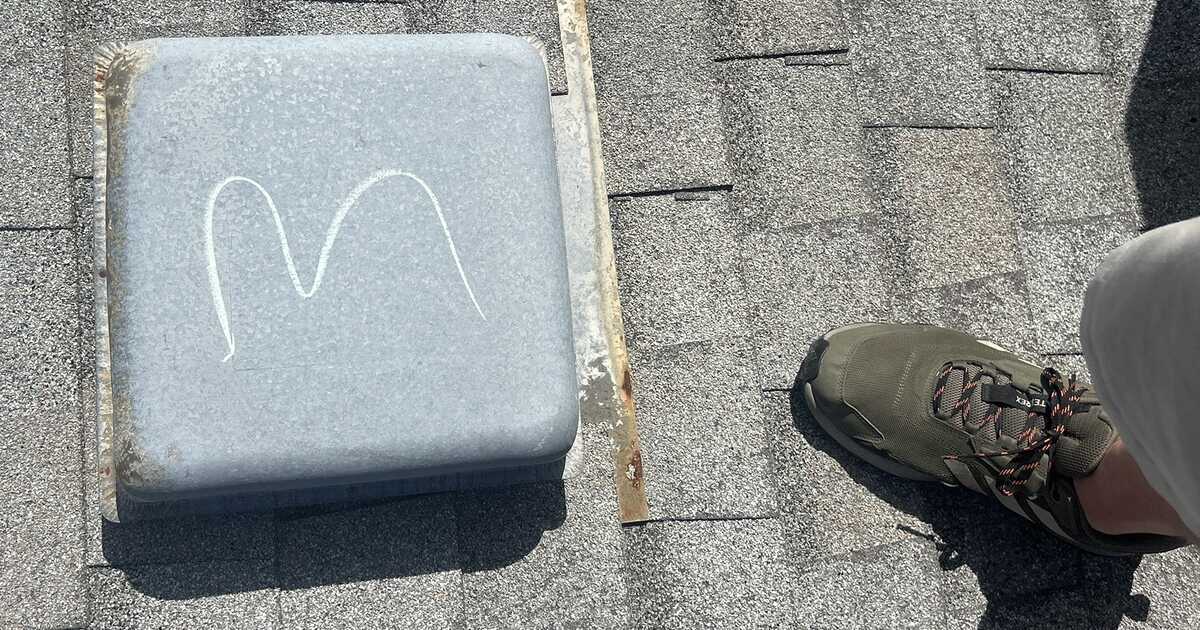
Short answer: the inspection produces evidence, not a decision. A roofer marks a test square, counts and photographs the impacts inside it, and documents the soft metals and gutters. Your carrier then decides, and that is where the waiting happens: an adjuster inspection, a scope written from it, and often a supplement once the roof is opened up. Most delay comes from an incomplete file or a disagreement about scope, and both are addressable while you wait.
The part nobody explains is the middle. Property owners generally understand the beginning, a storm came through and someone should look at the roof, and they understand the end, the roof gets replaced or it does not. What sits between the two is several weeks of a file moving between people, and from the outside it looks like nothing is happening.
Usually something is. This is what those weeks actually contain, why the inspection is done the way it is, and where claims genuinely get stuck.
The inspection is evidence-gathering, not a verdict
A roofing contractor does not approve your claim and cannot. What an inspection produces is a documented record that your carrier will accept or contest, so it is built to be checkable by someone who was not there.
The core of it is a test square, and it does more work than it looks:
- 1Mark a square on the slope10 ft by 10 ftOne hundred square feet, chalked out on the slope being assessed. A square is the unit the trade estimates in and the unit carriers think in, which is why the area is standardised rather than eyeballed.
- 2Find, circle and count every impact inside itDensity, not existenceEach hit gets circled in chalk. The count is what matters: your carrier is deciding whether the SLOPE is damaged, and that turns on how many impacts fall in a known area, not on whether a damaged shingle can be found somewhere.
- 3Write the count on the roof and photograph itSelf-documentingThe number goes on the shingles beside the square, so the photograph carries its own caption. Months later, nobody has to match a loose photo to a note in a file.
- 4Work the soft metalsOften the clearest evidenceVent caps, pipe collars, flashings and gutters are thin metal, so they dent visibly where a shingle only bruises. A marked vent cap is frequently the most legible proof of hail on the whole roof.
- 5Photograph the roof as found, in contextBefore anything is touchedWide shots that place the squares on the building, including the awkward parts: on a commercial roof the mechanical units, their screens and their curbs interrupt the slopes an adjuster needs to see, and unphotographed areas are the ones that get argued about.
Where Colorado and Nebraska hail claims actually stall
In our experience the delay is almost never a carrier refusing to answer. It is one of five things, and they behave differently.
Adjuster backlog. After a regional hail event every adjuster in the state is working the same storm at the same time. This is the one nobody controls. It is also the most predictable, so it is worth knowing early whether your claim landed inside a big event or on its own.
An incomplete file. The most common avoidable cause. A file missing slope counts, missing photographs of an elevation, or missing interior evidence does not get rejected; it gets set down and picked back up after somebody asks for the missing piece. That is a fresh wait, not a continuation of the old one.
Scope disagreement. The adjuster approves two slopes, the roof needs four. Or a repair is written where the jurisdiction requires replacement. This one is genuinely resolvable with evidence, and it is where most of the work happens.
Code requirements nobody priced. An estimate written from the ground does not include what the local building department requires once the roof is opened. In the Grand Valley, for instance, Mesa County publishes a written threshold: more than one square of damage on a slope and that slope has to be replaced, and two or more existing layers means replacement regardless of area. That is a documentable requirement rather than a preference, and it belongs in the file.
Supplements after tear-off. Rotten decking, a hidden second layer, a flashing detail that cannot be reused. These cannot be known in advance and are not a sign anything went wrong. They are photographed as found and submitted.
What a contractor should be doing while you wait
"We submitted it, now we wait" is not a process. Between the inspection and the approval, the work that matters is:
- Meeting the adjuster on the roof. Being physically present at the adjuster inspection, walking the same slopes, and looking at the same squares. Nearly every scope disagreement is cheaper to resolve on the roof than in writing afterwards.
- Re-documenting what was contested, rather than resending what was already rejected. If an elevation was denied, that elevation needs new evidence, not another copy of the old photographs.
- Writing supplements with the code cite attached. A supplement that says a slope must be replaced is an opinion. One that cites the jurisdiction's published requirement is a document.
- Protecting the roof in the meantime. An open or compromised roof does not pause because a file is in review. Temporary protection is not a substitute for the repair and is not a reason to let a claim drift, but a leak during the wait becomes a second problem.
- Telling you where it actually is. Including when the honest answer is that it is sitting in a queue.
What state law gives you, and where it stops
Colorado legislated specifically around roofing and hail, and the protections are more limited in scope than most people assume. Nebraska legislated separately and differently, so which set applies depends on which side of the state line your building is on.
C.R.S. 6-22-105 makes it illegal for a roofing contractor to pay, waive, or rebate any part of your deductible, or to advertise that they will. This is not a technical rule about paperwork. A contractor offering to absorb your deductible is describing a business model that pays for that offer somewhere else in your roof.
C.R.S. 6-22-104 requires a residential roofing contract to be in writing with the scope of work, approximate costs and the contractor's insurance information, gives you 72 hours to rescind after signing, and lets you rescind if your insurer denies the claim in whole or in part.
Nebraska is not a copy of that. Its deductible rule lives in Neb. Rev. Stat. 44-8604, which says a residential contractor shall not promise to rebate any portion of an insurance deductible as an inducement to a sale, and Neb. Rev. Stat. 44-8603lets an owner cancel insurance-funded work through the third business day after signing or after the insurer says the claim is not covered. Both sit inside the Insured Homeowners Protection Act and are written for residential property. On the claim-handling side, Nebraska's Unfair Insurance Claims Settlement Practices Act (Neb. Rev. Stat. 44-1536 to 44-1544) sets fair and prompt handling standards, but it is enforced by the Nebraska Department of Insurance rather than through a private lawsuit, and Nebraska has no equivalent of Colorado's statutory remedy for unreasonable delay or denial. Do not assume a Colorado citation you have read anywhere on this site reaches a Nebraska building, or the reverse.
What you can do that actually helps
- Get the roof looked at early. Evidence degrades, and so does the argument that damage came from the storm you are claiming for rather than a later one.
- Keep your own copy of everything. The photographs, the counts, the estimate, the correspondence. Files move between adjusters.
- Read your declarations page before the adjuster arrives. Wind and hail often carry their own deductible, commonly one to five percent of dwelling coverage rather than a flat amount, and replacement cost versus actual cash value changes what settlement looks like more than anything else in the file.
- Ask what is outstanding, by name. "Is anything missing from the file?" gets a more useful answer than "any news?".
If a roof in Colorado or the Nebraska Panhandle needs looking at, our inspections are free and carry no obligation, and we document them the way described above whether or not the work ends up with us. The wider claims process, including what to check on your policy before the adjuster arrives, is covered on our insurance claim support page. If the storm was recent, the first 48 hours after a Colorado hail storm covers the step before this one.
Frequently Asked Questions
How long does a hail claim take to get approved in Colorado or Nebraska?
A straightforward residential claim often moves from inspection to approval in two to six weeks. After a large regional storm that stretches, because every adjuster in the state is working the same event. Commercial claims usually take longer than residential ones: there is more roof to scope, often more than one building, and a commercial policy is more likely to involve an engineer or a second review. What matters more than the calendar is whether the file is complete, because an incomplete file restarts the wait rather than continuing it.
What does a roofer actually do during a hail inspection?
The core of it is a test square: a marked-out ten foot by ten foot area on a slope, in which every hail impact is found, circled and counted. That square is photographed against the slope it came from, and the count is written on the roof so the photo is self-documenting. Around that, the inspection covers the soft metals such as vents, caps and flashings, which bruise visibly and are often the clearest evidence on the roof, plus gutters, and the interior where access allows.
Why does my roof need a test square instead of just photos of the damage?
Because an adjuster is deciding whether the slope is damaged, not whether a shingle is. A scatter of close-up photographs proves individual impacts exist; a marked square with a count establishes a density across a known area, which is the measure carriers actually apply. It also makes the claim checkable: an adjuster can climb to the same square and count the same hits.
Can hail damage be real if the roof looks fine from the ground?
Yes, and this is the single most common misunderstanding. Hail at around one inch bruises an asphalt shingle: the impact fractures the mat beneath the granules without punching a hole. The roof looks intact from the driveway and often from the gutter line, while the granule loss that follows shortens its life by years. Soft metal vents and caps usually give it away first, which is why they are inspected and photographed.
What is a supplement, and why did my claim need one?
A supplement is a request to add scope to an approved estimate. It is normal, not a dispute. The first estimate is usually written from what the adjuster could see and measure on the day, and reality on a tear-off produces things nobody could have priced in advance: rotten decking, an extra layer, a code requirement that applies once the work is opened up. The supplement documents those with photographs and puts them back to the carrier.
Can my roofer pay my deductible if the claim is short?
No. Under C.R.S. 6-22-105 it is illegal for any roofing contractor in Colorado to pay, waive, or rebate any part of your deductible, or to advertise that they will. A contractor who offers is telling you something useful about how they operate. Note this chapter governs residential roofing contracts; a commercial roof is contracted under ordinary commercial terms instead, without those statutory protections.
Should I wait for the insurance approval before signing anything?
You should never sign under pressure, and you should understand what you are signing. For a residential roof, C.R.S. 6-22-104 requires the contract to be in writing with the scope, approximate costs and the contractor's insurance information, and gives you 72 hours to rescind after signing. Colorado law also lets you rescind if your insurer denies the claim in whole or in part. A commercial contract has none of those statutory defaults, so read the termination terms before you sign.
Related Resources

Talk to the team nearest you: our Denver office, our Grand Junction office, or our Scottsbluff office.