
Commercial Roofing
Commercial Flat Roof Leaks in Colorado: Causes and When to Repair vs Replace
By James Rhoades, Commercial Roofing Contractor · July 6, 2026
- Commercial Roofing
- Flat Roof
- Roof Leak
- Repair vs Replace
Short answer: Most commercial flat roof leaks in Colorado start at seams, flashing, and penetrations rather than in the open membrane field, and ponding water plus freeze-thaw cycling makes them worse. Repair when the membrane is generally sound, the leak is localized, and moisture has not spread into the insulation. Replace when leaks recur across the roof, scans show widespread wet insulation, or the membrane is at the end of its 15 to 25 year life. The decision should follow a moisture scan, not a guess.
A flat roof leak rarely stays small. Water enters at one point, travels across insulation and decking, and shows up far from the actual breach, often after it has already done damage you cannot see. For a Colorado building owner, understanding where leaks start and when to repair versus replace protects both the building and your budget. Here is the breakdown.
Why Colorado Is Hard on Flat Roofs
Low-slope and flat commercial roofs (slopes under about 2:12) drain slowly, which means water sits longer and finds weak points. Colorado adds specific stresses on top of that.
- Freeze-thaw cycling. Water that lingers on the membrane freezes and thaws repeatedly, expanding cracks and stressing seams and flashing.
- Snowmelt. Snow piles on flat roofs and melts slowly, holding moisture against the membrane and around penetrations for extended periods.
- High-altitude UV. Intense sun degrades membranes over time, creating brittleness, cracks, and blisters.
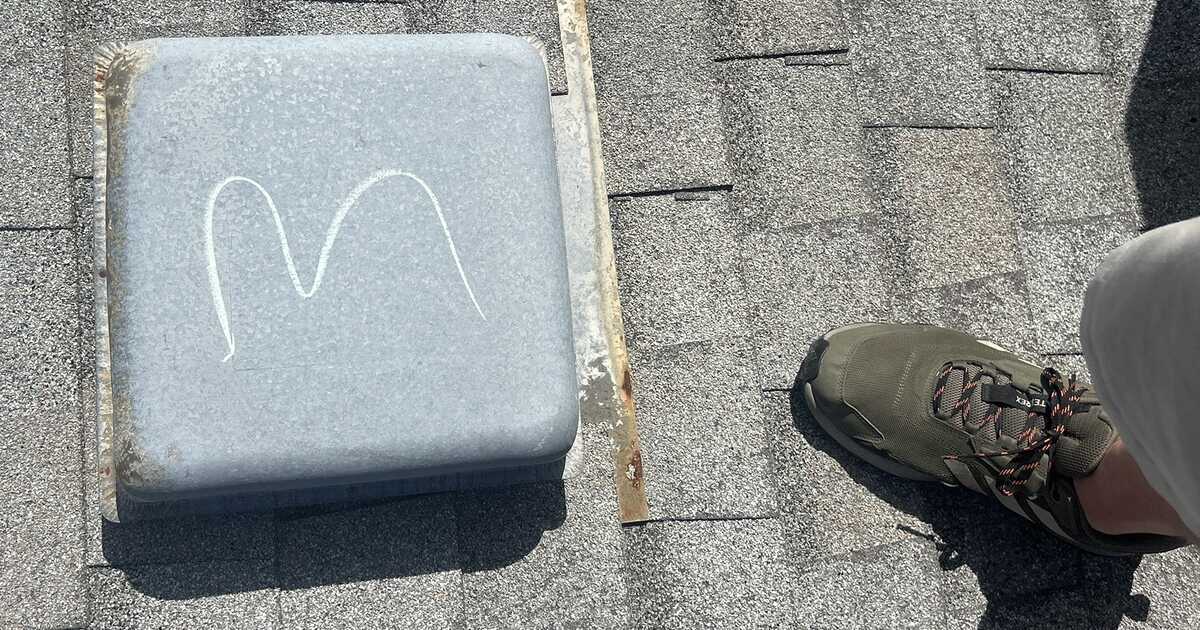
- Hail and wind. Even small hail can bruise or puncture a membrane, and wind uplift stresses edges and seams. Damage is often invisible from the ground.
Where Commercial Leaks Actually Start
Industry leak data and field experience consistently point to the same culprits. The membrane field itself is rarely the first thing to fail.
| Cause | What happens |
|---|---|
| Seam failure | Welded or glued seams separate with age and thermal movement, letting water under the membrane |
| Flashing and penetrations | Flashing at curbs, drains, pipes, HVAC units, and vertical transitions cracks or lifts; penetrations are a top entry point |
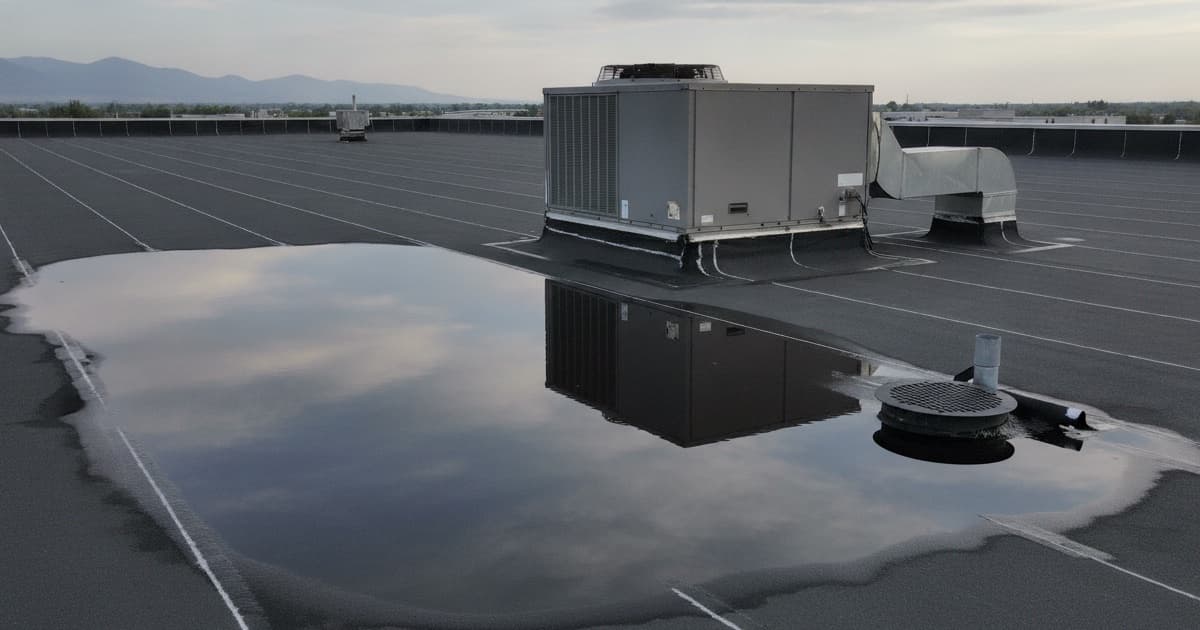
| Ponding water and drainage | Clogged drains, scuppers, or low spots leave standing water that accelerates membrane breakdown and seam stress |
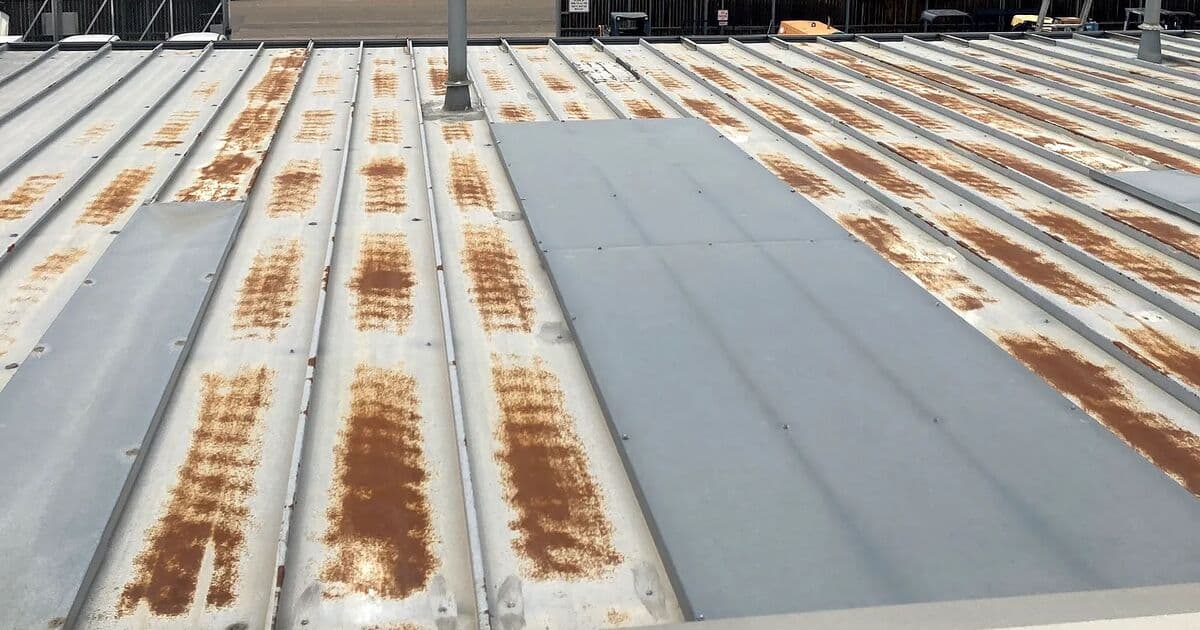
| Aging membrane | UV, snow, and temperature swings break down EPDM, TPO, and modified bitumen over time, causing cracks and blisters |
| Storm damage | Hail bruising or punctures and wind uplift compromise the system |
| Poor prior installation or repairs | Improper adhesive, bad seam welds, or unsealed flashing cause premature leaks |
A large share of commercial roof problems trace to seams, flashing, and drainage. That is good news for repair candidates, because those are often fixable with a targeted commercial roof repair rather than replacing the whole roof when caught early.
A Word on Ponding Water
Ponding is one of the most common and most misunderstood flat-roof issues in Colorado. Water that lingers well beyond the normal drainage and evaporation window is a problem for three reasons: it stresses seams and details, it keeps returning to the same low spot, and over time the added weight can contribute to structural deflection. Ponding is usually a symptom of a drainage or slope problem, not a standalone diagnosis, so the fix may involve clearing or repairing drains, correcting slope, or addressing low spots, depending on what an inspection finds.
Warning Signs to Watch For
Catching a flat roof problem early keeps it in repair territory. Watch for:
- Water stains on interior ceilings or walls, often appearing away from the actual roof breach
- Visible ponding that stays for days after rain or snowmelt
- Blistering, cracking, or splitting in the membrane
- Separated or lifting seams and flashing
- Clogged or slow drains and scuppers
- Higher energy bills, which can signal wet insulation that has lost its R-value
Repair vs Replace: How to Decide
The decision should follow a professional inspection, ideally with moisture detection, not a surface look.
Repair makes sense when:
- The leak is localized to a seam, a flashing detail, or a penetration.
- The membrane is generally sound and not near end of life.
- Moisture scans show the insulation underneath is still dry.
- Drainage can be corrected to stop ponding at the source.
Replacement makes sense when:
- Leaks recur in multiple areas or keep coming back after repairs.
- Moisture scans reveal widespread wet insulation, which a repair cannot reverse.
- The membrane is at or past its typical 15 to 25 year service life and has lost flexibility.
- The system has already been patched or recovered repeatedly.
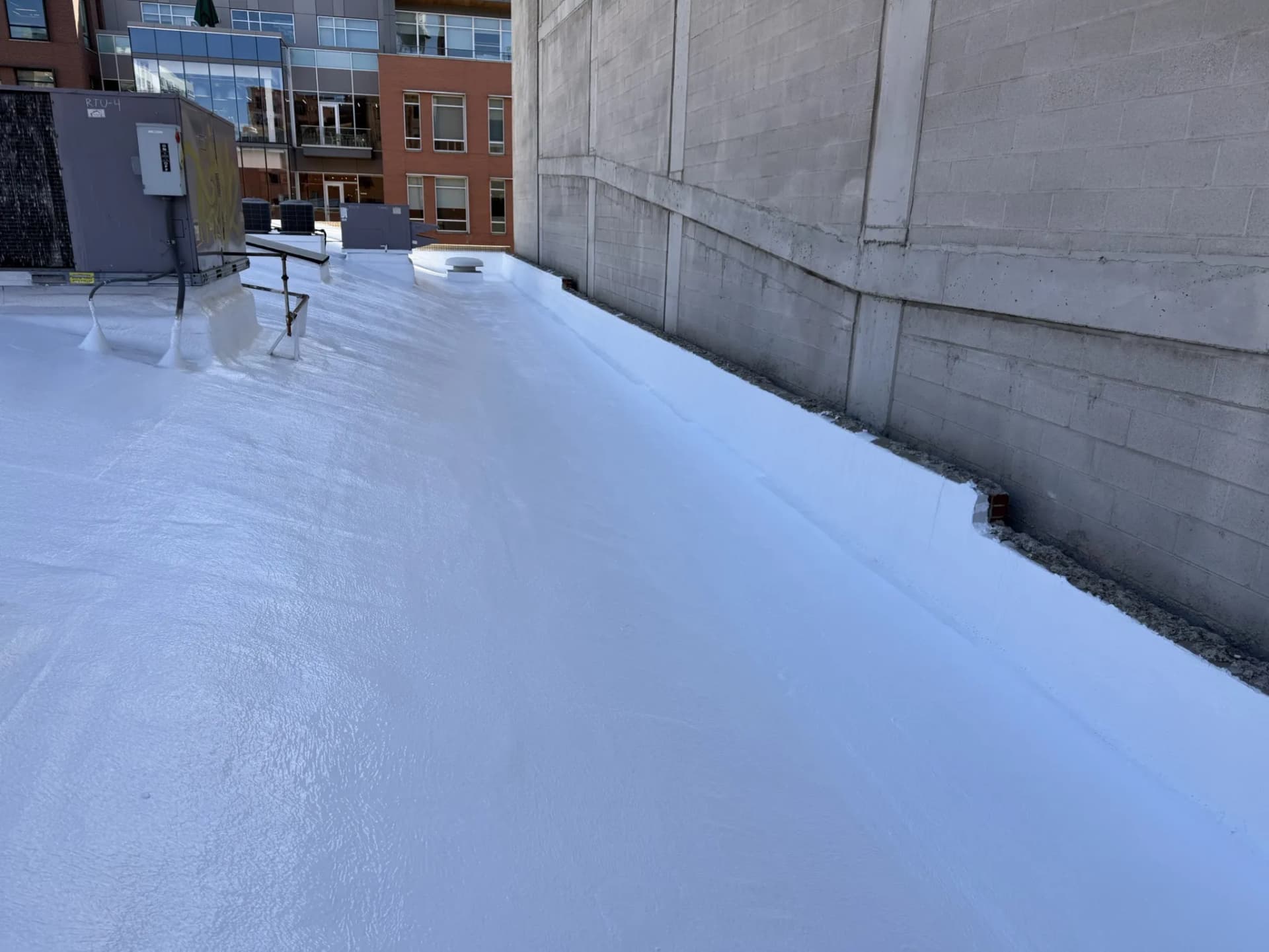
If the roof is sound but aging, there may be a third path between repair and tear-off: a restoration coating on a qualifying substrate. We cover how to evaluate that in our guide on commercial roof coatings vs tear-off, and the membrane choices for a full replacement in our TPO vs EPDM guide.
What to Do When You Find an Active Leak
For a property manager or building owner, the steps you take in the first hours of a discovered leak affect both the damage and any insurance claim.
- Contain the interior. Move inventory, equipment, and electronics out of the affected area and place containment under active drips. Photograph the interior damage before cleanup.
- Do not send untrained staff onto the roof. Wet membranes and edges are a fall hazard, and walking the roof can worsen the breach. Leave the on-roof work to a professional.
- Document the event. Note the date and any storm that may have caused it. If hail or wind is the cause, record it, because storm-related damage is more likely to be covered than wear.
- Call a commercial roofer for a proper diagnosis. Because water travels under the membrane, the visible interior stain is rarely under the actual breach. A professional traces the entry point with inspection and moisture detection rather than guessing.
- Keep all documentation. Inspection reports, photos, and repair records support warranty and insurance claims and help establish a maintenance history.
Temporary patching can slow a leak, but it hides the root cause. A durable fix addresses the seam, flashing, drainage, or membrane problem that let water in.
Why Speed Matters
A small seam gap that costs little to fix can become a large restoration project once water spreads through the insulation and into the deck. Wet insulation loses its insulating value and keeps degrading the structure, and mold can develop in damp materials quickly. Acting on a leak early almost always reduces the eventual scope and cost. Twice-yearly inspections, in spring and fall, plus a check after major hail or wind, are the cheapest insurance against a surprise failure.
Commercial Roofing Contractor specializes in commercial and residential roof replacements and leads every assessment with a proper inspection, including moisture detection where needed. Our inspectors hold Haag commercial roof certification, the leading damage-inspection credential, and we install and warranty TPO, EPDM, and modified bitumen systems as a certified contractor with GAF, Johns Manville, and Mule-Hide. You can review all of our certifications and credentials for verification. Our Denver office serves the Front Range and our Grand Junction office serves the Western Slope.
Frequently Asked Questions
What is the most common cause of commercial flat roof leaks?
Most leaks start at seams, flashing, and penetrations rather than in the open membrane, with ponding water and drainage problems a frequent contributor. In Colorado, freeze-thaw cycling and snowmelt make these failures worse.
Can a commercial flat roof leak be repaired, or do I need a full replacement?
Many leaks can be repaired if caught early and the membrane is generally sound, especially seam, flashing, and penetration leaks. Replacement is warranted when leaks recur across the roof, moisture scans show widespread wet insulation, or the membrane is at end of life.
Is ponding water on my flat roof a serious problem?
It can be. Water that lingers well beyond normal drainage time stresses seams, keeps returning to the same low spot, and adds weight that can contribute to structural deflection over time. Ponding is usually a symptom of a drainage or slope issue worth diagnosing.
How long does a commercial flat roof last in Colorado?
Single-ply membranes such as TPO and EPDM commonly last about 15 to 25 years or more depending on the system, thickness, installation quality, and maintenance. Colorado's UV, hail, and freeze-thaw can shorten that without regular upkeep.
How do you find where a flat roof is leaking?
Because water travels under the membrane, the interior stain is often far from the breach. Professionals use a physical inspection of seams, flashing, and penetrations along with moisture detection tools to trace the actual entry point and find trapped water.
How often should I inspect my commercial roof?
At least twice a year, in spring and fall, plus after any major hail or wind event. Regular inspections catch seam and flashing problems while they are still inexpensive repairs.
Will my insurance cover a commercial flat roof leak?
It depends on the cause and your policy. Sudden storm damage such as hail or wind is often covered, while wear, aging, and deferred maintenance typically are not. Documentation from a professional inspection helps support a storm-related claim.
Talk to the team nearest you: our Denver office, our Grand Junction office, or our Scottsbluff office.