Commercial Roofing Project
Commercial Metal Roof Recover in Grand Junction, CO
By Commercial Roofing Contractor, project management team · July 24, 2026
- Commercial Roofing
- Metal Roof Recover
- Hail Insurance Claim
- Grand Junction
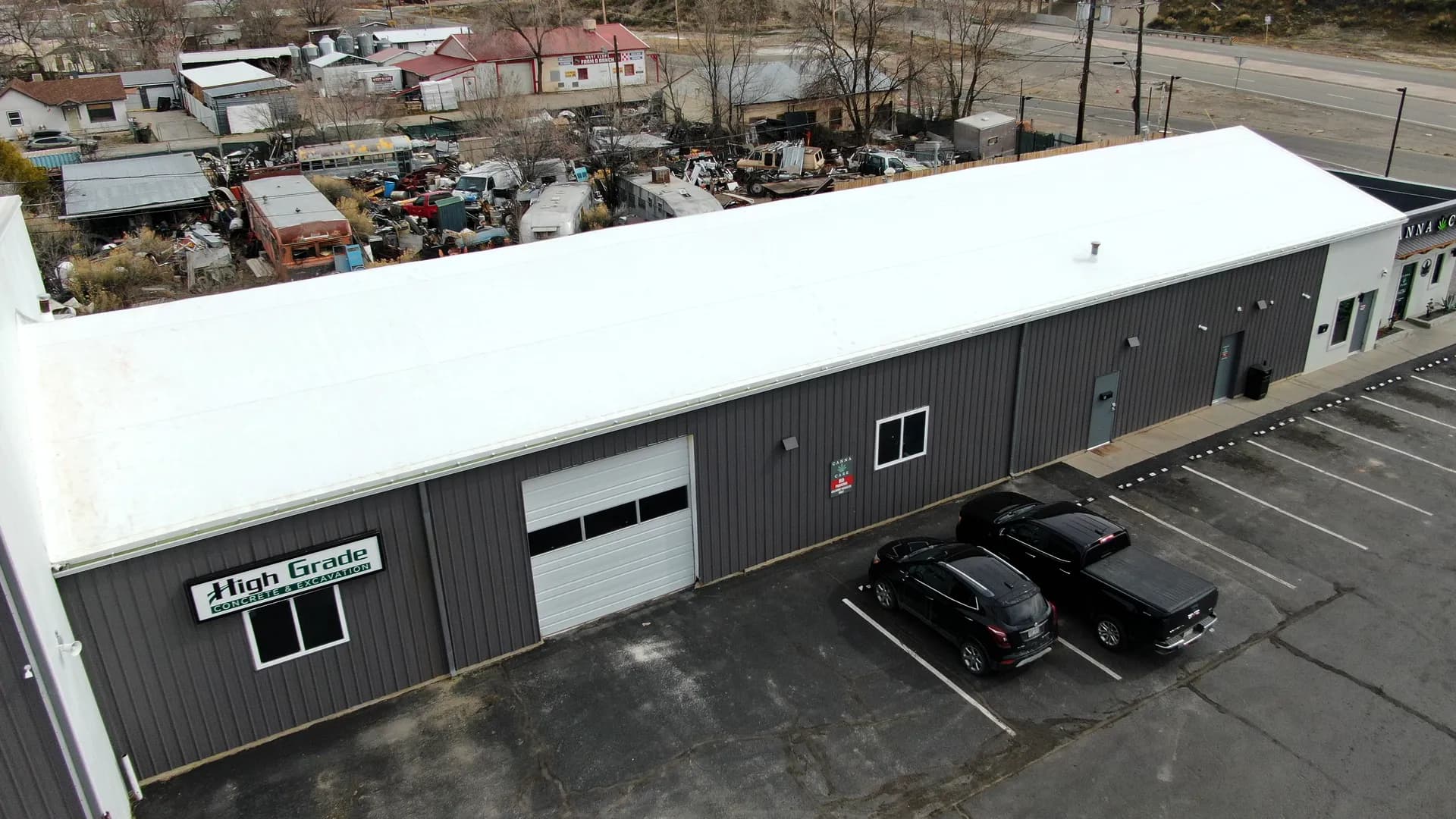
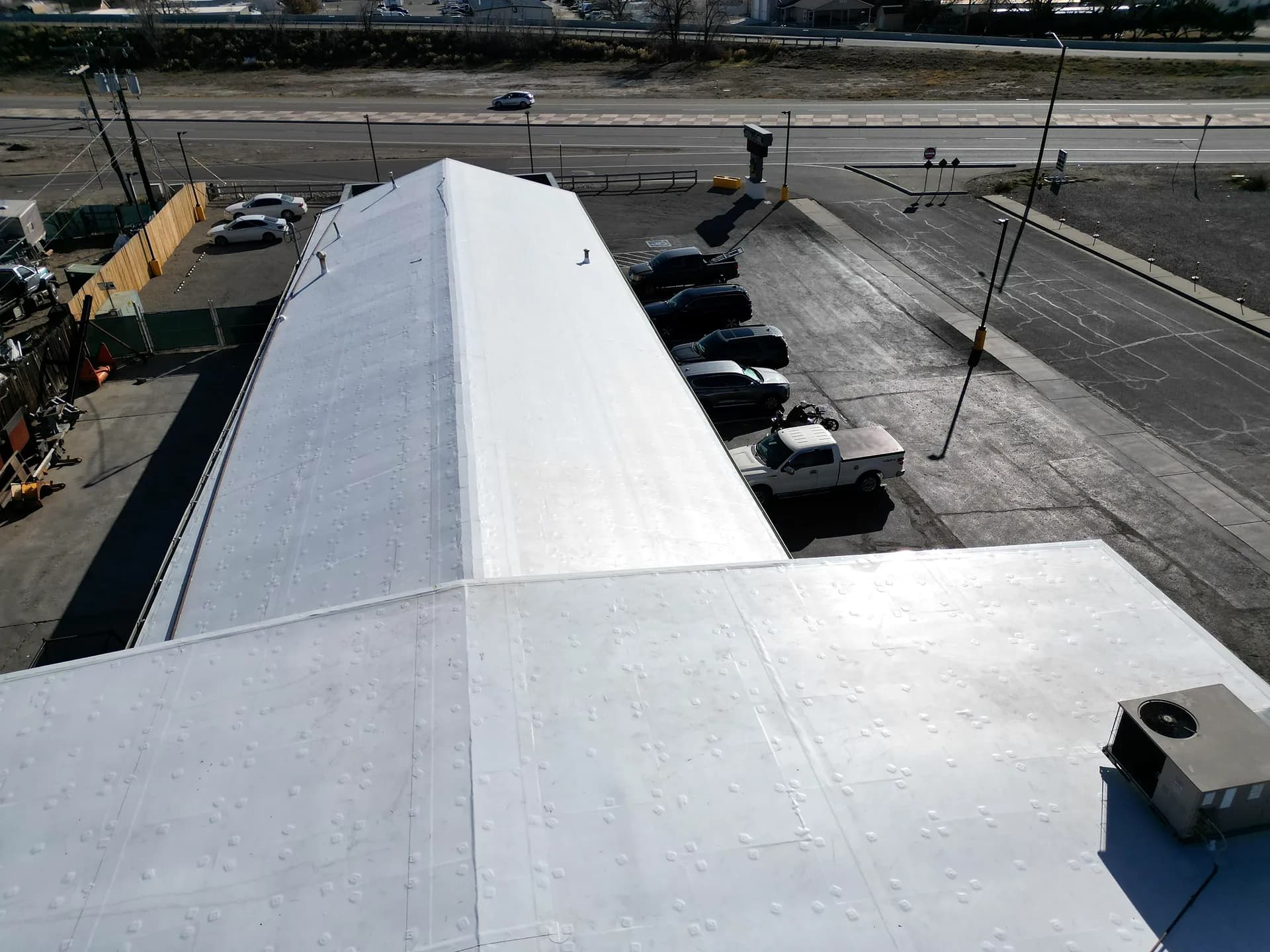
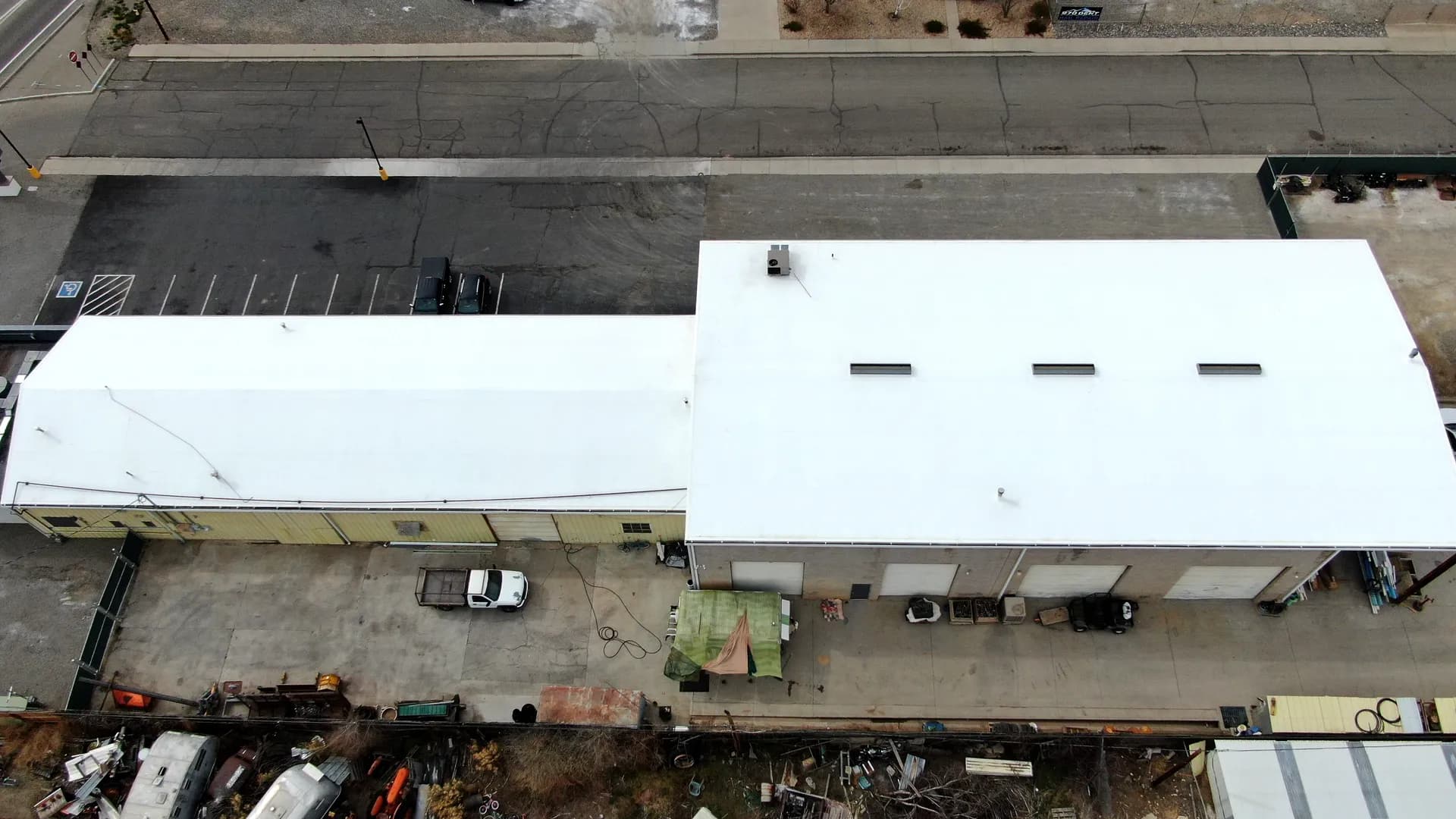
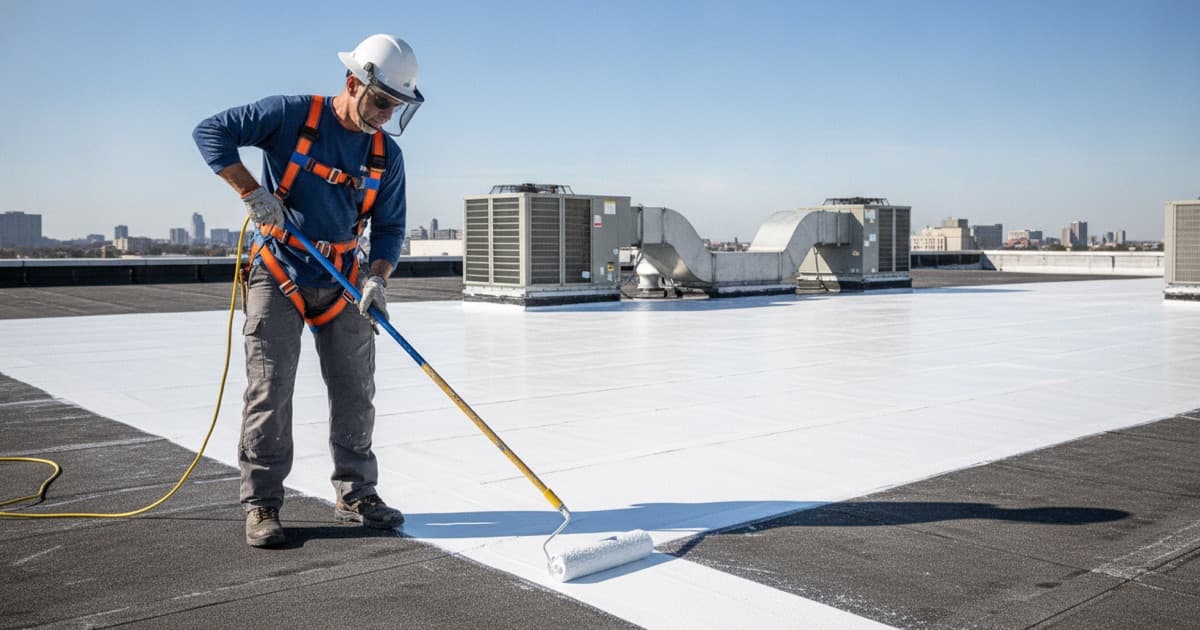
Project Capsule: The 2025 Western Slope hail storm dented the exposed-fastener metal roof on High Grade Concrete & Excavation's large building on Highway 50 in Grand Junction. Rather than tear off more than 12,000 square feet of metal, CRC documented the storm claim and recovered the roof, building a new insulated, code-compliant low-slope system directly over the existing metal and finishing it with a 60-mil white TPO membrane, with no exposed fasteners left for the next hail to find.
Project Facts
| Location | Highway 50 corridor, Grand Junction, Colorado |
| CRC office | CRC Grand Junction Office |
| Building type | A large two-story metal building for a concrete and excavation contractor, with a ground-floor tenant |
| Cause of loss | 2025 Western Slope hail storm |
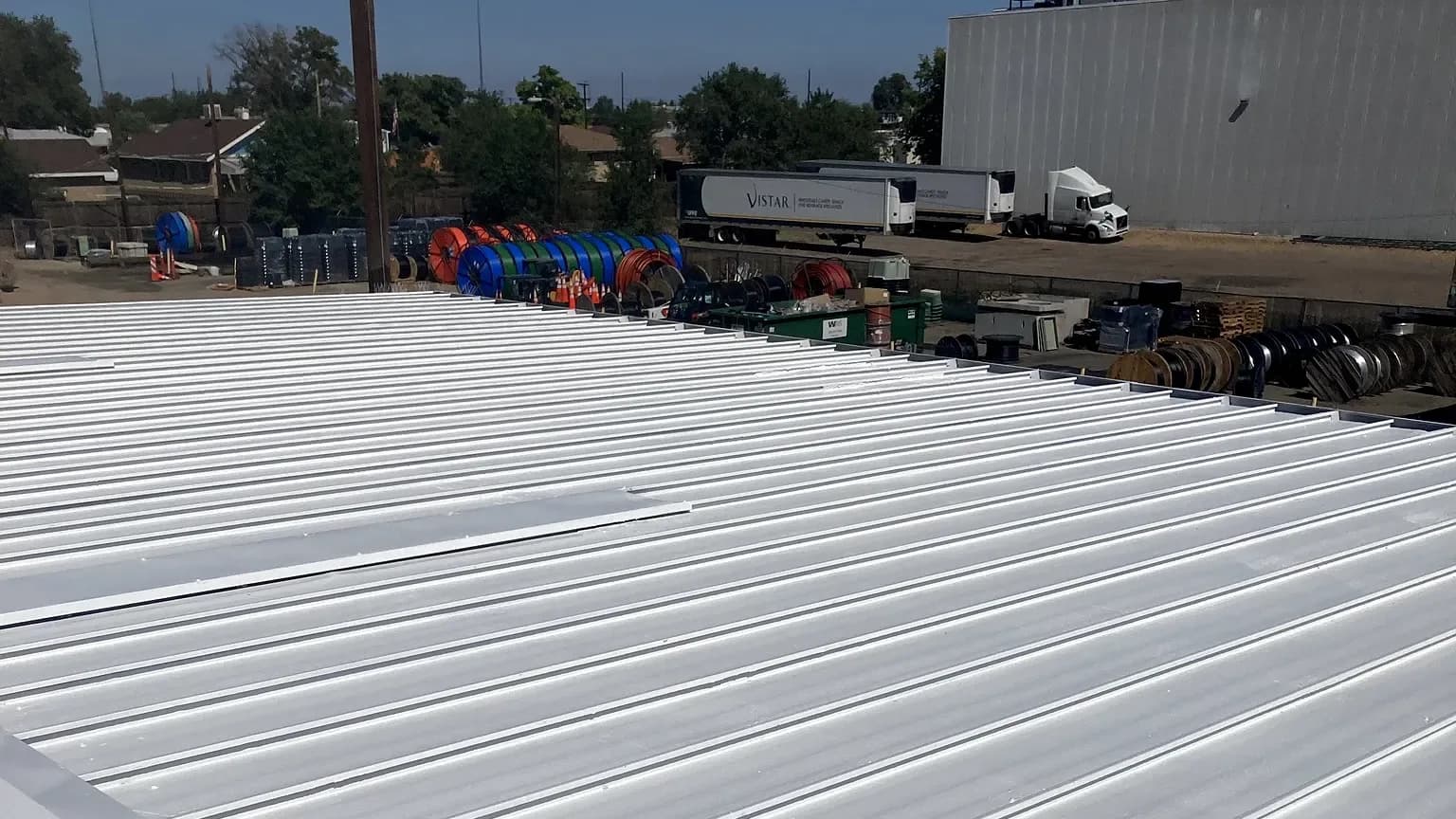
| Existing roof | 26-gauge exposed-fastener ribbed (R-panel) galvanized metal, roughly 8-1/2 inch rib spacing |
| Scope | Over 12,000 square feet (roughly 127 squares) recovered; hail-damaged ribbed metal wall panels also replaced |
| Roof system installed | A metal-roof recover: rigid polyiso insulation and a Georgia-Pacific DensDeck Prime cover board over the existing metal, finished with a 60-mil white TPO membrane induction-welded to its fastening plates |
| Insulation | Rigid polyiso built up to R-30 above the deck, the continuous-insulation level the energy code sets for a replaced roof in Climate Zone 5B |
Why recover a hail-damaged metal roof instead of tearing it off?
Stripping more than 12,000 square feet of 26-gauge metal off a two-story building would have exposed the interior to the weather, so CRC built the new roof over the existing panels and the concrete and excavation operation stayed dry and in use. Once hail has dented exposed-fastener panels and worked hundreds of gasketed screws, chasing individual leaks is a losing battle.
How is an induction-welded TPO recover different from a fully adhered one?
Here the 60-mil white TPO membrane was induction-welded to the fastening plates that hold down the insulation and cover board, so no fasteners pass through the finished membrane. On CRC's other Grand Junction metal recover, the membrane was instead fully adhered across the whole surface.
The Challenge
The 2025 Western Slope hail storm hammered High Grade Concrete & Excavation's metal building on Highway 50 in Grand Junction. The roof was a large 26-gauge exposed-fastener metal roof, and the hail bruised and dented the panels across the entire field. On a building this size, that is not a cosmetic problem. Compromised metal panels and the exposed fasteners that hold them down are exactly where a roof starts to leak, and a leak over an active concrete and excavation operation puts equipment, materials, and the whole building envelope at risk.
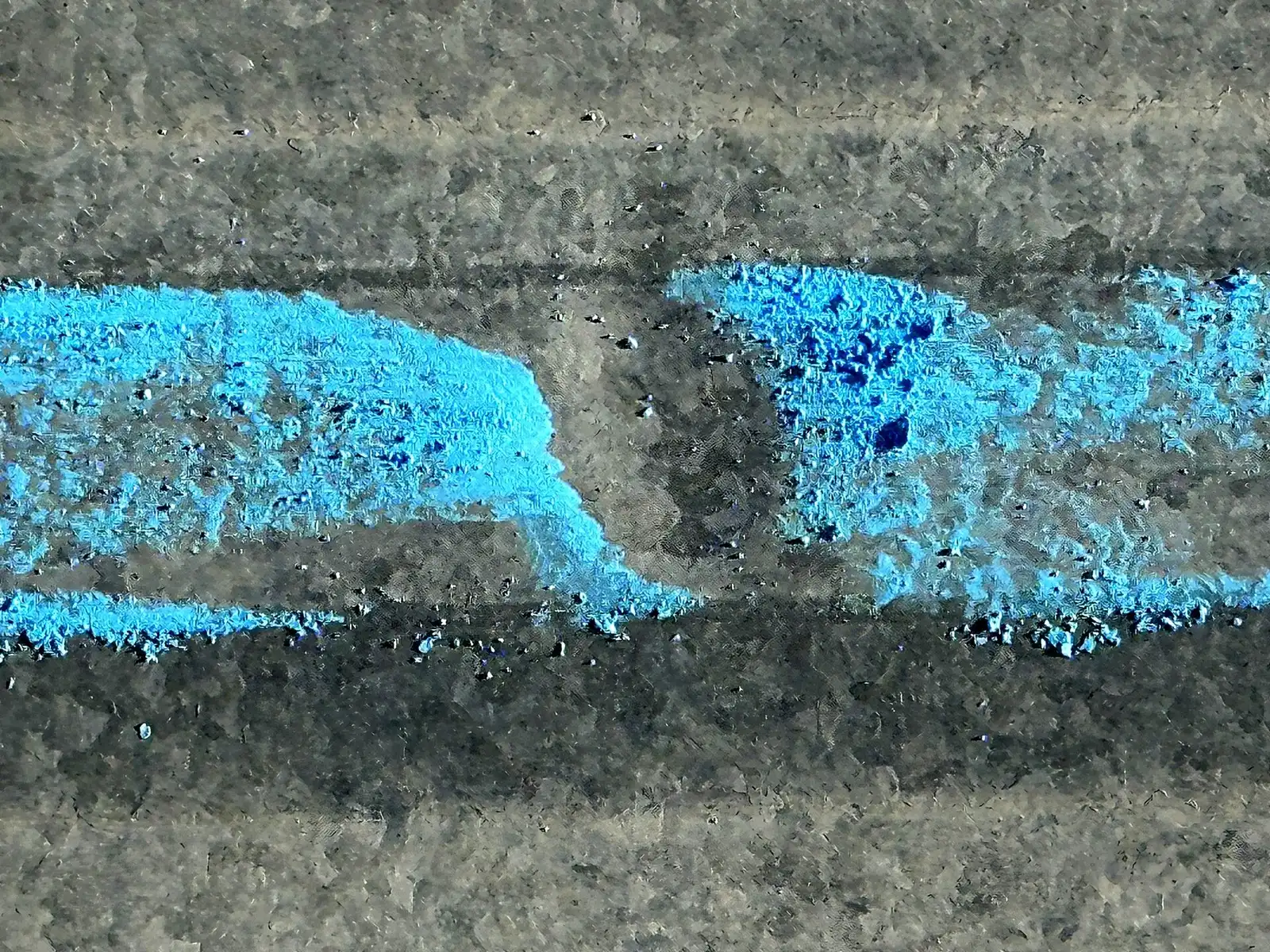
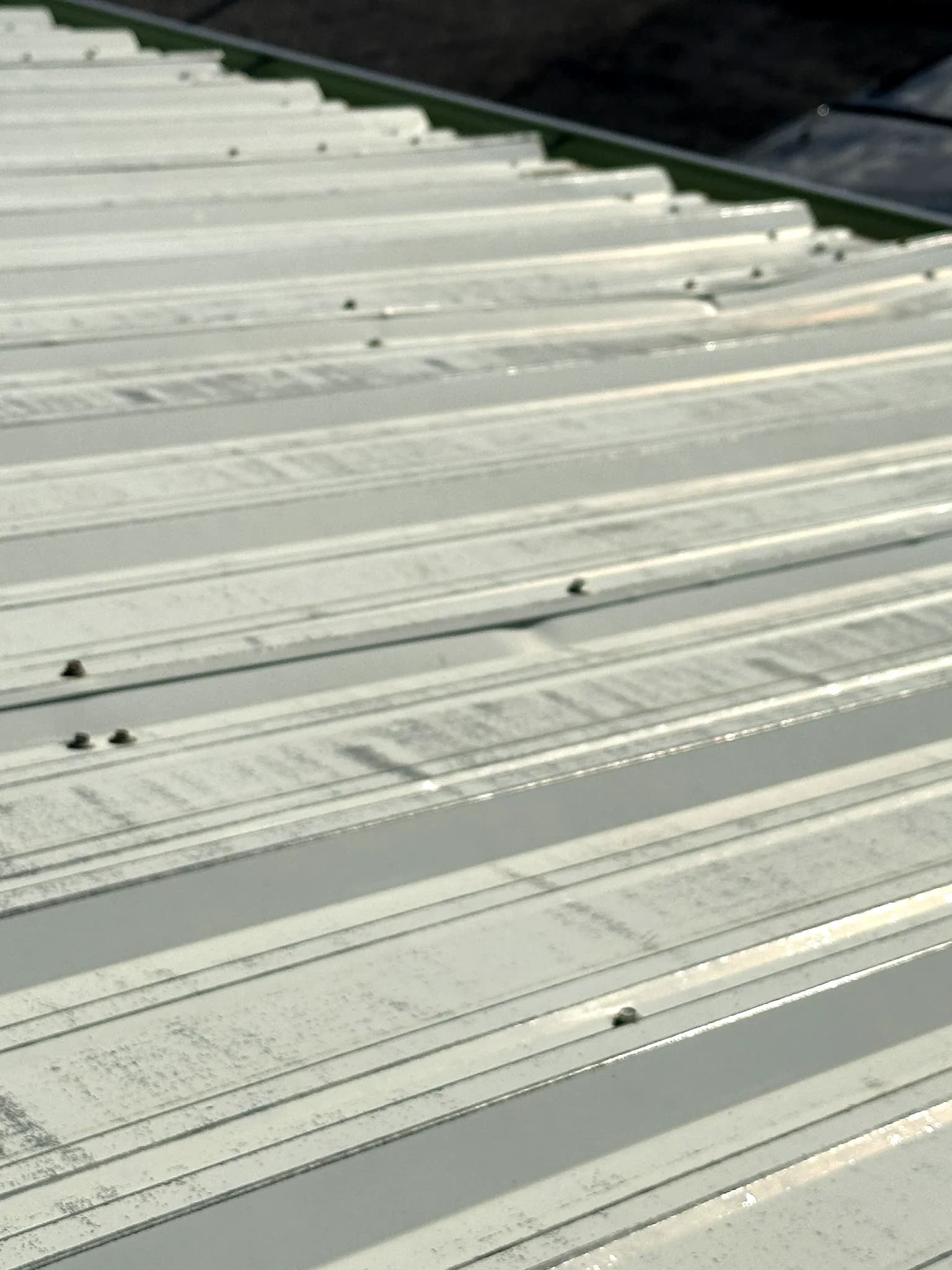
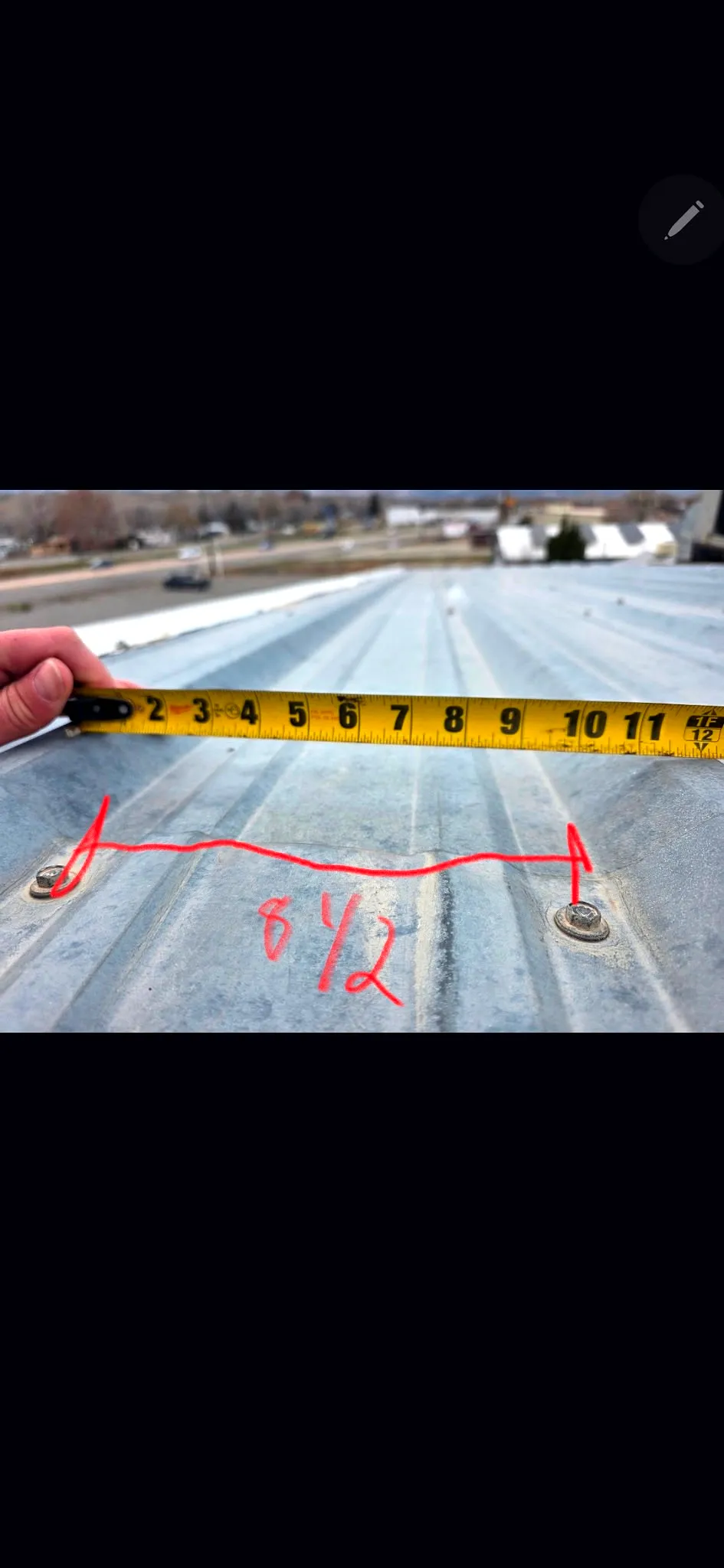
CRC documented the loss as a full insurance claim, measuring the existing panels, circling and photographing the hail impacts across the metal field, and recording the collateral hail damage to the building's AC condenser, a window, and exterior metal. Exposed-fastener metal like this ties its watertightness to hundreds of rubber-gasketed screws; once hail has dented the panels and worked the fasteners, chasing individual leaks across a roof this large is a losing battle. The question was not whether to fix a few panels, but how to give the building a roof that would shrug off the next storm.
The Solution
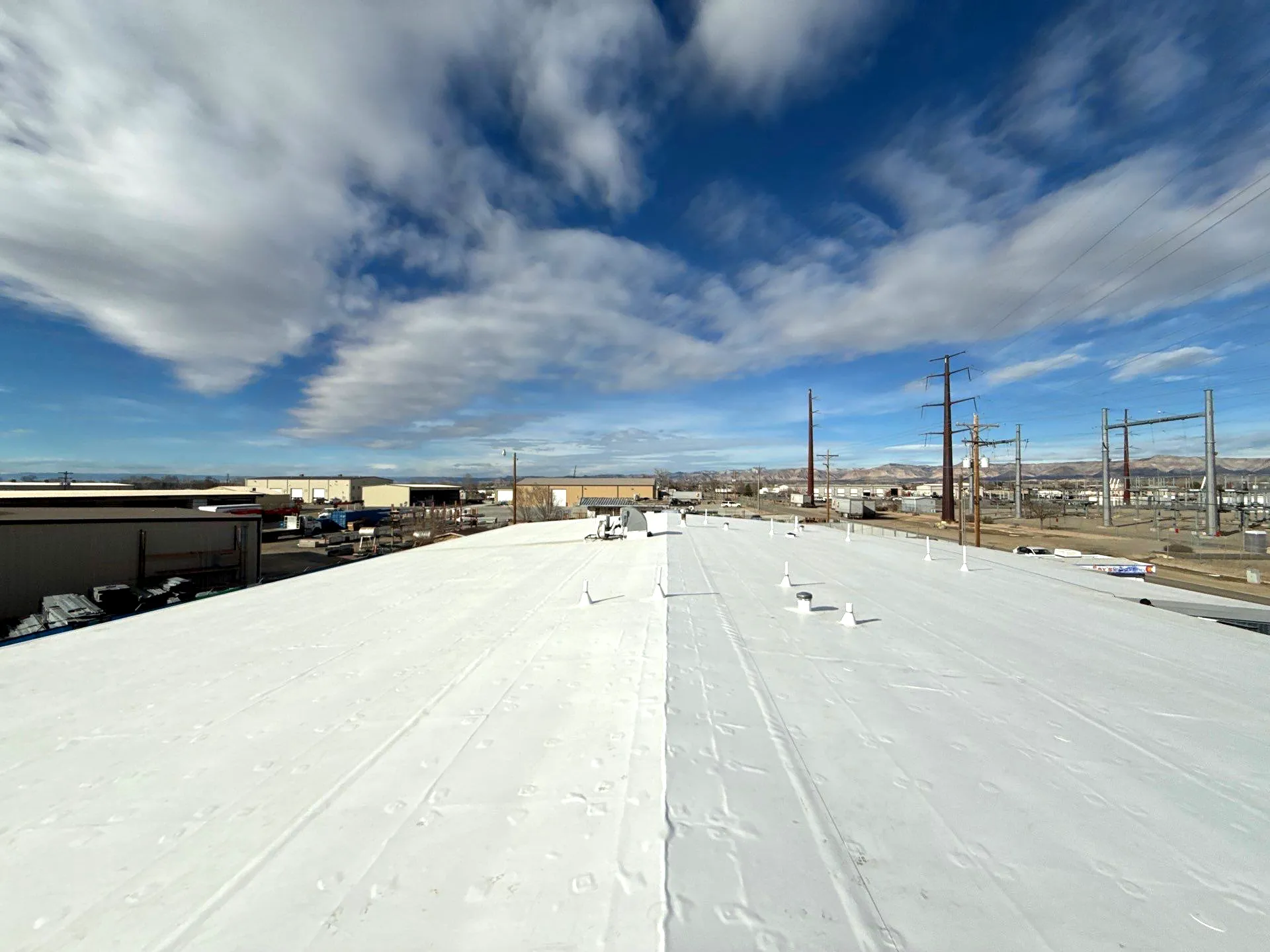
For the roof itself, CRC chose the smarter long-term fix for a large hail-damaged metal building: a recover, not a tear-off. Instead of stripping more than 12,000 square feet of metal panels off a two-story building, the crew built a new, fully insulated, code-compliant low-slope system directly over the existing metal. Rigid polyiso insulation was laid over the ribs to create a flat, insulated plane, built up to R-30. A recover is exempt from the energy code's insulation requirement, but R-30 is the continuous-insulation level the 2021 IECC, enforced by the Mesa County Building Department, sets for a replaced roof in this climate zone, so the recover was built to it. A Georgia-Pacific DensDeck Prime cover board went down over the insulation to give a hard, impact-resistant substrate, and a 60-mil white TPO membrane was installed over the cover board, induction-welded to its fastening plates, so no fasteners pass through the finished membrane.
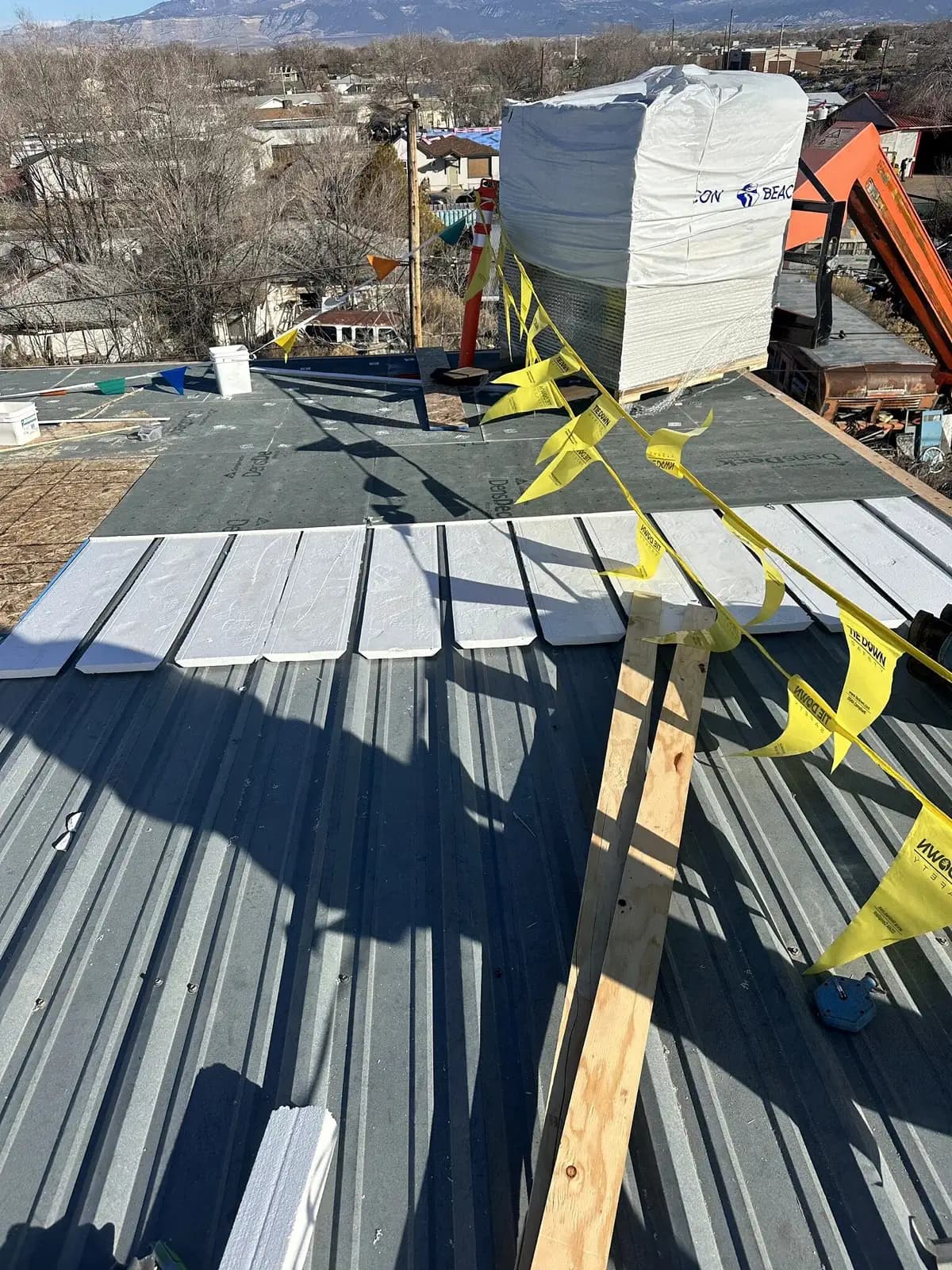
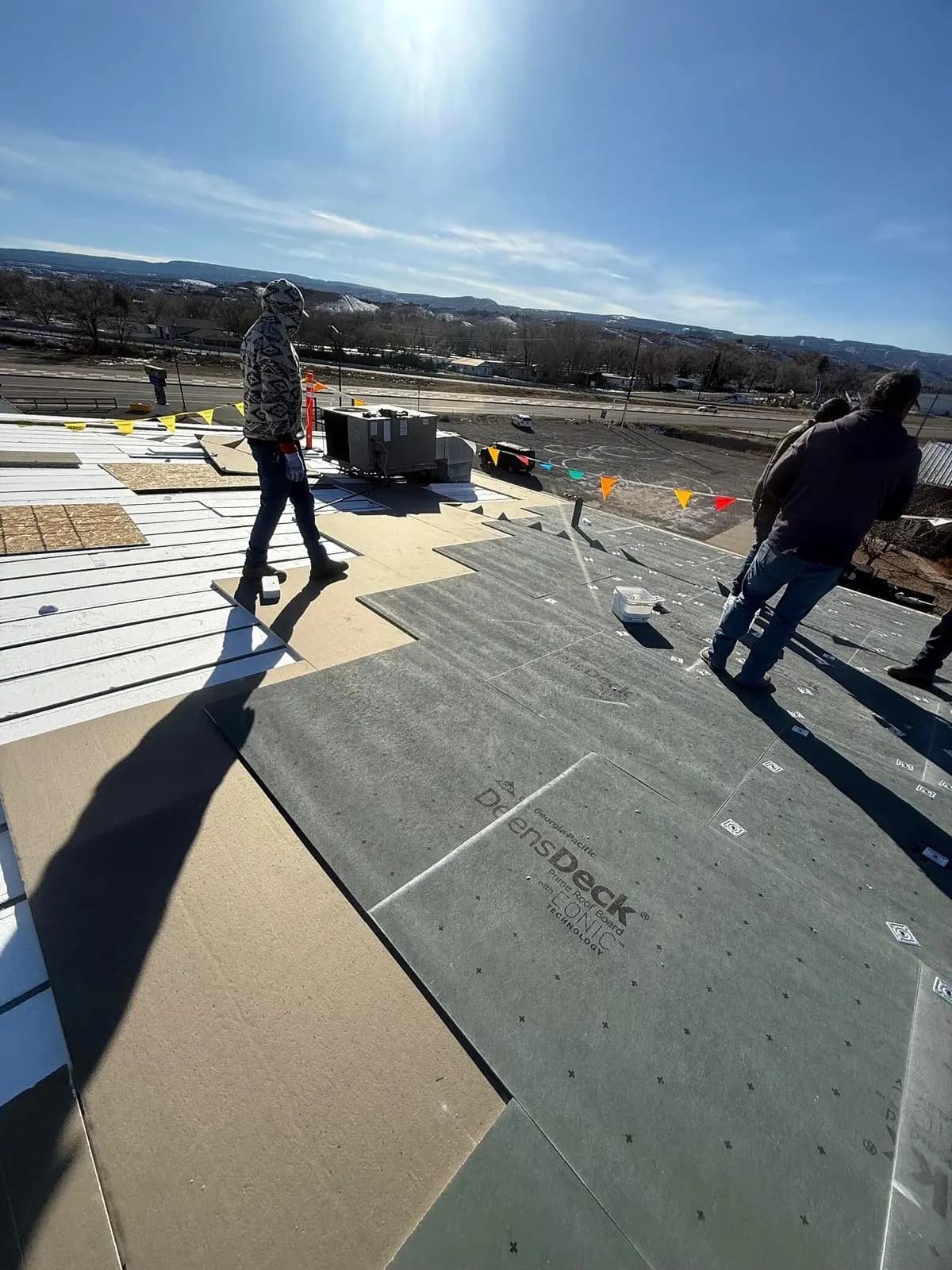
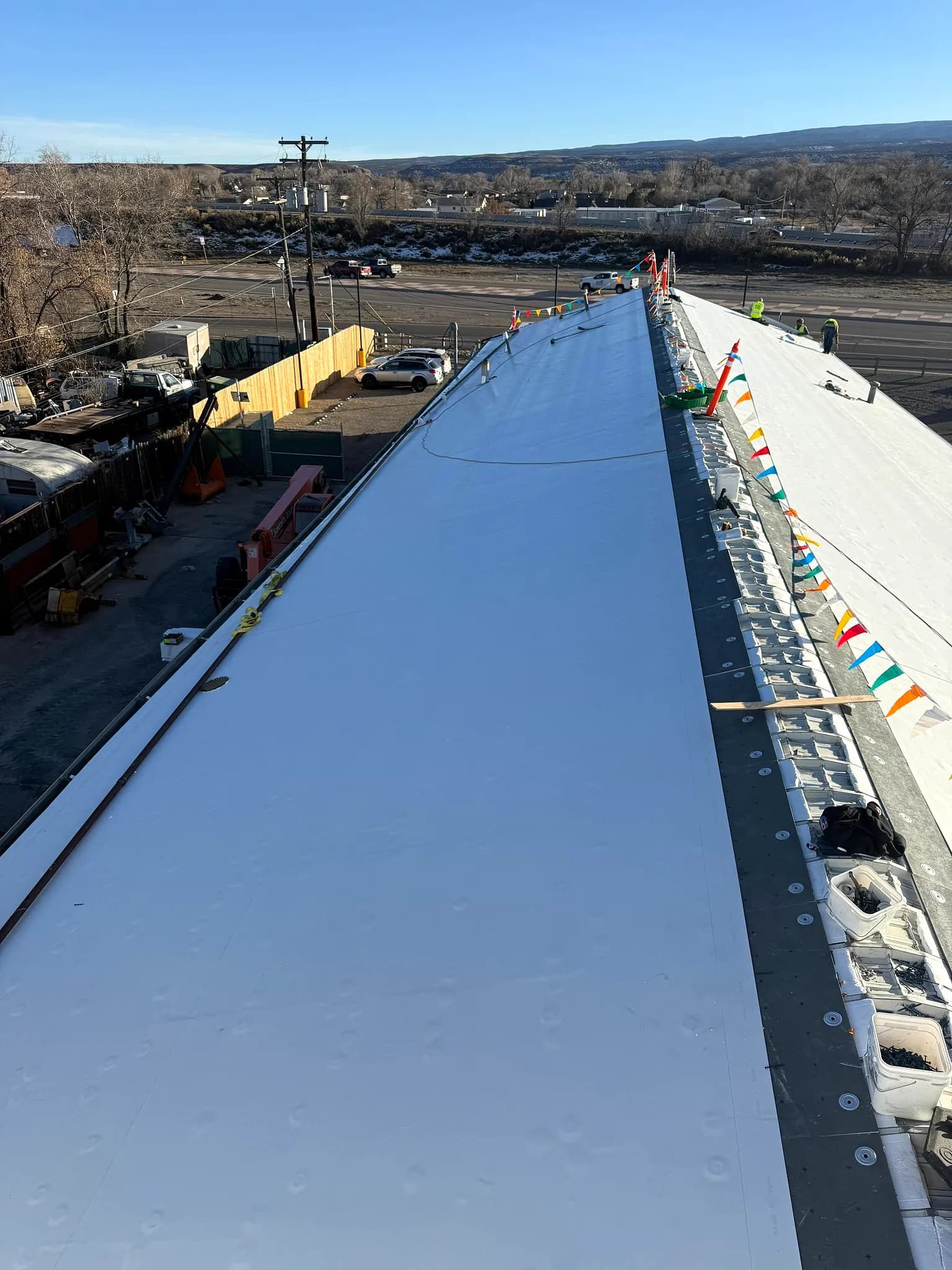
Because the recover was built over the existing metal, the building stayed dry and in use while the work went on overhead, and there was no full tear-off exposing the interior to the weather. CRC also replaced the building's hail-damaged ribbed metal wall panels as part of the same claim, so the finished exterior matched the new roof. The result is a continuous, reflective, fully sealed white membrane roof, with the insulation, cover board, and welded membrane doing the work the bare metal panels no longer could.
The Result
High Grade went from a dented, leak-prone metal roof to a continuous white membrane roof engineered for the Grand Valley's hail and sun. The white surface reflects heat and lowers the cooling load on the building below; the membrane and cover board shrug off the next hail event far better than bare metal panels; and because CRC handled the claim from documentation through the finished roof, the owner had one accountable contractor the whole way. It is a large, in-town Grand Junction project that shows how CRC tackles a difficult metal building, not with the obvious tear-off, but with a recover system that leaves the owner better protected than before the storm.
Why CRC for a Commercial Hail Claim
A hail-damaged commercial roof is often worth far more than a first estimate suggests, and the best repair is not always a like-for-like replacement. CRC documents what the storm actually did, presents the complete claim, and then builds the roof that will hold up, in this case a recover that outperforms the metal it replaced. Our Grand Junction office serves the Western Slope, and our commercial team installs white TPO membrane systems and handles storm and hail insurance claims across Colorado.
Get a Storm-Damage Roof Assessment
If a hail storm has hit your commercial building, do not settle on a surface-level estimate before the roof has actually been inspected. Call our Grand Junction office at (970) 877-7663 or our Denver office at (720) 893-7663, or click to request a free roof inspection.
Talk to the team nearest you: our Denver office, our Grand Junction office, or our Scottsbluff office.