
Residential Roofing
What Size Hail Damages a Roof?
By Chris Sanchez, Commercial Roofing Contractor · August 2, 2026
- Hail Damage
- Roof Inspection
- Insurance Claims
- Homeowner Guide
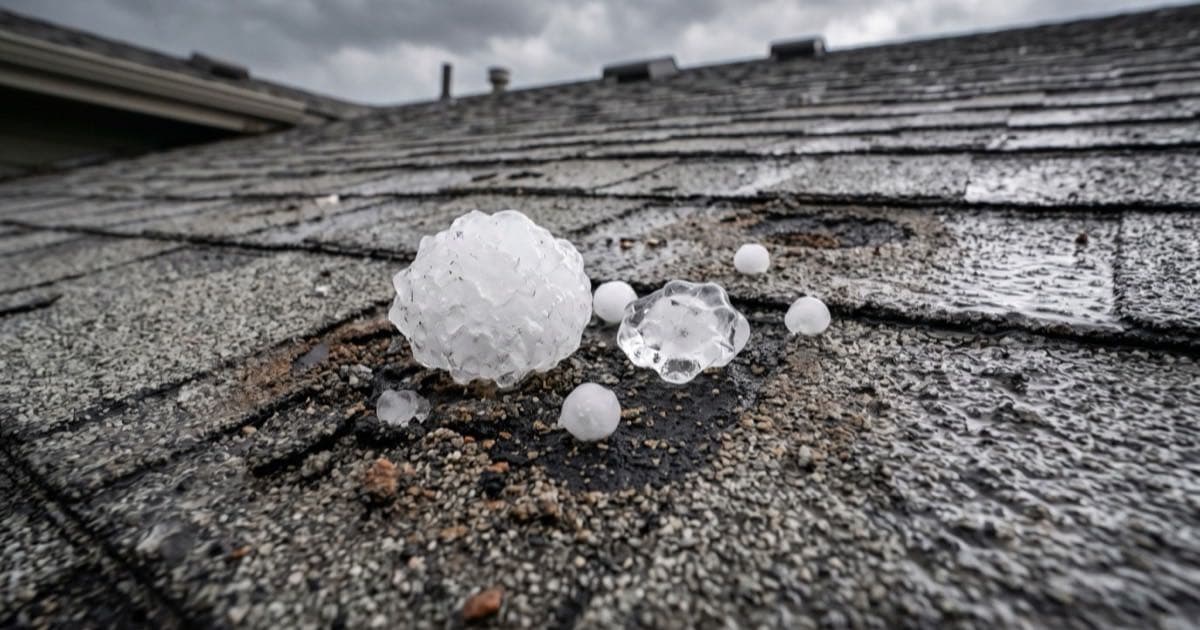
Short answer: On asphalt shingles, functional hail damage generally starts around one inch, quarter size, and becomes likely at one and a quarter inches. Soft metal dents earlier, near three quarters of an inch. Tile and slate usually need one and a quarter inches or more. But size alone does not decide it. Wind, the age of the roof, and the angle of the strike routinely make smaller hail do real damage.
It is the first question almost everyone asks after a storm, and the honest answer is that diameter is only the headline number. We have condemned roofs after a three quarter inch storm and cleared roofs after a golf ball storm. What follows is the size guidance the industry actually works from, and then the four things that move the line in both directions.
Hail size, in objects you can picture
Storm reports use inches, but nobody eyeballs inches on a lawn. The National Weather Service publishes a size reference in everyday objects, and it is worth knowing before the next storm so you can photograph a stone against something for scale.
- Pea, about a quarter inch
- Marble, about a half inch
- Penny, about three quarters of an inch
- Quarter, about one inch, which is the threshold for a severe thunderstorm warning
- Golf ball, about one and three quarter inches
- Tennis ball, about two and a half inches
- Baseball, about two and three quarter inches
One inch is the line the National Weather Service uses to call a storm severe. It is not a roofing threshold, but it is a useful marker, because a storm big enough to be warned on is a storm worth having looked at.
What size damages what material
These are the ranges where functional damage typically begins on a roof in reasonable condition. Treat them as a starting point, not a verdict.
- Soft metal (gutters, downspouts, vents, flashing, metal wrap). Denting from about three quarters of an inch. These are often the first place a storm leaves proof, which is why an inspector checks them even when the shingles look untouched.
- Asphalt shingles. Functional damage typically starts around one inch and becomes likely at one and a quarter inches. The failure is a bruise: the stone fractures the fiberglass mat under the surface and knocks granules loose, exposing the asphalt to UV. It often does not leak for years, which is exactly why it gets missed.
- Wood shake. Around one and a quarter inches, showing up as splits along the grain with sharp, unweathered edges.
- Concrete and clay tile. Usually one and a quarter inches or more to crack, though an already hairline-cracked tile can go with less.
- Single-ply commercial membrane (TPO, EPDM, PVC). Varies widely with the insulation underneath and the age of the membrane. Hail can fracture the reinforcing scrim without leaving an obvious hole, so the roof reads fine and leaks months later.
- Class 4 impact-resistant shingles. Rated under UL 2218, where the top class means the shingle withstands a two inch steel ball dropped from twenty feet without cracking. That is a laboratory test with a steel ball rather than ice, so it is a strong relative indicator rather than a promise about any particular storm. We cover the tradeoffs in our guide to Class 4 shingles in Colorado.
Four things that matter as much as size
- Wind. The single biggest variable. Hail falling straight down lands with far less energy than hail driven sideways at fifty miles an hour. Wind-driven three quarter inch hail regularly damages roofs that would shrug off calm one inch hail, and it concentrates the damage on one or two elevations rather than spreading it evenly.
- The age and condition of the roof. A twenty year old shingle has already lost granules and flexibility. The same stone that bounces off a three year old roof fractures an old one. This is why two neighbors on the same street get different answers after the same storm, which is the most common source of suspicion we hear about.
- Density and duration. Ten minutes of marble-size hail delivers far more total impacts than thirty seconds of golf balls. Damage assessment counts hits within a test square, so a long dense storm of medium hail can fail a roof that a brief large-hail burst would not.
- Slope and direction. Steeper pitches take glancing blows instead of direct ones. Damage is usually worst on the elevation facing the storm, which is why an inspection has to cover every slope rather than the easiest one to reach.
Cosmetic damage versus functional damage
Functional damage shortens the life of the roof: a fractured shingle mat, exposed asphalt, punctured membrane, cracked tile. Cosmetic damage is denting that looks bad but still sheds water, which is most common on metal panels and gutters.
The distinction is not academic. Some policies carry a cosmetic damage exclusion, which pays to restore function but not appearance. If you have a metal roof in a hail region, that clause is worth finding before a storm rather than after, and it is one of the things we walk through in reading your homeowners policy before hail season.
What to do after a hail storm
Stay off the roof. Wet hail-struck shingles are slick, and walking a damaged roof can add damage that complicates the claim. From the ground you can do the three things that matter most, and then book residential storm and hail damage repair so someone who does this every week gets on the roof instead.
- Photograph a stone before it melts, next to a coin for scale. This is the single most useful piece of evidence a homeowner can gather, and it takes thirty seconds.
- Check the soft metal. Gutters, downspouts, vents, and window wraps show impacts at eye level. Dents there mean the roof took the same storm.
- Note the date. Claims are settled against a date of loss, and matching your damage to a specific logged storm makes the whole process shorter.
Then get the roof inspected. Ours are free, we document every slope with photographs, and you get a written condition report whether or not there is a claim in it. If there is, our storm damage insurance claims guide covers the process from the adjuster meeting through final invoice.
Frequently Asked Questions
What size hail damages a roof?
On asphalt shingles, functional damage typically starts around one inch, which is quarter size, and becomes likely at one and a quarter inches and above. Soft metal like gutters, vents and flashing dents earlier, often at three quarters of an inch. Tile and slate usually need one and a quarter inches or more to crack. Those are thresholds, not guarantees: wind speed, hail density, the angle of the strike, and the age of the roof all move the line.
Can hail smaller than one inch damage a roof?
Yes. Wind-driven hail hits at an angle and with far more energy than the same stone falling straight down, so a windy three quarter inch storm can bruise shingles that a calm one inch storm would not. Older shingles that have already lost granules and flexibility are also easier to fracture. Age and wind matter as much as diameter.
How do I know what size hail fell at my address?
The National Weather Service logs storm reports by location and date, and NOAA's National Centers for Environmental Information keeps the archive. Your own photos help too: place a coin next to a stone before it melts. A quarter is roughly one inch, a golf ball is about one and three quarter inches. That record supports your date of loss when you file.
What is the difference between cosmetic and functional hail damage?
Functional damage shortens the life of the roof: fractured shingle mats, exposed asphalt where granules were knocked off, punctured or split membrane, cracked tile. Cosmetic damage is denting that looks bad but still sheds water, which is common on metal panels. The distinction matters because some policies carry a cosmetic damage exclusion that pays for function but not appearance.
Does hail damage a commercial flat roof differently?
Yes. Single-ply membrane like TPO and EPDM can be punctured or have its reinforcing scrim fractured without any obvious hole, and the leak shows up later. Hail also flattens drain strainers, dents scuppers and conductor heads, and damages rooftop equipment. A membrane roof needs a walked inspection, sometimes with an infrared scan, rather than a look from the ground.
How long do I have to file a hail claim in Colorado?
Most policies require prompt notice and Colorado gives you time to bring an action on a written contract, but your own policy may set a shorter suit limitation period. Do not rely on a general rule: read your policy or ask your carrier, and report the damage as soon as you find it. Waiting also makes it harder to tie the damage to a specific storm date.

Talk to the team nearest you: our Denver office, our Grand Junction office, or our Scottsbluff office.