
Residential Roofing
How Long Does a Roof Last in Colorado?
By James Rhoades, Commercial Roofing Contractor · August 2, 2026
- Roof Replacement
- Material Comparison
- Homeowner Guide
- Hail Damage
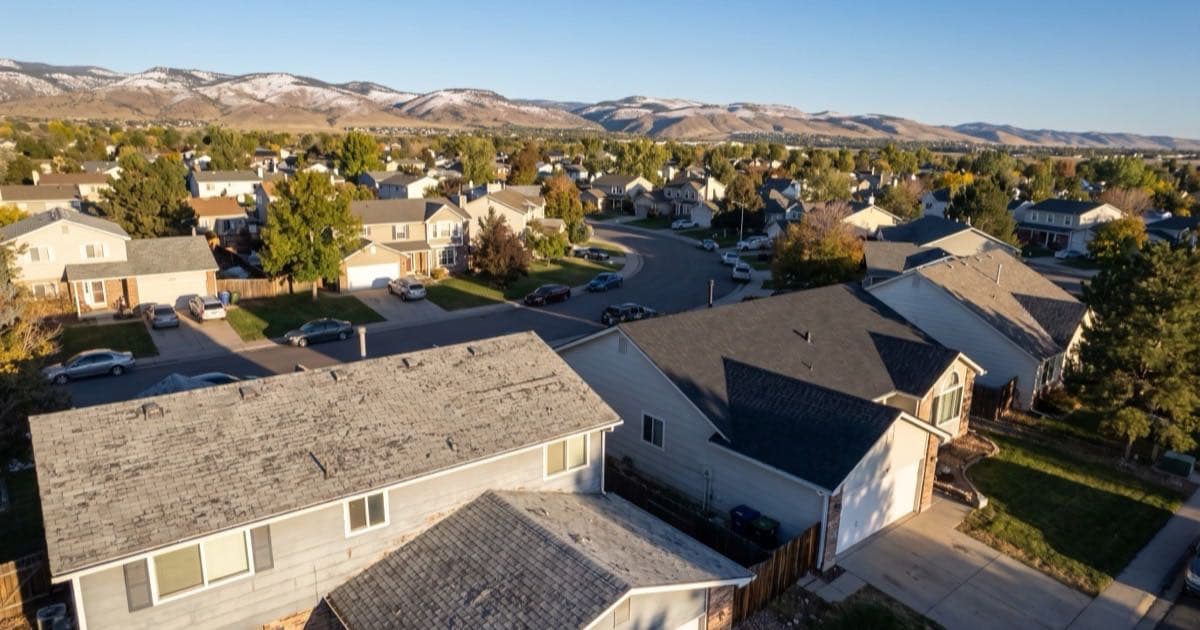
Short answer: Less than the warranty implies. Architectural asphalt shingles commonly reach fifteen to twenty five years in Colorado, three-tab twelve to eighteen. Metal runs forty to seventy, tile and slate longer still, and commercial single-ply membrane fifteen to twenty five. The shortfall against national averages comes from four things: hail, altitude UV, freeze-thaw, and wind.
Every roofing material carries a published life expectancy, and in Colorado most of them are optimistic. Not because the products are worse here, but because this state applies more stress to a roof than the conditions those numbers assume. Here is what materials actually deliver on the Front Range and the Western Slope, and why.
Realistic lifespans by material
- Three-tab asphalt shingles. Twelve to eighteen years. The thinnest and least impact-tolerant option, and the one most likely to be condemned by a hail storm well before it wears out.
- Architectural (dimensional) asphalt shingles. Fifteen to twenty five years. The default on most Colorado homes, and a meaningful step up in both weight and impact tolerance.
- Class 4 impact-resistant shingles. Similar base lifespan to architectural, but far more likely to survive a hail event intact, which in practice is what determines whether a Colorado roof reaches its rated age at all. Many carriers offer a premium discount for them. We work through the economics in our guide to Class 4 shingles in Colorado.
- Metal. Forty to seventy years. Standing seam at the top of that range. Metal dents under hail and that denting is often cosmetic rather than functional, which is a significant distinction for both performance and your policy.
- Concrete and clay tile. Fifty years and beyond for the tile itself. The underlayment below it does not last that long, so a tile roof usually needs the underlayment renewed once or twice while the tile stays in service. That lift-and-relay is the normal mid-life event for tile roofing, not a sign the roof has failed.
- Synthetic slate and shake. Forty to fifty years, with impact ratings that suit a hail climate better than natural wood shake.
- Commercial single-ply membrane (TPO, EPDM, PVC). Fifteen to twenty five years, driven more by the quality of flashings, penetrations and drainage than by the membrane itself.
- Modified bitumen and built-up. Twenty to thirty years when maintained, and both respond well to a coating that adds service life without a tear-off.
The four things that shorten a Colorado roof
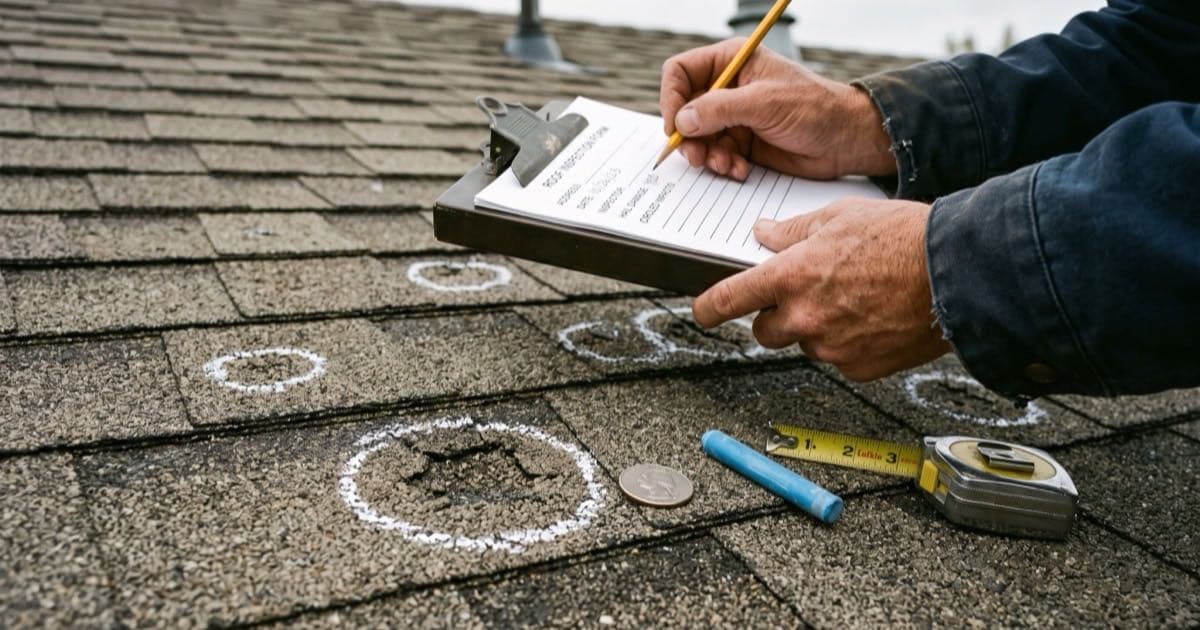
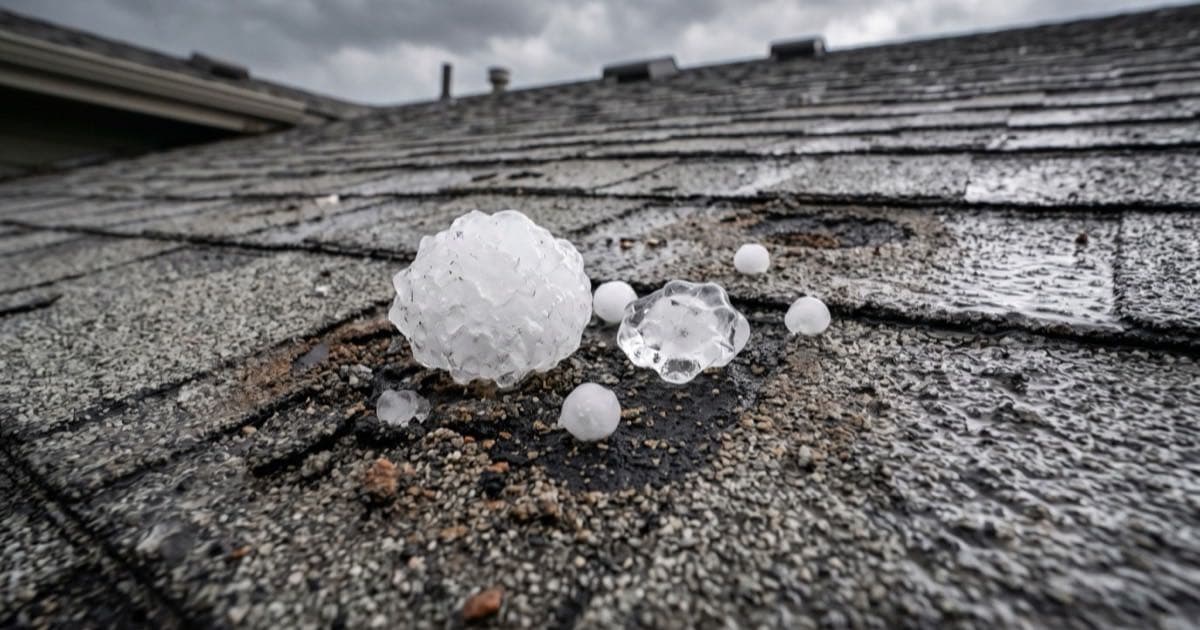
- Hail. The dominant factor, and the reason most Colorado roofs are replaced by a storm rather than by old age. A single event can end a roof with fifteen good years left in it. What hail does to a shingle is fracture the mat beneath the surface, which does not leak immediately and is easy to miss from the ground, so it quietly shortens the life of the roof from the day it happens. When it does end a roof, the result is a residential roof replacement rather than a repair, because the fracturing is spread across the whole field.
- Ultraviolet exposure at altitude. UV intensity rises roughly twenty five percent for every mile of elevation, and Denver sits at about a mile. Add high sunshine totals and asphalt shingles lose volatile oils and become brittle years earlier than they would at sea level. It is the least visible accelerant and one of the most consequential.
- Freeze-thaw cycling. Colorado winters swing across freezing repeatedly within a single day. Water works into small cracks, freezes, expands, and widens them, over and over. This is why pipe boots crack here so much sooner than the shingles around them, which we cover in the most common Colorado roof leak.
- Wind. Front Range downslope winds regularly reach speeds that lift and crease shingle tabs. A creased tab has already failed even if it looks attached, and it becomes the point where the next storm starts peeling.
What a warranty is actually telling you
A shingle sold as a fifty year product is not promising fifty years of Colorado service. Two things are usually true of that number. It is prorated, so coverage declines each year and is worth progressively less. And it covers manufacturing defects rather than weather, which means hail damage is not a warranty matter at all. It goes to your insurance policy instead.
Read the term as a signal of how substantial the product is, which is genuine and useful information, rather than as a countdown clock.
Getting the full life out of the roof you have
Most Colorado roofs that fail early do not fail across the open field of shingles. They fail at a detail: a cracked pipe boot, a lifted flashing, a clogged drain on a commercial roof that turns into standing water. Those are cheap to fix and expensive to ignore.
On the commercial side there is a further option worth knowing about. If the deck is sound and the insulation is dry, a coating or a recover can add years of service for a fraction of a tear-off, which we compare directly in roof coatings versus tear-off. What no amount of maintenance fixes is a shingle mat that hail has already fractured, and knowing which situation you are in is the whole point of having the roof looked at.
If your roof is past fifteen years, or has been through a significant hail storm at any age, an inspection tells you where you stand. Ours are free and you get the written report whether or not there is work in it. The signs that it is time are covered in the signs you need a new roof.
Frequently Asked Questions
How long does a roof last in Colorado?
Less than the warranty suggests. A three-tab asphalt shingle roof commonly reaches twelve to eighteen years here, and architectural shingles fifteen to twenty five, against national figures that run several years higher. Metal, tile and slate last far longer. The gap is not workmanship, it is hail, high-altitude ultraviolet exposure, freeze-thaw cycling, and wind.
Why do Colorado roofs wear out faster than the warranty says?
A shingle warranty is written against a laboratory weathering standard, not against a Front Range hail corridor at five thousand feet. Colorado stacks four accelerants at once: repeated hail impacts, roughly twenty five percent more ultraviolet intensity per mile of elevation, daily freeze-thaw swings in winter, and wind that lifts and creases shingle tabs. Every one of those shortens service life independently.
Does a fifty year shingle actually last fifty years?
Not in this climate, and the number is often misunderstood. Long warranty terms are typically prorated, meaning coverage declines each year, and they cover manufacturing defects rather than storm damage. Hail is not a defect, so it falls outside the warranty entirely and lands on your insurance policy instead. Treat the term as a durability signal, not a countdown.
How long does a commercial flat roof last in Colorado?
A well-installed TPO or EPDM membrane commonly runs fifteen to twenty five years, and a properly maintained modified bitumen system similar. The larger variable is not the membrane but the details: flashings, penetrations, and drainage. Most commercial roofs we replace early failed at a detail, not across the field.
Can I extend the life of my roof instead of replacing it?
Often, yes. On a low-slope commercial roof with a sound deck and dry insulation, a coating or a recover can add years for a fraction of a tear-off. On residential roofs, replacing failing pipe boots and keeping flashing sound prevents most premature leaks. What cannot be extended is a shingle mat that hail has already fractured.
How do I know if my roof is near the end?
Granules collecting in gutters, shingles that look bare or shiny where the mineral surface is gone, curling or cupping edges, cracked or missing pipe boots, and daylight or staining in the attic. Age matters too: if the roof is past fifteen years and has been through a significant hail storm, an inspection is worth it whether or not you see anything from the ground.
Talk to the team nearest you: our Denver office, our Grand Junction office, or our Scottsbluff office.