
Residential Roofing
When Mesa County Requires a Roof Replacement Instead of a Repair
By Ryan Sanchez, Commercial Roofing Contractor · August 26, 2026
- Grand Junction
- Repair vs Replace
- Roof Replacement
- Roof Repair
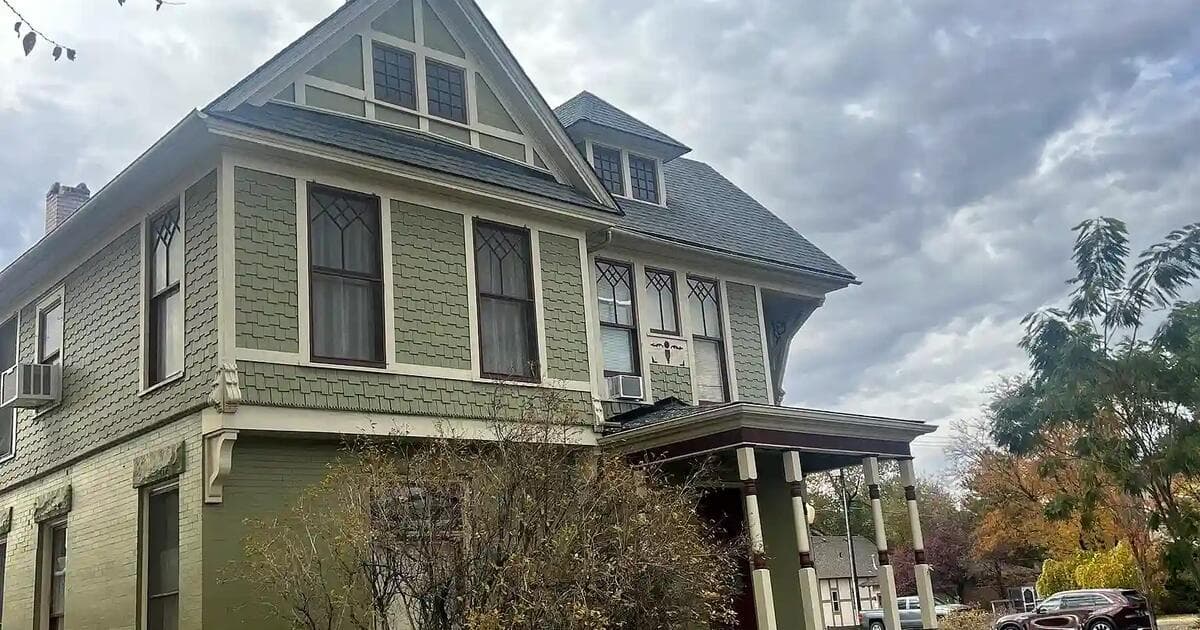
Short answer: In Mesa County, more than one square of damage on a roof slope requires that slope to be replaced. A square is 100 square feet. One square or less can be repaired, as long as the rest of that slope is sound and compatible material is available. Replacement is required regardless of area if the roof already has two or more layers, is beyond its life or in poor condition, has water-soaked decking, or has damage that simply cannot be repaired.
Every roofer in the Grand Valley has had this conversation. A storm goes through, an adjuster writes for a patch on one slope, and the homeowner wants to know whether a patch is actually allowed. For years the honest answer here started with "well, the county generally...", because the rule existed but nobody had written it down.
That changed in September 2025. The Mesa County Building Inspection Division published an administrative policy titled Roof Repair versus Replacement, and it says plainly what the department had been applying informally. Its own stated reason for publishing is worth repeating, because it tells you how often this comes up: there had been no clear written policy, the department had an unwritten rule, and a high volume of enquiries pushed it to establish one.
The line is one square, per slope
A square is 100 square feet of roof area. It is the unit the trade orders and estimates in, which is why the county wrote the rule in squares rather than in feet.
Damage of one square or less on a slope may be repaired, on two conditions: the rest of that slope has to be in good condition, and compatible roofing material has to be available. That second condition does real work on older roofs. If the shingle is discontinued and nothing on the market matches it, the repair path closes even though the damaged area is small.
Go over one square on a slope and that slope has to be replaced. Note what that does and does not say. It is written per slope, so crossing the line on the back of the house does not automatically condemn the front.
There is one allowance for larger roofs. A very large slope may exceed one square in total, provided the damage is spread out and no single place exceeds one square. So a scattering of small hail hits across a big slope is treated differently from a concentrated square and a half in one area, which is a sensible distinction and not one you would guess from the headline number.
Four things that require replacement no matter the area
The square is only the first test. Mesa County lists four other conditions, and any one of them requires replacement even where the damaged area is small:
- Two or more existing layers. Any time the roof already carries two layers, it is a replacement.
- The roof is beyond its life or in poor condition. A roof at the end of its service life is not a candidate for a patch, regardless of what the storm did to it.
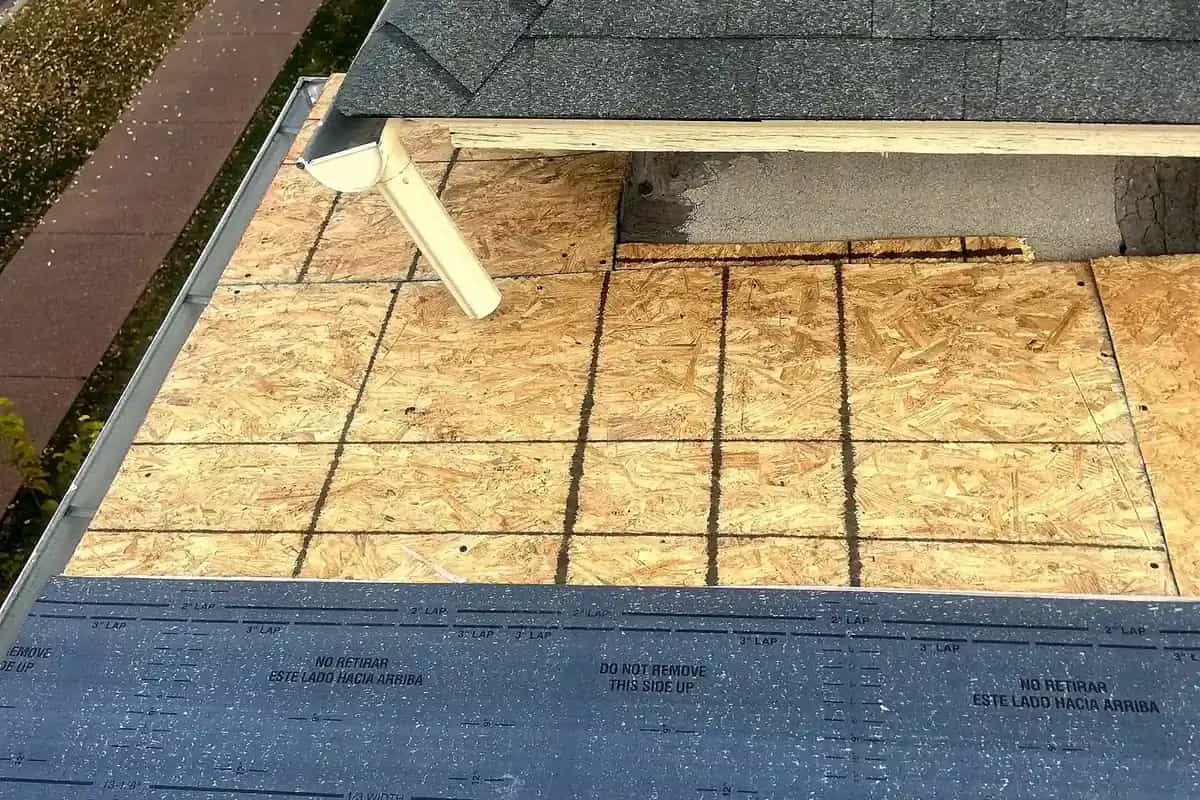
- Water-soaked decking. Once the deck has taken on water, the assembly above it is not the whole problem.
- Damage under a square that is not repairable. Small does not automatically mean fixable, and the policy says so.
The two-layer rule is the one that catches people
Mesa County has a separate, longer-standing reroof policy, and it says a permit is always required once two or more layers are on the roof. That is a well-known rule locally, and it is easy to carry the wrong lesson from it.
The repair-versus-replacement policy says something stronger about the same condition. Two or more layers does not just mean you need a permit. It means the roof is replaced. There is no small-repair path on a two-layer roof in Mesa County, no matter how modest the damage is.
If you do not know how many layers are on your roof, that is not unusual. It is visible at the rake edge and at any penetration, and it is one of the first things we check on a Grand Valley inspection, because it changes the answer before anything else is measured.
Where this rule applies, and where it stops
This matters more here than in most of Colorado, because Mesa County covers an unusually large share of its own valley. The Mesa County Building Department permits and inspects roofing for the City of Grand Junction as well as Palisade, De Beque, Collbran and the unincorporated county. One policy, most of the Grand Valley.
It stops at the jurisdiction line, and the line is not the county line. Fruita sits in Mesa County geographically but runs its own building division and adopts codes by its own ordinance, so this policy does not automatically apply inside the Fruita city limits. Montrose, Delta, Rifle and Glenwood Springs are each their own permitting authority as well. Neighbouring towns genuinely answer this question differently, and a rule carried across a jurisdiction line is worth nothing at inspection.
What the county will and will not do
Two limits in the policy shape how a claim should be handled here, and both point the same direction.
Mesa County will not review photographs for code requirements or compliance, and it will not get involved once the roof has already been repaired or replaced. Where a roof is genuinely borderline the department may come out and evaluate it, at its discretion and if staff are available, subject to an additional inspection fee paid before the site visit. Any exception to the policy has to be approved by the Building Official before work starts, not after.
Read together, that means the window for establishing what a roof needs is before anyone touches it. A roof that has already been patched cannot be walked back, and a folder of photographs will not settle it after the fact. It is the practical reason we document a Grand Valley roof in full at the inspection, measure the damaged area on each slope separately, and count layers before anything else.
What to do after a Grand Valley storm
- Get the roof looked at before any work happens. Not just for the claim. Once a repair is done, the county is out of the conversation entirely.
- Have the damage measured per slope. The threshold is a per-slope test, so a whole-roof damage figure does not answer the question the policy asks.
- Count the layers. On a two-layer roof the measurement stops mattering.
- Check which jurisdiction you are actually in. Grand Junction, Palisade, De Beque and Collbran are Mesa County. Fruita is not.
If a contractor quotes a patch on a slope with more than a square of damage in Mesa County, that is worth a question. Not because anyone is necessarily acting in bad faith, but because a repair the county will not pass is not a saving. Storm and hail damage inspections from our Grand Junction office are free, and we will tell you which side of the line your roof falls on before anything is scheduled.
This is a summary to help you plan, not a compliance determination. The Mesa County Building Department is the authority on what your specific roof requires, and we always confirm current requirements with them before we scope a job. Several Colorado jurisdictions changed their adopted codes during 2026, so we re-verify against each department's own published codes rather than working from memory. Source: Mesa County Community Development, Mesa County Reroof Policy (9.2025), the Mesa County Building Inspection Division administrative policy Roof Repair versus Replacement (9/9/2025), and the Mesa County Adopted Codes and Regulations page (read the source document, read the repair-versus-replacement policy). Last verified August 2026.
Related Resources
Talk to the team nearest you: our Denver office, our Grand Junction office, or our Scottsbluff office.