
Commercial Roofing Project
Commercial TPO Roof Replacement After Hail in Denver, CO
By CRC Project Management Team, Commercial Roofing Contractor · July 12, 2026
- Commercial Roofing
- TPO Roof Replacement
- Hail Insurance Claim
- Johns Manville
- Denver
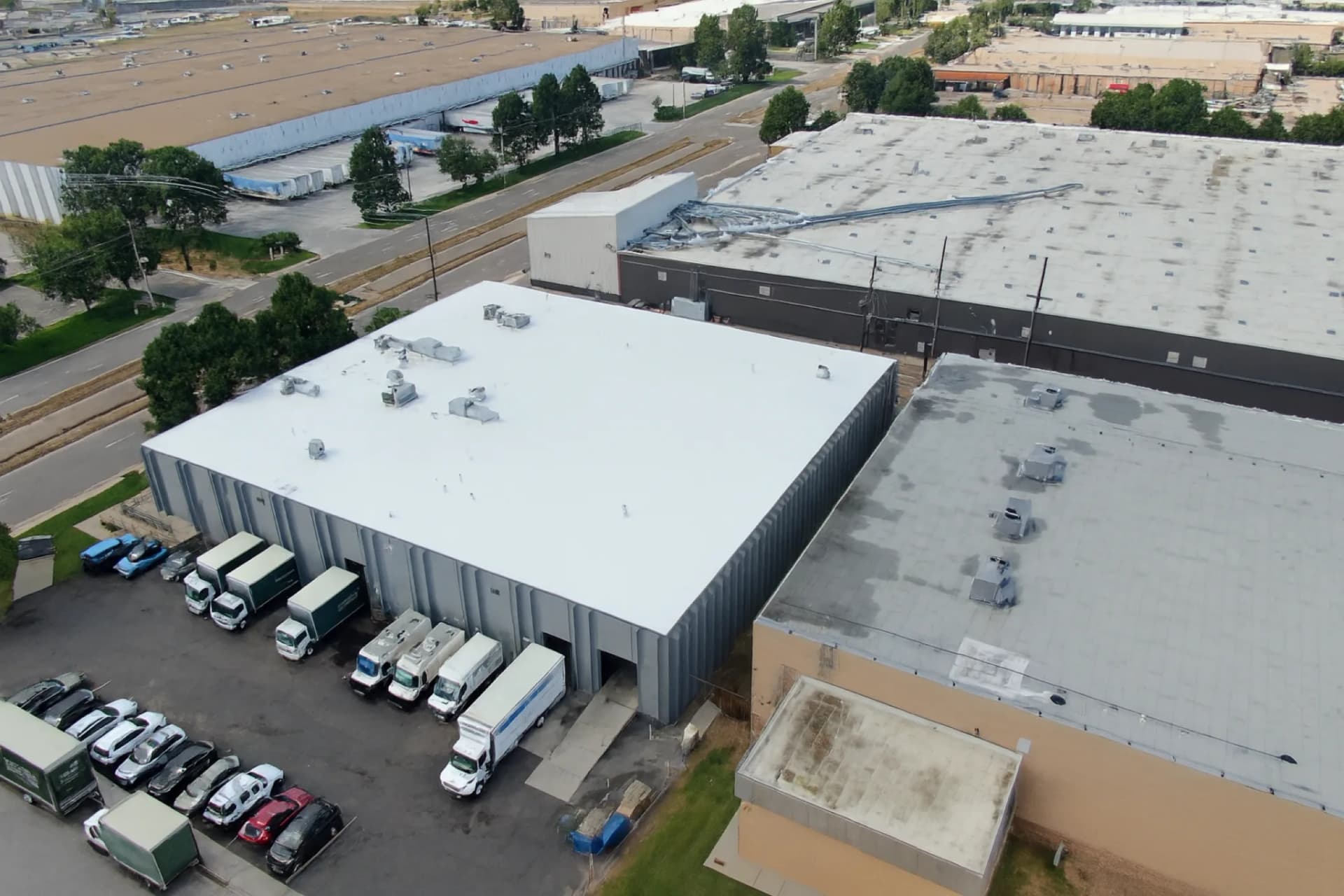
Project Capsule: A May 2024 hail storm damaged the roofs on two commercial buildings in the Northfield area of Denver. The insurer's initial assessment covered only a fraction of the damage. CRC opened the roof assembly, proved the hail had cracked the cover board and driven moisture into the system, and pushed for a re-inspection, winning approval to rebuild both roofs to current Denver code with a complete, mechanically fastened 60-mil Johns Manville TPO system backed by a 20-year No Dollar Limit warranty.
Project Facts
| Location | Northfield area of Denver, Colorado |
| CRC office | Denver Office |
| Building type | Two commercial buildings, a larger warehouse and a smaller office building, in a north Denver industrial corridor |
| Cause of loss | May 2024 Denver hail storm |
| Scope | Approximately 25,000 square feet of TPO and polyiso across both buildings |
| Related scope | Hail-damaged rooftop HVAC unit, exhaust fans, and ventilators documented for the same insurance claim by CRC's HVAC partners |
| Roof system installed | Complete Johns Manville assembly: mechanically fastened 60-mil JM TPO membrane over JM polyiso insulation and a JM ProtectoR HD high-density cover board |
| Code upgrades | Cover board, R-30 above-deck insulation, and a one-hour fire-rated assembly to meet current City of Denver code |
| Warranty | Johns Manville 20-year No Dollar Limit (NDL) warranty |
The Challenge
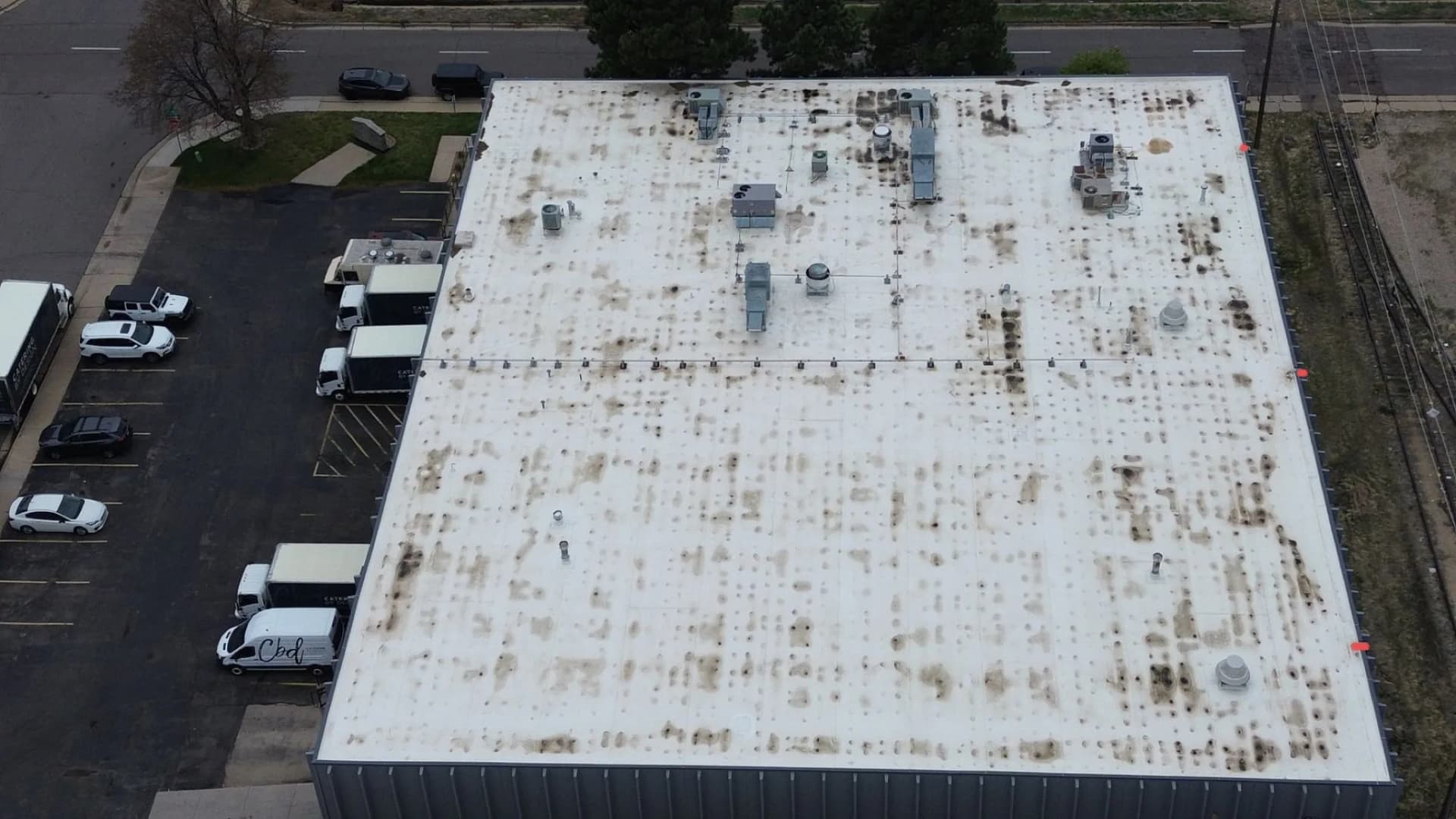
When a severe hail storm hit Denver in May 2024, it damaged the roofs on two commercial buildings in the Northfield area, a larger warehouse and a smaller office building. The hail bruised the membrane and fractured the roof system, and water was already working past the surface into the substrate below. When the owner filed an insurance claim, the carrier's initial assessment covered only a fraction of the true damage, the kind of surface-level scope that treats hail on a low-slope roof as cosmetic.
The Solution
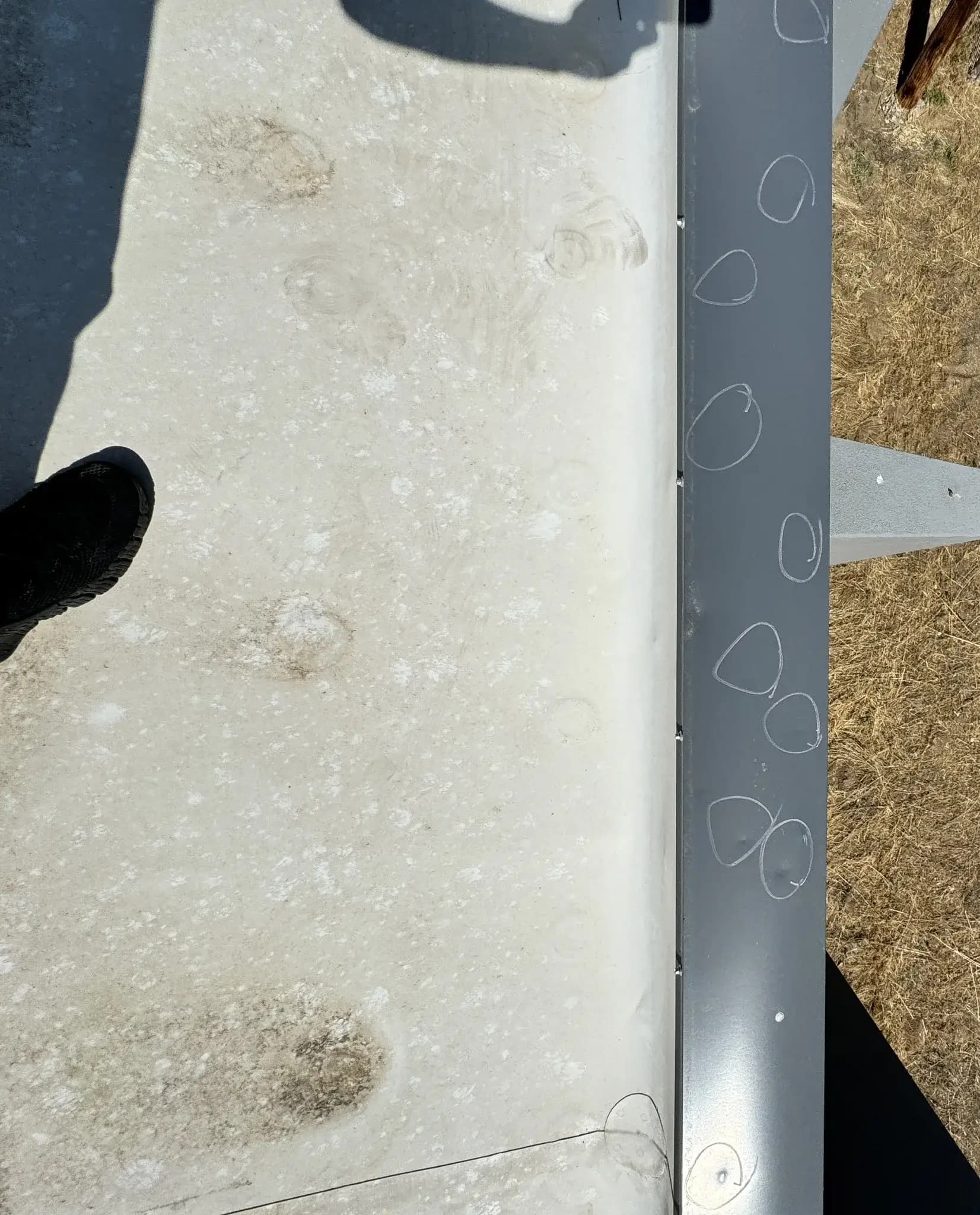
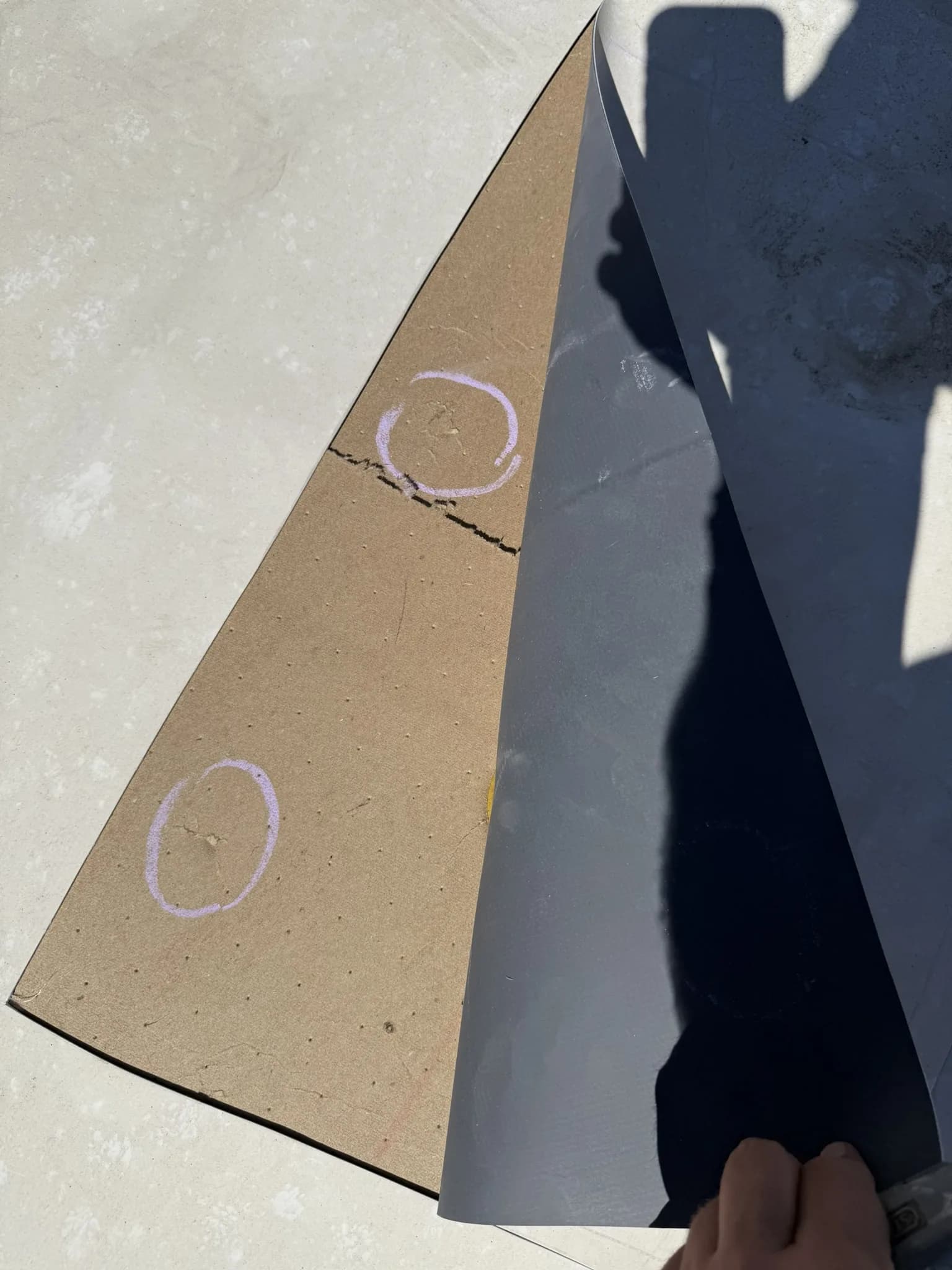
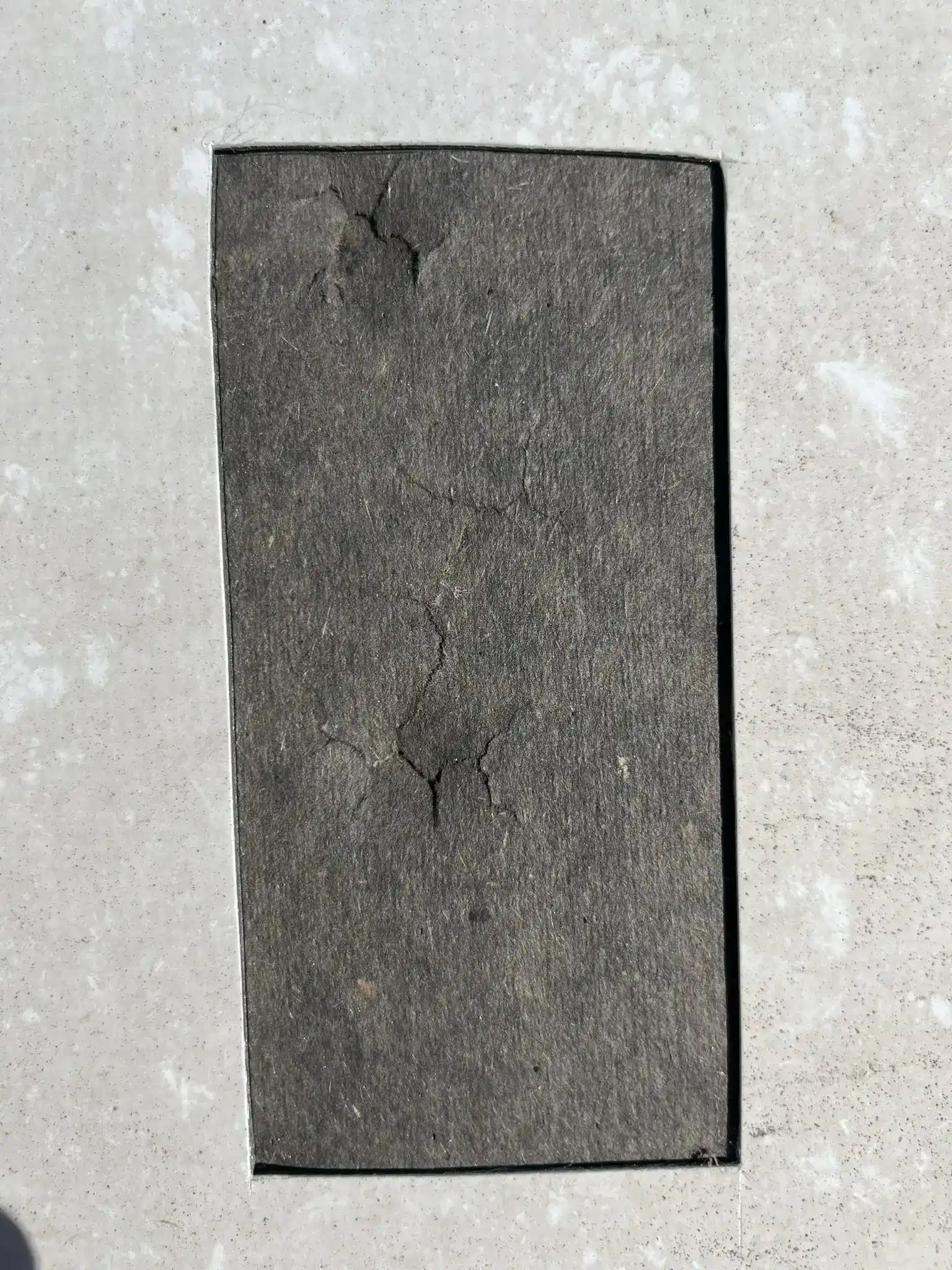
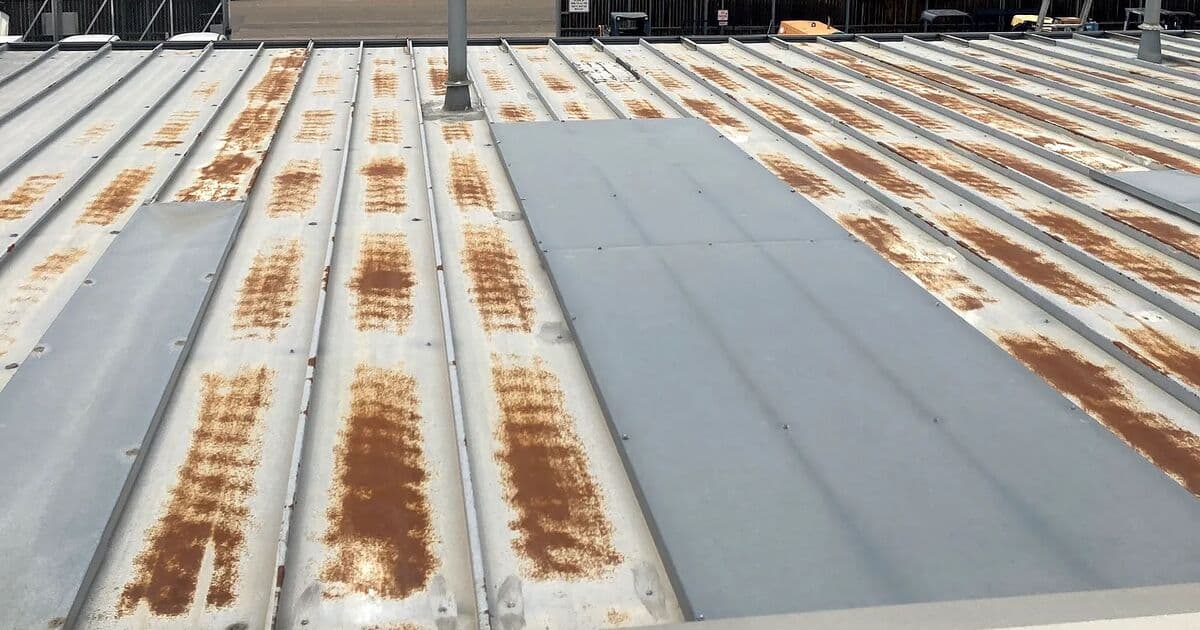
CRC met the adjuster on site and opened the roof assembly to document its true condition. By cutting test sections and inspecting the cover board directly beneath the TPO membrane, we showed that the hail had cracked the cover board, not just marked the surface, and that moisture had already permeated the substrate, the kind of damage a walk-over inspection misses. We documented every roof area with photos and measurements, identified related rooftop HVAC damage and heavy hail denting to the metal parapet caps, and presented the complete, code-required scope to the carrier.
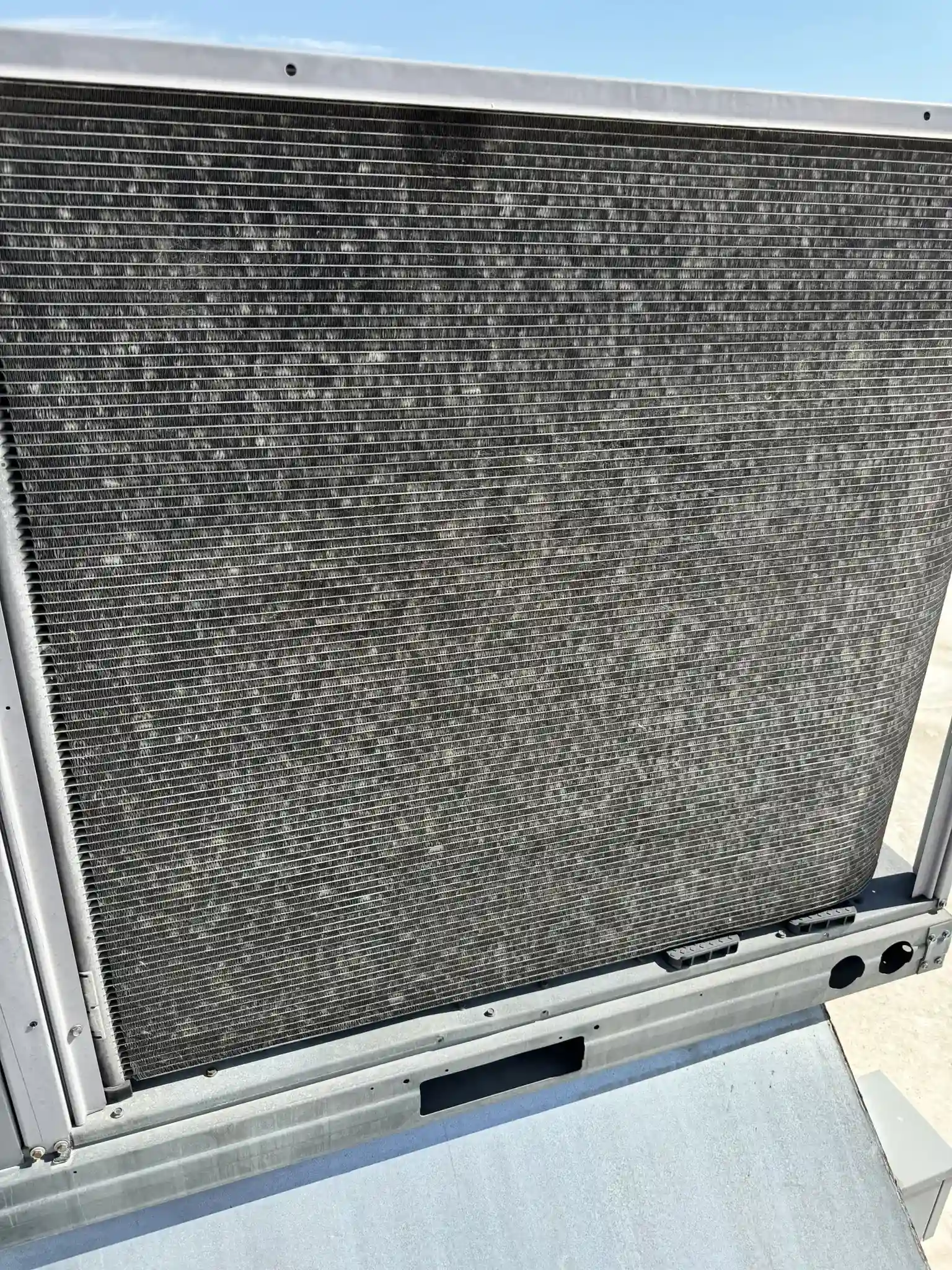
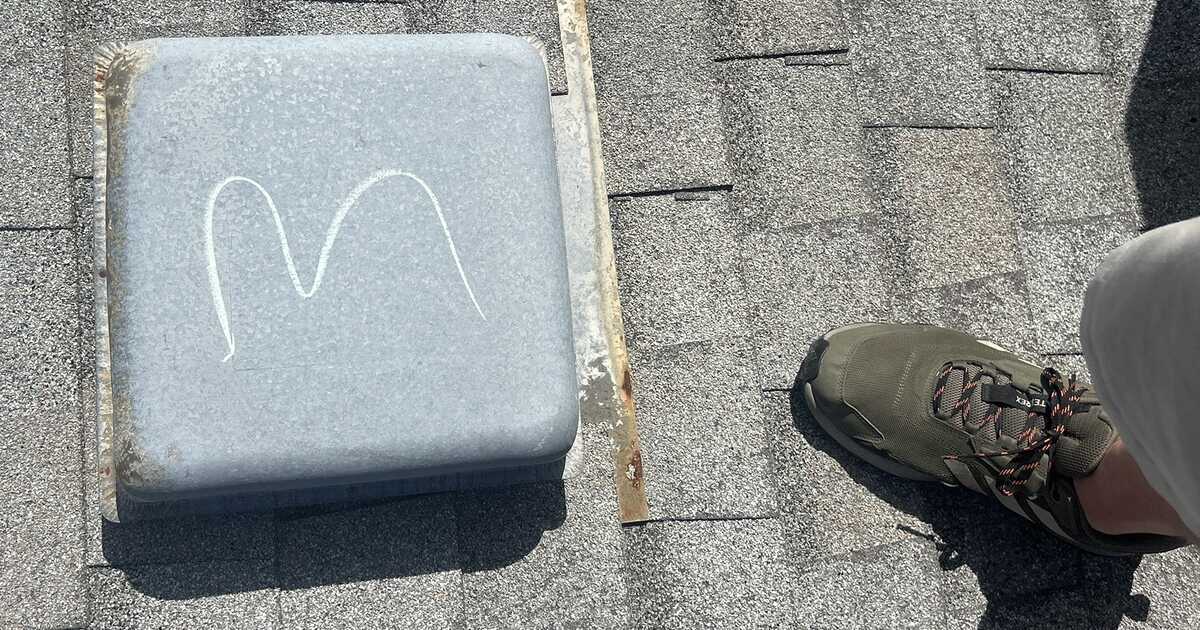
The damage was not limited to the membrane. CRC is a roofing contractor, not an HVAC company, so to capture the full loss it coordinated its HVAC partners to inspect and document the rooftop units for the same claim. Most were shielded by hail guards, but one unguarded Carrier combination heat and air-conditioning unit had taken a direct hit to a micro-channel aluminum condenser coil that cannot be combed back into shape, and two aging up-blast exhaust fans and two large ventilators were hail-damaged as well, with replacement parts long since obsolete. Documenting the rooftop equipment through the right trade partners, alongside the roof assembly, is part of putting a complete, code-required scope in front of a carrier, not just the damage that is easy to see.
The carrier initially declined to approve a full replacement. Rather than accept a repair-only scope, CRC formally requested a re-inspection by the carrier's engineer, submitting photo documentation of the fractured cover board beneath the membrane and the damaged rooftop HVAC units, and flagging what that damage meant for the roof system's fire rating and its ability to keep water out of the building. That request for a second, engineer-led look is what moved the claim from a partial repair to a full, code-required replacement.
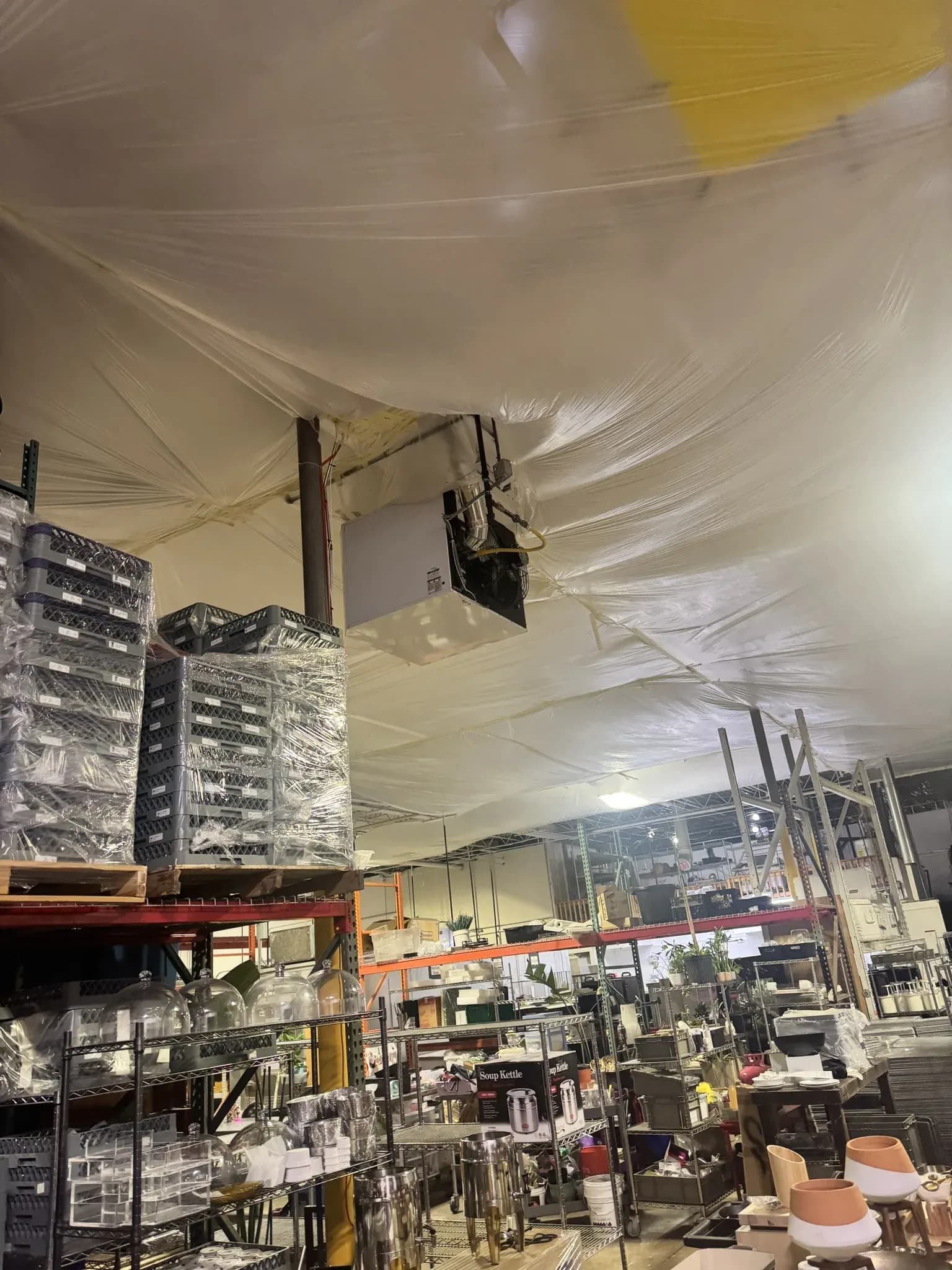
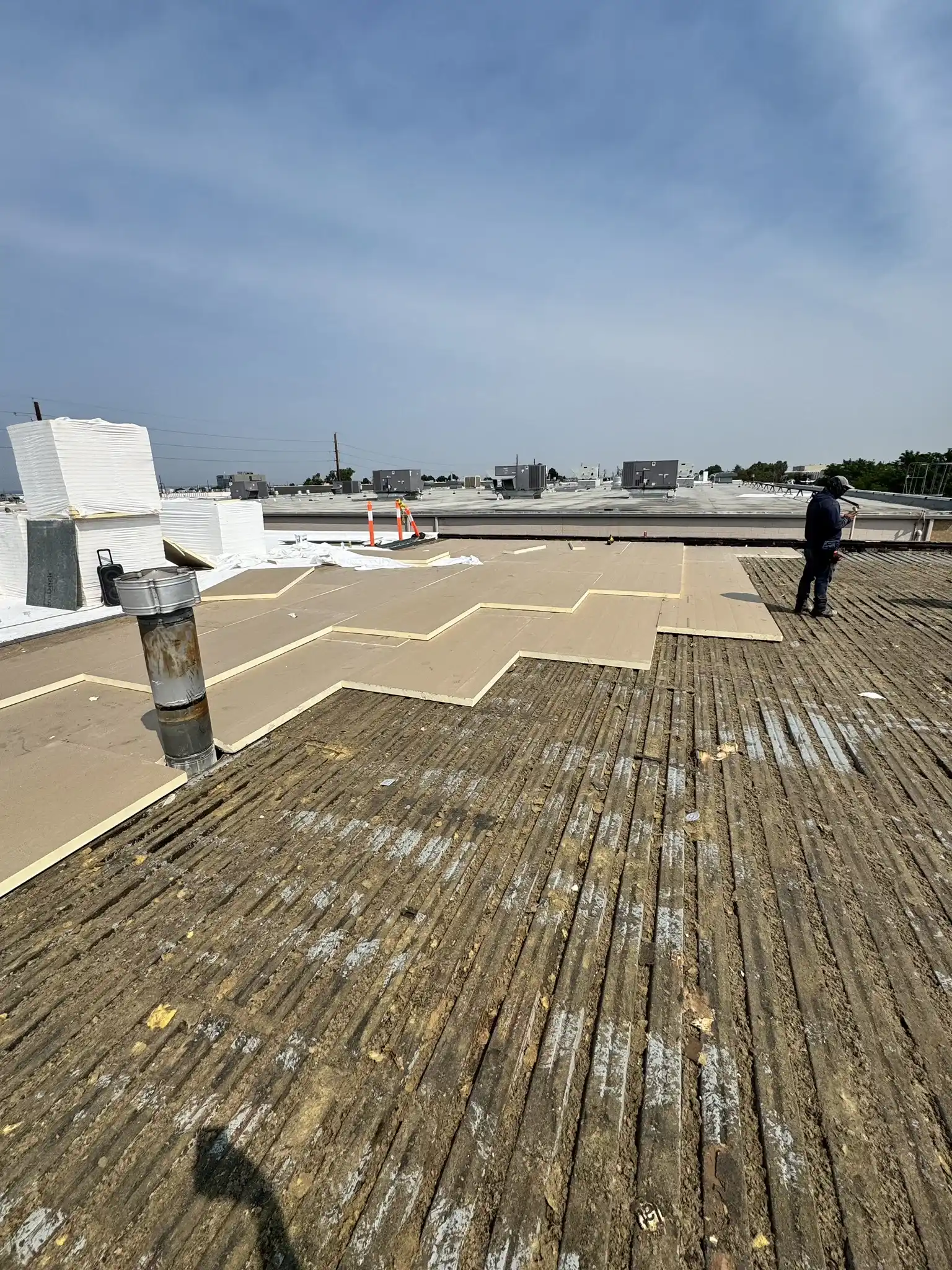
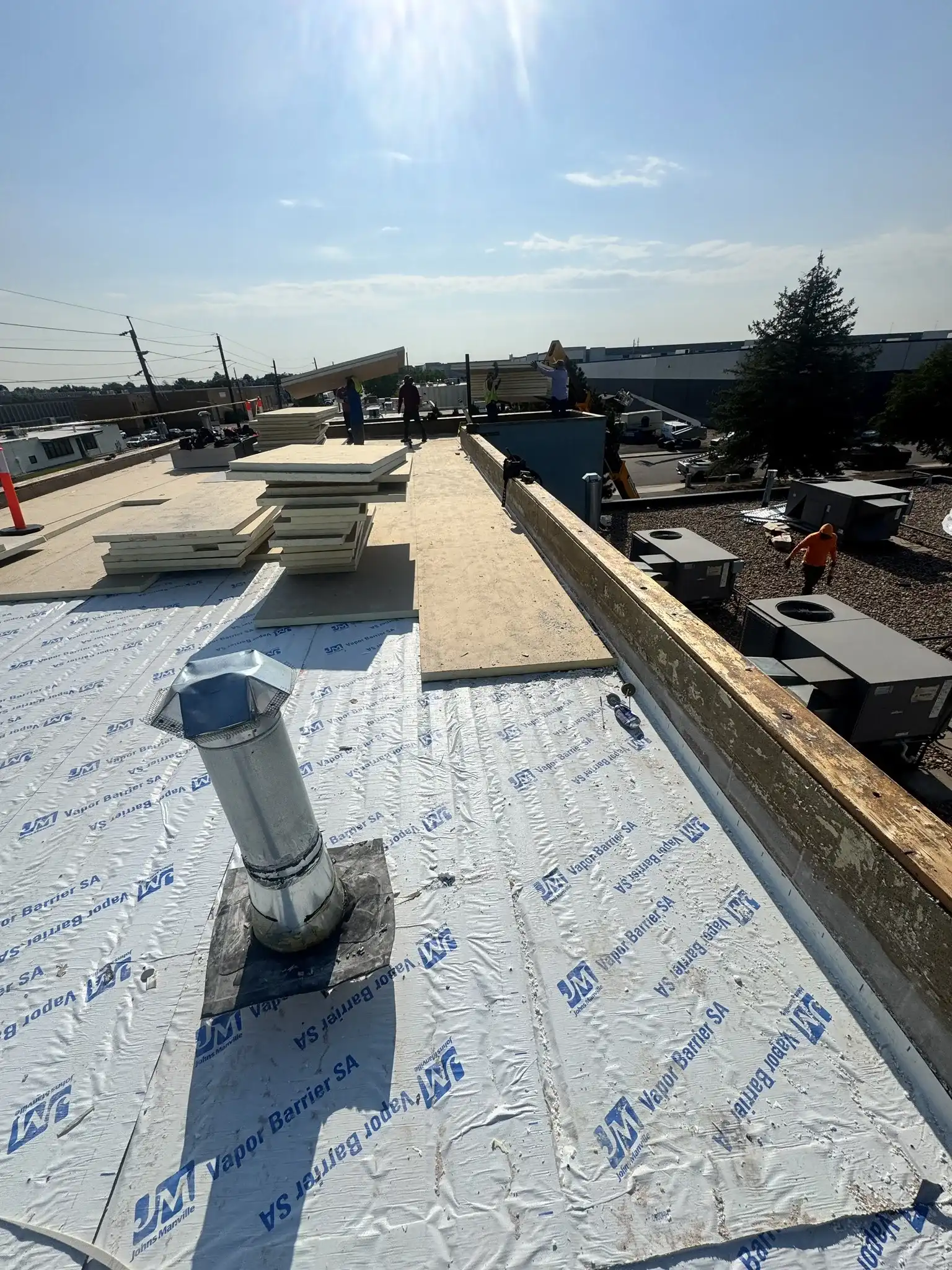
With the damage fully re-documented, the carrier approved a full replacement of both roofs along with the required Denver code upgrades. CRC then tore each roof off down to the original corrugated metal deck and rebuilt it from the deck up: a Johns Manville self-adhered vapor barrier, JM polyiso insulation, a JM ProtectoR HD high-density cover board, and a mechanically fastened 60-mil JM TPO membrane, one complete Johns Manville assembly. The hail-dented metal parapet caps that cap the roof edge were replaced as part of the same scope. Because the warehouse operated as a food-preparation facility, CRC had the carrier approve protective containment hung below the metal roof deck, so that any metal shavings thrown off as the long fasteners were driven through the deck were caught before they could reach the space below. As part of the rebuild, we upgraded the insulation to R-30 to comply with the City of Denver energy code, which improves the buildings' energy performance and lowers ongoing cooling and heating costs.
The Result
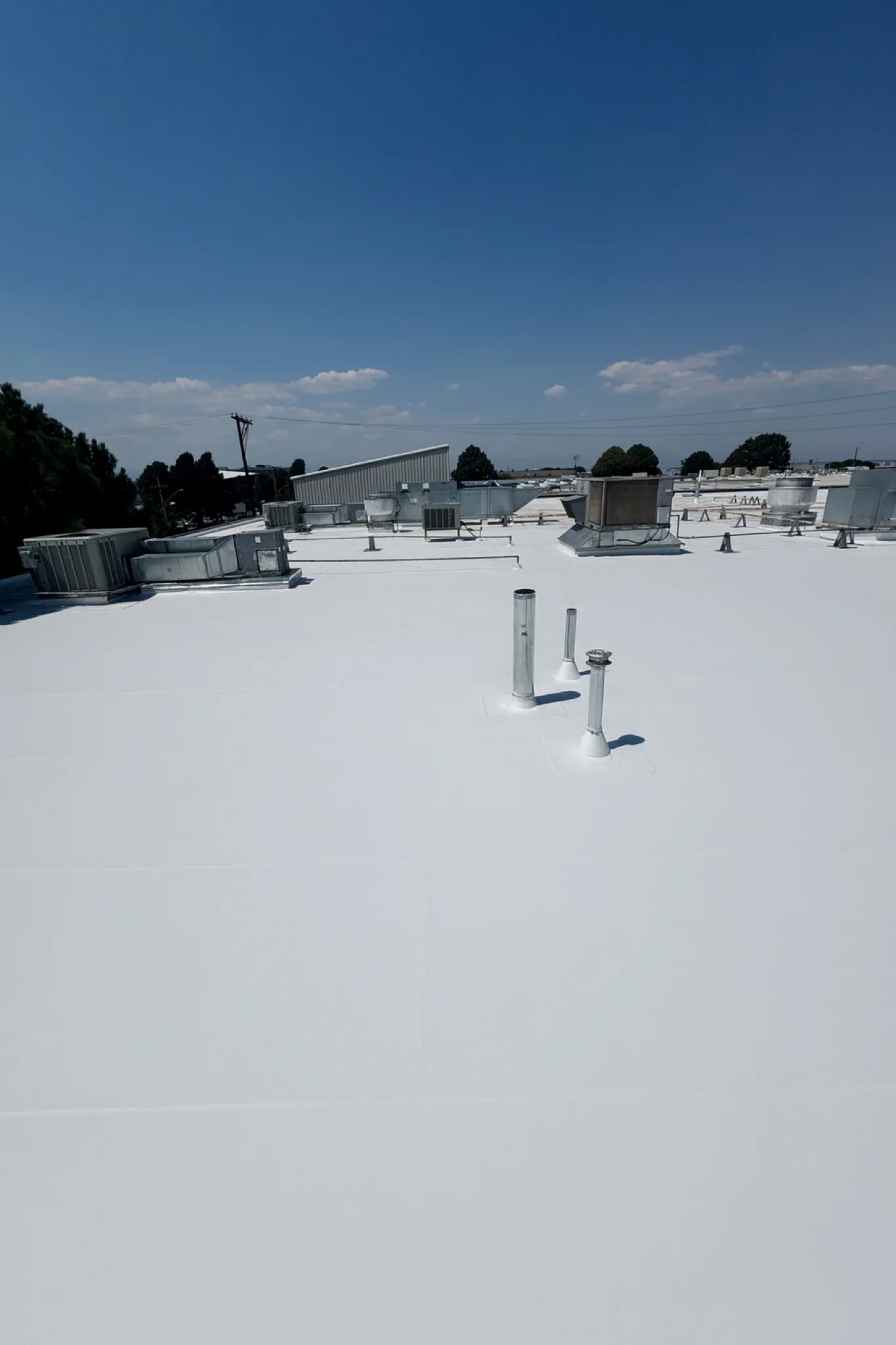
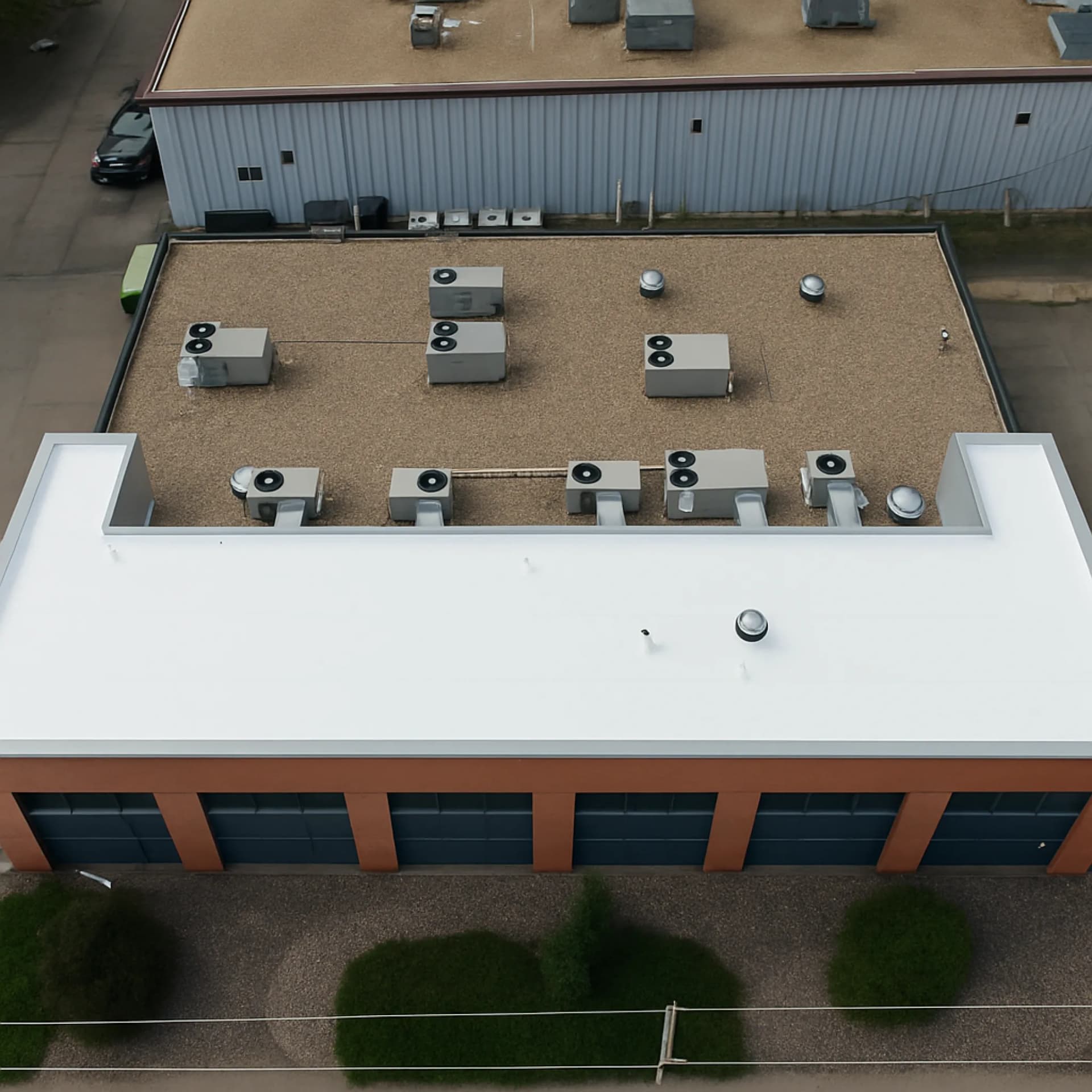
Both buildings went from hail-bruised, moisture-compromised roofs to complete, code-compliant Johns Manville TPO systems, roughly 25,000 square feet in total, finished in under two weeks with minimal disruption to the tenants' warehouse and office operations. Johns Manville is one of the most respected membrane manufacturers in the country, and CRC is among a select group of contractors in Colorado certified to install their systems.
When the work was finished, both roofs were independently signed off. The City of Denver's final inspection passed. Johns Manville then sent a representative to inspect the completed system and confirm it had been installed to their specifications, the final step that releases the 20-year No Dollar Limit warranty. Both inspections passed, and the warranty was issued.
Built to Current Denver Code
A large part of the approved scope was not the roof membrane itself but the code upgrades Denver now requires whenever a commercial roof is replaced. Denver's commercial roofing code changed significantly after 2022, so the rebuilt roof had to meet current standards, not simply match what was there before. When CRC met with the City of Denver's commercial roof inspector, the City's requirements came down to two things: the roof had to reach the specified insulation R-value and maintain a positive slope for proper water drainage. CRC's plan was approved and the building permit issued.
The biggest of these was a cover board installed over the insulation and beneath the TPO membrane. It adds real hail protection for future storms, but it is also a fire-resistance requirement, and getting it approved took months, because the building is not classified as a Class A structure. The carrier had to be shown that the new assembly met a one-hour fire-resistance rating using a UL-tested design, with a Class A TPO membrane rated under ASTM E108. CRC also brought the roof insulation up to Denver's current energy code, R-30 of continuous insulation above the deck for Climate Zone 5, from a starting point of roughly R-15. Together, the cover board, the added insulation, and a positive-slope drainage plan brought a roof built to an older standard fully up to current Denver code.
Customer Testimonial
Gunnar Hencmann
General manager at the time
CRC went above and beyond to help us with a previously denied insurance claim. Thanks to their expertise, the insurance company approved a full TPO roof replacement for two buildings in Denver. Tom, Chris, and their team replaced 25,000 sq. ft. of TPO and ISO in less than two weeks, which was an impressive turnaround for such a large project. Even with our busy warehouse and loading docks, they kept disruption to a minimum. Professional, efficient, and reliable. I highly recommend CRC for any commercial roofing project!
Why CRC for a Commercial Hail Claim
A hail-damaged commercial roof is often worth far more than a first adjuster estimate suggests, but only if someone documents the real condition of the assembly. CRC opens the roof, proves what the storm actually did, and presents the complete, code-required scope, then rebuilds it right. Our Denver office serves the Front Range, and our commercial team installs Johns Manville TPO systems and handles storm and hail insurance claims across Colorado.
Get a Storm-Damage Roof Assessment
If a hail storm has hit your commercial building, do not settle on a surface-level estimate before the roof assembly has actually been inspected. Call our Denver office at (720) 893-7663 or our Grand Junction office at (970) 877-7663, or click to request a free roof inspection.
Talk to the team nearest you: our Denver office, our Grand Junction office, or our Scottsbluff office.