
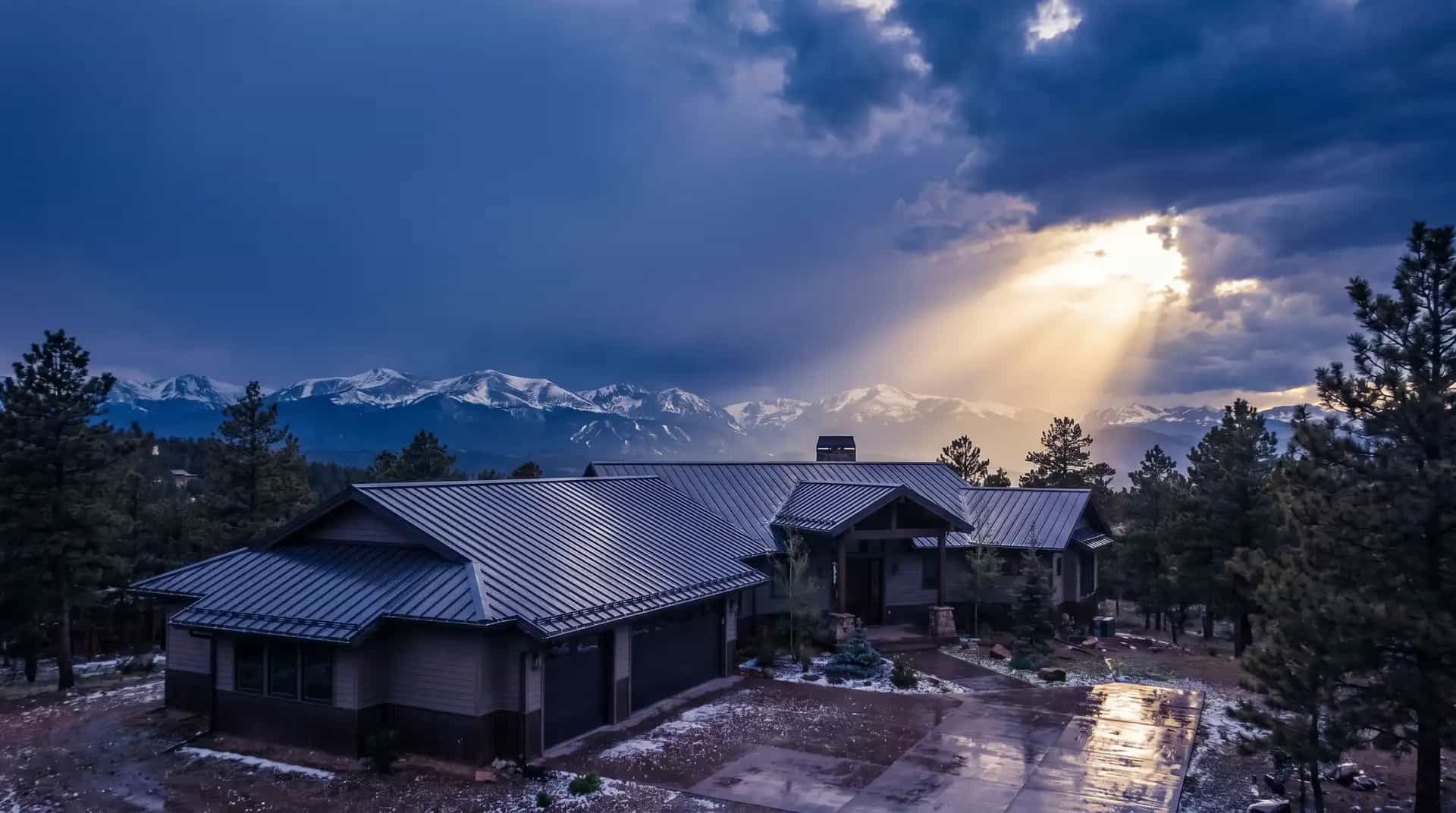
Commercial Roofing Contractor manages your Colorado storm damage insurance claim end to end, from the first free inspection through final repair, meeting your adjuster on site and filing supplements to recover the hidden damage, code-required upgrades, and full repair scope that a carrier's first estimate routinely leaves out. We are a family-owned, Colorado-based roofing company that has done this since 2001, Haag Certified for both residential and commercial roofs, with two staffed offices in Denver and Grand Junction.
Why CRC
Why Having CRC at Your Adjuster Meeting Matters
Storm damage claims are won or lost on documentation, and documentation is what we do. As Haag Certified Inspectors, we inspect to the same standard insurance carriers train their own adjusters to, meet your adjuster on site, and file the supplements that recover what initial estimates miss. We are a local, licensed Colorado contractor, not an out-of-state storm chaser.
- Haag Certified Inspectors for residential and commercial roofs, the inspection standard insurance carriers recognize.
- Family-owned and operated since 2001, with more than two decades of Colorado storm, hail, and insurance-claim experience.
- Two staffed Colorado offices, Denver for the Front Range and Grand Junction for the Western Slope, so a local team handles your claim start to finish.
- Adjuster coordination and supplement filing in-house, the work that recovers the code upgrades and hidden damage initial estimates routinely miss.
- Licensed and insured, operating within Colorado roofing and insurance law. We never pay, waive, or rebate deductibles, which is illegal under C.R.S. 6-22-105.
Don't Wait
Storm Damage Gets Worse When You Wait
Colorado sits in the heart of "Hail Alley," the strip of high plains running through Colorado, Wyoming, and Nebraska that sees more large-hail events than almost anywhere else in North America. The same storms bring straight-line wind, wind-driven rain, and, on the Western Slope and in the high country, heavy snow and ice load.
The underlying problem is always the same: a breach lets moisture into the underlayment and decking, and Colorado's freeze-thaw cycle turns small breaches into leaks, mold, and structural deterioration over a single winter. Even damage that looks minor from the ground can compromise your roofing system, and the longer you wait to document it, the harder it becomes to file a successful claim.
Heads up
1 to 5% deductible
Most Colorado policies now carry a separate wind and hail deductible set as a percent of your dwelling coverage, not a flat dollar amount (Colorado Division of Insurance). Carriers have also tightened filing deadlines and deny claims that have visibly aged.
Know the Signs
What Storm Damage Looks Like
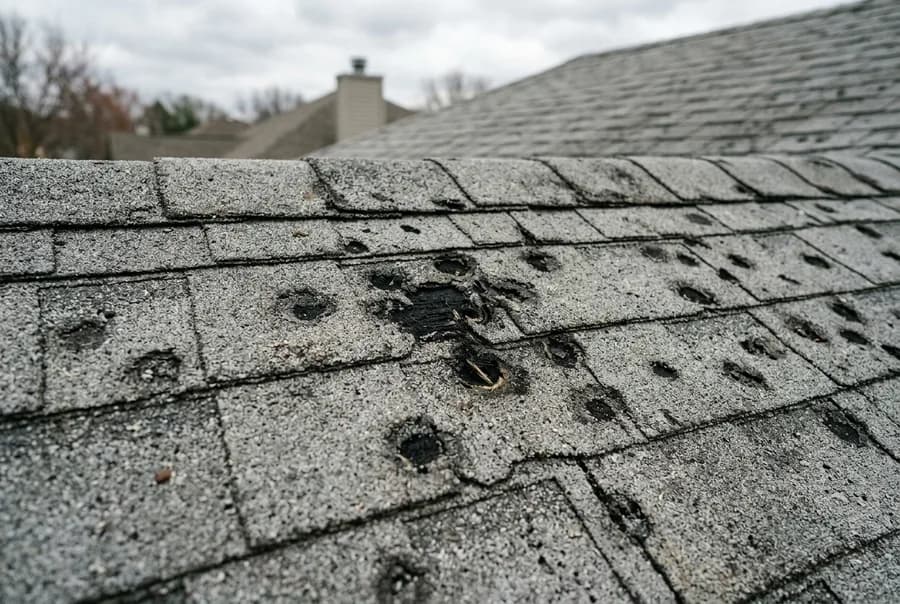
Hail: asphalt shingles
Dark spots or divots where granules are missing, exposed or ruptured fiberglass mat underneath, cracked or bruised shingles that may not be visible from the ground.
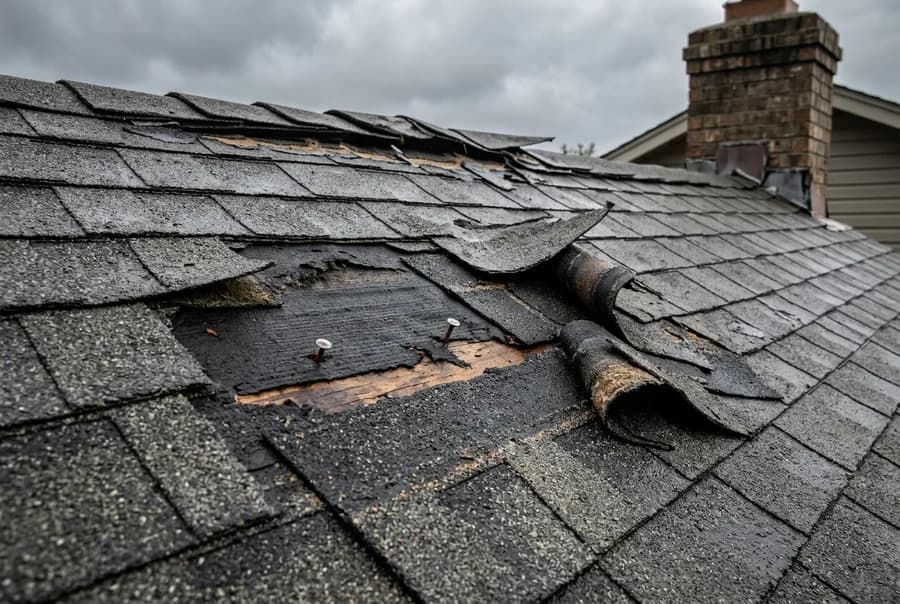
Wind: asphalt shingles
Lifted, creased, or missing shingles, broken seals along ridges and edges, exposed nail heads and underlayment where wind has peeled back a section.
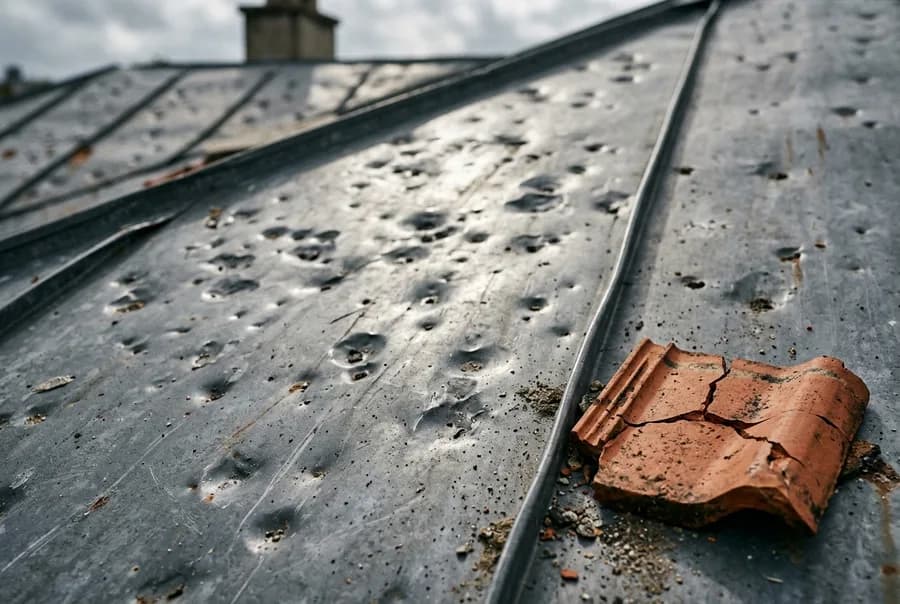
Tile & metal roofs
Cracked, chipped, or fractured tiles from hail, dents and dimples on metal panels, wind-displaced or missing tiles, damaged ridge caps and valley flashing.
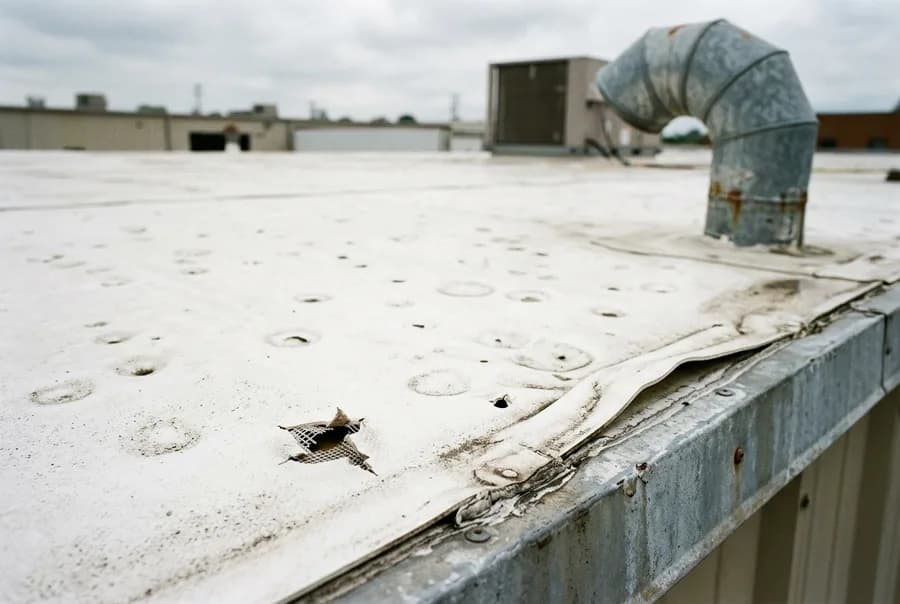
Flat commercial membrane (TPO, EPDM, PVC)
Hail punctures or indentations in the membrane, wind-lifted edges and seams, compromised seam welds, and damaged flashing around penetrations and parapet edges.
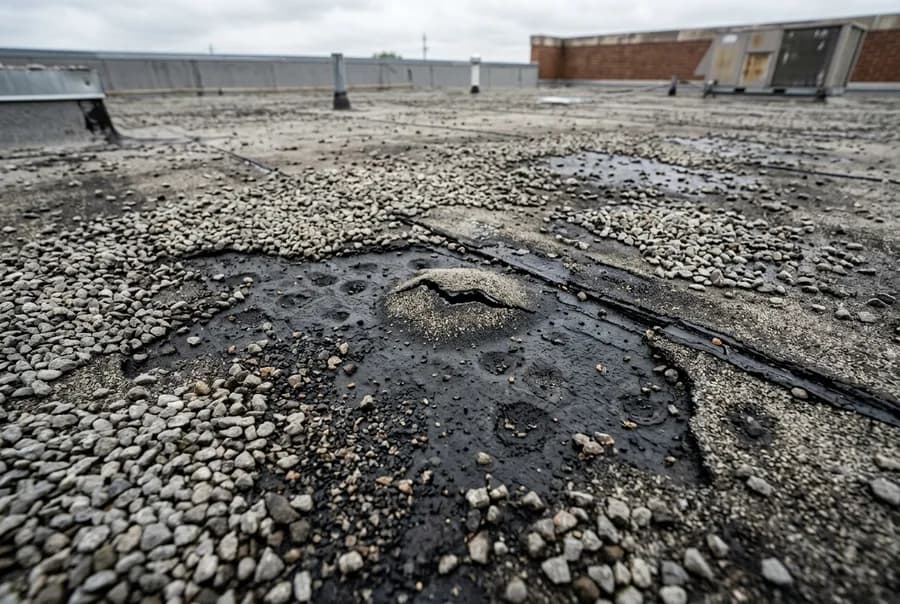
Modified bitumen & BUR
Displaced gravel and bruised cap sheet from hail, blistering and split laps at the seams, and deeper interply damage that stays hidden until an inspector opens the system up.
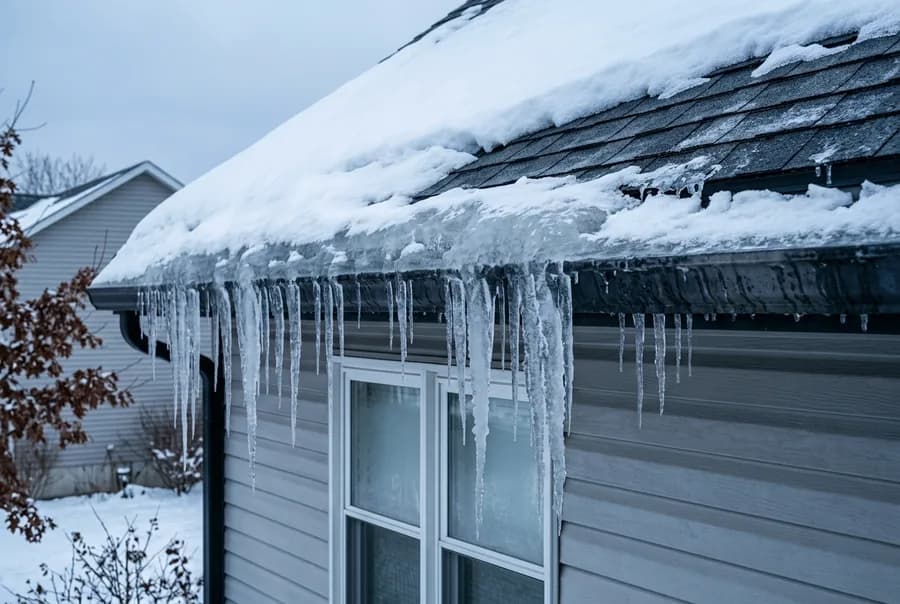
Snow & ice
Ice dams at the eaves that force meltwater back under shingles, ponding on flat and low-slope roofs, cracked flashing from repeated freeze-thaw movement.
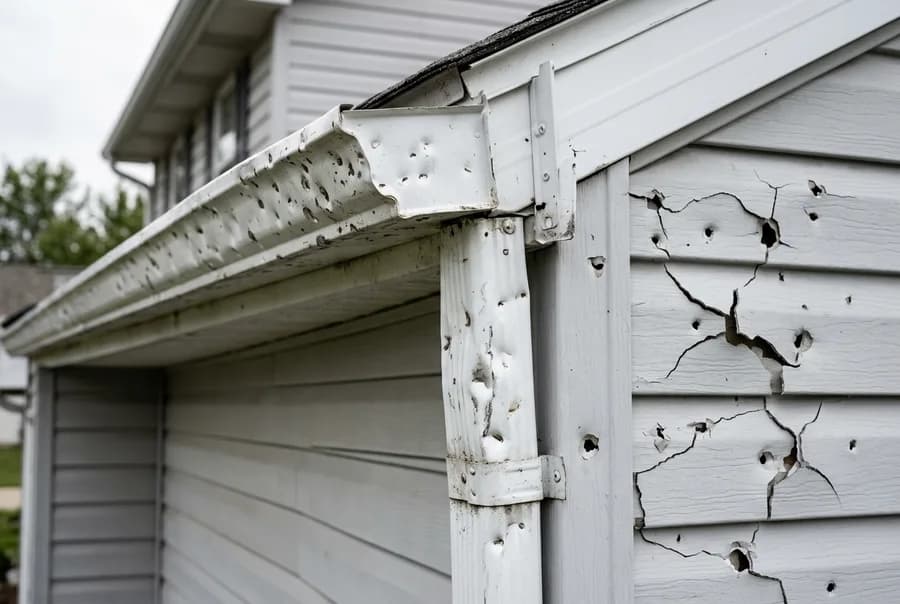
Gutters, siding & exterior
Dented gutters and downspouts, cracked or chipped siding, damaged window screens, trim, fencing, and outdoor equipment, all of which support your claim.
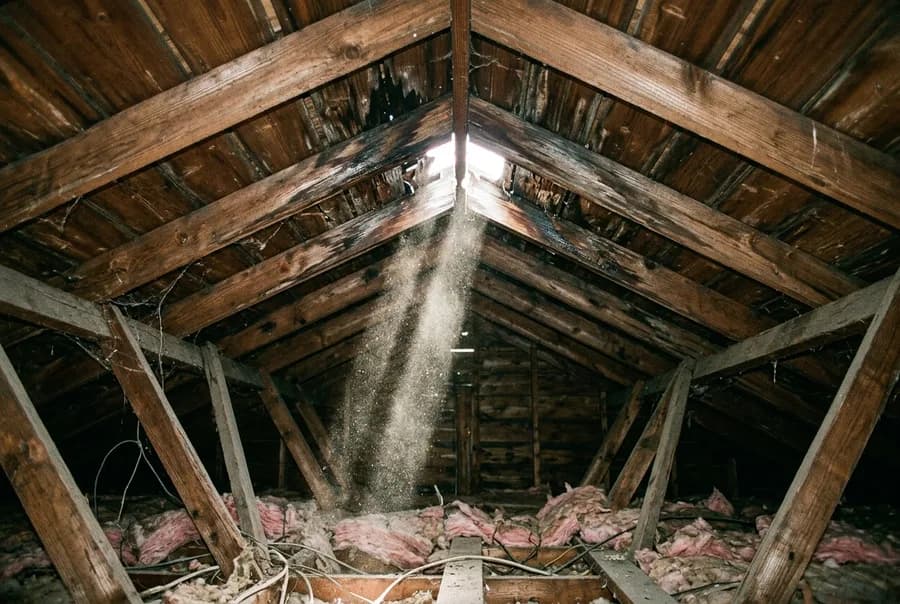
Roof leaks: daylight in the attic
Daylight visible through the roof deck, wet or stained sheathing and insulation, and water tracks along the rafters, the sign a storm breach is already letting water into the structure.
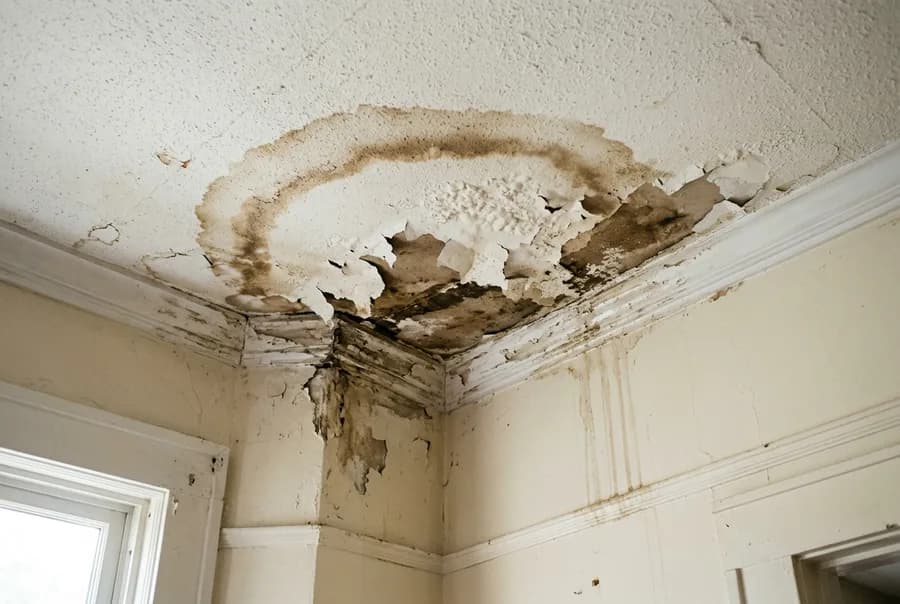
Interior water damage: ceilings
Brown water rings on ceilings and upper walls, bubbling or peeling paint, and damp drywall, the interior evidence that a roof leak has already reached your living space.
Illustrative examples of what each type of storm damage looks like, not photos of specific CRC projects.
Avoid These
Common Mistakes Homeowners Make
Common mistakes
- Waiting weeks or months to file. Damage worsens and carriers increasingly deny claims that have visibly aged.
- Accepting the insurer's first estimate as final when it misses code upgrades or hidden damage.
- Signing on the spot with a door-knocking, out-of-state storm chaser.
- Climbing on your own roof to inspect. It is dangerous and can create more damage.
- Throwing away damaged materials or storm photos before they are documented.
What to do instead
- Get a free professional inspection right after a storm, before you file.
- Have a Haag Certified contractor document everything and meet your adjuster on site.
- Verify any contractor is Colorado-based, licensed, insured, and has verifiable reviews.
- Keep every photo, estimate, and piece of correspondence.
- File promptly, within your policy's notice deadline.
The Process
How to File a Storm Damage Roof Insurance Claim in Colorado
The insurance claims process can feel overwhelming, but it does not have to be. Most roofing companies just install shingles; we manage the entire claim so you recover the full value of the damage to your property, not just the roof, from the first inspection through final payment, whether the damage came from hail, wind, rain, or snow and ice. Each step below shows exactly who handles what.
Click any step to see the details.
- 1
- 2
- 3
- 4
- 5
- 6
- 7
Beyond the paperwork, we also provide emergency tarping to stop active leaks the moment storm damage happens, and, when a flat or low-slope roof does not need a full tear-off, roof coating systems with 10 and 20 year warranties as a cost-effective restoration.
If your policy is RCV-only and depreciation is withheld until repairs are complete, you do not have to wait or pay out of pocket to start. Financing is available through Hearth to bridge the gap between your initial ACV check and your final depreciation recovery. Explore financing options.
Full Exterior
Your Roof Is Rarely the Only Thing a Storm Damages
When hail or high wind moves across Colorado, the damage rarely stops at the roof. The same storm that bruises your shingles or punctures a commercial membrane often dents gutters, cracks siding, tears window screens, and pockmarks garage doors. Much of that damage can belong to the same insurance claim. Commercial Roofing Contractor inspects and documents the entire exterior, not just the roof, so your claim reflects everything the storm actually damaged.
What hail and wind damage beyond the roof
A single storm can damage exterior components that homeowners and even adjusters routinely overlook, including:
- Siding and siding panels (cracks, holes, and impact marks)
- Gutters, downspouts, and gutter guards (denting and separation)
- Fascia, soffit, and metal wraps or capping around windows and doors
- Garage doors (denting that affects both appearance and operation)
- Window screens and window frames
- Fences, gates, and deck surfaces
- Air conditioner and heat pump condenser fins
- Painted and coated surfaces, exterior light fixtures, mailboxes, and vents
On commercial and multifamily properties, that list extends to rooftop units, parapet caps, flashing, exterior doors, and any painted or clad building elements the storm reached.
Why so much of it gets left out of the claim
Most inspections focus on the roof, because that is usually the largest and most obvious loss. But an initial estimate that stops at the roof leaves real, storm-caused damage unaccounted for, and that gap comes out of your pocket if it is never documented. Adjusters work quickly and often from the ground, property owners do not always know which components a storm affects, and secondary damage like a dented garage door or a torn screen is easy to miss when everyone is looking up. This is exactly where claims get underscoped.
How Commercial Roofing Contractor handles the full exterior
We document the whole exterior in one visit. Our Haag Certified inspectors photograph and record every storm-damaged component, from the roof down to the fence line, and compile it into a detailed report tied to the same date of loss. We present that documentation to your insurance company and, when items are missed or underpaid in the initial estimate, we prepare and submit a supplement to recover what the first pass left out. Our in-house claim and supplement work is built around one goal: making sure nothing the storm damaged gets overlooked, and that the paperwork supports every line of it.
Whether a specific component is covered depends on your policy and the damage itself, and we do not decide that, your insurer does. What we do is make sure the full scope of storm damage is inspected, documented, and put in front of the adjuster, so the claim is decided on complete information rather than a roof-only snapshot.
Get Your Full Exterior Documented
If a storm hit your property, do not assume the roof is the whole story. Schedule a free inspection and we will document every exterior component the storm affected, then help you take it through the claim.
Know Your Coverage
RCV vs ACV: Understanding Your Payout
Replacement Cost Value (RCV)
Pays the full cost to replace your roof with equivalent materials at current prices. The insurer issues an initial payment minus depreciation, then releases the rest after repairs are complete. Most Colorado homeowners carry RCV.
Actual Cash Value (ACV)
Deducts depreciation based on the roof's age and condition, so a 15-year-old roof pays out far less than a new one. Some Colorado carriers have moved roofs to ACV-only endorsements, so check your declarations page carefully.
Financing available
Insurance not covering the full cost?
Financing through our partner Hearth covers ACV-only policies, denied claims, and retail (non-insurance) roof projects, so you can spread your out-of-pocket cost into affordable monthly payments, often at rates lower than a credit card.
See financing optionsExample
How a Typical Settlement Works
- Initial insurance check (minus depreciation)
- ~$18,000
- Depreciation recovery (released after repairs)
- ~$8,000
- Your deductible (you pay)
- $2,000
You pay (deductible)
$2,000
Insurance pays
$26,000
This example assumes RCV coverage. Under Colorado law it is illegal for a contractor to waive, pay, or rebate any portion of your deductible ( C.R.S. 6-22-105 ).
Repair or Replace?
We Help You Decide
A repair may be enough when
- Damage is isolated to a small, defined area.
- The rest of the roof is sound and within its service life.
- A matching repair will not compromise the system or void the warranty.
Replacement is warranted when
- Damage is spread across multiple slopes or the storm-facing side.
- A partial repair would compromise the system's integrity.
- Discontinued materials cannot be matched, or a repair would void the manufacturer warranty.
Colorado Law
Your Rights as a Colorado Policyholder
Your deductible cannot be waived
Under Colorado Senate Bill 38, it is illegal for any roofing contractor to pay, waive, or rebate any part of your deductible, or to advertise that they will. If a contractor violates this, your insurer is not obligated to honor that contractor's estimate.
Your contract has required disclosures
A residential roofing contract must be in writing with the scope of work, approximate costs, the contractor's insurance information, and a written no-waiver statement. You may rescind within 72 hours of signing.
Delay or denial has a remedy
A first-party policyholder whose claim is unreasonably delayed or denied may recover reasonable attorney fees, court costs, and up to two times the covered benefit, on top of a breach-of-contract claim.
Your right to sue is protected
A homeowner's policy issued or renewed after January 1, 2014 cannot require suit in less time than the statute of limitations allows. Commercial policies are not covered, so review your suit-limitation clause directly.
Commercial
Commercial Claim Considerations
Commercial and multifamily claims follow the same documentation-first playbook as residential, with a few differences that decide whether the claim comes in complete. The storm damage itself, from membrane and modified bitumen to metal, is shown in the gallery above; what changes on a commercial building is how it has to be inspected and which rules govern the claim.
The whole membrane gets walked
On flat and low-slope roofs, hail punctures, weakened seam welds, and edge and flashing damage are invisible from the ground or a drone. A trained inspector has to physically walk the entire membrane and test-cut where needed, which is exactly where a ground-only adjuster estimate leaves claimable damage on the table.
Restored to the right system
Once the scope is set, we rebuild to specification with the correct commercial system: TPO, EPDM, metal, modified bitumen, or a roof coating restoration when a full tear-off is not required.
CRC Never Charges for Claims Assistance
Documenting your damage, meeting your adjuster, and filing supplements is part of how we do your roof, not a separate fee. You pay only your policy deductible, which by law we cannot waive, and your insurer covers the approved repairs.
Storm Damage Insurance Claims: Frequently Asked Questions
How long do I have to file a storm damage insurance claim in Colorado?
Most Colorado homeowners policies set their own deadline for notifying the carrier, often six months to two years from the storm date. The longer you wait, the harder it becomes to prove the storm caused the damage. Separately, C.R.S. 10-4-110.8(12) prevents a homeowner's policy from shortening the lawsuit deadline below the standard statutory period. Schedule a free inspection as soon as possible after a storm and file promptly.
Should I get a roof inspection before filing an insurance claim?
Yes. A professional inspection before filing confirms whether storm damage actually exists and documents its full extent across roofing, siding, gutters, and windows, so you file a well-documented claim from the start.
Will filing a storm damage claim raise my insurance rates?
Hail and wind claims are weather-related events, typically treated differently than other claim types. There are no laws preventing a carrier from choosing not to renew after multiple losses, so the answer varies by insurer. Upgrading to impact-resistant Class 4 roofing can help future insurability and may qualify you for a discount; ask your carrier.
What is the difference between Actual Cash Value and Replacement Cost Value?
RCV pays the full replacement cost at current prices, with an initial payment minus depreciation and the remainder released after repairs. ACV deducts depreciation based on the roof's age and condition, resulting in a lower total payout. Most Colorado homeowners carry RCV, but some carriers have moved roofs to ACV-only endorsements, so check your declarations page.
Can a roofing contractor help negotiate with my insurance adjuster?
Yes, within limits. With a signed contract, an experienced contractor can discuss the scope of repairs with your insurer, meet your adjuster on-site, identify missed items, verify measurements, confirm code requirements, and submit supplements. A contractor cannot act or hold itself out as your public adjuster; that requires a separate license under C.R.S. 10-2-417.
What is a supplement in the storm damage claim process?
A supplement is a request to your insurer for additional funds when the original estimate does not cover the full scope of required repairs. They are common because initial inspections may miss hidden damage, use incorrect specifications, or omit code requirements. We document every discrepancy and file supplements directly with your carrier.
What will I owe out of pocket for a storm damage roof replacement?
You are responsible for your deductible. Under C.R.S. 6-22-105 it is illegal for any contractor to pay, waive, or rebate any part of your deductible. Your deductible is set by your policy, commonly a flat amount or 1 to 5 percent of dwelling coverage for wind and hail claims.
What if my insurance company is delaying or denying my claim?
Colorado law requires insurers to handle first-party property claims in good faith without unreasonable delay or denial. Under C.R.S. 10-3-1115 and 10-3-1116, you may be entitled to up to two times the covered benefit plus attorney fees and court costs. Document every communication and consider speaking with an attorney who handles first-party property claims.
Does my homeowner's insurance treat hail, wind, rain, and snow damage the same way?
Hail and wind are almost always named perils, usually sharing one combined deductible. Wind-driven rain entering through a wind-created opening is typically covered as part of the wind claim. Snow and ice coverage varies more by policy; review your declarations for ice dam or water backup exclusions.
How can I tell if my roof actually has storm damage or just normal wear?
Storm damage has a specific signature: hail leaves circular impact marks with exposed mat or fractured tile, often clustered on the storm-facing slope; wind damage shows as creased, lifted, or missing shingles along edges and ridgelines. Normal wear is uniform and gradual. A trained inspector can tell the difference quickly, which is what a free inspection is for.
Do I need a public adjuster, or is a roofing contractor enough?
For most residential hail and wind claims, a contractor experienced in insurance work can document damage, meet your adjuster, and file supplements without a public adjuster license. A public adjuster (licensed under C.R.S. 10-2-417) represents you directly and typically charges a percentage of the settlement; larger or contested claims, especially commercial, are where that added cost is more often worth it.
What happens if my roof is only partially damaged?
Insurers generally pay to repair or replace only the portion that sustained covered damage. If damage is spread enough that a partial repair would compromise the system's integrity or void a manufacturer warranty, that is the basis for a full replacement, which we document specifically when we write your scope.
Can I choose my own roofing contractor?
Yes. Your insurer may suggest a preferred vendor, but you are not required to use it. Get your own inspection and estimate before signing anything, and make sure whoever you hire is licensed, insured, and familiar with how Colorado claims are scoped and supplemented.
What should I do if I suspect storm chasers after a major hailstorm?
After large hail events, watch for traveling storm chasers who pressure homeowners into signing on the spot. Get multiple quotes, verify the contractor is Colorado-based with a physical address and verifiable reviews, never sign under pressure, and remember you have 72 hours to rescind any roofing contract under C.R.S. 6-22-104.
Does a roof insurance claim cover siding, gutters, and other exterior damage?
Often, yes. If the same storm that damaged your roof also damaged siding, gutters, garage doors, screens, or other exterior components, those losses can typically be included in the same claim under the same date of loss. Coverage depends on your policy, which is why documenting all of it matters.
What exterior items besides the roof does hail usually damage?
Commonly siding, gutters and downspouts, window screens and wraps, garage doors, fences and decks, painted surfaces, exterior fixtures, and air conditioner condenser fins. On commercial and multifamily buildings, add rooftop units, flashing, parapet caps, and exterior doors.
The adjuster only approved my roof. Can the rest still be claimed?
Often it can. When storm damage to other exterior components was missed or underpaid in the first estimate, Commercial Roofing Contractor documents it and submits a supplement to your insurer to recover the overlooked items. This is a routine part of how we handle claims.
Related Resources
 ArticleResidential Roofing
How to Read Your Homeowners Policy Before Hail Season in Colorado
Read more →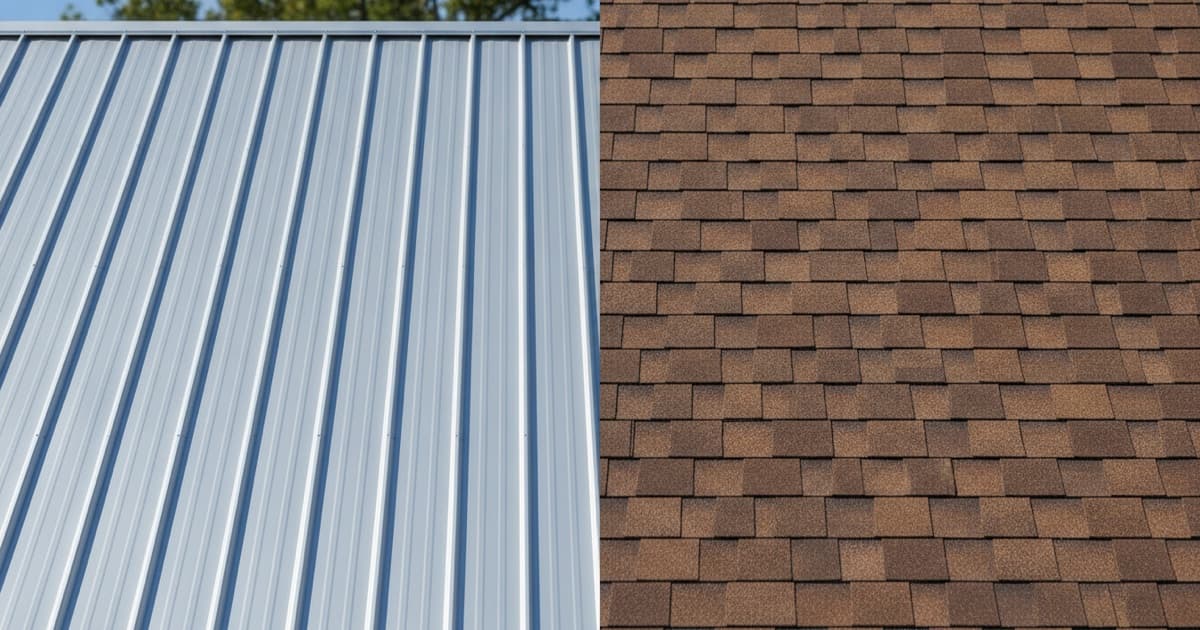 ArticleResidential Roofing
Metal Roof vs Asphalt Shingles in Colorado: Which Is Right for Your Home?
Read more → ArticleResidential Roofing
How Much Does a Roof Replacement Cost in Colorado? (2026)
Read more →
This page is for general information only and is not legal, insurance, or tax advice. Colorado statutes and insurance practices change, and how any law applies depends on your specific policy and situation. Confirm details with your insurer, agent, or a qualified professional before acting. Statute references are provided for convenience and may not reflect the most current law.