Residential Roofing
Metal Roof vs Asphalt Shingles in Colorado: Which Is Right for Your Home?
By Chris Sanchez, Commercial Roofing Contractor · July 10, 2026
- Metal Roofing
- Asphalt Shingles
- Material Comparison
- Hail Damage
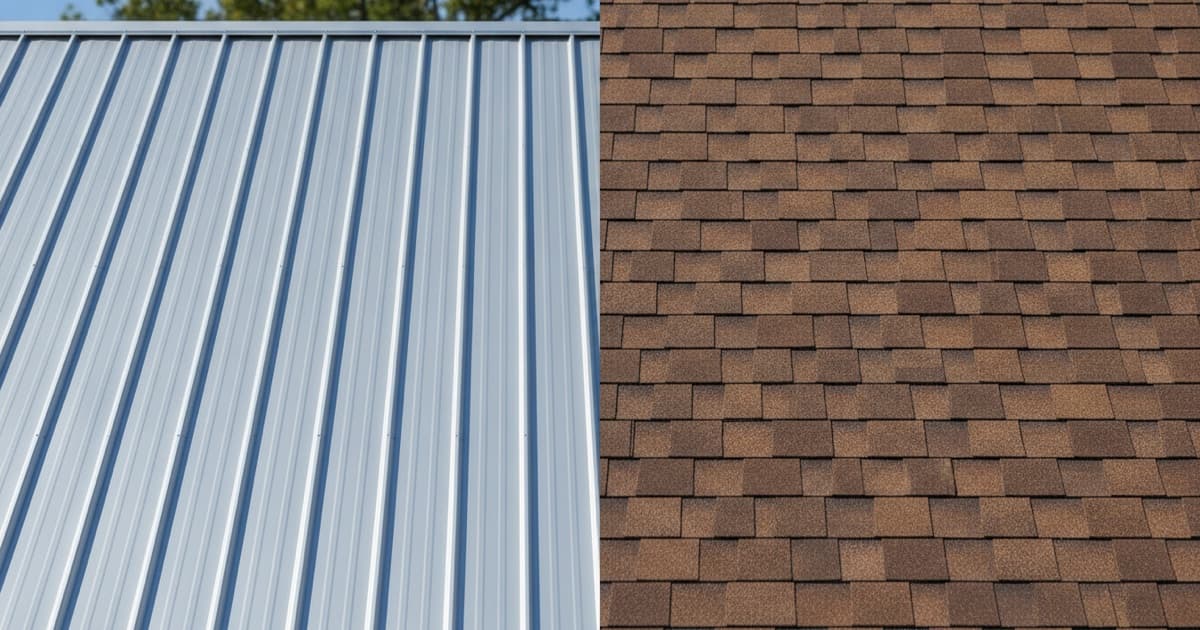
Short answer: For most Colorado homeowners, architectural or Class 4 asphalt shingles are the practical choice: lower upfront cost, strong hail performance, and easy insurance replacement. Standing seam metal makes sense if you plan to stay in the home for decades and want a 40-to-70-year roof with excellent wind and fire resistance, and you can absorb roughly two to three times the cost. The right answer comes down to how long you will own the house and your budget.
Metal versus asphalt is the most common material question we hear from Colorado homeowners, usually right after a hail storm or when an aging roof finally needs replacing. Both are good roofs. They just win on different things. Here is how they actually compare on the Front Range and the Western Slope.
Cost: Asphalt Wins Upfront, Metal Plays the Long Game
Cost is where the decision starts for most people. In 2026, architectural asphalt shingles run about $4.50 to $7.00 per square foot installed in Colorado, while standing seam metal runs roughly $9.00 to $16.00 or more. On a typical home that gap is often $15,000 to $30,000.
| Factor | Architectural asphalt | Standing seam metal |
|---|---|---|
| Installed cost per sq ft (2026) | About $4.50 to $7.00 | About $9.00 to $16.00+ |
| Typical lifespan in Colorado | 20 to 30 years | 40 to 70 years |
| Hail behavior | Can crack; Class 4 resists impact | Rarely leaks; can dent cosmetically |
| Fire resistance | Good (Class A rated systems) | Excellent (non-combustible) |
| Install time | 1 to 2 days | 3 to 5 days |
The long-term math is closer than the sticker price suggests. Because a metal roof can outlast two or three asphalt roofs, the lifetime cost per year narrows. But that only pays off if you stay in the home long enough to bank those decades. For a fuller pricing breakdown, see our guide to roof replacement cost in Colorado.
Hail: The Deciding Factor on the Front Range
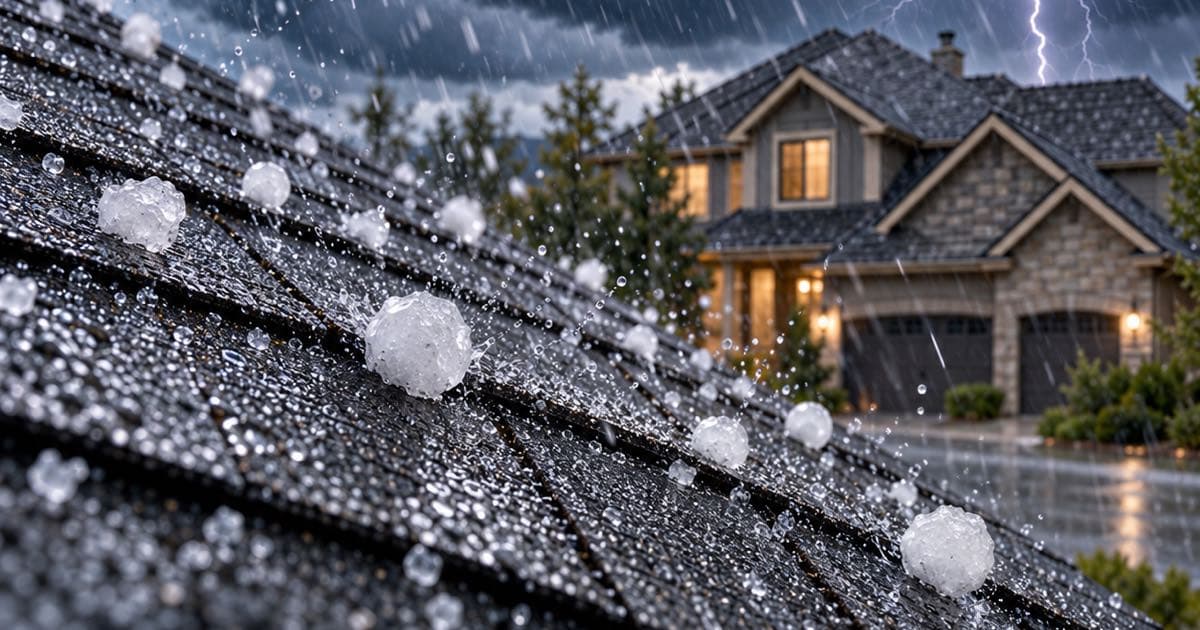
Colorado sits in one of the most hail-prone corridors in the country, so impact performance matters more here than almost anywhere. Metal and asphalt handle hail differently.
- Asphalt can crack, bruise, and lose granules under hail. A Class 4 impact-rated shingle resists that damage and can earn an insurance discount, which is why it is our default recommendation for Front Range homes.
- Metal almost never leaks from hail. In a severe storm it can take cosmetic dents, but the roof keeps doing its job. If your priority is never worrying about a hail leak again, metal is the stronger performer.
Either way, keep documentation. If a storm hits, our first-48-hours hail checklist walks through what to do before you call your insurer.
Lifespan and Maintenance
Asphalt is a 20-to-30-year roof in Colorado, and high-altitude UV and freeze-thaw cycles tend to push it toward the shorter end of that range. Metal is a 40-to-70-year system. Both are low maintenance, but metal has fewer wear parts to fail over time. On asphalt, small components like pipe boots often fail long before the shingles do, which is the single most common leak we see; we cover that in our cracked pipe boots article.
Insurance and Resale
On insurance, the key rule is like kind and quality: if your damaged roof is asphalt, the policy pays to replace it with asphalt. If you want to upgrade to metal, expect to pay the difference out of pocket. A Class 4 asphalt upgrade is the more common insurance-friendly move because some carriers discount the premium.
For resale, a new asphalt roof reliably clears a buyer objection and protects value. Metal can be a genuine premium selling point in hail country and mountain communities, but you will not always recover the full upcharge at sale, so choose metal for the years you plan to live there.
So Which Should You Choose?
It comes down to how long you will own the home and your budget. A quick rule of thumb:
Architectural or Class 4 Asphalt
- Lowest upfront cost
- Strong hail protection, especially Class 4
- Straightforward insurance replacement
- Best if you may move within 10 to 15 years
Standing Seam Metal
- 40 to 70 year lifespan
- Best fire and wind resistance
- Rarely leaks from hail
- Best if you will stay for decades and the cost fits
Commercial Roofing Contractor installs both systems across Colorado and is a GAF Certified Plus, TAMKO Pro Platinum, and Malarkey Certified contractor, so we can qualify a new roof for extended warranty tiers. See our certifications and credentials for the full list. Our Denver office serves the Denver Metro and Front Range, and our Grand Junction office serves the Western Slope.
Frequently Asked Questions
Is a metal roof worth it in Colorado?
For a homeowner staying long term, often yes. A standing seam metal roof can last 40 to 70 years and stands up well to wind and fire, so it can outlast two or three asphalt roofs. The trade-off is a much higher upfront cost, roughly two to three times asphalt, so the payback depends on how long you keep the house.
Which holds up better to Colorado hail, metal or asphalt?
Both can be rated for impact, but they fail differently. A Class 4 impact-rated asphalt shingle resists cracking, while metal resists puncture and rarely leaks from hail. Metal can dent cosmetically in a severe storm without losing function, whereas damaged asphalt shingles are more likely to need replacement. For pure leak protection, metal has the edge; for lowest cost with strong protection, Class 4 asphalt is hard to beat.
How much more does a metal roof cost than shingles in Colorado?
Architectural asphalt commonly runs about $4.50 to $7.00 per square foot installed in 2026, while standing seam metal runs roughly $9.00 to $16.00 or more. On a typical home that is often a difference of $15,000 to $30,000 or more.
Will insurance pay for a metal roof after hail?
If your existing roof has covered hail or wind damage, insurance generally pays to replace it with like kind and quality. If you currently have asphalt and want to upgrade to metal, the policy typically pays the asphalt replacement value and you pay the difference to upgrade.
Does a metal roof make a house hotter or louder?
Modern metal roofing is installed over underlayment and solid decking, so rain noise is comparable to other roofs, not the tin-shed sound people expect. Reflective and cool-rated metal finishes can actually reduce summer heat gain compared with dark asphalt.
Which roof adds more resale value in Colorado?
A new asphalt roof reliably removes a buyer objection and is the expected standard, so it protects value. Metal can be a premium selling point in hail-prone and mountain markets, but the higher cost is not always fully recovered at sale, so choose it for the years you will live there, not purely for resale.
Related Resources
Talk to the team nearest you: our Denver office, our Grand Junction office, or our Scottsbluff office.