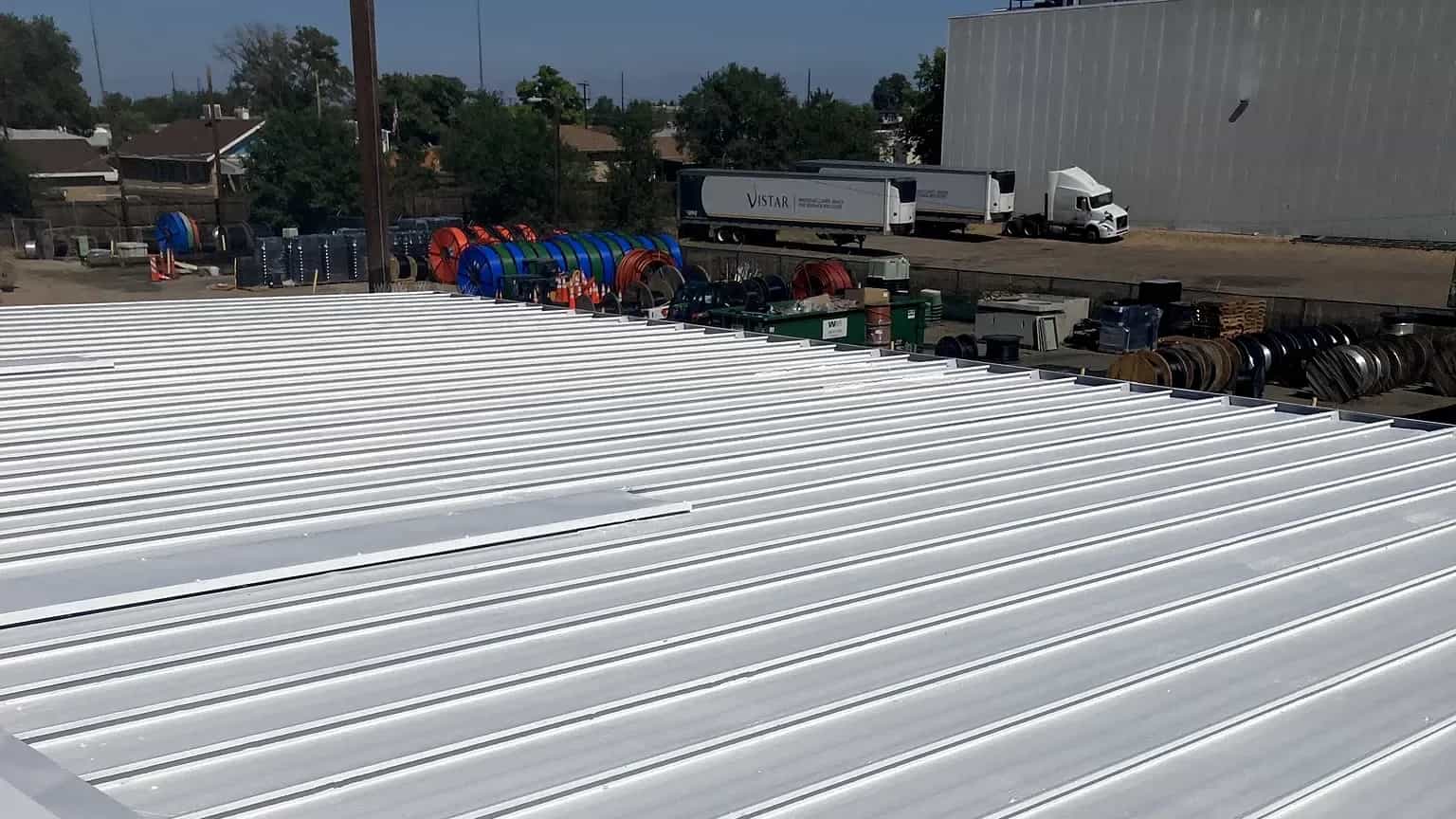
Commercial Roofing Contractor restores aging commercial roofs with fluid-applied coating systems instead of full tear-offs. With more than 20 years in business and top-tier American WeatherStar Platinum Elite standing, the manufacturer's highest contractor tier, our Denver and Grand Junction crews coat TPO, PVC, EPDM, metal, SPF, modified bitumen, and built-up roofs across Colorado, sealing them into a seamless, reflective, waterproof surface backed by 10 and 20 year manufacturer material and labor warranties. A coating extends the life of a sound roof by 10 to 15 years, and up to 20 years with a 20-year No Dollar Limit (NDL) warranty, at a fraction of the cost and disruption of a tear-off.
What Roof Restoration Is
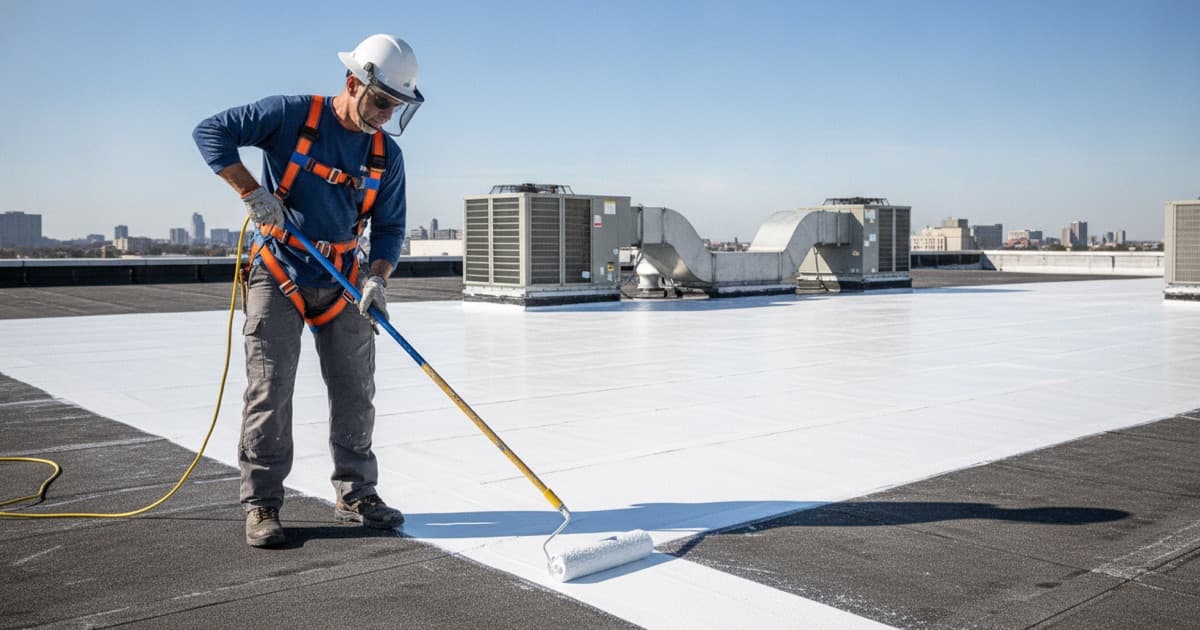
A roof coating, also called a roof restoration, is a liquid system that is cleaned onto, primed, and rolled or sprayed over your existing roof, where it cures into one continuous membrane. Rather than removing a roof that is still structurally sound, we renew it: the coating bridges seams, encapsulates fasteners, seals small splits, and adds a fresh reflective surface across the entire roof. The result is a watertight, energy-reflective roof for far less cost and disruption than a full replacement, and far less material sent to the landfill.
Roof Systems We Coat and Restore
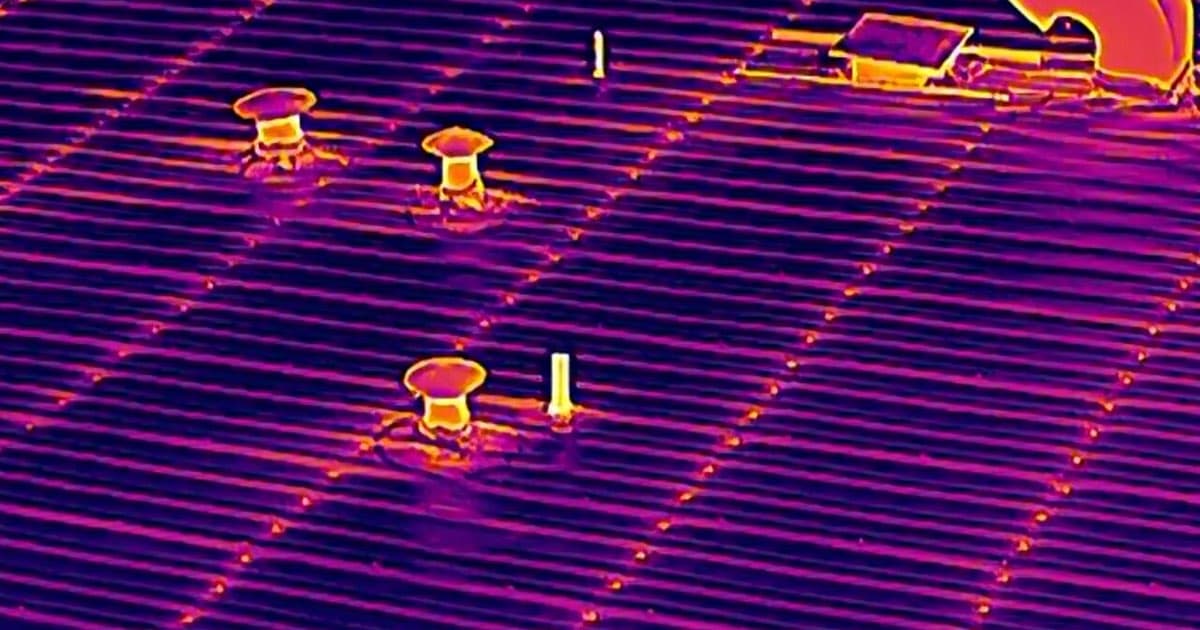
Restoration is not one-size-fits-all. We match the prep and the system to the roof in front of us, and every roof starts with a moisture survey and, where needed, an adhesion test so we only coat a surface that will actually hold the coating.
Single-Ply: TPO and PVC
Single-ply coatings work when the membrane is structurally stable and the seams and details are repairable. Because hail can compromise a membrane in ways that are not visible from the surface, we test adhesion and check for subsurface moisture before recommending a coating. Typical scope: wash and prep, moisture survey, adhesion test, hail-damage assessment, seam and detail reinforcement, then a full-field coat to spec.
EPDM
EPDM is coatable, but Colorado UV and ozone accelerate chalking, and that chalk has to be fully removed or the coating will not bond. Typical scope: a heavy clean, adhesion test, primer where required, detail reinforcement, then coat.
SPF (Spray Polyurethane Foam)
SPF roofs need periodic recoating to maintain their waterproofing and UV protection, and Colorado's high-altitude sun degrades the topcoat faster than lower-elevation markets, so recoat timing matters more here. Typical scope: repair or replace any compromised foam, then recoat to restore full UV and weather protection. Metal roofs are the other major restoration candidate we handle, covered in detail below.
American WeatherStar Coating Systems We Install
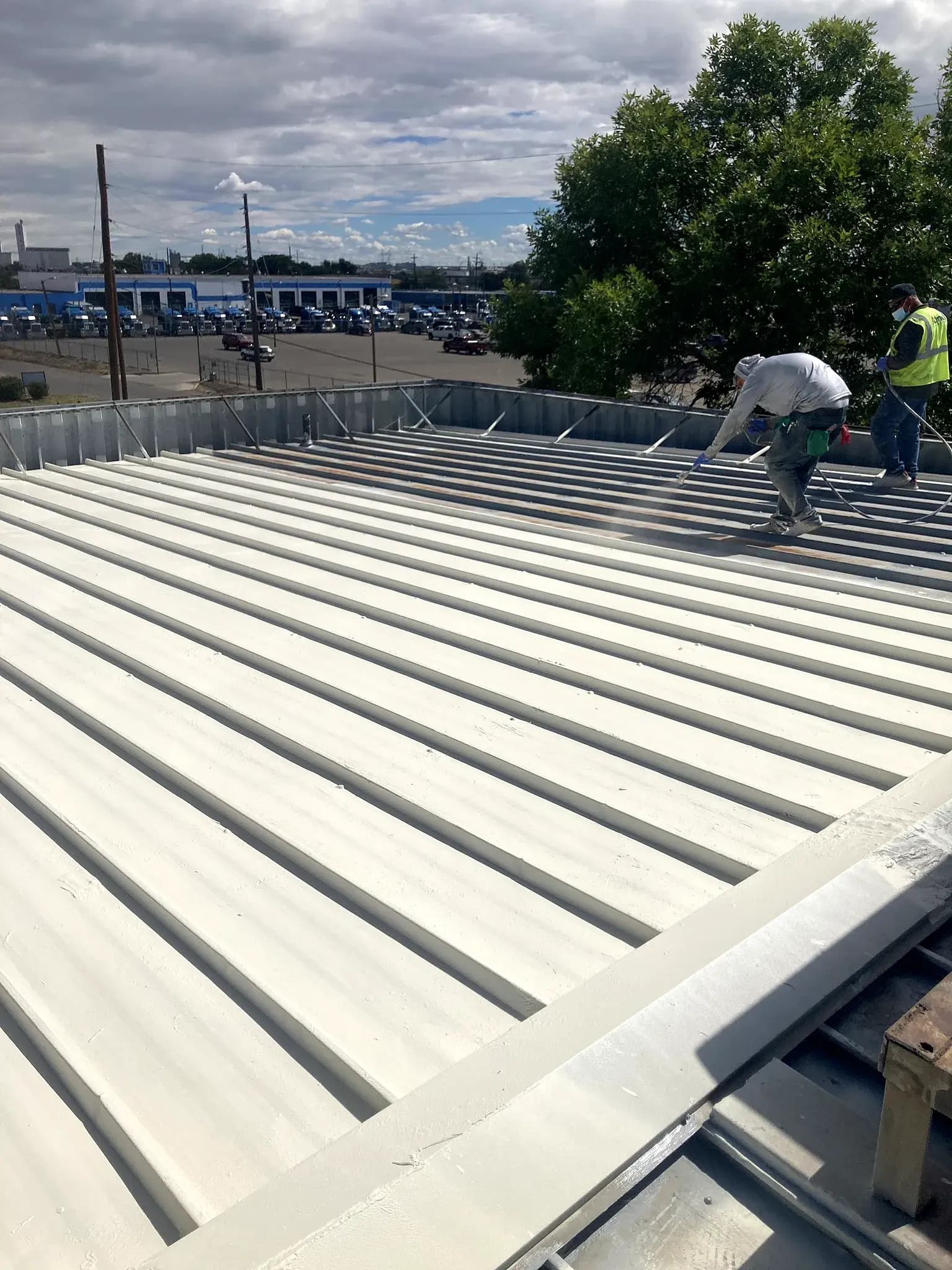
We are a top-tier American WeatherStar Platinum Elite contractor, the manufacturer's highest contractor tier, so our coating installations are built to the manufacturer's specification and eligible for American WeatherStar's StarGard manufacturer-backed warranties. We install their engineered restoration systems, including Ure-A-Sil for flat and low-slope roofs, Met-A-Gard+ for metal, and Envir-O-Sil high-solids silicone for single-ply, and we match the chemistry to your roof:
Acrylic Coating Systems
Acrylic systems are a versatile, reflective, water-based choice for metal roof restoration and many low-slope roofs in Colorado's dry, sunny climate. A primer and seam treatment lock down the existing surface, then base and reflective white topcoats build a durable, energy-efficient membrane. Acrylics are well suited to the high UV and wide temperature swings of the Front Range and the Western Slope.
Silicone Coating Systems
Silicone systems excel where ponding water and constant moisture are a concern. They resist standing water without breaking down, making them a strong option for flat low-slope roofs and roofs with poor drainage. Silicone holds its waterproofing through years of weather exposure.
Urethane Coating Systems
Urethane coatings add impact and traffic resistance, which makes them useful as a tough base coat or in areas of a roof that see foot traffic or are exposed to physical wear. They are frequently paired with acrylic or silicone topcoats in a multi-layer system.
Metal Roof Restoration
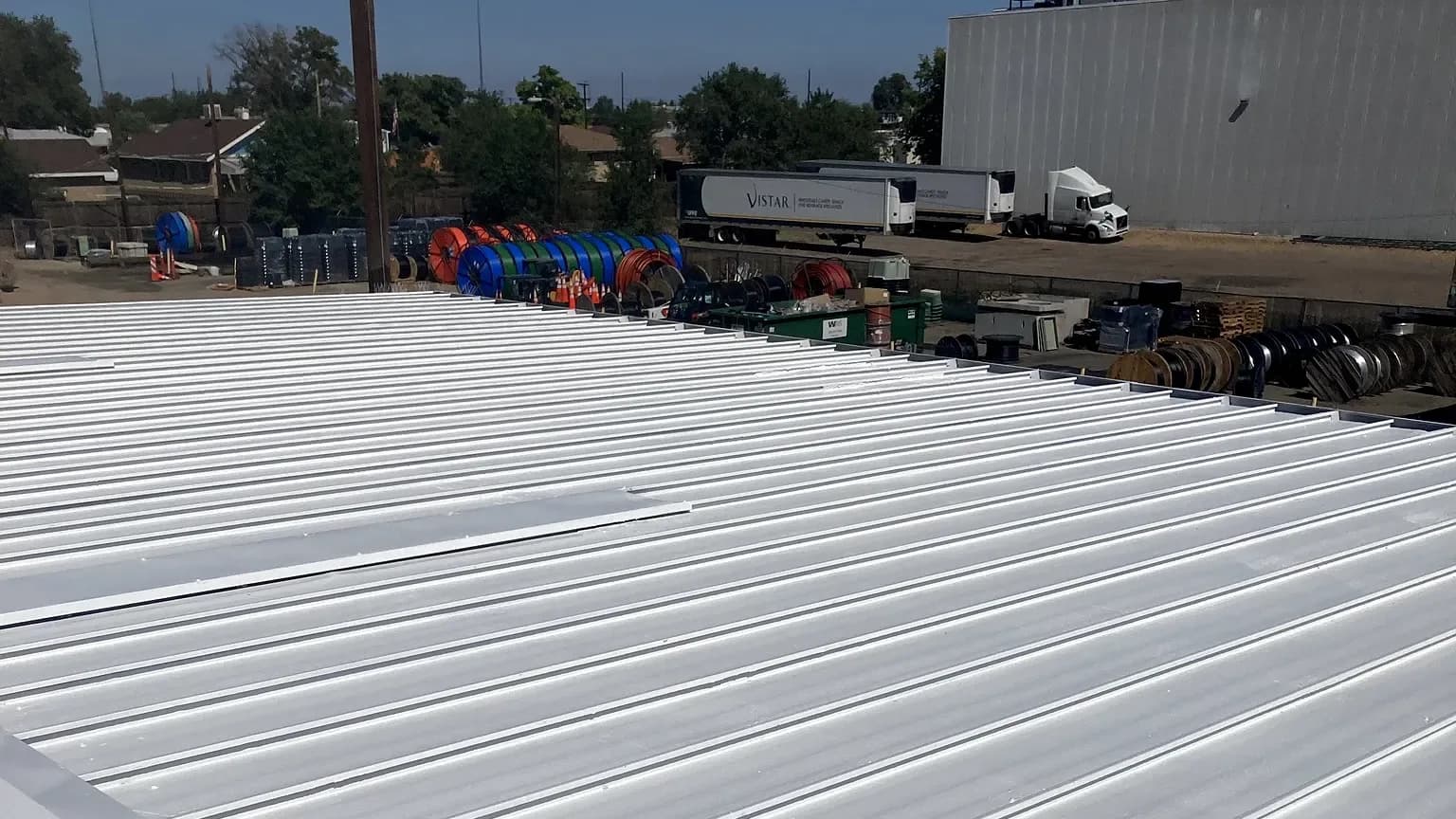
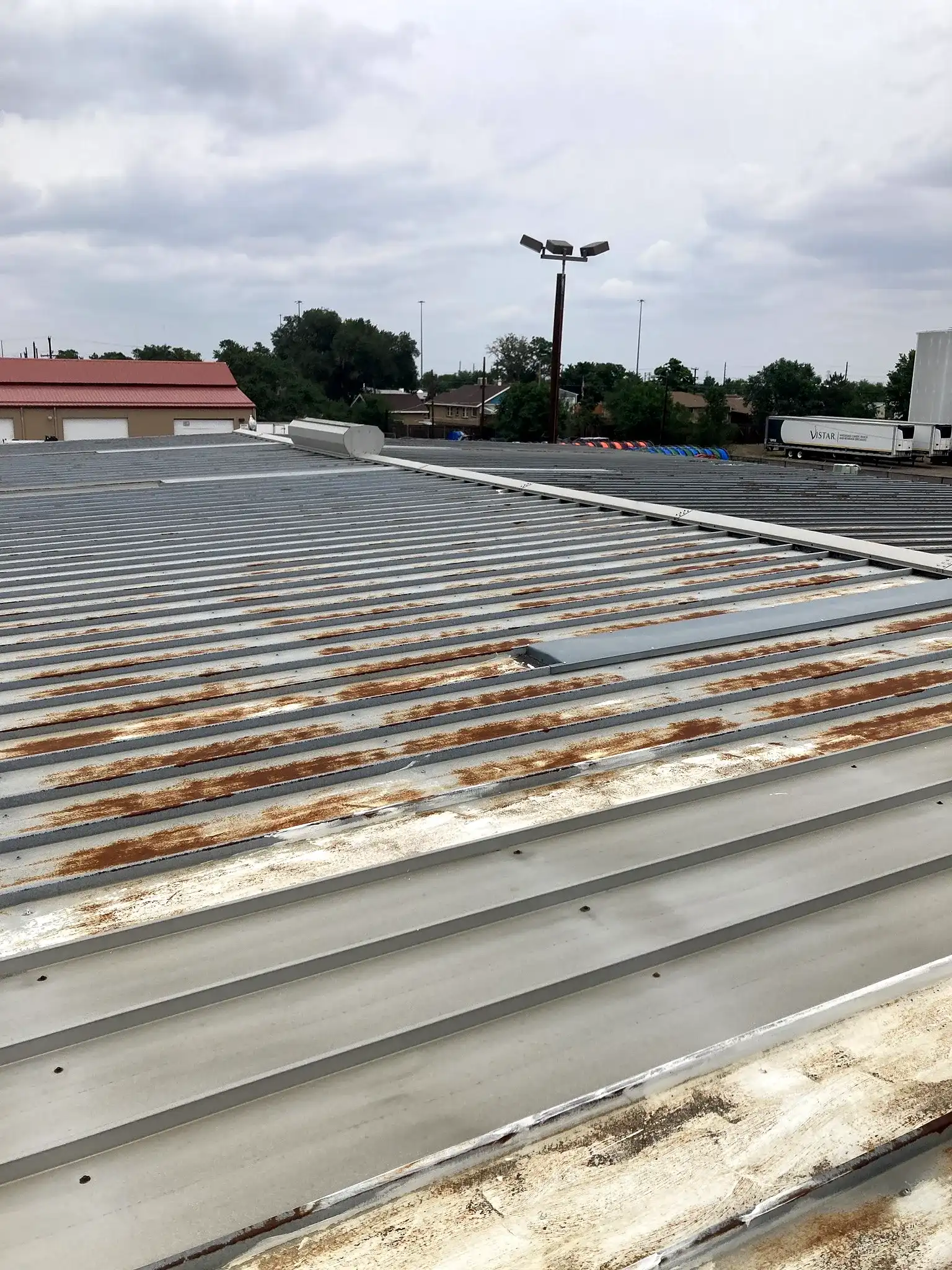
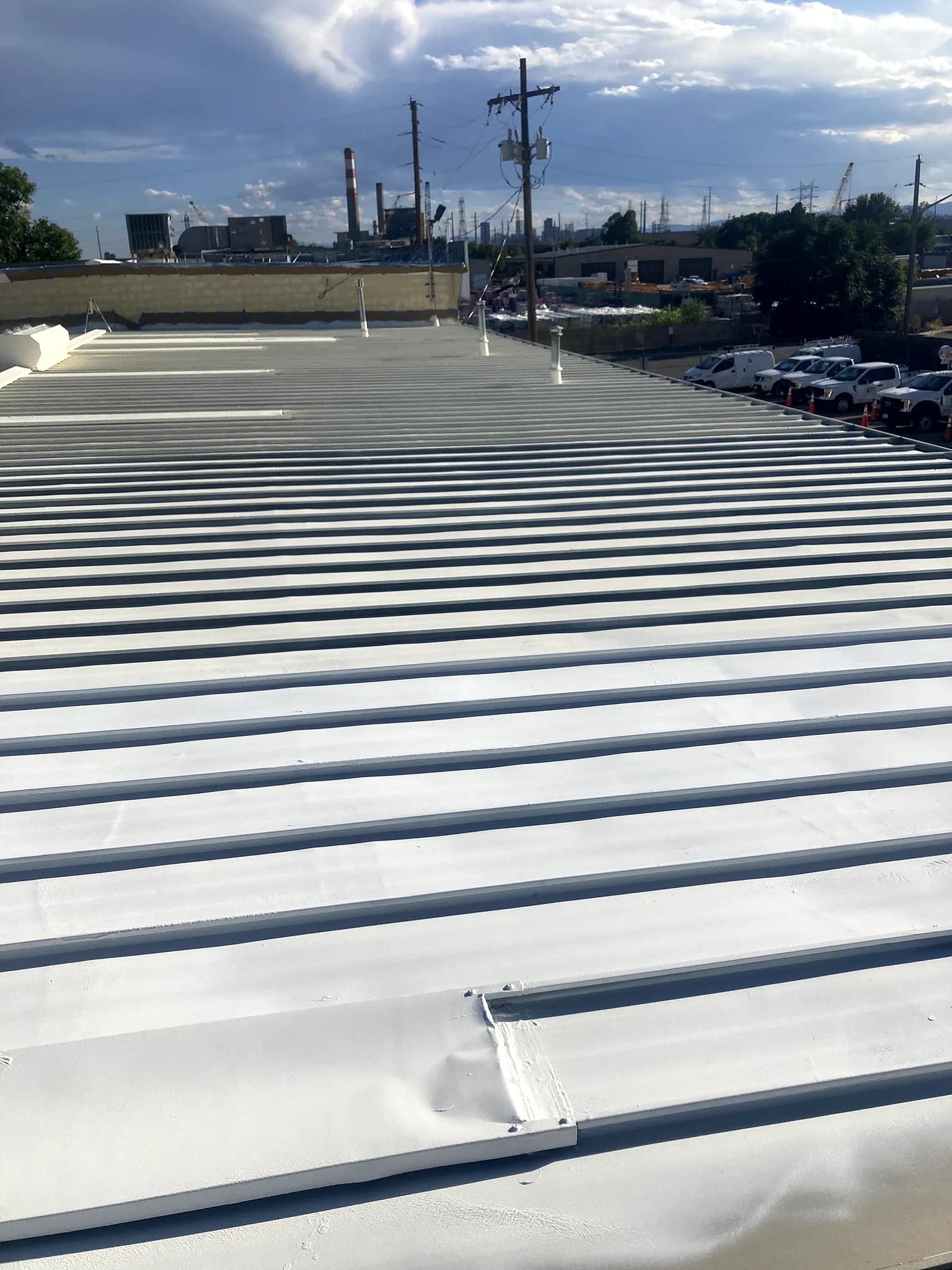
Metal roof restoration is one of the most effective coating applications we perform. Exposed fastener metal roofs do not usually fail in the field of the panel. They fail at the seams and at the thousands of fastener points that loosen, back out, and let water in as the metal expands, contracts, and ages. We clean and prime the metal, detail every seam and fastener, and apply a reflective coating across the whole roof, turning a field of separate panels into one continuous, watertight membrane. The building keeps its roof and gains years of life without the cost and downtime of stripping and re-paneling. See a Denver metal roof we restored this way, from rust-streaked panels to a bright white reflective roof.
Coating Roofs in Colorado's Climate
Colorado is hard on roofs, and it is just as hard on coatings applied without accounting for it. We build three local realities into every coating recommendation:
- Hail. Hail is the wildcard on both sides of the state. A roof that took a significant hail event needs a proper assessment before a coating goes over hidden damage, or the coating will fail at those impact points and can void the warranty.
- Freeze and thaw. Repeated freeze/thaw cycles stress seams, flashings, and penetrations. Those details have to be reinforced before the coating goes down, not after they fail through the new system.
- High-altitude UV. At 5,280 feet and above, UV degrades coatings faster than sea-level specifications suggest, so coating thickness and recoat timing carry more weight here, especially on SPF and light-colored membranes.
Across the Denver metro area we restore a large inventory of flat industrial, warehouse, retail, and office roofs that are strong coating candidates once hail and freeze/thaw damage is addressed. On the Western Slope, many Mesa County facilities want life extension without tenant disruption, and most leaks there are detail-driven, showing up at transitions, penetrations, and fasteners rather than across the whole field. In both regions, widespread wet insulation or broad substrate failure points to repair sections or a replacement rather than a coating, and we will tell you which situation you are in before any coating is sold.
When to Coat and When to Replace
A coating is the right call when the roof is weathered but sound: the decking and insulation are dry, the structure is intact, and the leaks are at seams, fasteners, and surface wear. A coating is not a fix for a roof with trapped moisture, saturated insulation, hail punctures across the field, or structural damage, and we will tell you so. During your free inspection we check the roof's real condition, including moisture where needed, and give you an honest recommendation on whether restoration or a full roof replacement is the better investment for your building.
Why Property Owners Choose a Coating
- Lower cost. A restoration typically costs a fraction of a full tear-off and replacement, deferring a major capital expense while protecting the building.
- Less disruption. Coatings are applied over the existing roof, so there is no tear-off noise, debris, or exposed deck, and operations below continue.
- Energy savings.Reflective white coatings bounce back 80 to 90 percent of the sun's heat and are ENERGY STAR and Cool Roof Rating Council rated, lowering rooftop temperature and the building's summer cooling load in Colorado's intense high-altitude sun.
- Seamless waterproofing. The coating seals seams and fasteners across the whole roof, eliminating the leak points that age every membrane and metal roof.
- Manufacturer warranty. American WeatherStar systems carry 10 and 20 year material and labor warranties, and the roof can be recoated again at the end of the term.
- Less waste. Restoring a roof keeps the old roof out of the landfill, a sustainability win for owners with environmental goals.
Our Coating Process
- Free inspection, moisture survey, and adhesion test. We assess whether the roof is a candidate for restoration, documenting condition, seams, fasteners, hail damage, and any trapped moisture, and we test adhesion so we only coat a roof that will hold the coating.
- Clean and prep. The roof is cleaned and prepared so the coating bonds properly, and rusted or failed areas are addressed first.
- Prime and detail. We apply the appropriate primer and detail every seam, fastener, and penetration, the places a roof actually leaks.
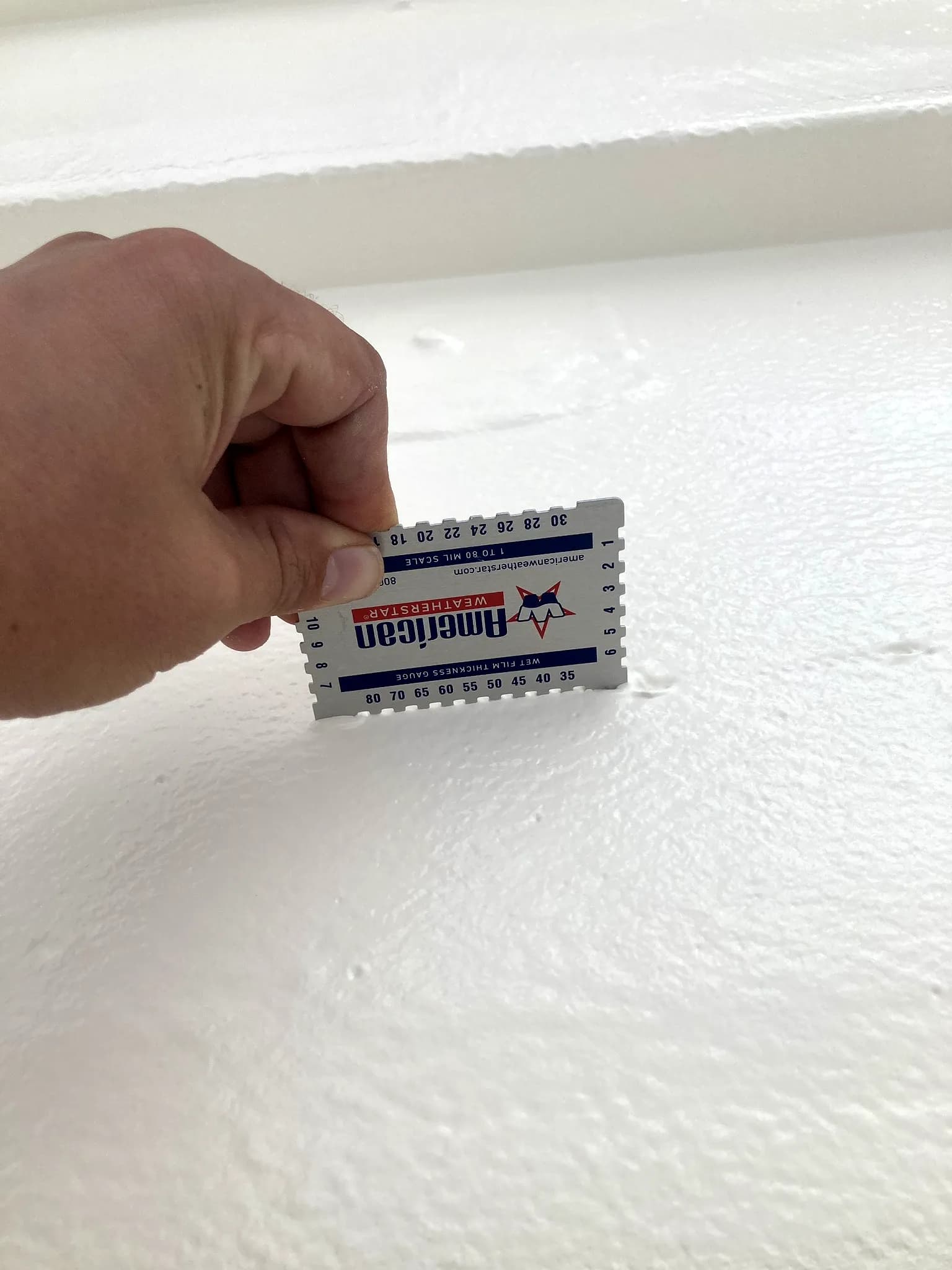
- Apply the coating system. Base and reflective topcoats are applied to the specified thickness for the warranty term being installed.
- Inspect and warranty. The finished system is inspected and registered for its American WeatherStar manufacturer warranty.
Frequently Asked Questions About Roof Coatings
What is a commercial roof coating and how does it work?
A roof coating is a fluid-applied system that is cleaned onto, primed, and rolled or sprayed over an existing roof, where it cures into a seamless, reflective, waterproof membrane. Instead of tearing the old roof off, we restore it: the coating seals seams, fasteners, and small splits across the entire surface and renews the roof for years of additional service. We install American WeatherStar acrylic, silicone, and urethane systems depending on the roof type and conditions.
Should I coat my commercial roof or replace it?
Coating is the right choice when the existing roof is weathered but still structurally sound, the decking and insulation are dry, and leaks are limited to seams, fasteners, and surface wear rather than widespread saturation or hail punctures. If the roof has trapped moisture, failed insulation, hail damage across the field, or structural damage, a tear-off and replacement is the better long-term investment. We determine which path fits your roof during a free inspection, and we will tell you honestly when a coating is not the right answer.
My roof took hail. Can it still be coated?
Maybe. Hail that has punctured or severely dimpled the membrane is not a coating candidate, and those areas need repair or section replacement first. A coating placed over unaddressed hail damage will fail at those points and can void the warranty. In Colorado we inspect for hail damage as part of every evaluation, because hail can compromise a membrane in ways that are not visible from a walk-by. If the impacts are isolated and repairable, we fix them first and then coat; if the field is broadly damaged, we will tell you that replacement is the honest call.
Can you coat a metal roof?
Yes. Metal roof restoration is one of the most effective uses of a coating system. Exposed-fastener metal roofs leak at their seams and at thousands of fastener points as the panels age, chalk, and loosen. We prime the metal, detail every seam and fastener, and apply a reflective coating that turns the separate panels into one continuous, watertight surface, without the cost and disruption of stripping and re-paneling the roof.
What roof types can be coated and restored?
We coat and restore TPO, PVC, EPDM, metal, and SPF (spray polyurethane foam) roofs, along with modified bitumen and built-up roofs, when they are sound candidates. Single-ply membranes need stable, repairable seams and details; EPDM must be fully cleaned of chalk or the coating will not adhere; metal needs its fasteners and laps addressed first; and SPF needs any compromised foam repaired before recoating. Every system starts with a moisture survey and, where needed, an adhesion test so we only coat a roof that will hold the coating.
How long do roof coatings last and what warranty comes with them?
A coating restoration typically extends the life of a sound roof by 10 to 15 years, and up to 20 years when the system is installed to a 20-year No Dollar Limit (NDL) warranty. American WeatherStar coating systems carry manufacturer material and labor warranties of 10 or 20 years, with the term depending on the system and the number of coats applied. Because CRC is an American WeatherStar Platinum Elite contractor, our coating installations are eligible for these manufacturer-backed warranties, and a coated roof can be recoated again at the end of its term to extend its life further.
Will a reflective roof coating lower my energy costs?
In most cases, yes. White and light-colored coatings are reflective (cool roof) surfaces that bounce sunlight away instead of absorbing it, which lowers rooftop temperatures and reduces the cooling load on the building below. In Colorado's high-altitude sun, that can mean meaningfully lower summer cooling costs and less thermal stress on the roof and rooftop equipment.
Will a roof coating void my existing roof warranty?
It can, depending on the manufacturer's terms. Before recommending a coating we review your existing warranty documentation and advise on the safest path, including whether to seek the manufacturer's written approval or to transition to a new warranted system. We would rather protect the coverage you already have than jeopardize it.
What is the best coating for a roof with ponding water?
System selection depends on drainage and substrate. Silicone systems resist standing water without breaking down, which makes them a strong choice where ponding is a concern, but the bigger fix is usually correcting the drainage and reinforcing the details so water is not sitting on a weak point. We assess both the coating chemistry and the drainage during the inspection.
How does Colorado altitude affect coating performance?
At 5,280 feet and above, UV intensity is significantly higher than in lower-elevation markets, and that accelerates topcoat degradation, especially on SPF and light-colored membranes. Freeze and thaw cycles also stress seams, flashings, and penetrations. We account for both by specifying appropriate coating thickness and realistic recoat intervals, and by addressing seams and details before the coating goes down rather than after they fail through it.
What does a commercial roof coating cost in Colorado?
A realistic planning range is $3 to $10 or more per square foot installed, depending on the roof type, its condition, the extent of prep and repairs needed, roof access, the coating chemistry, and the warranty term. A coating restoration still typically costs a fraction of a full tear-off and replacement, and it avoids the disruption, downtime, and landfill waste of removing the old roof. A site visit and moisture survey tighten the number considerably, so we do not give firm coating prices without seeing the roof. Denver metro: (720) 893-7663. Western Slope: (970) 877-7663.